Last updated: September 12, 2026
How to choose an emergency plumber near you
Facing a plumbing disaster in San Diego? Learn what counts as an emergency, what to ask before you hire, and realistic costs for a 24/7 plumber.

The short answer
- Real emergencies: burst pipes, sewer backups, no water in the home, gas leaks, and a water heater leaking from the bottom.
- Central San Diego response runs 30 to 60 minutes; North County, East County, and South Bay run 45 to 90 minutes.
- Before they roll a truck, ask if they are licensed and insured, the dispatch fee, the billing structure, and a rough estimate.
- Expect a $150 to $350 call-out fee, $200 to $450 per hour, or flat rates like $400 to $800 for a mainline clog.
- Red flags: no CSLB license, vague pricing, high-pressure upsells, or large upfront cash demands. Call (858) 400-4417.
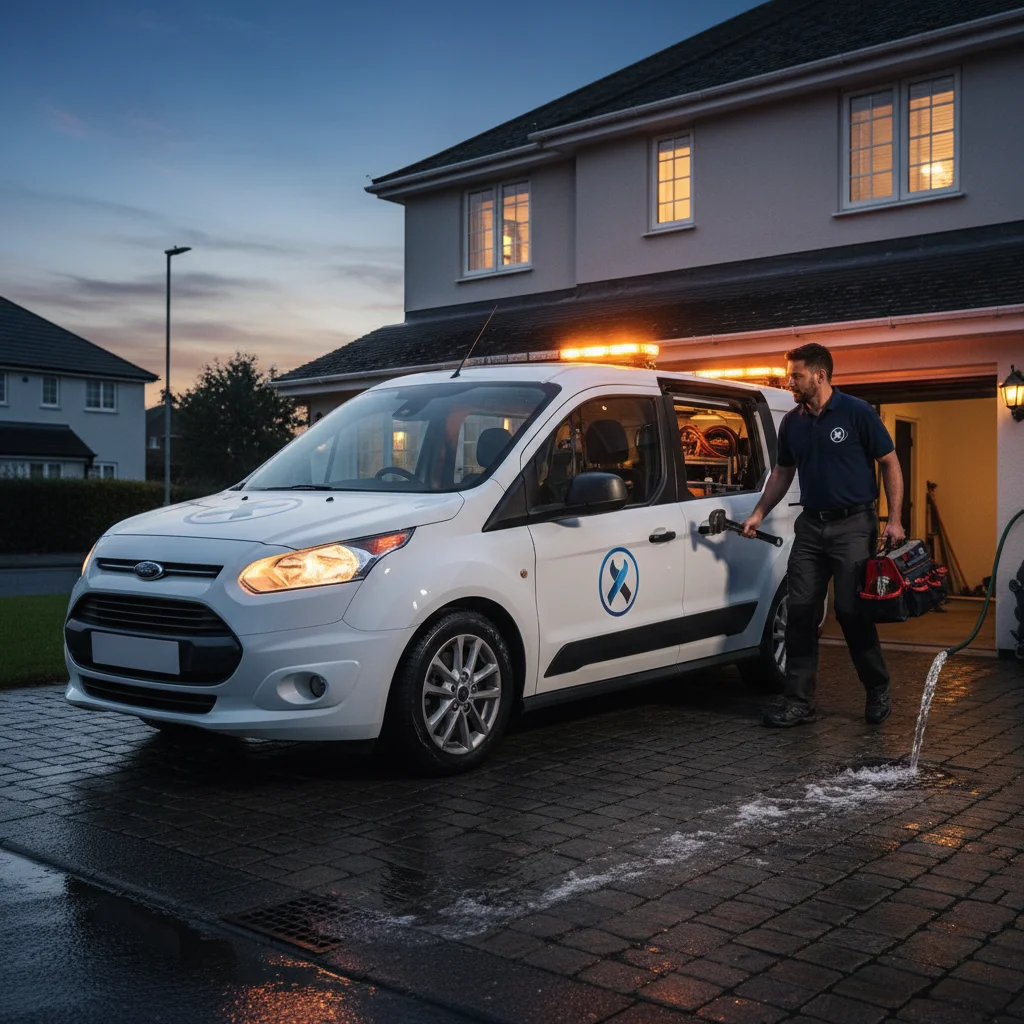
When water is pooling on your floor, a toilet is overflowing, or you’ve suddenly lost all pressure, your first call matters. This page is how to vet the person who shows up: CSLB, marked van, written estimate. For the county how-to before they arrive, read what to do in a San Diego plumbing emergency. To dispatch, call (858) 400-4417 or use emergency plumbing. Parked after-hours ranges in the FAQs stay as written.
This guide is designed to help you make a clear-headed decision when your plumbing fails unexpectedly in San Diego County. We’ll cover what truly constitutes an emergency, what to expect for response times and costs, and how to protect your home while you wait for help to arrive.
What counts as a real plumbing emergency
Not every plumbing issue requires an after-hours call. A dripping faucet can wait until morning, but some situations demand immediate professional attention to prevent significant water damage, health hazards, or safety risks. If you’re experiencing any of the following, it’s time to call a 24-hour plumber.
- Burst Pipes: This is the most obvious emergency. A major pipe burst can release gallons of water per minute, causing structural damage to drywall, flooring, and foundations.
- Sewer System Backup: If you have multiple drains backing up simultaneously or see sewage coming up into your bathtub or shower, you have a mainline clog. This is not only a mess but also a serious health risk that needs immediate resolution.
- No Water in Your Home: A sudden, complete loss of water could indicate a major leak in your main water line or a municipal supply issue. If your neighbors have water, the problem is likely on your property and requires a plumber.
- Gas Line Leaks: The smell of rotten eggs or sulfur is a tell-tale sign of a natural gas leak. This is the most dangerous type of plumbing emergency. If you suspect a leak, evacuate your home immediately, call 911 from a safe distance, then call your gas company and an emergency plumber.
- Leaking Water Heater: A tank that’s actively leaking from the bottom is at risk of bursting. This can cause severe flooding and scalding hazards.
Many of these issues present clear warning signs before they become full-blown disasters. Understanding the signs you need an emergency plumber can help you act faster and potentially reduce the extent of the damage.
How fast a plumber should reach you in San Diego County
When your home is flooding, every minute counts. A plumber’s response time is one of the most critical factors in an emergency. In a county as large and geographically diverse as San Diego, “near me” can mean very different things depending on where you live and the time of day.
A reputable emergency plumber should be able to give you a realistic ETA when you call. Here’s a general guide to what you can expect across the county:
- Central San Diego (Downtown, Mission Valley, Clairemont): You should expect a plumber to arrive within 30 to 60 minutes, traffic permitting. Most established companies have technicians staged to cover these dense areas.
- North County (Oceanside, Carlsbad, Escondido): Response times here can also be in the 30- to 60-minute range, but can stretch to 90 minutes if the plumber is coming from a central location during rush hour on the I-5 or SR-78. An emergency plumber in Carlsbad or an emergency plumber in Escondido with dedicated North County coverage will cut that window considerably.
- East County (El Cajon, La Mesa, Santee): Similar to North County, expect a 45- to 90-minute wait. Traffic on the I-8 can be a major factor. An emergency plumber in El Cajon or an emergency plumber in La Mesa who is already based in the area will always be faster than someone driving in from central San Diego.
- South Bay (Chula Vista, National City, Imperial Beach): With the I-805 and I-5 as primary arteries, a 45- to 90-minute response time is typical.
Always ask the dispatcher for an estimated arrival time. A professional company will be transparent. If they’re vague or can’t give you a window, it might be a sign that they’re overbooked or not truly local, and you should consider calling someone else.
Questions to ask before they roll a truck
You’re stressed, but taking two minutes to ask a few key questions can save you a massive headache later. Before you agree to have an emergency plumber come to your home, get clear answers to the following.
-
“Are you licensed and insured?” This is non-negotiable. A licensed plumber carries liability insurance and a worker’s compensation policy, protecting you if something goes wrong. Ask for their California State License Board (CSLB) number. You can verify any license instantly on the CSLB’s website. A legitimate company will provide this number without hesitation.
-
“What is your dispatch fee or emergency call-out charge?” Most companies charge a fee just to come to your home for an emergency, especially after hours. This typically covers travel time and initial diagnostics. Get this number upfront so there are no surprises.
-
“How do you bill for emergency work? Is it a flat rate or hourly?” Some plumbers charge a higher hourly rate for nights and weekends, plus the cost of materials. Others may quote a flat rate for a specific job (like clearing a main sewer line). Understanding their pricing structure helps you know what to expect.
-
“Can you give me a rough estimate over the phone?” While they can’t give you a precise quote without seeing the problem, a seasoned plumber can often provide a general price range based on your description. Be wary of anyone who refuses to discuss cost at all.
Asking these questions helps you vet the plumber and sets clear expectations for the service call.
What 24/7 emergency service actually costs
Emergency plumbing isn’t cheap, but it’s less expensive than extensive water damage restoration. You’re paying for a licensed professional’s expertise, specialized equipment, and immediate availability at inconvenient times. Understanding the costs involved can help you budget and avoid sticker shock.
Here’s a breakdown of typical charges for an emergency plumber in San Diego:
- Dispatch/Call-Out Fee: Expect to pay between $150 and $350 simply for the plumber to arrive at your door. This fee is often higher for calls late at night, on weekends, or on holidays. Some companies may waive this fee if you proceed with the repair.
- Hourly Rate: Emergency hourly rates can range from $200 to $450+ per hour, often with a one- or two-hour minimum. This is significantly higher than the standard daytime rate.
- Flat-Rate Pricing: For common emergencies like a mainline drain clog or a water heater replacement, some companies offer flat-rate pricing. This can be beneficial as it won’t change even if the job takes longer than expected. A mainline clog, for example, might be quoted at $400 to $800.
- Materials and Parts: The cost of any replacement parts (pipes, fittings, valves, etc.) will be added to the final bill.
For a comprehensive look at standard plumbing rates, our guide on how much a plumber costs in San Diego offers more detail. In an emergency, always get the total estimated cost in writing before any work begins.
Red flags that mean you should call a different plumber
In a crisis, it’s easy to overlook warning signs. But the wrong plumber can make a bad situation worse. If you encounter any of these red flags during your call or when the technician arrives, it’s best to stop and find someone else.
- No CSLB License Number: As mentioned, this is the biggest red flag. An unlicensed individual is not legally authorized to perform plumbing work in California and likely lacks the proper insurance, leaving you completely liable for accidents or faulty work.
- Vague or Evasive Pricing: If a plumber can’t or won’t explain their fees clearly, hang up. Phrases like “We’ll figure it out when I get there” without providing even a call-out fee are a sign of trouble.
- High-Pressure Sales Tactics: An emergency plumber’s job is to diagnose and fix the immediate problem. If they immediately try to upsell you on a complete home repiping at 2 a.m. or create a false sense of urgency to approve expensive, non-critical work, be skeptical.
- Requesting a Large Upfront Cash Payment: A dispatch fee is normal. Demanding thousands of dollars in cash before starting work is not. This is often a sign of a scammer who may take the money and disappear.
- Unprofessional Appearance: A professional plumber should arrive in a marked vehicle, often in uniform, and have the proper tools for the job. Someone showing up in a personal car with a handful of tools from a home improvement store is a major cause for concern.
Your intuition is a powerful tool. If something feels off, it probably is. It’s better to spend a few more minutes finding a reputable emergency plumbing service than to risk poor workmanship or being overcharged. If you’re in coastal San Diego, our guide on emergency plumbing in La Jolla covers specific response patterns for that area.
How to shut off water and gas while you wait
While you wait for the plumber to arrive, you can take immediate steps to prevent further damage. The most important action is to shut off the main supply lines for water or gas.
Shutting off the main water supply
- Locate the Valve: Your main water shutoff valve is typically located where the water line enters your house. Check the perimeter of your home, in the garage, or in a utility closet. In some San Diego homes, it may be in an underground box near the street with a meter.
- Turn it Off: Most homes have either a gate valve (a round, spigot-like handle) or a ball valve (a lever handle).
- Gate Valve: Turn it clockwise several times until it’s tight. Don’t force it.
- Ball Valve: Turn the lever a quarter-turn (90 degrees). The lever will be perpendicular to the pipe when it’s off.
- Drain the System: Open a faucet on the lowest level of your home (like a basement sink or outdoor spigot) and the highest level (like an upstairs shower) to drain the remaining water from the pipes.
Shutting off the gas supply (use extreme caution)
Only attempt this if you smell gas and know where the shutoff valve is. If you’re unsure, evacuate everyone and call 911 immediately.
- At the Appliance: Most gas appliances (water heater, furnace) have a small shutoff valve on the gas line leading to them. A quarter-turn of this valve will shut off gas to that specific unit.
- At the Meter: Your gas meter, usually located on the side of your house, has a main shutoff valve. You will need a wrench to turn it. The valve is on when the tang is parallel to the pipe. A quarter-turn in either direction will make it perpendicular, shutting off the gas to the entire house.
Once gas is off at the meter, do not turn it back on yourself. Only a qualified professional or the gas company should restore service.
When to call us
When you’re facing a burst pipe, a backed-up sewer line, or any other plumbing crisis, you need a fast, reliable, and licensed plumber. The network has plumbers located throughout San Diego County, and every plumber quotes you directly, in writing, before any emergency work begins. For city-specific emergency coverage details, see our posts on emergency plumber in Poway and emergency plumber in Chula Vista.
Call us at (858) 400-4417 and we’ll connect you with a plumber.
Areas this guide covers
We connect homeowners with licensed plumbers in these San Diego County communities.
Keep reading
Need a Plumber in San Diego?
Licensed, insured plumbers, ready across San Diego County. The plumber quotes you before any work starts.
Call (858) 400-4417Call any time, day or night, anywhere in San Diego County