
Last updated: May 9, 2026
Garbage Disposal Repair in San Diego: Fix or Replace
Is your San Diego garbage disposal humming, leaking, or jammed? Learn when to try DIY fixes, when to call a plumber, and when replacement is the smarter choice.

The short answer
- Three common failures: humming without grinding (jam), leaking (worn seal or crack), and dead silence (electrical or burned-out motor).
- Try first: turn off power, free a jam with the 1/4-inch Allen wrench, and press the red reset button on the bottom.
- Replace it when it leaks from the housing, has recurring problems, or makes loud clanking from worn bearings or broken impellers.
- Professional disposal repair in San Diego runs about $120 to $450 depending on parts and complexity.
- For most homes a 1/2 HP or larger unit with two grinding stages is the right pick. Call (858) 400-4417.
Most garbage disposal repairs in San Diego run $120 to $300. Before calling a plumber, try two things: press the red reset button on the bottom of the unit, and use the quarter-inch Allen wrench hole to manually free a jammed motor. If neither works, or the unit leaks from the housing, it’s time for professional help or replacement.
Disposal jammed, humming, or leaking? The plumbers we connect you with repair and replace garbage disposals throughout San Diego County. Garbage disposal repair in San Diego or call (858) 400-4417.
Common garbage disposal problems: humming, leaking, jammed
Garbage disposals are hardworking kitchen appliances, but they’re not invincible. Over time, or with improper use, they can develop several common issues. Understanding these problems is the first step in deciding whether you need a simple fix or professional help.
One of the most frequent complaints we hear in San Diego is a humming noise without grinding. This usually indicates a jammed motor. Something solid, like a piece of silverware, a cherry pit, or even a hard bone fragment, might be caught between the impellers and the grinding plate. The motor tries to turn, but the obstruction prevents the blades from rotating, causing that tell-tale hum. Left unaddressed, a prolonged jam can eventually burn out the motor.
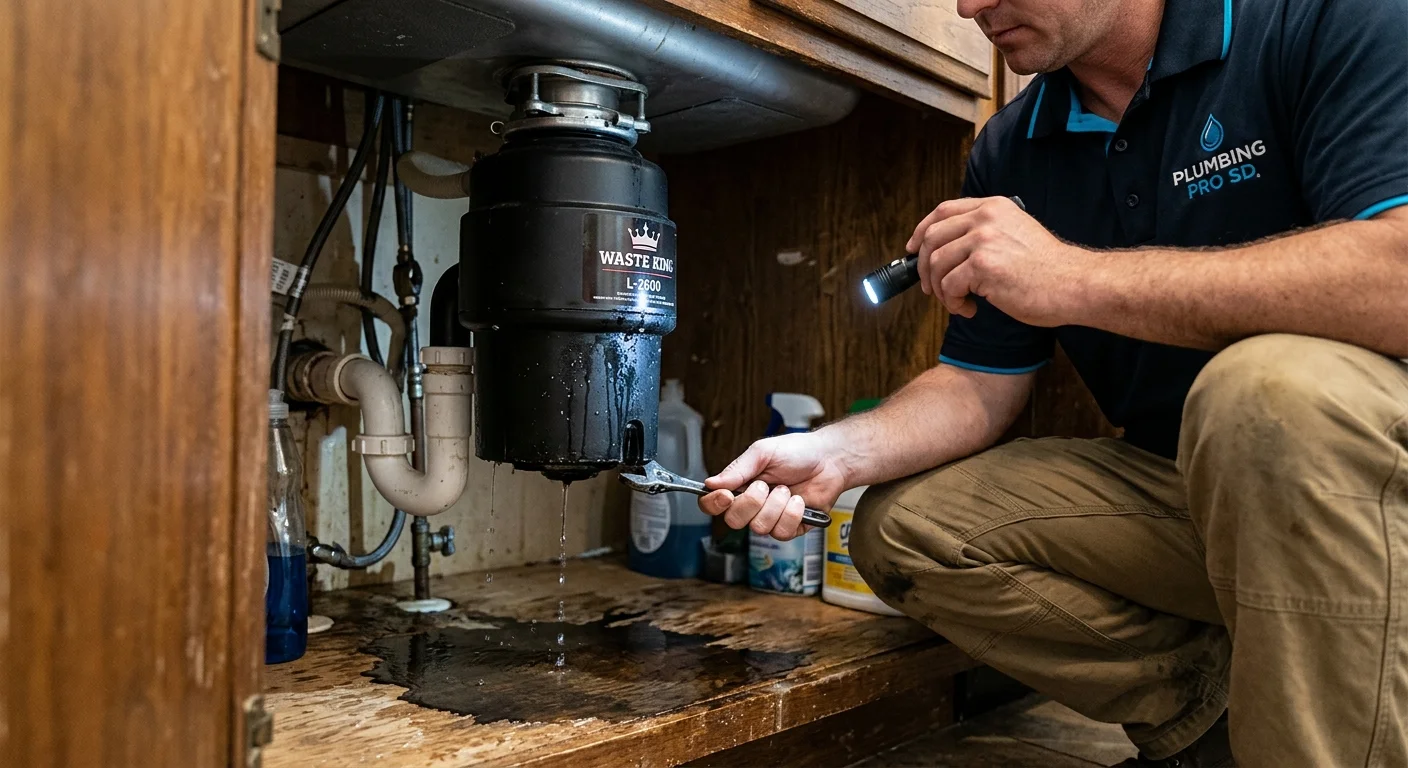
Leaking is another serious problem. A leak often points to a worn-out seal, a cracked housing, or a loose connection. You might notice water dripping from the bottom of the disposal unit, from the drainpipe connections, or where the disposal attaches to the sink flange. While a loose connection can sometimes be tightened, a crack in the housing or a failing internal seal generally means the unit needs more significant attention, often making replacement the more practical solution. Regular maintenance, as discussed in our garbage disposal maintenance guide, can help prevent some leaks but not all.
Finally, a completely dead disposal with no sound at all typically signals an electrical issue or a tripped circuit. It might also mean the motor has entirely burned out, especially if it was humming unsuccessfully for a long time. Sometimes, it’s a simple fix, but other times, it means the unit has reached the end of its life.
Simple fixes you can try first (reset button, allen wrench)
Before you pick up the phone to call a plumber, there are a few simple troubleshooting steps you can try. These DIY fixes often resolve common issues and can save you the cost of a service call. However, always prioritize safety: make sure the power is off at the switch before you reach into the disposal or attempt any internal work.
If your garbage disposal is humming but not grinding, it’s likely jammed. First, turn off the power to the disposal at the wall switch. Never put your hand inside the disposal, even if you think the power is off. Look down into the drain with a flashlight to identify the obstruction. If you can see a piece of silverware or another object, try to remove it with pliers or tongs.
If you can’t see anything, or if it’s too deep, look for the Allen wrench hole on the very bottom center of the disposal unit. Most disposals come with a special ¼-inch Allen wrench for this purpose (check under your sink or in a kitchen drawer). Insert the wrench into the hole and turn it back and forth manually. This rotates the impellers, often dislodging the stuck item. You might hear a “clunk” as the object frees itself. Remove the wrench, turn the power back on, and try running the disposal with cold water.
For a completely dead disposal, or one that repeatedly shuts off, check the red reset button on the bottom of the unit. This button is a thermal overload protector; it pops out when the motor overheats or is overworked, preventing damage. Push it firmly back in. If it pops out again immediately, there’s still a problem. You might need to let the motor cool down for a few minutes before trying again. If the button keeps popping, it’s a sign of a deeper electrical or motor issue. Always ensure that the circuit breaker hasn’t tripped as well, especially if other kitchen appliances are also without power.
Signs your disposal is beyond repair
While simple fixes can sometimes bring your garbage disposal back to life, there are clear indicators that your unit is nearing the end of its useful life or has suffered damage beyond economical repair. Recognizing these signs can save you time, frustration, and money in the long run.
One of the most definitive signs is frequent and recurring problems. If you’re constantly resetting the unit, clearing jams, or dealing with minor leaks every few weeks, the internal components are likely worn out. A disposal that requires constant attention probably has deteriorating blades, a weakened motor, or fatigued seals. Investing in repeated repairs for an old unit can quickly add up, making replacement a more cost-effective solution.
Significant leaking from the housing is another major red flag. If water is seeping from the main body of the disposal itself, rather than from a connection point, it usually means there’s a crack in the internal chamber or housing. This kind of damage is virtually impossible to repair effectively and safely. Trying to patch it up often leads to recurring leaks and potential water damage to your cabinets and floor.
Finally, loud, unusual noises beyond a typical hum or grind can signal serious internal damage. A loud clanking, grinding, or screeching sound that persists even after clearing a jam indicates worn-out bearings or broken impellers. These are often integral to the motor assembly and not easily replaceable. At this point, the cost of labor to diagnose and replace these internal parts often outweighs the cost of a new unit. If you’re experiencing any of these severe issues, it’s probably time to explore the option of a new garbage disposal installation. For a detailed breakdown of what that might entail, you can check out our article on garbage disposal replacement cost.
What does a garbage disposal repair cost in San Diego?
The cost of a garbage disposal repair in San Diego can vary widely depending on the nature of the problem, the parts needed, and the complexity of the job. Generally, most minor repairs that require a professional plumber fall into a specific range.
For common issues like clearing a stubborn jam that an Allen wrench can’t fix, or diagnosing and addressing an electrical issue, you might expect to pay between $120 and $300. This range typically covers the plumber’s service call fee, their diagnostic time, and the labor for a straightforward fix. If the repair involves replacing a minor component like a drain flange or a connection gasket, the cost could be at the higher end of this spectrum, including the part itself.
However, if the problem is more complex, such as a major leak requiring the replacement of several seals, or if the plumber needs to disassemble parts of the unit, the cost can increase. A professional repair involving internal components might range from $250 to $450 or more. It’s important to remember that these are estimates, and the final price will depend on the specific parts and labor involved. The plumbers we connect you with give you a price after diagnosis so you know exactly what to expect before any work starts.
It’s crucial to weigh the repair cost against the age and condition of your existing unit. If your disposal is 8-10 years old or older and the repair estimate is approaching half the cost of a brand-new, entry-level disposal, replacement might be the more economical choice in the long run. A new disposal often comes with a warranty and improved efficiency, offering better value than patching up an aging appliance that could develop new problems soon.
How a professional plumber fixes a disposal
When your DIY efforts fall short, or you recognize signs that your garbage disposal needs expert attention, calling a professional plumber is the safest and most efficient solution. The plumbers we connect you with are equipped with the right tools and expertise to handle a wide range of disposal issues.
First, a professional will conduct a thorough diagnosis. This involves checking for power issues, examining the unit for external damage or leaks, and attempting to clear any visible jams with specialized tools. They’ll listen to the motor, if it’s still attempting to run, to identify abnormal sounds that might point to internal problems like worn bearings or broken impellers. They’ll also check all connections for leaks, including the dishwasher drain line if it’s connected to the disposal.
If it’s a jam, they can use commercial-grade tools to dislodge stubborn obstructions that an Allen wrench couldn’t budge. For leaks, they’ll pinpoint the exact source. If it’s a loose connection, they’ll tighten it properly, ensuring a watertight seal. If a gasket or drainpipe needs replacement, they carry common parts on their truck to perform the repair on the spot.
In cases where the motor is struggling or has burned out, they’ll confirm the issue. If the reset button continues to pop or the motor is dead, they’ll verify if it’s an electrical fault or a mechanical failure within the unit. They understand the nuances of various disposal models and can quickly determine if the issue is a simple component failure or if the entire unit needs to be replaced. For any fixture installation needs, including new disposals, they can provide efficient and code-compliant service, ensuring proper electrical connections and plumbing seals to prevent future issues.
Choosing a new disposal: what we recommend
If repair isn’t feasible or cost-effective, selecting a new garbage disposal is the next step. With many options on the market, choosing the right one for your San Diego home can seem daunting. Plumbing Pro San Diego can help guide you through the process, considering your budget, kitchen needs, and typical waste habits.
When recommending a new disposal, we generally focus on a few key factors: motor power, grinding stages, and noise level.
-
Motor Power: Disposals are measured in horsepower (HP).
- 1/3 HP units are basic and best for very light use and soft foods. They tend to jam more easily. We typically don’t recommend these for most households due to their limitations.
- 1/2 HP units are the most common and a good balance for average household use, handling most food scraps adequately.
- 3/4 HP units are excellent for families who cook frequently and process a wider variety of waste, including some harder items like small bones or fruit rinds.
- 1 HP units are top-of-the-line, designed for heavy-duty use, larger households, and those who want the best performance and durability. They rarely jam and can handle almost anything you throw at them.
-
Grinding Stages: Entry-level disposals have one grinding stage. Higher-end models offer two or even three stages, which break down food waste into much finer particles. This significantly reduces the chance of clogs in your drain lines and allows the disposal to handle tougher scraps more effectively. For San Diego homes with older plumbing or those prone to clogs, a multi-stage grinder is often a smart investment.
-
Noise Level: More powerful disposals, especially those with multiple grinding stages, often come with enhanced insulation, making them significantly quieter during operation. If your kitchen is open-concept or you simply prefer a quieter appliance, look for models marketed as “quiet” or “sound insulated.” Brands like InSinkErator Evolution series are known for their quiet performance.
We typically recommend at least a 1/2 HP unit with at least two grinding stages for most San Diego homes. If your budget allows, a 3/4 HP or 1 HP unit will provide superior performance and longevity. Investing in a good quality disposal now can prevent future repair headaches and ensure smoother kitchen operations for years to come.
When to call us
Don’t let a malfunctioning garbage disposal stress you out or lead to potential plumbing issues. If you’ve tried the simple fixes without success, or if you’re experiencing leaks, persistent humming, or a completely dead unit, it’s time to call in the professionals. The licensed plumbers we connect you with are ready to help San Diego homeowners determine if a repair is feasible or if a new installation is the best option. Call us at (858) 400-4417 and we’ll connect you with a plumber.
Areas this guide covers
We connect homeowners with licensed plumbers in these San Diego County communities.
Keep reading
Need a Plumber in San Diego?
Licensed, insured plumbers, ready across San Diego County. The plumber quotes you before any work starts.
Call (858) 400-4417Call any time, day or night, anywhere in San Diego County