
Hot Water Recirculation Pump in San Diego: Costs and Types
Hot water recirculation pump costs in San Diego, dedicated line vs comfort valve, tankless compatibility, and real savings. Call (858) 400-4417.
The short answer
- A recirculation pump does not make more hot water, it moves already-heated water through the pipes so it reaches the tap in seconds instead of minutes.
- A comfort (crossover valve) retrofit runs roughly $400 to $900 installed, while a dedicated return line runs $800 to $1,500 or more if new pipe has to be added.
- On-demand control, triggered by a button or motion sensor, saves the most water and energy; continuous or timer modes cost more to run.
- Standard tankless water heaters can short-cycle on a recirc loop; the unit needs a recirc-compatible model, a buffer tank, or a plumber-verified setup.
- San Diego's hard water shortens recirc pump life, so periodic maintenance and a compatible pump matter more here than in most other markets.
A hot water recirculation pump gets hot water to your tap in seconds instead of minutes, and in most San Diego homes a plumber can install one in a few hours for $400 to $1,500, depending on the type.
San Diego’s sprawling single-story layouts, plus the ADUs that keep getting added to backyards, mean long pipe runs between the water heater and the farthest bathroom. That’s a lot of cold water running down the drain every morning. A water heater service visit is the right time to ask whether a recirculation pump makes sense for the layout, since the plumber is already looking at the whole hot water system.
How does a hot water recirculation pump work?
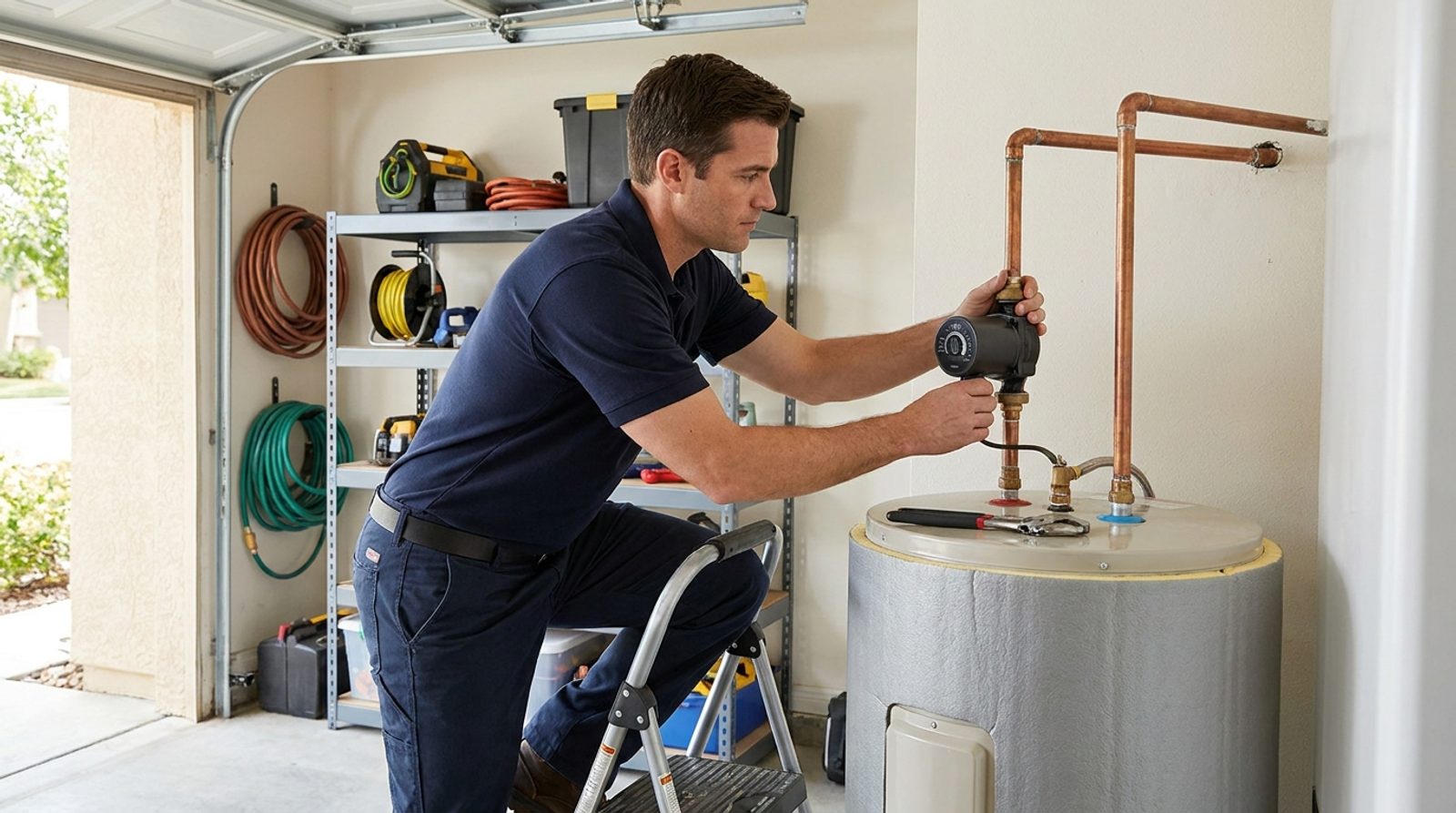
A recirculation pump moves water that’s already hot through a loop of pipe, so it never has time to sit and cool between uses. It does not heat any additional water. It just keeps hot water staged closer to the fixtures.
The pump usually mounts at or near the water heater. A sensor, timer, or push button tells it when to run. Once triggered, it pulls the cooled water sitting in the hot line back toward the heater and pushes freshly heated water forward, so the tap runs warm almost as soon as it’s opened.
The two main types of recirculation systems
The two setups work differently, and the right one depends on how the home is already plumbed.
| Feature | Dedicated return line | Comfort (crossover) valve |
|---|---|---|
| How it works | Separate return pipe carries water from the farthest fixture back to the heater | Pump uses the existing cold-water line as the return path via a valve |
| New pipe required | Yes, unless the home already has one | No |
| Typical installed cost | $800 to $1,500+, more if pipe has to be added | $400 to $900 |
| Best for | New construction or homes already plumbed with a return line | Existing homes being retrofitted |
| Tradeoff | Best performance and efficiency, but costly to retrofit | Easier and cheaper install, slightly less efficient |
Most San Diego homes weren’t built with a return line, which is why the comfort valve setup is the retrofit a plumber recommends most often. It’s a smaller job because nothing has to be opened up in the walls.
How much does a recirculation pump cost in San Diego?
A comfort valve retrofit runs roughly $400 to $900 installed, and that’s the number most homeowners here end up paying. The pump and valve kit itself typically costs $200 to $600, with labor making up the rest of the total.
A dedicated return line costs more. If the home already has a return line run from a previous build or renovation, adding the pump alone can land in the $800 to $1,500 range. If a return line has to be added from scratch, meaning a plumber opens a wall, floor, or ceiling to run new pipe, the cost climbs well past that and depends entirely on the distance and how accessible the framing is. A plumber needs to see the layout before quoting that job with any accuracy.
Do recirculation pumps actually save water and energy?
They save real water, and the amount adds up over a year. The EPA’s WaterSense program estimates that households can waste tens of thousands of gallons annually just waiting for water to heat up at the tap. A recirc pump cuts most of that waste by keeping hot water closer to where it’s used.
Energy is a more honest tradeoff. How the pump is controlled changes the math:
- On-demand (a button near the sink or a motion sensor) only runs the pump when someone’s about to use hot water. This saves the most water and energy, since the loop isn’t kept hot around the clock.
- Timer runs the pump during set hours, like mornings and evenings. It’s convenient but wastes some energy running when nobody needs hot water.
- Continuous or thermostatic keeps the loop hot at all times. It’s the most convenient and the least efficient, since the water sitting in the pipe loses heat constantly and the heater has to keep replacing it.
For most San Diego homes, on-demand is the smart pick. It delivers the fast hot water without the standby heat loss that shows up on the gas or electric bill.
Do recirculation pumps work with tankless water heaters?
Sometimes, and it depends on the model. A standard tankless heater needs a minimum flow rate before it fires up, and a recirculation loop can trigger short-cycling or a cold-water sandwich, that jarring blast of cold water between two bursts of hot, if the system isn’t set up correctly.
Many newer tankless units, including several models common in San Diego installs, include a built-in recirc mode designed to work with this exact setup. Others need a small dedicated buffer tank to smooth out the flow. A plumber should confirm compatibility before adding a recirc pump to an existing tankless system, and it’s worth raising during any tankless water heater installation if fast hot water matters to the household. Homeowners still deciding between heater types can compare the tradeoffs in this guide to tankless vs. tank water heaters in San Diego.
Is a recirculation pump worth it for a San Diego home?
It’s worth it for larger single-story homes, common on bigger lots in areas like Poway, homes with an ADU, or anyone who’s timed how long they wait for hot water and didn’t like the answer. San Diego imports most of its water supply, and conservation is a standing civic priority here, so cutting that daily waste at the tap has real appeal beyond just comfort.
It’s a harder case for smaller homes where the water heater already sits close to most fixtures. If the wait for hot water is only a few seconds to begin with, a recirc pump adds cost without much upside. There’s also a hard water factor to weigh: San Diego’s water is hard across most of the county, and scale buildup can shorten a recirc pump’s working life if the unit and maintenance schedule aren’t matched to that. Pairing the system with a water softener installation helps protect both the pump and the water heater from scale. Anyone dealing with frequent water heater issues already might want to read up on whether San Diego’s water is hard before adding another component to the system.
Homeowners weighing this against other plumbing upgrades can also check the San Diego plumbing cost guide for how a recirc pump stacks up against other projects, and anyone currently dealing with a cold shower should start with diagnosing no hot water before assuming a recirc pump is the fix.
Frequently asked questions
How does a hot water recirculation pump work?
It moves water that is already hot through a loop of pipe back toward the water heater instead of letting it sit and cool in the line. A sensor or timer triggers the pump, and hot water shows up at the tap in seconds instead of after a minute or two of running the tap cold.
How much does a hot water recirculation pump cost in San Diego?
A comfort (crossover valve) retrofit, the common option for existing homes, typically runs $400 to $900 installed. A dedicated return line system runs $800 to $1,500 or more when a return line already exists, and substantially more if new pipe has to be run through walls or ceilings.
Do recirculation pumps actually save water and energy?
They save real water at the tap by cutting the wait for hot water, and the EPA’s WaterSense program estimates that wasted wait can add up to tens of thousands of gallons a year per household. Energy savings depend on the control mode: on-demand saves the most, while continuous or timer settings can add to the water heating bill from standby heat loss.
Do recirculation pumps work with tankless water heaters?
Sometimes, but not automatically. Standard tankless units need a minimum flow rate to fire, and a recirc loop can cause short-cycling or a cold-water sandwich unless the unit has a built-in recirc mode, pairs with a buffer tank, or is verified compatible by a plumber before installation.
What is the difference between a dedicated return line and a comfort valve system?
A dedicated return line uses a separate pipe that carries water back to the heater, which gives the best performance but is expensive to add if the home was not plumbed for it. A comfort valve system uses the existing cold-water line as the return path, so it needs no new pipe and is the more common retrofit for existing San Diego homes.
Is a recirculation pump worth it for a San Diego home?
It is worth it for larger single-story homes, homes with an ADU, or anyone tired of running water down the drain while waiting for it to heat up. It is a harder case for small homes where the water heater already sits close to every fixture, since the wait is short to begin with.
Plumbing Pro San Diego connects homeowners with licensed plumbers available 24/7 across San Diego County. If a recirculation pump seems like the right fix for a slow-to-heat home, call (858) 400-4417 and ask for an assessment, or start with a tankless water heater installation or water heater service visit to have a plumber look at the home’s layout in person.
Need a Plumber in San Diego?
Licensed, insured plumbers, available 24/7 across San Diego County. Upfront pricing, no surprises.
Call (858) 400-4417Available 24/7, no voicemail, no answering service