
Hot water smells like rotten eggs? San Diego causes and fix
Hot water that smells like rotten eggs almost always points to your water heater's anode rod, not your city supply. Here's why, and how it gets fixed.
The short answer
- A rotten egg smell in hot water only, not cold, means the tank itself, almost always a reaction between the anode rod and naturally occurring bacteria.
- The anode rod protects the tank from rust by corroding first. That reaction can produce hydrogen sulfide gas, which smells like sulfur.
- A water softener often makes it worse, since softened water speeds up the reaction with a magnesium anode rod.
- The lasting fix is swapping the magnesium anode for an aluminum-zinc rod, sometimes paired with a tank disinfection.
- An anode swap with disinfection typically runs $200 to $400 in San Diego. Call (858) 400-4417 and we'll connect you with a plumber, often the same day.
If your hot water smells like rotten eggs but your cold water runs clean, the smell is almost always coming from inside your water heater, not your city supply. A reaction between the tank’s anode rod and naturally occurring bacteria produces hydrogen sulfide gas, the sulfur smell hitting you at the hot tap. It’s unpleasant, but it’s a fixable maintenance issue, not a sign your water is unsafe.
This guide covers why the reaction happens, how to tell your tank from your supply, and what actually makes the smell go away for good.
Why does hot water smell like rotten eggs?
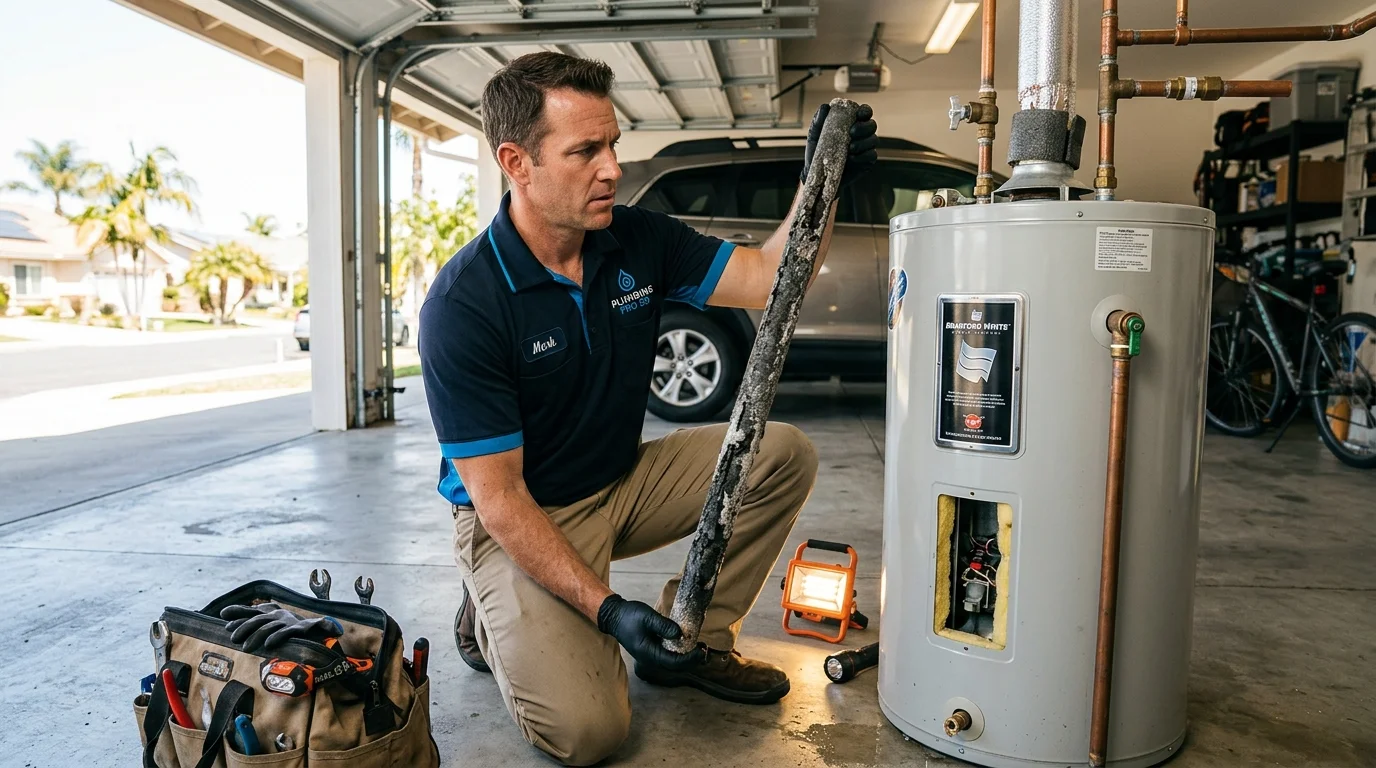
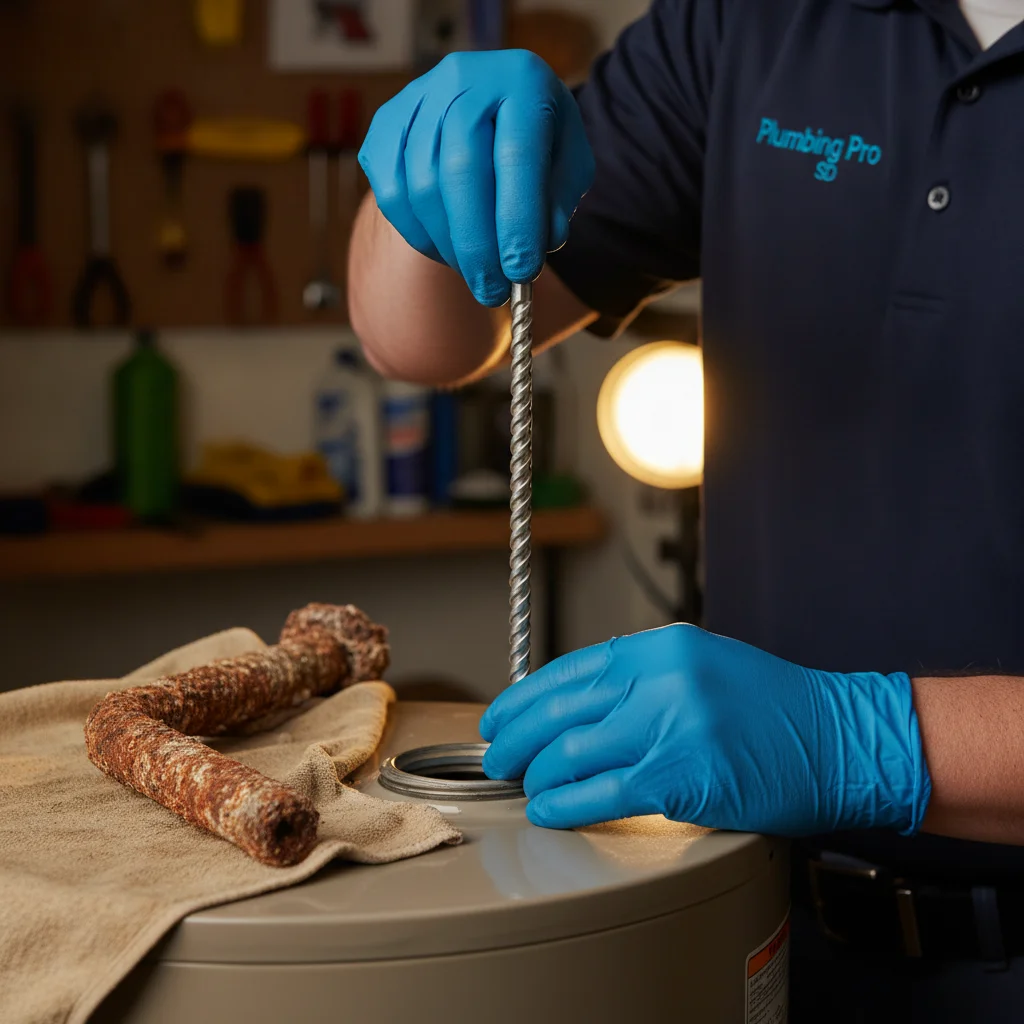
Every tank-style water heater has a sacrificial anode rod, usually magnesium or aluminum, running down the center of the tank. Its job is to corrode instead of the steel tank walls, which is exactly why it protects the tank from rusting through. That corrosion is a chemical reaction, and under the right conditions it also produces hydrogen sulfide gas as a byproduct.
The right conditions usually mean sulfate-reducing bacteria are present in the water, which is common and mostly harmless on its own. Those bacteria feed on sulfates and interact with the magnesium rod, and hydrogen sulfide is what comes out the other end. It’s the same compound that gives sulfur springs their smell, and your nose picks it up at tiny concentrations, so even a small amount reads as a strong rotten egg odor.
The tell that it’s this reaction and not something else is timing. It shows up steadily whenever you run hot water, it doesn’t come and go with the weather, and it’s stronger right after the tank has sat unused for a day or two, like overnight or after a vacation.
Why only the hot water, and not the cold?
This is the fastest way to tell where the problem lives. Cold water at most fixtures runs straight from your home’s supply line and never passes through the tank, so it never touches the anode rod or the bacteria reacting with it. Hot water passes through the tank on its way to the faucet, which is where the smell gets picked up.
So if only your hot tap smells, the tank is the source, not your incoming water. If both your hot and cold water smell like sulfur, that’s a different situation pointing to the supply itself, and it’s worth a call to your water provider or, if you’re on well water in one of San Diego’s rural inland communities, a water quality test. The San Diego County Water Authority is the right first call if you’re on a municipal connection and both taps smell.
Does a water softener make the smell worse?
Often, yes, and it catches people off guard because the softener usually gets installed for an unrelated reason, like scale buildup or spotty dishes. Softened water strips out the calcium and magnesium that would otherwise compete with the reaction at the anode rod, letting the bacteria work faster. Homes with hard water sometimes go years without a hint of the smell, then notice it within a few months of adding a softener.
That doesn’t mean the softener is the wrong call. San Diego’s water is genuinely hard, and softeners solve a real problem for pipes and appliances. It just means a softened home is more likely to need the anode rod addressed at the same time. Our water softener installation guide covers the tradeoffs in more detail.
How do plumbers get rid of the smell?
There are two pieces to a real fix, and doing only one tends to bring the smell back. The first is disinfecting the tank, usually with a chlorine solution circulated through the system to knock down the bacteria already built up. That brings fast relief, but it’s a temporary win, since the bacteria are still capable of repopulating around the rod.
The second, more durable piece is replacing the magnesium anode rod with an aluminum-zinc alloy rod. Aluminum-zinc rods react far less with sulfate-reducing bacteria, cutting off the hydrogen sulfide production at the source instead of just clearing out what’s already there. Most plumbers pair the rod swap with the flush and disinfection in the same visit. Simply pulling the anode rod and skipping replacement is sometimes floated as a shortcut, but it’s a bad trade: the tank starts corroding years ahead of schedule, and most manufacturer warranties require the rod to stay in place.
Will flushing my water heater fix the smell for good?
Flushing is genuinely good maintenance, and every tank benefits from it, but by itself it’s usually a temporary fix for a sulfur smell. Sediment builds up at the bottom of the tank over time, and flushing clears that out along with some of the suspended bacteria. The problem is that the reaction driving the smell happens at the anode rod’s surface, and a flush doesn’t change the rod itself.
Most homeowners who flush without touching the rod see the smell fade for a few weeks, then slowly return as the bacteria reestablish. If you want it gone for good, the flush needs to happen alongside the anode swap, not instead of it. See our guide on how long water heaters last for the bigger picture on tank upkeep and San Diego’s hard water.
What does it cost to fix in San Diego?
An anode rod swap with a tank flush and disinfection typically runs $200 to $400 installed. Where you land in that range comes down to access, a tank tucked into a closet or attic takes longer than one in an open garage, and how corroded the old rod is. A badly deteriorated rod can be harder to remove and sometimes needs a low-clearance replacement if your garage ceiling doesn’t leave room for a full-length one.
If your water heater is already 8 to 10 years old or older, ask your plumber for a repair-versus-replace read at the same visit instead of just paying for the anode swap in isolation. Our water heater team can give you both numbers on the same call, so you’re not guessing whether the fix is worth it on an aging unit.
When rotten egg smell means it’s time to replace, not repair
The smell by itself doesn’t mean your water heater is failing. Plenty of tanks develop the anode-bacteria reaction well before they’re close to the end of their working life, and an anode swap resolves it cleanly. But if the smell shows up alongside rust-colored hot water, a tank past 8 to 10 years old, or a unit that’s already needed a repair this year, it’s a different conversation, and spending on a new anode rod for a tank failing in other ways usually isn’t the best use of the money. Our water heater repair or replace guide walks through weighing that decision by age and symptom.
Frequently asked questions
Why does my hot water smell like rotten eggs but my cold water doesn’t?
Cold water usually runs straight from the supply line and never sits in the tank, so it never touches the reaction that causes the smell. Hot water passes through the water heater tank, where the anode rod and naturally occurring bacteria interact and produce hydrogen sulfide gas. If only your hot tap smells, the tank is almost always the source, not your home’s incoming water.
Is it safe to shower or wash dishes in water that smells like sulfur?
A sulfur smell from the tank’s anode reaction is a nuisance, not something treated as a health hazard on its own. It’s unpleasant, not dangerous, and normal use is fine while you get it fixed. The one case worth a closer look is if both your hot and cold water smell, since that points to the supply itself.
Does a water softener make the rotten egg smell worse?
Often, yes. Softened water strips out the calcium and magnesium that would otherwise slow the reaction between a magnesium anode rod and sulfate-reducing bacteria. Homes that add a softener sometimes notice the smell start or get stronger within a few months, even if the water heater never smelled before.
How do plumbers get rid of the rotten egg smell in a water heater?
The lasting fix is replacing the magnesium anode rod with an aluminum-zinc rod, which reacts far less with the bacteria that produce hydrogen sulfide. Many plumbers pair that with a full tank flush and a disinfection pass to clear out the bacteria already present. Chlorinating the tank alone without changing the rod often brings the smell back within a few months.
Will flushing my water heater fix the smell for good?
Flushing helps and it’s good maintenance regardless, but on its own it’s usually a temporary fix. The bacteria causing the reaction live on and around the anode rod itself, so unless the rod gets swapped for an aluminum-zinc one, sediment and bacteria tend to rebuild and the smell returns within a few months.
How much does it cost to fix a smelly water heater in San Diego?
An anode rod swap with a tank flush and disinfection typically runs $200 to $400 installed, depending on access to the tank and whether the old rod is corroded enough to need extra work getting it out. If your water heater is already past 8 to 10 years old and showing other signs of wear, it’s often worth getting a repair-versus-replace opinion at the same visit.
When to call a plumber
If it’s only your hot water and it’s been going on for more than a week or two, have a plumber look at the anode rod rather than living with it. Hardware-store chlorine treatments can mask it for a while, but they don’t touch the cause. Call us at (858) 400-4417 and we’ll connect you with a plumber, often the same day, who’ll tell you straight whether it’s a rod swap or something the tank’s age says isn’t worth fixing.
Areas this guide covers
We connect homeowners with licensed plumbers in these San Diego County communities.
Keep reading
Need a Plumber in San Diego?
Licensed, insured plumbers, ready across San Diego County. The plumber quotes you before any work starts.
Call (858) 400-4417Call any time, day or night, anywhere in San Diego County