
Last updated: May 9, 2026
How to find the main water shut off valve in your house
Learn how to find the main water shut off valve inside or outside your San Diego home, what it looks like, and how to turn it off during an emergency.

The short answer
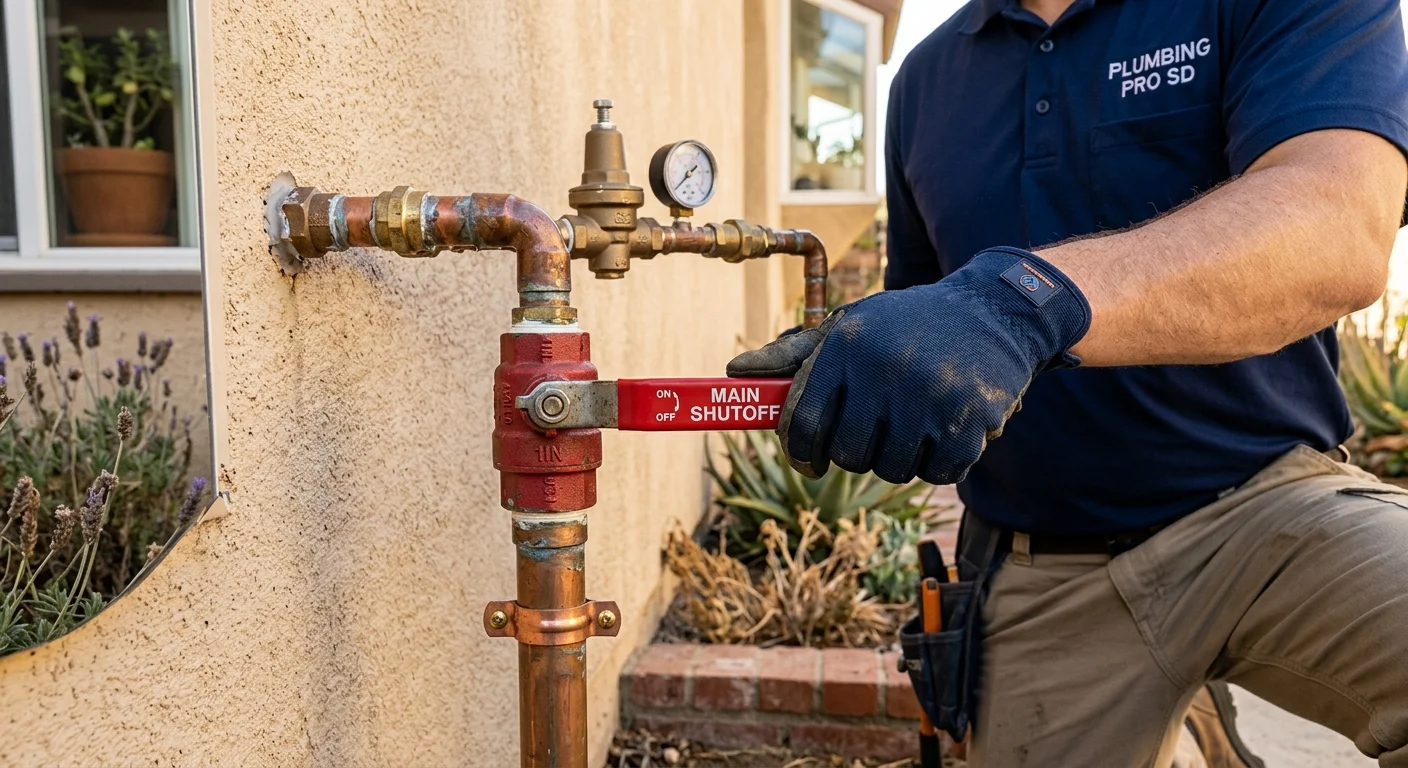
- Find your main shutoff before an emergency; in San Diego it is usually on an exterior wall near the water meter, or indoors in a garage or near the water heater.
- Follow the incoming water line from the street to find where it enters the house.
- To shut off: turn a round gate-valve handle clockwise until snug, or turn a lever-style ball valve 90 degrees so it sits perpendicular to the pipe.
- Do not force a stuck or corroded gate valve; you can break the valve or pipe and make the leak worse.
- If you cannot find it, or the valve is stuck or leaking, call a plumber; reach us at (858) 400-4417.
Knowing where your main water shut-off valve is before a pipe bursts can prevent thousands of dollars in damage. In San Diego homes it’s usually on an exterior wall near the meter, inside the garage, or near the water heater. Find it now, confirm it turns freely, and you’ll have a real plan if a leak ever forces the issue.
Why you need to know where your shutoff valve is
Your main water shut-off valve is the ultimate control point for your home’s entire water supply. It’s like the emergency brake for your plumbing system. When a major leak or burst pipe happens, turning off this valve stops the flow of water to your entire house, preventing catastrophic flooding and water damage. Without this knowledge, even a small leak can quickly escalate into a massive problem, leading to expensive repairs and potential mold growth.
Beyond emergencies, knowing its location is useful for planned plumbing work. If you’re tackling a DIY project like replacing a faucet or toilet, you’ll need to turn off the water to that specific fixture, but it’s always wise to know where the main shut-off is as a backup. Regular maintenance on your home’s plumbing often requires a full water shut-off, making this essential knowledge for every homeowner. Identifying it now, during a calm moment, will save you precious time and stress if a real emergency strikes. In San Diego, where homes range from historic bungalows to modern builds, the exact location can vary, so it’s not something to assume.
Common locations in San Diego homes
Finding your main water shut-off valve can sometimes feel like a treasure hunt, but there are common places to check in San Diego homes. Often, the valve is located where the main water line enters your property, typically on an exterior wall. For many San Diego residences, this means checking near the front of the house, usually on the side facing the street or in a utility area.
Outside the home
Look around the perimeter of your house, especially near the front or side where your water meter is located. You might find it mounted on an exterior wall, often in a recess or a utility box, usually made of plastic or concrete, near ground level. Some homes, particularly older ones, may have the valve in an underground box with a removable lid, close to the property line. This box might also contain your water meter. If you’re unsure where your water meter is, contact the San Diego County Water Authority, or your local water provider, and they can direct you.
Inside the home
For many homes, especially those with attached garages or utility rooms, the main shut-off valve can be found indoors. Check your garage, utility closet, or basement. It’s usually on the wall where the main water line enters the house. In some cases, it might be in a laundry room or even under a sink if the water main enters directly into that area. It’s common for the valve to be near your water heater or furnace, as these appliances are significant water users. Don’t forget to check crawl spaces too, though this is less common for the primary shut-off in newer builds. The key is to follow the incoming water line from the street into your home.
What a main water shutoff valve looks like
Main water shut-off valves come in a couple of primary styles, and recognizing them is crucial so you know how to operate them correctly. The two most common types you’ll encounter are gate valves and ball valves. Knowing which one you have will dictate how you turn off your water.
Gate valves
A gate valve is characterized by a round handle, similar to a spigot or outdoor hose bib. To turn off the water with a gate valve, you turn this handle clockwise, just like you would to turn off a garden hose. You’ll need to turn it several times until it’s snug. The internal mechanism uses a gate to block the water flow. The downside of gate valves, especially older ones, is that they can sometimes get stuck or corroded, making them difficult to turn. If you have an older gate valve and it’s hard to budge, don’t force it excessively, as you could damage the valve or the pipe.
Ball valves
Ball valves are generally newer and much easier to operate. They have a lever-style handle, typically red or blue, that lies parallel to the pipe when the water is on. To shut off the water with a ball valve, you simply turn the lever 90 degrees so that it’s perpendicular to the pipe. This action rotates a ball with a hole through its center, blocking the water flow. Ball valves are preferred because they are less prone to sticking and offer a quick, definitive shut-off. If your home has an older gate valve, you might consider having a plumber replace it with a more reliable ball valve. This can be a smart preventative measure, giving you peace of mind in an emergency.
How to turn it off in an emergency
When a plumbing emergency strikes, like a burst pipe or a major leak, every second counts. Knowing how to quickly and correctly turn off your main water supply can prevent thousands of dollars in water damage. The first and most critical step is to stay calm. Panic can lead to mistakes.
Once you’ve located your main water shut-off valve, identify whether it’s a gate valve or a ball valve, as described above. If it’s a gate valve, turn the round handle clockwise until it’s tight. Don’t apply excessive force if it feels stuck, as you could strip the valve or break the stem. If it’s a ball valve, simply turn the lever 90 degrees so it’s perpendicular to the pipe. This should immediately stop the water flow to your entire home.
After turning off the valve, you should hear the sound of rushing water stop, or see the leak diminish significantly. Next, if safe to do so, turn on a faucet in your house (preferably one on a lower floor) to drain any remaining water from the pipes. This helps relieve pressure and can minimize residual leaking. Once the water is off, you can then begin to assess the damage and call for professional help. Remember, if you’re dealing with a significant leak, especially one causing structural damage or electrical hazards, your safety is paramount. Don’t hesitate to call 911 if necessary, then reach out to us for emergency plumbing service. Knowing the signs you need an emergency plumber can also help you react quickly.
What to do if your shutoff valve is stuck or leaking
Finding your main water shut-off valve is one thing; being able to operate it is another. If you discover your valve is stuck, leaking, or doesn’t seem to work correctly, it’s crucial to address the issue before an actual emergency forces your hand. An old, corroded gate valve can be particularly stubborn, often refusing to turn or breaking when force is applied. If you twist the handle and nothing happens, or if it feels like it’s grinding, stop immediately. Applying too much force can cause the valve to break, leading to an even worse leak, or it might damage the pipe itself, resulting in a much more significant pipe repair job.
A leaking shut-off valve, even a slow drip, indicates a problem that needs attention. It could be a worn packing nut on a gate valve, a corroded body, or a faulty seal in a ball valve. Ignoring a small leak can lead to bigger problems down the line, including increased water bills, water damage, and even mold growth in the surrounding area. If your valve is stuck or leaking, your best course of action is to contact a licensed plumber. We have the specialized tools and expertise to safely free a stuck valve or replace a faulty one without causing further damage to your plumbing system. Proactive maintenance on your main shut-off valve is a small investment that offers immense peace of mind.
Can’t find it? When to call a plumber
You’ve searched high and low, checked all the common spots in your San Diego home, but your main water shut-off valve remains elusive. Don’t worry, you’re not alone. Sometimes, valves are hidden behind landscaping, buried under layers of dirt, or simply located in an unconventional spot due to older construction or previous renovations. If you’ve exhausted your search and still can’t locate it, it’s definitely time to call in the professionals.
A licensed plumber can efficiently locate your main shut-off valve using their experience and specialized tools. They know the typical layouts for homes in different San Diego neighborhoods and can often spot clues you might miss. Once located, they can ensure it’s in proper working order and even mark it clearly for future reference. Furthermore, if your valve is old, corroded, or you’re unsure if it’s functioning correctly, a plumber can inspect it and recommend whether it needs repair or replacement. Having a functional and easily accessible main water shut-off valve is non-negotiable for homeowner safety and peace of mind. Don’t wait for an emergency to discover you can’t turn off your water.
When to call us
If you’re struggling to locate your main water shut-off valve, suspect it’s faulty, or if you’re experiencing an active leak and can’t get the water to stop, it’s time to bring in the experts. Plumbing Pro San Diego is ready to connect you with help for any plumbing emergency or maintenance need. Call us at (858) 400-4417 and we’ll connect you with a plumber, often the same day.
Areas this guide covers
We connect homeowners with licensed plumbers in these San Diego County communities.
Keep reading
Need a Plumber in San Diego?
Licensed, insured plumbers, ready across San Diego County. The plumber quotes you before any work starts.
Call (858) 400-4417Call any time, day or night, anywhere in San Diego County