Last updated: August 5, 2026
Drain cleaning in Rancho Santa Fe: what a large lot changes
Drain cleaning on a large Rancho Santa Fe lot means longer private laterals and heavier root pressure. Here's how method choice and access should change.
The short answer
- Rancho Santa Fe's large lots mean unusually long private sewer laterals and drain runs compared to standard suburban parcels.
- Mature heritage trees increase root pressure on older clay or cast-iron lateral sections, which changes how a plumber should approach the job.
- Snaking, hydro jetting, and camera inspection solve different problems, and picking the wrong one on a long run wastes a visit.
- Private roads and easements common in Rancho Santa Fe can carry their own maintenance covenants, so confirm responsibility before assuming the standard homeowner-to-main rule applies.
- A drain cleaning visit should end with camera footage or a clear explanation of what was found, not just a cleared drain.
- Plumbing Pro San Diego connects Rancho Santa Fe homeowners with licensed and insured local plumbers experienced on large-lot properties.
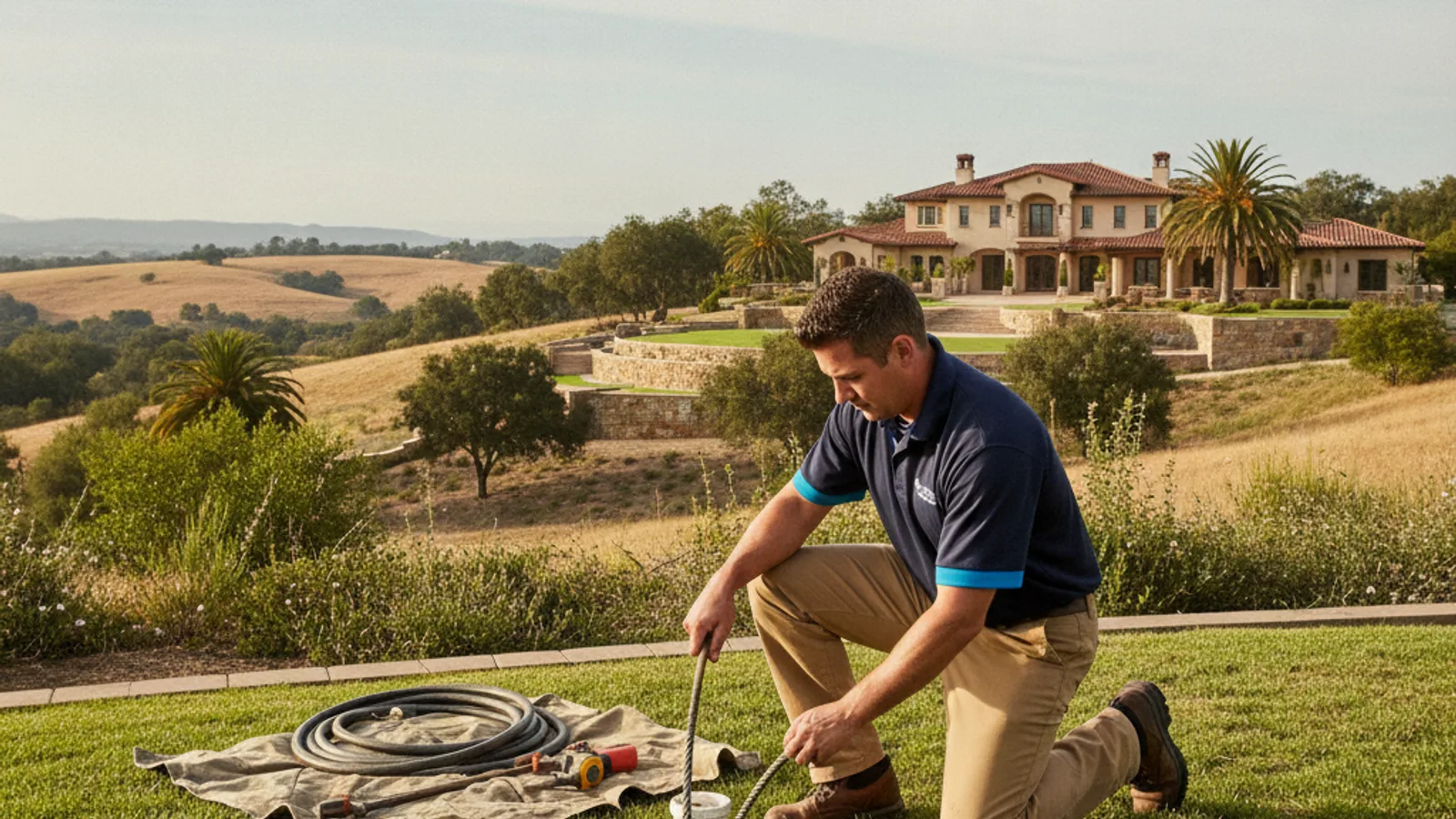
On a large Rancho Santa Fe lot, drain cleaning is a different job than it is on a standard suburban parcel, mostly because of distance. A property set back on a large lot can have a long private lateral before it reaches a public connection. That distance changes which tool actually solves the problem, and it’s the reason a generic drain cleaning guide doesn’t hold up out here.
Why drain cleaning is a different job on a large RSF lot
Rancho Santa Fe’s defining feature for plumbing purposes is lot size. Long private driveways, mature landscaping, and setback homes mean the sewer lateral connecting the house to the public main often has to travel much further than it would on a standard-sized parcel. More pipe length means more joints, more bends, and more places along the route where a problem can start.
Mature heritage trees are common throughout the covenant and surrounding areas, and tree roots seek out any moisture source, including the small amount that seeps through an aging joint or hairline crack in a clay or older cast-iron lateral. On a long run with several decades-old trees near the path, root intrusion becomes a more likely cause of a slow or blocked drain than it would be on a shorter, newer line.
None of this means every clog here is complicated. A kitchen sink backing up from grease is the same problem anywhere. But when the complaint is a slow-draining yard line, a recurring backup, or a blockage that a basic snake can’t seem to reach, the extra pipe length and root exposure are the first things worth asking about.
Snaking, jetting, and when each is wrong
Two tools handle most drain blockages, and picking the wrong one on a long run means paying for a visit that doesn’t actually solve the problem.
| Method | Best fit | Where it falls short |
|---|---|---|
| Cable snaking | A localized clog close to an access point | Doesn’t scour buildup along the full length of a long lateral |
| Hydro jetting | Grease buildup, scale, or root intrusion along an extended run | Not the right first step if the pipe has a structural crack or a bellied section that jetting could worsen |
| Camera inspection | Confirming the actual cause and location before choosing a method | Doesn’t clear anything by itself; it’s a diagnostic step, not a fix |
A drain cleaning visit on a short, simple line might reasonably start with a snake. On a long Rancho Santa Fe lateral, especially one with a history of root problems, starting with a sewer camera inspection before committing to a method is the more efficient approach, because it tells the plumber exactly what’s down there before equipment gets deployed. Hydro jetting is the right call once roots or grease buildup are confirmed along the run, not before.
Finding the blockage on a long run
Locating a blockage on a long private lateral takes more than a snake hitting resistance. A camera with a locator beacon lets the plumber pinpoint the exact depth and position of a problem from the surface, which matters when the alternative is guessing where to dig on a large property with mature landscaping in the way.
This step also protects the property itself. A long driveway, established trees, and landscaped grounds are expensive to disturb unnecessarily. Confirming the exact location before any excavation is discussed keeps the footprint of any eventual repair as small as possible.
If a property has never had a baseline camera inspection, that’s worth doing even before a problem shows up, simply so there’s a reference point for comparison if a blockage happens later.
Roots, and the maintenance interval question
Root intrusion is a progressive problem. A small amount of root hair finding its way into a joint today can become a significant blockage in a year or two as the roots continue to grow toward the moisture source. Once a camera has confirmed root intrusion in a line, the practical question becomes how often to have it checked or cleared again.
There isn’t a single verified maintenance interval that applies to every property, since pipe material, age, and the specific tree species and proximity all affect how fast the problem returns. Rather than relying on a generic average, ask the plumber to base a recommended interval on what your own camera footage has shown. A line with confirmed heavy root intrusion warrants closer monitoring than one that showed a clean pipe at its last inspection.
Our tree roots in sewer lines guide covers more on how root intrusion progresses and what the repair options look like once it’s advanced.
What the plumber should leave you with
A drain cleaning visit that ends with only “it’s clear now” leaves you no better prepared for next time. Ask for camera footage of the interior condition, or at minimum a clear verbal description of what was found: root intrusion, grease buildup, a bellied or sagging section, or a crack.
On a property with a private road or easement, also confirm who is actually responsible for maintaining the lateral. In many San Diego jurisdictions with public streets, the property owner maintains the line out to its connection with the public main. On a private road or easement, that standard rule can be layered with the road’s own maintenance covenant or an association’s governing rules, so check both rather than assuming the usual pattern applies unchanged.
Frequently asked questions
Why is drain cleaning different on a large Rancho Santa Fe lot?
The private lateral often runs much longer than a standard suburban parcel’s, and mature trees along the route raise the likelihood of root intrusion. Distance and root exposure both change which method actually solves the problem.
Should I ask for snaking, jetting, or a camera inspection first?
On a long line with any history of root problems, a camera inspection first is usually the more efficient choice. It confirms the cause before committing to snaking or hydro jetting.
How often should the line be checked?
There’s no single verified interval for every property. Base the schedule on what your own camera footage has shown, and ask the plumber to explain their recommendation.
Who maintains the lateral on a private road?
Confirm this specifically. Standard rules put the property owner in charge of the lateral out to the main connection, but a private road or easement can carry additional covenant requirements on top of that.
What should I ask for at the end of a drain cleaning visit?
Camera footage or a clear explanation of what was found inside the pipe. That record helps you or a future plumber make a faster call the next time the line acts up.
When to call us
A licensed plumber should evaluate a long or recurring drain problem with a camera before committing to a repair method, especially on a large-lot property with mature trees nearby. Our Rancho Santa Fe plumbing service page covers the full range of local services. Call (858) 400-4417 with what you’re seeing at the drain and roughly how long the affected line runs, and we’ll connect you with a licensed and insured local plumber.
Areas this guide covers
We connect homeowners with licensed plumbers in these San Diego County communities.
Keep reading
Need a Plumber in San Diego?
Licensed, insured plumbers, ready across San Diego County. The plumber quotes you before any work starts.
Call (858) 400-4417Call any time, day or night, anywhere in San Diego County