
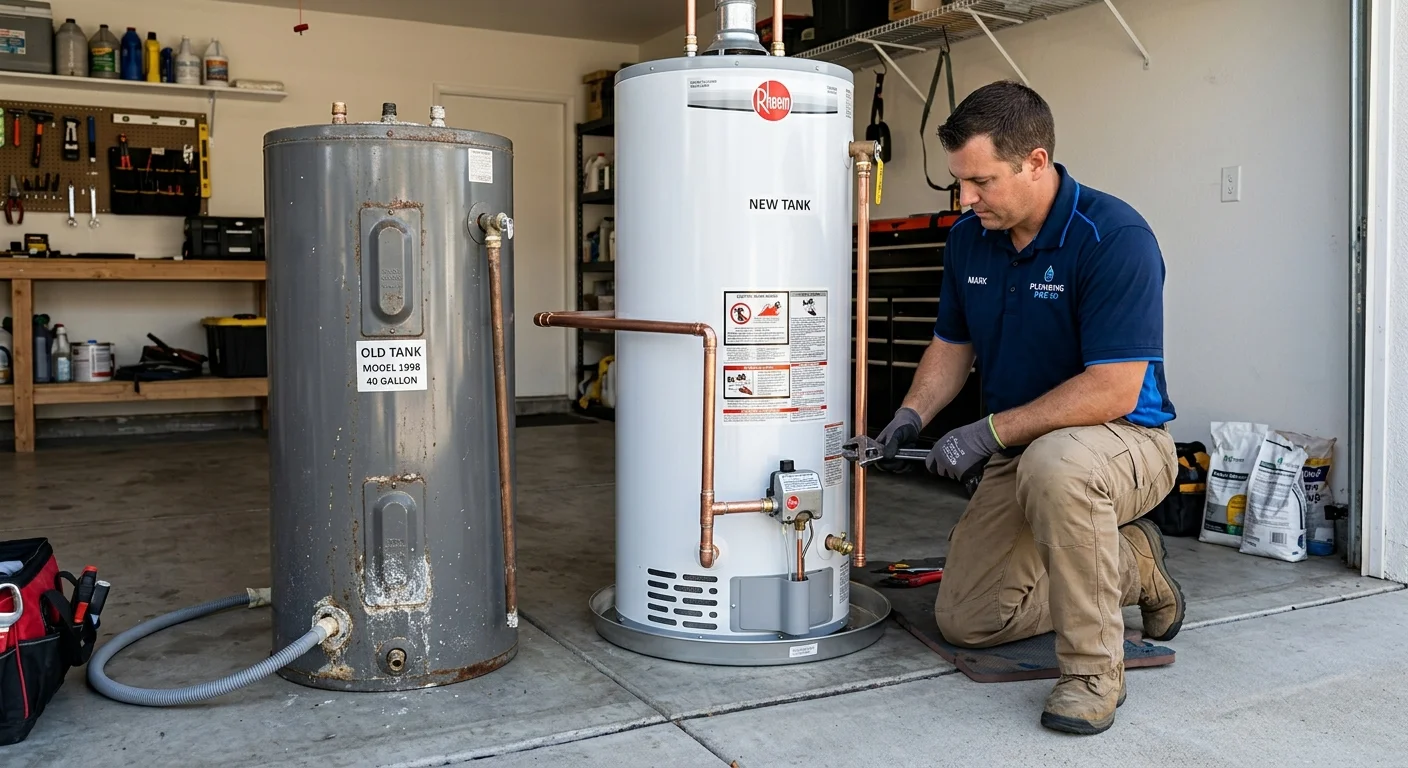
Heat Pump Water Heater Installation Requirements in San Diego
San Diego heat pump water heater install requires 240V circuit, 50+ sq ft space, clearance for airflow, noise distance from bedrooms. Here's what you need.
The short answer
- Heat pump water heaters need 240V dedicated circuit, 50+ square feet of surrounding space, and at least 18 inches of clearance on all sides for airflow.
- San Diego homes often need electrical panel upgrades ($500-$1,500) because the circuit isn't there or capacity is maxed out.
- Noise placement matters: HPWHs run 50-55 decibels; they belong away from bedrooms, living spaces, and properties under 50 feet away.
- Space requirements rule out HPWH in closets, attics, or tight crawlspaces; they need room for compressor operation and maintenance access.
- Venting location for combined units must clear roof/wall properly; indoor-only models need 50+ square feet but skip the venting work.
A heat pump water heater can cut your San Diego energy bill in half compared to a standard gas tank. Golden State Rebates offer $400 to $700 instant off. But before you commit, make sure your home can actually handle one.
Heat pump water heaters have specific installation requirements that trip up homeowners who don’t plan ahead. Not the complexity of the install itself—that part your plumber handles fine. The trap is the space and power your home has to offer.
This guide walks through exactly what you need: the electrical work, the physical space, the placement away from living areas, and the venting options. Do it right on the front end, and you’ll have a unit that runs efficiently and quietly for 15 years. Skip these checks, and you’ll end up with either a poor performer or a costly retrofit.
Heat pump water heaters need 240V power, and your home might not have it
Every HPWH runs on 240-volt electricity. Most gas water heaters don’t; they just need a gas line and a 120V outlet for the control board. This is the biggest gotcha for San Diego homeowners switching from gas.
A heat pump unit typically needs 20 to 60 amps of dedicated circuit capacity, depending on the model. “Dedicated” means that circuit doesn’t power anything else—just the water heater.
If your electrical panel has an open 240V breaker slot and the capacity, your electrician runs the wire and you’re done. Cost: $200-$400.
If your panel is maxed out or lacks a 240V circuit, you need a service upgrade. Your electrician expands the main panel, adds capacity, and runs the line. Cost: $1,200-$2,500. It’s the most expensive single requirement for a heat pump install in an older San Diego home.
Have your electrician check during the estimate. It takes 30 seconds; you’ll know the cost before signing.
You need 50+ square feet of clear space around the unit
Heat pump water heaters aren’t as compact as gas tanks. They’re taller, have a wider footprint, and critically, they need breathing room.
The compressor draws air from below and around the tank, cools it, and pulls heat from it. If you box it in—tight spaces like a closet, corner with stacked stuff, or crowded utility room—the air circulation fails. The unit has to work harder, runs less efficiently, and might not even reach its rated efficiency. In some cases, the compressor can shut down if it detects a lack of airflow.
A San Diego garage works fine if you have space. A basement utility room works. A packed coat closet does not. An attic does not (even if it’s technically 50+ sq ft, most attics don’t allow the airflow pattern HPWHs need).
Measure the footprint of the unit first. Then measure clear space around it: at least 18 inches on all sides. If you can’t find it, ask your contractor about a split heat pump model (condenser outside, tank inside) or a ductless indoor HPWH that can handle tighter spaces.
Noise matters: keep it away from bedrooms and neighbors
Heat pump water heaters are quiet compared to older units. They run at 50-55 decibels—roughly the sound of a refrigerator or a moderate AC unit.
But 50 decibels at midnight in an attached garage is louder than the gas heater that used to be there.
If the unit’s going in an attached garage and a bedroom is directly on the other side of the wall, ask your plumber about acoustic insulation during install. If it’s in a backyard shed or utility space, keep it at least 15-20 feet from bedroom windows if you can. Property lines matter too: if you’re close to a neighbor, distance is courtesy.
San Diego’s noise ordinance (SMC § 59.5.0601) sets residential limits at 55 decibels during the day and 45 at night. Your HPWH operates at 50-55 regardless of time, so placement and insulation matter.
Venting depends on your model choice
Heat pump water heaters come in three main types:
Indoor-only (pull from garage/utility room air). The cheapest option ($2,500-$3,500 installed, plus rebate). It pulls ambient air from the space, extracts heat, and vents the cooled air back into the same space. Your garage/utility room becomes slightly cooler in winter (minimal impact for most homes). Needs 50+ sq ft of clear space. No venting ducts needed. Works best in San Diego garages that stay between 50°F and 90°F year-round (almost all of them).
Split heat pump (condenser outside, tank inside). The condenser unit (about the size of an AC condenser) sits outside. The tank stays inside in a smaller footprint. Higher cost ($4,500-$6,500 installed) because you’re running refrigerant lines and ductwork between outdoor and indoor components. Best for homes where indoor space is tight or bedrooms are very close. More efficient in cold climates (not a major factor in San Diego).
Hybrid electric (backup electric resistance). Not technically a “heat pump” but worth knowing. These are smaller than full HPWHs, use less electrical capacity, but cost more to operate. They’re a middle ground if space is very tight.
For most San Diego homes, indoor-only is the right choice: lowest cost, simple install, and our climate keeps garage temperatures in the ideal range.
Placement logistics: where to put it
Best locations (in order):
- Garage against an exterior wall, away from the door and main living area (better noise distance, better airflow).
- Utility room or shed with good air circulation and 50+ sq ft.
- Basement utility corner (if you have one and it’s climate-controlled).
Don’t put it:
- In an attic (too hot/cold, not enough usable space).
- In a bedroom closet or interior closet (confined air, noise issue).
- In a garage corner directly behind a bedroom wall (sound insulation needed; cost goes up).
- Anywhere without 18 inches of clearance on all sides.
Getting the install right from day one
When you call a plumber for a heat pump estimate, ask these five questions:
- Is my electrical panel sufficient, or do I need an upgrade? (Get the cost upfront.)
- How much clear space do you need, and where do you recommend installing it?
- Will I need sound insulation, or is placement far enough from bedrooms?
- Which model type do you recommend for my home—indoor-only, split, or hybrid?
- What’s included in your install: drain pan, expansion tank, new relief valve, permits, and cleanup?
Get the answers in the estimate. Then decide if heat pump makes sense for your home. If it does, you’ll know exactly what to expect cost-wise and how the install will affect your space.
Call Plumbing Pro San Diego at (858) 400-4417 to discuss your home’s specific requirements and get a free estimate. We handle the electrical coordination with licensed electricians, manage all permits, and guarantee the install meets San Diego code.
Internal links for your decision
Ready to move forward? Check out our guide on water heater replacement costs in San Diego to understand total investment. Once installed, read about water heater expansion tanks (required for closed-system heat pumps) and California water heater rebates to confirm your incentive. Our water heater services page shows what’s included in a pro install.
If you’re still on gas and comparing options, water heater repair or replace walks the decision tree. And if you’re concerned about your home’s specific setup, our San Diego plumbing cost guide breaks down typical installs by scenario.
Frequently asked questions
These answers address the frontmatter FAQ items above.
Do I need a 240V circuit for a heat pump water heater in San Diego? Yes. Every heat pump water heater requires a dedicated 240V, 20-60 amp circuit (depending on model). If your home doesn’t have an available circuit with that capacity, your electrician will need to run one from the main panel. This is the #1 requirement, and roughly 40% of San Diego homes need a panel upgrade to accommodate it.
How much space do I need around a heat pump water heater? Heat pump units need at least 50 square feet of surrounding space and 18 inches of clearance on all sides for air circulation. The compressor pulls air from below and around the tank, so cramped spaces make it work harder and run less efficiently. An open garage corner works; a packed closet does not.
Can I put a heat pump water heater in my attic? Not typically. Attics are too small (they rarely have 50 sq ft of clear space) and too isolated for the exhaust airflow HPWHs need. Garages and utility rooms work. Attics get too hot in summer and too cold in winter for efficient operation. If you’re considering an attic install because of space, an indoor-only HPWH vented through the roof might be the answer, so ask your contractor.
How far does a heat pump water heater need to be from bedrooms? Install it at least 15 to 20 feet from bedrooms if possible. Heat pump units run at 50-55 decibels during operation, quieter than a typical air conditioner, but louder than a tank water heater. If it’s in an attached garage and bedrooms are on the other side of the wall, sound insulation (batt insulation plus acoustic drywall) can help. Ask your plumber to verify noise distance during the estimate.
What if my San Diego home doesn’t have room for a 50+ square foot space? You have two options: (1) relocate the water heater to a space that does qualify (often possible in a garage addition or outdoor weatherproof enclosure), or (2) install a hybrid electric water heater instead, which uses less space and has a 240V requirement but not the 50-sq-ft rule. Discuss this with your installer before ruling out a heat pump unit.
Does a heat pump water heater need venting in San Diego? It depends on the model. Traditional HPWH combined units pull ambient air and vent it back into the space (indoor-only) or vent air outside (split/ductless). Indoor-only HPWHs don’t require exterior venting but need the space to be at least 50 degrees Fahrenheit year-round (most San Diego garages qualify). If your garage gets too hot or cold, a split unit with outdoor condenser (roof-mounted or wall-mounted) works, but it costs more and requires venting installation.
Need a Plumber in San Diego?
Licensed, insured plumbers, available 24/7 across San Diego County. Upfront pricing, no surprises.
Call (858) 400-4417Available 24/7, no voicemail, no answering service