
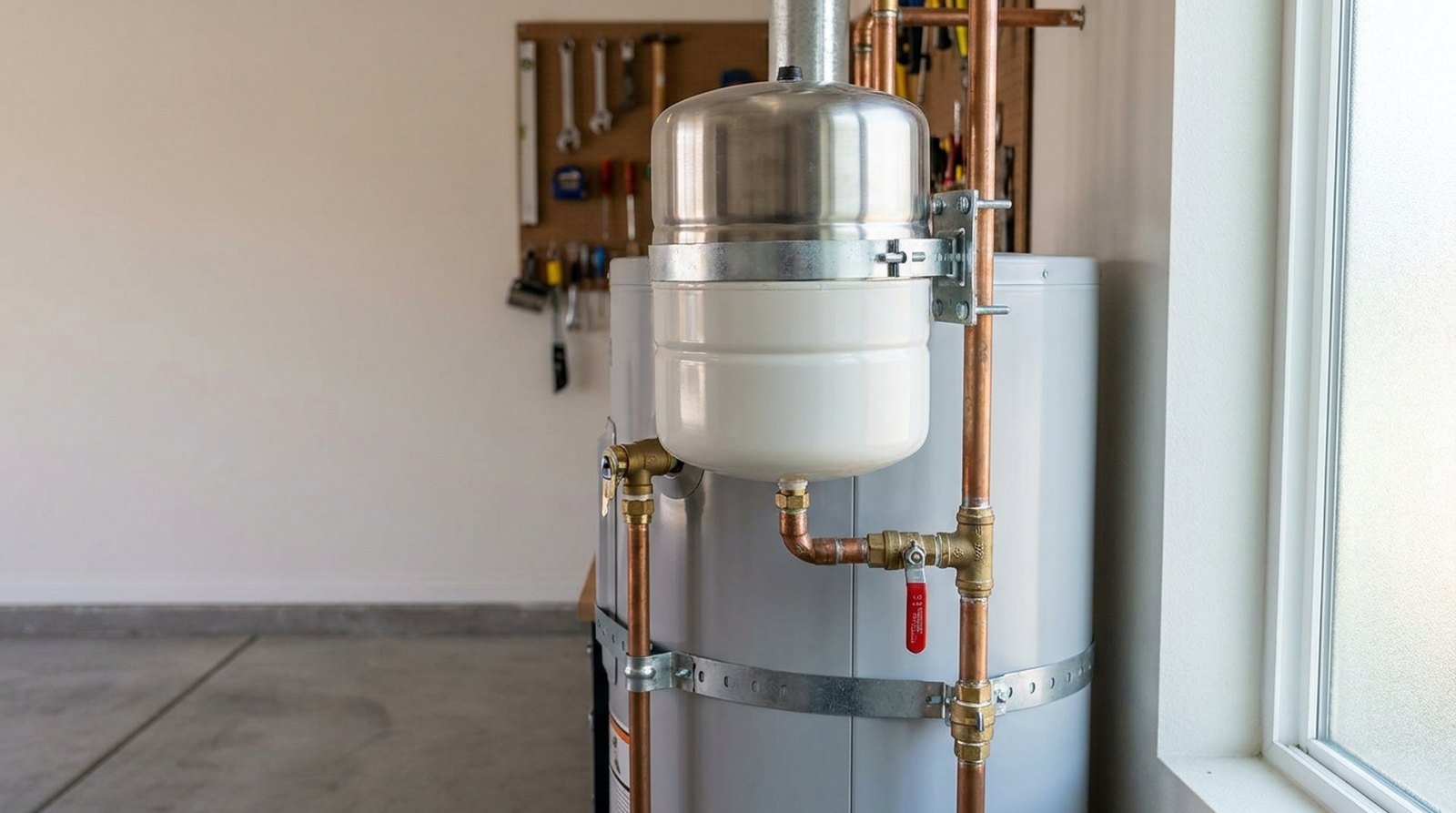
Water Heater Expansion Tank: Do You Need One in San Diego?
Water heater expansion tank basics for San Diego homes with a PRV or backflow valve, where CA code requires one and what a dripping relief valve means.
The short answer
- If your home has a pressure reducing valve or backflow preventer, California code requires a thermal expansion tank on the water heater.
- A dripping T&P relief valve is the classic sign the expansion tank is missing, failed, or waterlogged.
- Tap the tank: the top should sound hollow, the bottom solid. A tank that sounds solid all the way through has a failed bladder.
- Installed cost typically runs $150 to $350, and the tank part alone is about $40 to $60.
- Expansion tanks last 5 to 10 years, so replace it when you replace the water heater. Call (858) 400-4417 to have one checked or installed.
If your San Diego home has a pressure reducing valve or backflow preventer, California code requires a thermal expansion tank on your water heater, and going without one is why your relief valve drips. A lot of hillside and elevation neighborhoods here run high municipal water pressure, which means a PRV on the incoming line, which means a closed system with nowhere for heated water to expand. Once that’s the case, the expansion tank isn’t optional.
Here’s what an expansion tank does, how to tell if yours has failed, and when code actually requires one.
What does a water heater expansion tank do?
A water heater expansion tank absorbs the extra volume that hot water creates as it heats up. Water expands when it’s heated, and in an open system, that extra volume just pushes back out through the supply line toward the street. In a closed system, it can’t go anywhere, so the expansion tank gives it somewhere to go instead.
Inside the tank, a rubber bladder separates a pocket of compressed air from the water side. When the water heater fires and the water inside expands, it pushes into the tank and compresses that air pocket, which absorbs the pressure spike instead of letting it build up inside the water heater itself.
Do you need an expansion tank in San Diego?
Yes, if your home is a closed system, and a large share of San Diego homes are. A closed system means there’s a check valve, backflow preventer, or pressure reducing valve somewhere on the incoming water line that stops water from flowing back toward the street. Once that valve is in place, expansion has no outlet except into an expansion tank.
San Diego’s municipal water pressure runs high enough in many hillside and elevation zones that homes need a PRV just to bring pressure down to a safe range for household plumbing. If you’ve had high water pressure addressed with a PRV, or your home has a backflow preventer for irrigation or cross-connection protection, you’re on a closed system. California’s plumbing code (based on the Uniform Plumbing Code) requires a thermal expansion tank on the water heater in that setup, and it’s one of the most common items flagged during a San Diego water heater permit inspection.
What are the signs of a failed or waterlogged expansion tank?
A T&P relief valve that drips or discharges water is the clearest sign something is wrong with expansion control. The temperature and pressure relief valve on top of the water heater is a safety device, and it releases water when internal pressure climbs past its rating. On a closed system, that almost always points to a missing, undersized, or failed expansion tank rather than a bad valve.
Other signs include banging or knocking in the pipes right after the water heater cycles, which is a form of water hammer caused by the pressure spike, along with fluctuating water pressure throughout the house and a water heater that seems to be wearing out earlier than it should. A leaking water heater can also trace back to the same root cause, since repeated pressure spikes stress tank seams and fittings over time.
How do you test a water heater expansion tank?
Tap the tank with your knuckle from top to bottom. The top portion holds a compressed air pocket and should sound hollow. The bottom portion holds water and should sound solid. If the entire tank sounds solid all the way up, the internal bladder has likely failed, and the tank is waterlogged, meaning it’s filled with water and has no air cushion left to absorb expansion.
You can also check the small air valve on top of the tank, similar to a tire valve. Press it briefly. Air should come out. If water sprays instead, the bladder is torn or ruptured. A working tank should also be pre-charged with air to match your home’s static water pressure, typically around 50 to 60 PSI once a PRV has brought San Diego’s often-higher supply pressure down into a safe range.
How much does a water heater expansion tank cost in San Diego?
Installed cost typically runs $150 to $350, depending on how easy the water heater is to access and whether the pressure reducing valve needs attention at the same time. The tank itself is the smaller piece of that number, usually running $40 to $60 for the part. If a full water heater replacement is already on the table, adding or swapping the expansion tank at the same time is a minor add to that job rather than a separate visit.
Can you install an expansion tank yourself?
It’s a doable project for someone comfortable with basic plumbing work, but two things trip up DIY installs. First, the tank has to be pre-charged with air to match your home’s actual static pressure, not just installed at whatever pressure it ships with. Second, most San Diego jurisdictions require the expansion tank to pass permit inspection along with the water heater, and inspectors check for correct sizing and mounting, not just presence.
If you’re not confident measuring house pressure and pre-charging the tank to match it, or you’d rather not deal with the permit process, it’s worth having a plumber handle it as part of the water heater work.
When to replace the expansion tank
Expansion tanks generally last 5 to 10 years before the internal bladder wears out. Since that lifespan roughly tracks a water heater’s own lifespan, the simplest approach is replacing the expansion tank at the same time you replace the water heater, rather than waiting for it to fail on its own and drip through the relief valve first.
Need an expansion tank installed or checked?
If your relief valve is dripping, your pipes bang after the water heater runs, or you’re not sure whether your home even has an expansion tank, it’s worth having someone check. Licensed plumbers across San Diego County can test the tank, confirm whether your system is closed, and install or replace it to code.
Call (858) 400-4417 to get it looked at. We can connect you with licensed plumbers across San Diego County, day or night, for expansion tank work or full water heater installation and repair.
Frequently asked questions
Do I need a water heater expansion tank in San Diego?
You need one if your home is a closed system, meaning there’s a pressure reducing valve or a backflow preventer on the incoming water line. California plumbing code requires a thermal expansion tank on the water heater in that setup, because heated water has nowhere to expand once the supply line is closed off by a check valve. A large share of San Diego homes, especially in hillside and elevation zones with high municipal pressure, have a PRV for exactly this reason, which is why the expansion tank shows up so often on local permit inspections.
What happens if you don’t have an expansion tank?
Without an expansion tank on a closed system, water expands during every heating cycle with nowhere to go, and pressure inside the tank spikes. That extra pressure pushes water out through the temperature and pressure relief valve, so a dripping T&P valve is usually the first sign something’s missing. Left alone, the repeated pressure spikes also strain the water heater tank itself, fittings, and other fixtures, and can shorten the water heater’s lifespan.
Why is my water heater relief valve dripping?
A dripping T&P relief valve almost always means pressure inside the water heater is spiking higher than the valve is rated for, and the valve is doing its job by releasing it. On a closed system, that’s usually caused by a missing, undersized, or failed expansion tank. It can also mean the water heater thermostat is set too high or the existing expansion tank is waterlogged and no longer absorbing the expansion. The valve itself is rarely the problem, it’s a symptom of what’s happening upstream.
How do I know if my expansion tank is bad?
Tap the tank with your knuckle. The top half, which holds a pocket of pressurized air, should sound hollow. The bottom half, which holds water, should sound solid. If the whole tank sounds solid from top to bottom, the internal rubber bladder has likely failed and the tank is waterlogged, meaning it’s full of water with no air cushion left to absorb expansion. You can also press the air valve on the top of the tank. If water sprays out instead of air, the bladder has failed.
How much does a water heater expansion tank cost in San Diego?
Installed cost typically runs $150 to $350, depending on access to the water heater and whether the pressure reducing valve also needs attention. The tank itself is a relatively small part of that, usually $40 to $60. Cost climbs if the existing plumbing needs modification to fit the tank or if it’s being added to an older system that was never set up for one.
Can I install a water heater expansion tank myself?
It’s a doable DIY project for someone comfortable with basic plumbing, but the tank has to be pre-charged with air to match your home’s static water pressure, typically in the 50 to 60 PSI range in much of San Diego once a PRV is set. Get that wrong and the tank won’t absorb expansion properly even though it’s installed. It also needs to pass a permit inspection in most San Diego jurisdictions, so a licensed plumber is the safer call if you’re not confident sizing and pre-charging it correctly.
Need a Plumber in San Diego?
Licensed, insured plumbers, available 24/7 across San Diego County. Upfront pricing, no surprises.
Call (858) 400-4417Available 24/7, no voicemail, no answering service