
High Water Pressure in San Diego: Signs, PRV Fix, Cost
Normal is 50–70 PSI. Over 80 is a code violation that wrecks pipes and water heaters. How to test your pressure and what a pressure reducing valve costs.
The short answer
- Normal household water pressure is 50 to 70 PSI. Anything over 80 PSI is too high, and California plumbing code requires a pressure reducing valve at that point.
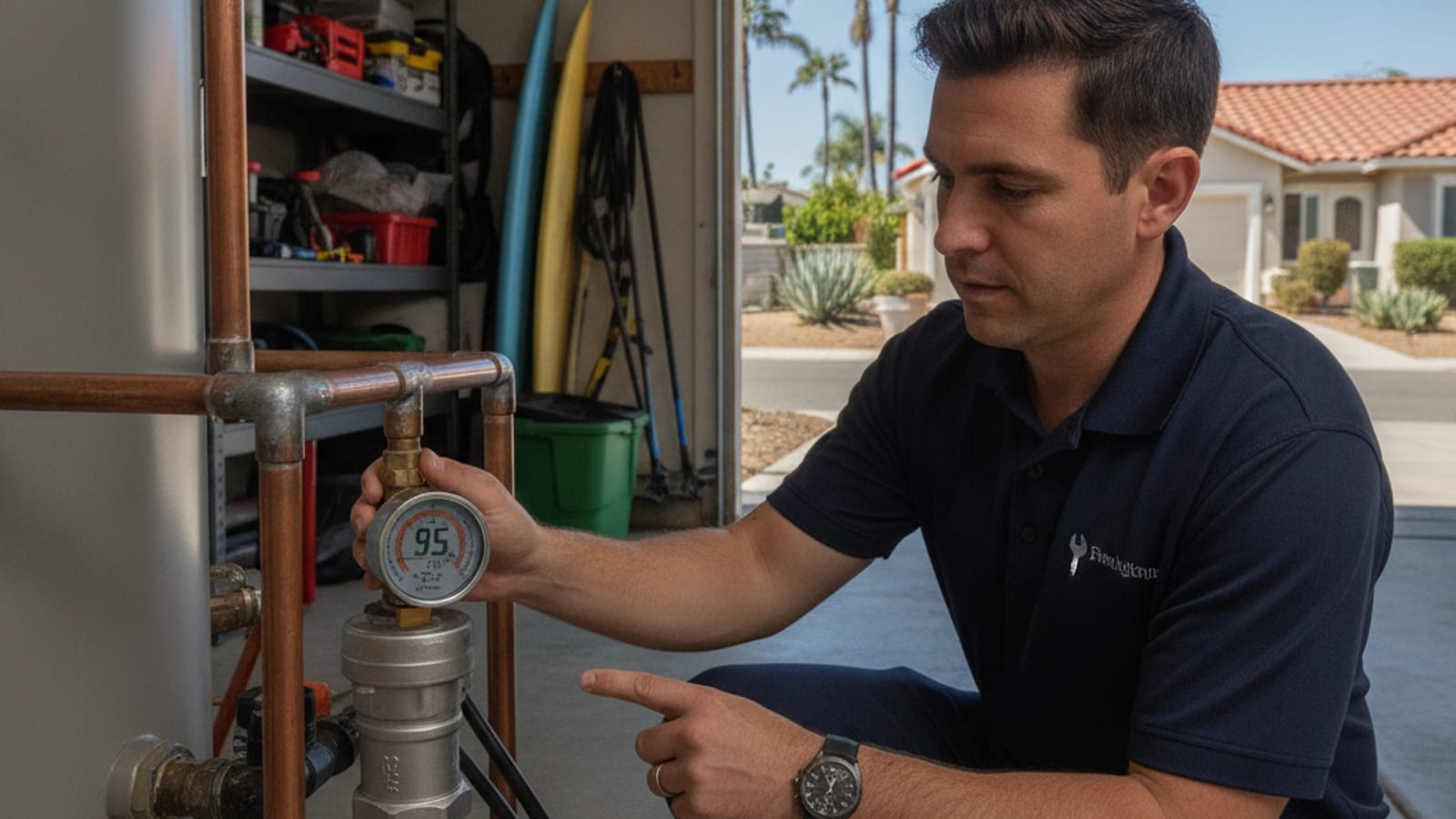
- You can test it yourself in about five minutes with a $12 gauge that screws onto any outdoor hose bib.
- High pressure shows up as banging pipes, running toilets, dripping faucets, a short water heater life, and a higher water bill.
- The fix is a pressure reducing valve (PRV) installed where the main line enters the house. Installed cost usually runs $300 to $650, and the valve lasts 10 to 15 years.
- If your pipes bang or your water heater relief valve keeps dripping, call (858) 400-4417 and a licensed San Diego plumber can test the pressure and quote the fix.
Normal household water pressure is 50 to 70 PSI. If your San Diego home measures over 80 PSI, the pressure is too high, it violates California plumbing code, and it’s quietly damaging your pipes, faucets, and water heater every day. Plenty of local homes read 90 to 120 PSI at the tap and the owners have no idea until a fixture fails or the water heater starts leaking.
The good news is this is one of the cheapest plumbing problems to diagnose and fix. Here’s how to test your pressure, what the warning signs look like, and what the repair costs in San Diego.
What counts as too high?
Anything over 80 PSI is too high. California plumbing code (Section 608.2) requires a pressure reducing valve on any home where the incoming pressure exceeds 80 PSI. The comfortable range for a house is 50 to 70 PSI. That’s enough for a strong shower without stressing the system.
Pressure matters because every fixture, supply hose, and appliance valve in your home is rated for a ceiling. Push past it and the weakest part gives first. A toilet fill valve, a faucet cartridge, a braided washing machine hose, the relief valve on your water heater. High pressure finds them one at a time.
Why so many San Diego homes get high pressure
Water districts pressurize their mains to reach the highest home in a service zone. If you live lower on the same hill, you receive more pressure than the system needs to deliver, because gravity adds to it on the way down.
San Diego County has a lot of elevation change packed into short distances. Homes below a water tank or reservoir often get the brunt of it. Neighborhoods like La Mesa, El Cajon, Santee, Poway, and Escondido sit on slopes where this is common, which is why so many local houses already have a PRV at the main. If yours doesn’t, or the one you have is old, the pressure climbs unchecked.
How to test your water pressure in five minutes
You don’t need a plumber for this part. Buy a water pressure gauge at any hardware store for about $12. It screws onto a standard hose thread.
- Pick an outdoor hose bib, ideally the one closest to where the water line enters the house. The washing machine valve works too.
- Make sure no water is running anywhere in the house, inside or out.
- Thread the gauge on and open the valve all the way.
- Read the needle. That number is your static water pressure.
Test in the early morning or late evening. Municipal pressure peaks when neighborhood demand drops, so that’s when you’ll catch the highest reading. If the gauge reads above 80, you have a problem worth fixing. If it swings wildly or reads very high, a failing PRV is a likely cause.
Signs your pressure is too high
If you haven’t tested yet, your house is probably already telling you. Watch for these:
- Banging or hammering pipes when a faucet or appliance shuts off. This is water hammer, and high pressure makes it loud.
- Toilets that run or refill on their own. High pressure wears out the fill and flush valves fast.
- Faucets that drip even after you’ve replaced the washer or cartridge.
- A water heater relief valve that weeps or drips from the discharge pipe. That valve opens to protect the tank from pressure.
- Banging when the irrigation system or washer cycles.
- Short fixture life. Supply hoses, valves, and cartridges that fail every couple of years instead of lasting a decade.
A spike can also cause a hidden leak inside a wall or under the slab, where the pressure works open a weak joint. If your bill jumps with no obvious cause, our guide to a high water bill with no visible leak walks through how to track it down, and a plumber can run leak detection to pinpoint it.
What high pressure costs you
Ignoring it is the expensive choice. Constant high pressure shortens the life of everything it touches. A water heater rated for 12 years might fail in 7. The temperature and pressure relief valve drips, which can signal a water heater problem and also void the manufacturer warranty. Pipe joints and supply lines fatigue and start to leak, and a burst supply hose behind a washing machine can flood a room in minutes.
You also pay for it on the meter. Higher pressure means more water through every open tap and every small drip, so a house running at 110 PSI wastes water it never uses.
The fix: a pressure reducing valve
The repair is a pressure reducing valve, usually called a PRV. It’s a brass valve installed on the main water line right where it enters the house, often near the meter or in the front yard. It takes the high incoming street pressure and steps it down to a steady, safe level, typically set around 60 PSI.
A PRV installed on a typical San Diego home usually runs $300 to $650. The valve is a small part of that cost. Most of it is the labor to shut off the main, cut in, fit and seal the valve, and test the new pressure. The price moves with valve size, how easy the main is to reach, and whether brittle old shutoffs should be replaced while the line is open.
A PRV lasts 10 to 15 years. When one wears out it can fail in either direction, letting pressure climb or choking it down to a trickle. If you have an existing PRV and your pressure now reads high or low, the valve is the first thing a plumber checks. A licensed plumber in the Plumbing Pro San Diego network can test your static pressure, confirm whether the valve is the issue, and set the replacement to the right level.
Water hammer and thermal expansion
Two related problems travel with high pressure, and both have real fixes.
Water hammer is the bang you hear when fast-moving water stops short at a closing valve. Lowering the home’s pressure with a PRV calms most of it. For the appliances that still trigger it, a plumber adds water hammer arrestors near the washing machine and dishwasher to absorb the shock.
Thermal expansion is the quieter one. Once a PRV or a check valve is on the line, your home becomes a closed system. Heated water in the tank expands and has nowhere to go, so the pressure inside spikes every heating cycle. California code requires a thermal expansion tank on the water heater in this situation. It’s a small steel tank that gives the expanding water a cushion. If you add a PRV without one, you trade a pressure problem for a dripping relief valve. A plumber installs both together so your water heater stays protected.
When to call a plumber in San Diego
Test your pressure first. It’s a five-minute, $12 check. If the gauge reads over 80 PSI, your pipes bang, or your water heater relief valve keeps dripping, that’s the signal to bring in a pro.
Call (858) 400-4417 and we’ll connect you with a licensed San Diego plumber who can confirm the reading, install or replace the PRV, add an expansion tank where code requires it, and set your home back to a steady 60 PSI. Plumbers in the network cover all of San Diego County, from the coast to the inland slopes where high pressure is most common.
For the opposite problem, weak flow instead of too much, read our guide to low water pressure in San Diego homes. And if you’re in an elevated inland area, find local plumbers in La Mesa where high static pressure is a routine call.
Frequently asked questions
What is considered high water pressure in a house?
Anything above 80 PSI is considered high and is a code violation in California. Normal residential pressure sits between 50 and 70 PSI. Many San Diego homes measure 90 to 120 PSI at the tap because the water district sets street pressure high enough to serve homes uphill, which leaves lower homes on the same line receiving more than they need.
How do I test my water pressure at home?
Buy a water pressure gauge for about $12 at any hardware store, screw it onto an outdoor hose bib or your washing machine valve, turn the water fully on with no other fixtures running, and read the dial. That number is your static pressure. Test in the early morning or evening when municipal pressure peaks, since pressure rises when neighborhood demand drops.
Does San Diego have high water pressure?
Many San Diego County neighborhoods do, especially homes that sit below a water tank or reservoir. Water districts pressurize their mains to reach the highest homes in a zone, so a house lower on the hill can receive 90 PSI or more. Elevated areas like La Mesa, El Cajon, Santee, Poway, and Escondido see this often, which is why a PRV is common on local homes.
How much does a pressure reducing valve cost in San Diego?
A pressure reducing valve installed on a typical home usually costs $300 to $650, depending on the valve size, where the main line is accessible, and whether old shutoffs need replacing at the same time. The valve itself is a small part of that. Most of the cost is the labor to cut into the main, fit the valve, and test the new pressure.
Can high water pressure damage my water heater?
Yes. High pressure forces the temperature and pressure relief valve on the water heater to weep or drip, shortens the tank’s life, and can void the manufacturer warranty. When a home has a PRV or check valve installed, California code also requires a thermal expansion tank on the water heater so heated water has somewhere to expand instead of spiking the pressure inside the tank.
What causes pipes to bang in the walls?
That banging is water hammer, a shock wave that happens when fast-moving water slams to a stop as a valve or appliance shuts off. High static pressure makes it worse. The fixes are lowering the home’s pressure with a PRV and adding water hammer arrestors near the appliances that trigger it, like the washing machine and dishwasher.
Areas this guide covers
We connect homeowners with licensed plumbers in these San Diego County communities.
Keep reading
Need a Plumber in San Diego?
Licensed, insured plumbers, ready across San Diego County. The plumber quotes you before any work starts.
Call (858) 400-4417Call any time, day or night, anywhere in San Diego County