
Water hammer in San Diego homes: causes and the fix
Water hammer is the loud bang in your pipes when a valve shuts fast. See why it's common in San Diego homes and how a plumber stops it for good.
The short answer
- Water hammer is the loud bang or shudder in your pipes right after a washing machine, dishwasher, or icemaker valve slams shut.
- Older San Diego homes are more prone to it because air chambers waterlog over time and rigid copper pipe doesn't absorb the shock like PEX.
- Occasional hammer is just noise, but years of it can loosen fittings and stress joints, especially with San Diego's higher static water pressure.
- The fix is a water hammer arrestor at the fixture, a pressure-reducing valve at the main, or both, depending on whether it's one fixture or the whole house.
- A single arrestor install runs roughly $150 to $350; a pressure-reducing valve replacement runs $350 to $650. Call (858) 400-4417 and we'll connect you with a plumber.
That loud bang or shudder you feel right after the washing machine or dishwasher shuts off isn’t the house settling. It’s water hammer, a pressure spike created when a fast-closing valve stops a moving column of water almost instantly, and it’s one of the most common noise complaints we hear from older San Diego homes.
What is water hammer, and why does it make that loud bang?
Water moving through a pipe has momentum, the same way a car has momentum at highway speed. When a valve somewhere in the system slams shut fast, that moving water hits a dead stop almost instantly. The energy it was carrying doesn’t just disappear. It converts into a pressure spike that travels back through the pipe, and you hear it as a bang, a shudder, or a series of knocks that fade out over a second or two.
Modern appliances are actually part of why this has gotten more common. Washing machines, dishwashers, and icemakers use fast-acting solenoid valves that snap shut in a fraction of a second, compared to the slower mechanical valves and taps that used to be standard. Rigid pipe makes it worse. Copper, common in San Diego homes built from the 1960s through the 1980s, doesn’t flex or absorb shock the way PEX does, so the pressure wave has nowhere to dissipate and rings through the whole line instead.
The tell that it’s water hammer and not something else is timing. It happens right after a specific appliance cycles, not randomly, and it’s usually loudest in the pipe closest to that fixture.
Why does water hammer happen more in older San Diego homes?
Homes built before the 1980s were often plumbed with air chambers, short capped sections of vertical pipe near a fixture that hold a pocket of trapped air specifically to cushion pressure spikes. They worked well when new. The problem is that trapped air slowly dissolves into the water over years of use, and once a chamber waterlogs, it stops cushioning anything. That’s why a house that was quiet for two decades can suddenly start banging with no plumbing work having been done at all.
Add San Diego’s water pressure into the mix. Supply pressure varies a lot by pressure zone, and homes at higher elevations or near a pump station often run well above the 50 to 70 psi range that’s easiest on a home’s plumbing, sometimes into the 80 to 100 psi range. The San Diego County Water Authority doesn’t set a single pressure for every address, so two homes a few blocks apart can have noticeably different baseline pressure. Higher static pressure means more energy released the instant a valve closes, so the same fast-closing dishwasher valve produces a louder, harder knock in a high-pressure home than in a low-pressure one.
Is water hammer just annoying, or can it actually damage my pipes?
Most of the time, it’s a noise problem, not a structural emergency. A bang that happens once in a while isn’t going to bring down your plumbing system. The concern is repetition. If a specific appliance triggers hammer every single time it runs, that’s the same joint, strap, and fitting absorbing a pressure spike hundreds or thousands of times a year.
Over years, that repeated stress can loosen a pipe strap, work a soldered joint at a fitting loose, or shorten the working life of the valve inside the appliance itself. In a home with already-aging supply lines, chronic hammer is one more stressor on joints that are also dealing with San Diego’s hard, mineral-heavy water and decades of thermal expansion and contraction. It’s rarely the single cause of a leak, but it’s a real contributor worth removing rather than tolerating for another ten years.
How do plumbers stop water hammer for good?
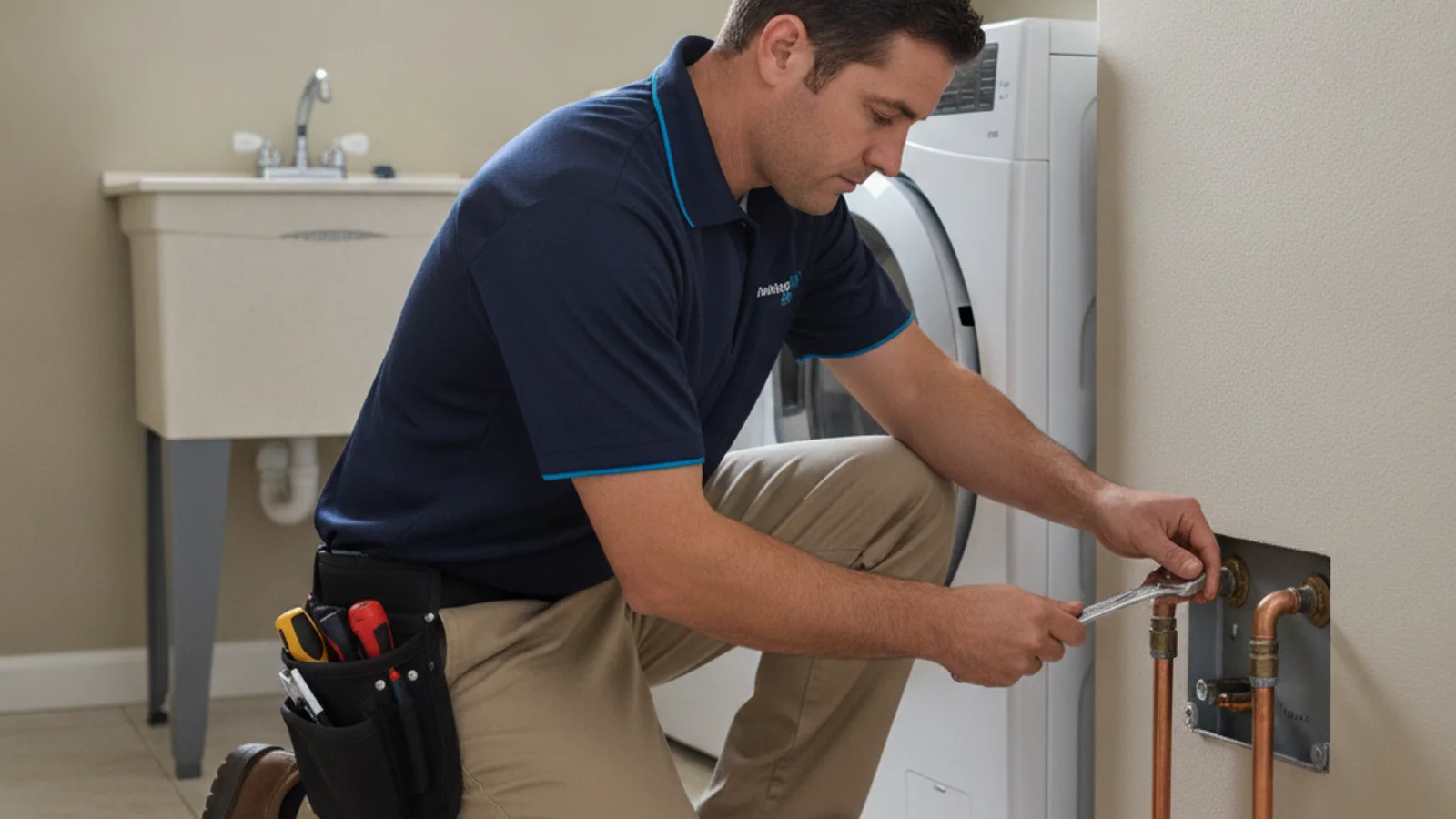
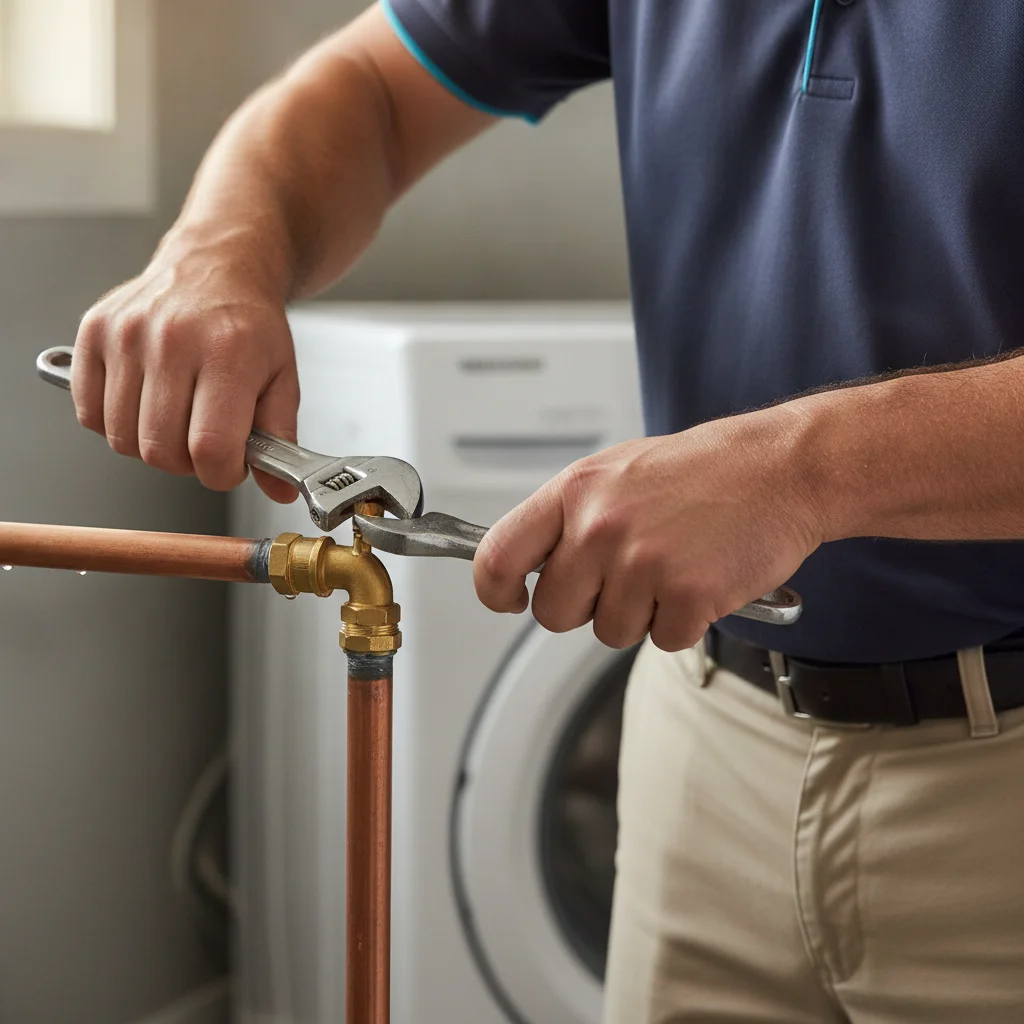
The fix depends on whether it’s one fixture or the whole house. If the bang traces back to a single appliance, a water hammer arrestor solves it directly. It’s a small sealed piston or bellows device installed on that fixture’s supply line, usually right at the washing machine box, dishwasher connection, or icemaker line. Unlike an old-style air chamber, it’s mechanically sealed, so it can’t waterlog the way a decades-old air pocket does. A plumber traces the noise to the exact fixture first, since guessing and installing arrestors everywhere wastes money on fixtures that were never the problem.
If the whole house shudders, or hammer shows up on multiple fixtures at once, high static pressure is usually the real root cause, and a pressure-reducing valve at the main is the fix that addresses every fixture at the same time instead of one at a time. Bringing incoming pressure down into the 50 to 70 psi range quiets hammer throughout the house and is easier on every joint, fixture, and appliance connected to your pipe repair history going forward. In homes with both problems, a plumber often installs both: a pressure-reducing valve to lower the baseline, and one or two arrestors on the loudest fixtures.
Can I fix water hammer myself before calling a plumber?
A couple of things are worth trying first. If your home still has old-style air chambers and the hammer started recently, shutting off the main, opening the highest faucet in the house and the lowest one (often an outdoor spigot or laundry tub), and letting the system drain fully can restore the air pocket in a waterlogged chamber. It’s a five-minute fix that sometimes quiets things down for months.
A hardware-store arrestor kit for a washing machine hookup is also a fair DIY project if the connection is accessible and you’re comfortable shutting off water and reconnecting a supply line. Beyond that, treat it as licensed-plumber territory. Installing arrestors inside a wall, soldering copper, or cutting into a main supply line to add a pressure-reducing valve without the right shutoff sequence and tools risks a flood a lot faster than it risks a wasted afternoon. Our guide on why a licensed plumber matters covers what a C-36 license actually protects you against on jobs like this.
What does water hammer repair cost in San Diego?
Pricing follows the same structure as most plumbing repairs: labor, parts, and access. A single water hammer arrestor installed on an accessible fixture typically runs $150 to $350, mostly driven by how easy the supply line is to reach. If a plumber needs to install arrestors on several fixtures in the same visit, expect a modest per-fixture discount over calling separately for each one.
A pressure-reducing valve replacement or new install at the main typically runs $350 to $650, depending on pipe size and whether the existing valve needs to be cut out or the install is straightforward. Some cities require a permit for main-line PRV work; a licensed plumber pulls it when needed so the work is inspected and code-compliant. If you’re not sure which fix your home needs, a diagnostic visit (usually $75 to $150, often waived if you move ahead with the repair) settles it before you pay for the wrong solution.
When to call us
If the bang happens every time you run one appliance, or your whole house shudders when any valve shuts, it’s worth a diagnostic visit rather than living with it for another decade. Chasing the wrong fix wastes money, and chronic hammer keeps stressing joints in the meantime. Call us at (858) 400-4417 and we’ll connect you with a plumber.
Frequently asked questions
What causes water hammer in a house?
Water hammer happens when a fast-closing valve, most often a washing machine, dishwasher, or icemaker solenoid valve, stops a moving column of water almost instantly. The water’s momentum has nowhere to go, so it converts into a pressure spike that slams through the pipe and reverberates as a bang or shudder. Modern appliance valves close faster than older mechanical ones, which is part of why the noise has gotten more common even in newer homes.
Is water hammer bad for your pipes?
An occasional bang is mostly a noise problem, not a structural one. But water hammer that happens every time you run a specific appliance is a repeated pressure spike hitting the same joints, straps, and fittings for years. Over time that can loosen pipe supports, work a soldered joint loose, or shorten the life of the valve inside the appliance itself.
How do you fix water hammer in an older San Diego home?
A plumber traces the bang to the specific fixture, usually a washing machine box, dishwasher line, or icemaker connection, and installs a water hammer arrestor there. It’s a small sealed piston or bellows device that cushions the pressure spike mechanically. If the hammer happens on several fixtures at once, a pressure-reducing valve at the main brings the whole system’s pressure down and quiets it everywhere.
Can high water pressure cause water hammer?
Yes. The higher the static pressure in your home’s supply, the more energy is released when a valve shuts fast. Some San Diego neighborhoods, especially at higher elevations, run supply pressure well above the 50 to 70 psi range that’s easiest on a home’s plumbing. A pressure gauge check at an outdoor spigot tells you where your home stands in a couple of minutes.
Do I need a plumber to install a water hammer arrestor?
A single arrestor on an accessible washing machine box is a fair DIY project using a hardware-store kit. Anything beyond that, arrestors on multiple fixtures, work inside a wall, or a pressure-reducing valve at the main, calls for a licensed plumber. Soldering copper or cutting into a main supply line without the right tools and shutoff sequence risks a flood, not just a wasted afternoon.
Areas this guide covers
We connect homeowners with licensed plumbers in these San Diego County communities.
Keep reading
Need a Plumber in San Diego?
Licensed, insured plumbers, ready across San Diego County. The plumber quotes you before any work starts.
Call (858) 400-4417Call any time, day or night, anywhere in San Diego County