
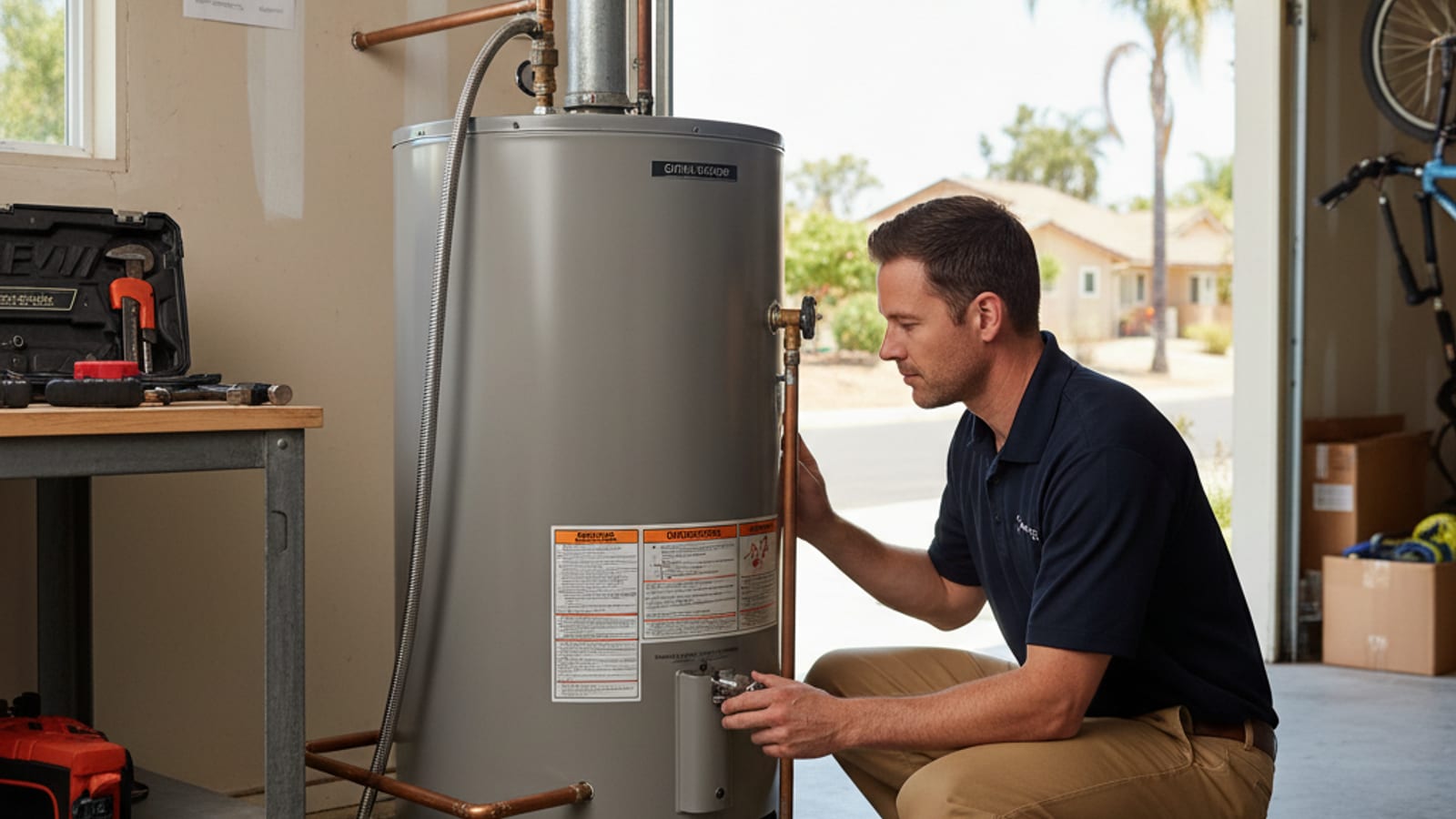
Water heater permit in San Diego: do you need one?
Yes, California requires a permit to replace a water heater. Here's the City of San Diego permit process, what the inspector checks, cost, and the DIY risk.
The short answer
- Yes, California requires a permit to replace a water heater, even a like-for-like tank swap.
- A standard tank swap uses the City of San Diego's Simple No-Plan Plumbing/Gas Permit, usually issued within about 2 business days.
- The permit runs around $115 in the City of San Diego as of 2026; check current City of San Diego fees for your exact amount.
- Inspectors check seismic strapping at two points, the T&P relief valve and discharge pipe, an expansion tank, drain pan, and proper venting.
- A tankless install does not qualify for the simple permit and needs a Plan plumbing/gas permit with plan review.
Yes, California requires a permit to replace a water heater, including a simple like-for-like tank swap. In the City of San Diego, a standard tank replacement uses the Simple No-Plan Plumbing/Gas Permit, which costs around $115 and is usually issued within about 2 business days. The permit exists so an inspector can confirm the install meets current California Plumbing Code, which covers seismic strapping, the relief valve, an expansion tank, and safe venting.
People skip the permit because it feels like paperwork on a job that takes a couple of hours. It isn’t. The permit is how the work gets inspected, and the inspection is what keeps a gas appliance in your garage from becoming a fire, flood, or carbon monoxide problem. Here’s exactly how it works in San Diego.
The City of San Diego water heater permit process
For a standard tank water heater swap, the City of San Diego issues a Simple “No-Plan” Plumbing/Gas Permit. “No-plan” means the work is routine enough that no drawings or plan review are needed, so it’s the fastest permit the city offers.
You apply online through the City of San Diego Development Services portal. After creating an account, you create an application and select the no-plan residential combination permit for a single-family home or duplex. Licensed plumbers and homeowners can both apply. The permit normally issues within about two business days, and you schedule the inspection once the invoice is paid.
If you live in an unincorporated part of San Diego County, like Lakeside, Ramona, Alpine, or Spring Valley, you go through the County of San Diego instead of the city. The process is similar, but the fees and portal differ. When in doubt, the plumber you hire should know which jurisdiction your address falls under.
One important catch: this simple, fast permit only covers tank water heaters. A tankless water heater installation does not qualify. Tankless conversions need a Plan Plumbing/Gas Permit with actual plan review, because they usually require a larger gas line and new venting. That’s more time and more cost, so factor it in if you’re switching to tankless.
What the inspector checks on a San Diego water heater swap
The permit isn’t the point. The inspection is. A San Diego inspector walks the install against the California Plumbing Code, and these are the items that fail jobs most often.
| What the inspector checks | Why it matters |
|---|---|
| Seismic strapping at two points | Straps in the upper and lower third keep the tank from toppling in a quake; a third strap is required over 52 gallons |
| T&P relief valve and discharge pipe | The temperature and pressure valve vents excess pressure; its drain line must run to a safe termination point |
| Expansion tank | Required on closed-loop systems (a check valve or backflow device between the house and meter) to absorb thermal expansion |
| Drain pan and drain line | Required for attic and floor installs so a leak drains away instead of into your ceiling or subfloor |
| Venting and combustion air (gas) | Bad venting is how carbon monoxide ends up indoors; gas units need adequate combustion air |
| Sediment trap (gas) | A short drip leg on the gas line keeps debris out of the burner valve |
| Gas or electrical connection | Proper, code-rated connectors and a correct shutoff |
Most failed inspections in San Diego come down to a missing expansion tank, missing or wrongly placed seismic straps, or a relief-valve drain that doesn’t terminate correctly. A plumber who does this every week installs all of it as a matter of course.
Gas vs. electric, and why SDG&E matters
In San Diego, your gas utility is SDG&E, not SoCalGas. That matters because most San Diego homes run natural gas water heaters, and gas units carry the requirements that fail inspections most often: venting, combustion air, the sediment trap, and the gas connection itself.
A gas water heater shares a flue or vent that has to be sized and pitched correctly so combustion gases leave the building. Get that wrong and you have a carbon monoxide risk. An electric unit skips the venting and gas-line items, but it still needs the strapping, T&P valve, expansion tank, and drain pan, and it needs a properly sized circuit and disconnect.
If you’re switching fuel types, say electric to gas, the job grows. You’re adding a gas line, venting, and combustion air, which changes the permit scope and the cost. That’s a real conversation to have before you buy a unit. For the full numbers, see our water heater replacement cost in San Diego breakdown and the broader San Diego plumbing cost guide for 2026.
Why the permit is worth it (and the cost of skipping it)
Around $115 and a two-day wait feels like friction on a job you want done today. Here’s the honest math on why it’s still the right call.
Resale. When you sell, an unpermitted water heater can surface in the buyer’s inspection or your disclosures. That stalls escrow while you either pull a retroactive permit and bring the install up to code, or negotiate a credit. Either way it costs more than the original permit.
Insurance. If an unpermitted, non-code install leaks and floods a room, or a bad gas connection causes a fire, your insurer can deny the claim. A few hundred dollars of permit and code work is cheap next to an uncovered loss.
Safety. The code items aren’t arbitrary. Seismic straps matter in earthquake country. Proper venting keeps carbon monoxide outside. An expansion tank keeps pressure from stressing your plumbing. The inspection is a second set of eyes confirming a gas appliance in your home is safe.
DIY legality. A homeowner can legally pull a permit and replace their own water heater in California. But you take on full responsibility for passing inspection, and a gas connection or venting mistake is the kind of error that hurts people. Many homeowners decide the permit and a licensed plumber together are the safer path. If you’re weighing a new unit anyway, our guide on water heater repair or replace helps you decide which way to go, and you may offset some of the cost with California water heater rebates.
If you want a permitted water heater replacement done right, with the permit pulled, the code items installed, and the inspection scheduled for you, call Plumbing Pro San Diego at (858) 400-4417 for a written estimate. You can also see our water heater services for what a full replacement includes.
Frequently asked questions
Do I need a permit to replace a water heater in California?
Yes. California requires a permit to replace a water heater, including a like-for-like tank swap. The permit triggers an inspection that confirms the install meets current California Plumbing Code, which protects against gas leaks, scalding, and earthquake damage. Skipping it is a code violation and can cause problems at resale and with insurance.
How much does a water heater permit cost in San Diego?
A Simple No-Plan Plumbing/Gas Permit in the City of San Diego runs around $115 as of 2026. The exact fee depends on your jurisdiction and the scope of work, so check current City of San Diego fees. Unincorporated areas use the County of San Diego, which has its own fee schedule.
Who pulls the water heater permit, me or the plumber?
Either can. A licensed plumber typically pulls the permit as part of the job and schedules the inspection for you. Homeowners can also apply through the City of San Diego online portal, but you take on responsibility for passing inspection. Most homeowners let the plumber handle it.
How long does it take to get a water heater permit in San Diego?
A Simple No-Plan Plumbing/Gas Permit is usually issued within about 2 business days of applying online. The work and inspection happen after the permit is issued and the invoice is paid. A tankless conversion takes longer because it needs a Plan permit with plan review.
What does the inspector check on a water heater replacement?
The inspector confirms seismic strapping at two points, a T&P relief valve with a proper discharge pipe, an expansion tank on closed-loop systems, a drain pan where required, and correct venting and combustion air on gas units. They also check the gas or electrical connection and, on gas heaters, a sediment trap. Anything missing fails the inspection.
What happens if I replace a water heater without a permit?
An unpermitted water heater is a code violation. It can stall a home sale when the inspection or disclosure turns it up, and an insurer can deny a claim if an unpermitted install causes water or fire damage. A retroactive permit and corrections usually cost more than doing it right the first time.
Do tankless water heaters need a different permit in San Diego?
Yes. A tankless conversion does not qualify for the Simple No-Plan permit. The City of San Diego requires a Plan Plumbing/Gas Permit with plan review, because tankless units often need a larger gas line and new venting. That adds time and cost compared to a straight tank swap.
Areas this guide covers
We connect homeowners with licensed plumbers in these San Diego County communities.
Keep reading
Need a Plumber in San Diego?
Licensed, insured plumbers, ready across San Diego County. The plumber quotes you before any work starts.
Call (858) 400-4417Call any time, day or night, anywhere in San Diego County