Last updated: August 3, 2026
Plumber in Mira Mesa: what hard water is doing to your pipes
A Mira Mesa plumbing guide to hard water damage, softener versus filtration, hidden leaks, and what to check yourself before calling a licensed plumber.
The short answer
- San Diego drinking water averages about 16 grains per gallon of hardness, and that mineral load is the root cause behind most of the fixture and appliance complaints in Mira Mesa.
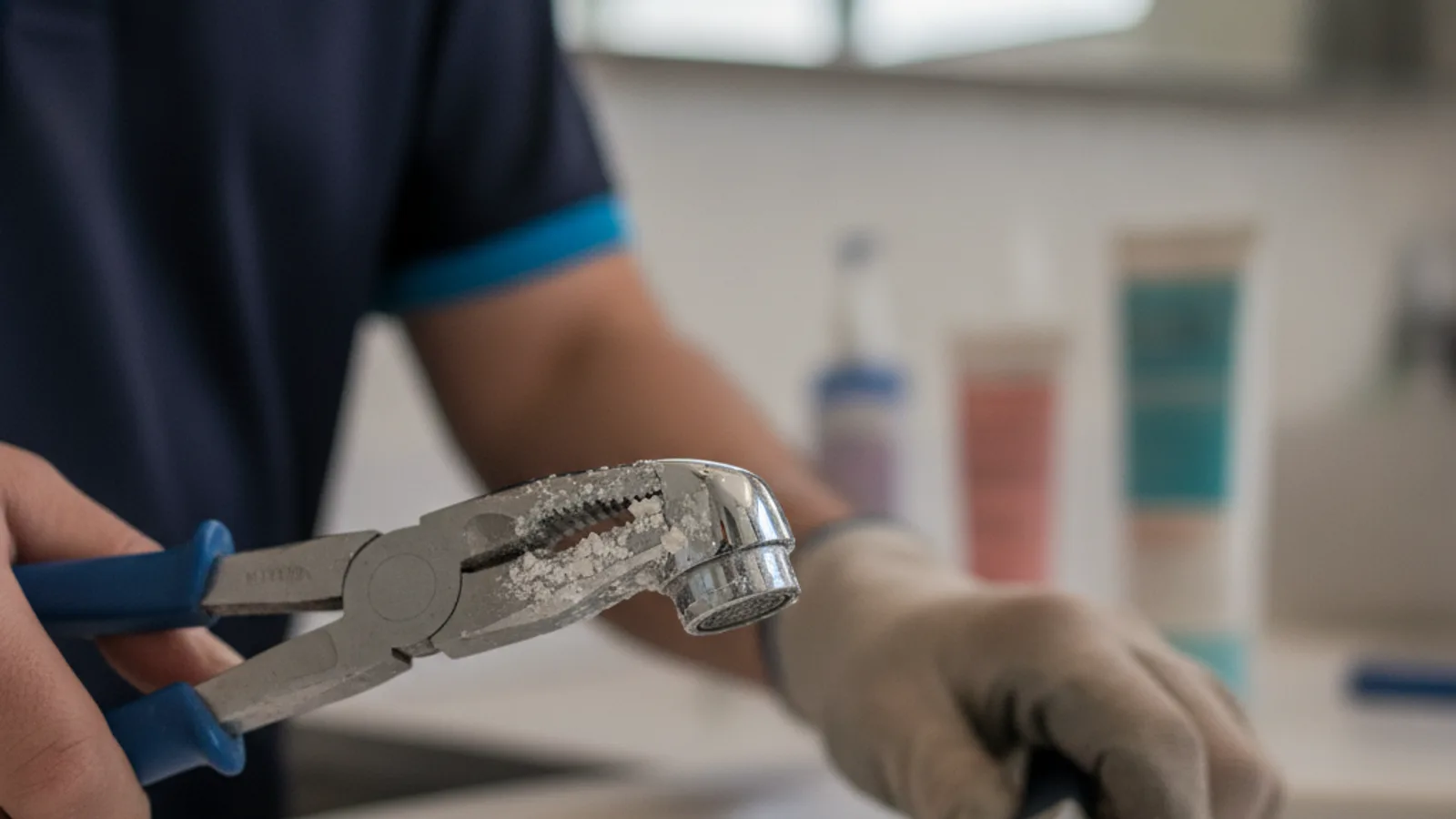
- Scale shows up first in showerheads, faucet aerators, and water heaters because those are where minerals concentrate and heat speeds deposit buildup.
- A softener treats the whole house for scale, while filtration targets taste and specific contaminants. They answer different questions and some homes need both.
- Hard water can mask a slow leak by leaving mineral evidence that looks like normal buildup instead of an active problem.
- Check your water bill and the toilet-tank-dye test yourself before booking a service call. It can save a wasted visit.
- Plumbing Pro San Diego connects Mira Mesa homeowners with licensed and insured local plumbers for softener, filtration, and leak work.
Mira Mesa’s plumbing complaints trace back to one shared cause more often than any other: mineral-heavy water working on pipes and fixtures every time a tap runs. San Diego’s drinking water averages about 16 grains per gallon of hardness, or roughly 276 parts per million, largely from imported Colorado River water carrying dissolved limestone. That single fact explains scaled showerheads, clouded glassware, and water heaters that groan before they fail, and it’s the most useful starting point for anyone searching for a plumber in this part of the county.
Mira Mesa sits on the mesa its name describes, a flat plateau above the surrounding canyons. Housing age and piping material vary from block to block and even house to house, so the way to know what your own home has is to check your permit history or ask a plumber to identify it on site rather than assume from the neighborhood. Hardness can also vary by location and seasonal demand, so check your household’s specific reading before choosing any treatment.
What the water is doing to your plumbing
Hardness itself isn’t a safety problem. Calcium and magnesium dissolved in the water are safe to drink and use. The trouble is what happens when that water sits, heats, or evaporates: the minerals stay behind as scale, and scale accumulates wherever water moves slowest or gets hottest.
Inside pipes, scale narrows the interior diameter over time, which can show up as gradually declining water pressure rather than a sudden drop. Inside a water heater, scale settles on the heating element and along the tank bottom, changing how evenly the unit heats and how much sediment gets stirred up when hot water draws down. None of this happens overnight. It’s a slow accumulation that most homeowners notice only once a fixture or appliance is already struggling.
Hardness readings vary by location and by seasonal demand, so the number on a countywide average won’t match every household exactly. For your specific reading, check the annual water quality report published by the agency named on your water bill. Our is San Diego’s water hard guide walks through what those numbers mean in more detail.
The fixtures that show it first
Scale doesn’t hit every fixture evenly. It concentrates wherever water sits, heats, or sprays through a small opening, so a handful of fixtures act as an early warning system for the whole house.
| Symptom | Likely cause |
|---|---|
| Showerhead spray pattern turns uneven or weak | Mineral deposits clogging the nozzle holes |
| White or chalky crust around faucet spouts | Scale left behind as water evaporates on contact |
| Water heater popping, rumbling, or ticking | Sediment layer forming on the heating element and tank floor |
| Glassware and dishes come out cloudy from the dishwasher | Mineral film that plain detergent can’t fully rinse away |
| Slow-filling toilet tank | Scale narrowing the fill valve or supply line |
| Faucet handle stiff or hard to turn | Mineral buildup inside the valve cartridge |
A single symptom on this list is usually cosmetic. Two or three together, especially the water heater sounds paired with cloudy dishes, are a reasonable trigger to have a plumber look at the whole system rather than chase one fixture at a time.
Softener or filtration, and how to tell which question you’re asking
These two systems get bundled together in casual conversation, but they solve different problems, and picking the wrong one means paying for equipment that doesn’t fix your actual complaint.
A water softener installation treats hardness. It uses an ion-exchange process at the point where water enters the house, swapping calcium and magnesium for sodium or potassium, so every fixture downstream gets water that won’t leave scale behind. If your complaint is scaled showerheads, a water heater working harder than it should, or dishes that never come out clear, hardness is the target and a softener is the tool built for it.
A water filtration system answers a different question: taste, odor, chlorine, sediment, or specific contaminants in the water itself. Filtration doesn’t remove hardness minerals the way a softener does. Some households want both, a softener at the main line to protect plumbing and appliances, and a filter at the kitchen tap for drinking water quality. Tell the plumber which problem you’re trying to solve, scale on fixtures versus how the water tastes, and let that drive the recommendation instead of guessing.
The leak that hard water hides
Hard water creates a strange side effect: it can make an active leak look like ordinary residue. A slow drip at a shutoff valve or a fitting under a sink leaves the same white or greenish mineral crust that shows up anywhere water evaporates repeatedly, so homeowners wipe it away and move on without realizing water is actually escaping.
This matters most around toilets, water heater connections, and any fitting that’s hard to see, like a line running behind a washing machine or under a slab. A leak detection visit uses acoustic equipment or a dye test to confirm whether water is actively moving, rather than relying on what the residue looks like. That distinction matters on a water bill too: a leak that’s been quietly running for weeks shows up as unexplained usage long before it shows up as a puddle.
If a fixture keeps developing the same crust no matter how often you clean it, treat that as a reason to check for an active leak, not just as another sign of hard water doing its usual work.
What to check yourself before calling
A few checks take five minutes and can tell you whether you’re looking at routine hard-water maintenance or something that needs a plumber now.
Read the water meter before bed with every fixture off, then read it again first thing in the morning before anyone uses water. Any movement between those two readings means water is flowing somewhere in the system even with nothing turned on. Put food coloring in a toilet tank and wait 15 minutes without flushing; color that appears in the bowl means the flapper is letting tank water leak into the bowl continuously, which can run up a water bill fast.
Also check your most recent water bill against your typical usage. A jump with no obvious explanation, no new appliance, no extra houseguests, is worth mentioning to whoever comes out, because it narrows down whether you’re dealing with a leak, a running toilet, or genuinely more water use than usual.
Frequently asked questions
Is Mira Mesa’s water hard?
San Diego drinking water averages about 16 grains per gallon countywide, and hardness can vary by location and seasonal demand. For your household’s specific number, check the water quality report published by the agency named on your water bill.
Should I get a softener or a filtration system?
A softener treats hardness across the whole house by removing calcium and magnesium. A filtration system addresses taste, odor, and specific contaminants instead. Decide based on which problem you actually have, and know that some homes install both.
Can hard water hide a leak?
Yes. Mineral crust from ordinary evaporation and mineral crust from a slow, active drip can look identical. A dye test or an acoustic leak check is the way to tell them apart with confidence.
What should I check before booking a plumber?
Read the water meter overnight with no water use, and run a dye test on any toilet tank. Movement on the meter or color in the bowl both point toward an active problem worth a service call.
Does hard water shorten a water heater’s life?
Scale changes how a water heater functions and can produce popping or rumbling sounds, but no verified lifespan figure exists for San Diego water heaters specifically. Watch the warning signs rather than an age estimate.
When to call us
A licensed plumber should confirm any leak, size a softener correctly for your household, and handle water heater sediment issues that go beyond a simple flush. Mira Mesa homeowners can also start from our Mira Mesa plumbing service page for the full range of local services. Call (858) 400-4417 with your address and what you’re seeing at the fixture, whether that’s scale, sound, or a suspected leak, and we’ll connect you with a licensed and insured local plumber.
Areas this guide covers
We connect homeowners with licensed plumbers in these San Diego County communities.
Keep reading
Need a Plumber in San Diego?
Licensed, insured plumbers, ready across San Diego County. The plumber quotes you before any work starts.
Call (858) 400-4417Call any time, day or night, anywhere in San Diego County