Last updated: May 3, 2026
Shower drain clogged? DIY fixes and when to call a plumber
Standing in shower water? Learn 5 fast DIY fixes for a clogged shower drain in San Diego. Know when to call a professional for tough clogs caused by hard water.
The short answer
- Shower clogs are a buildup of hair, soap scum, and San Diego hard-water mineral scale, usually in the P-trap just below the drain.
- Five fixes to try in 20 minutes: manual removal, a Zip-It tool, boiling water, baking soda and vinegar, and a plunger.
- A drain snake beats chemical cleaners, which corrode pipes and only burn a small tunnel through the clog.
- Professional drain cleaning for a standard shower clog runs about $150 to $350 in San Diego.
- Multiple slow fixtures, gurgling, backups, or a clog that keeps returning means a main line issue. Call (858) 400-4417.
You step into the shower to start your day, and by the time you’re done, you’re standing in a few inches of murky water. A slow or completely clogged shower drain is a frustrating problem that interrupts your routine and can lead to bigger issues if ignored. For many San Diego homeowners, this is a familiar sight, but the good news is that many clogs can be fixed with a little DIY effort.
This guide will walk you through why your drain is clogged, a few quick fixes you can try yourself, and the clear signs that it’s time to call in a professional.
Why shower drains clog (hair, soap scum, hard water)
A shower drain clog isn’t a random event. It’s usually a gradual buildup of a few key culprits that combine to form a stubborn blockage. Understanding what causes them is the first step to both fixing and preventing them.
The primary ingredient in almost every shower clog is hair. Long hair is especially good at weaving itself around the drain parts, creating a net that catches everything else. But hair alone isn’t the whole story.
Soap scum is the binding agent. Traditional bar soaps are made with fats and oils that react with minerals in the water to create a waxy, sticky residue. This residue lines your pipes and acts like glue, trapping hair and other debris that washes down the drain. Even liquid body washes and conditioners contain oils and silicates that contribute to this buildup over time.
Here in San Diego, we have a specific accelerator: hard water. According to the San Diego County Water Authority, our water is rich in minerals like calcium and magnesium. These minerals not only make soap scum form more easily but can also build up inside your pipes as limescale. This scale creates a rough surface that snags hair and debris more effectively, narrowing your pipes and making clogs more frequent and severe. Over years, this combination of hair, soap scum, and mineral deposits can create a dense, cement-like blockage that simple fixes can’t touch.
5 fixes you can try in 20 minutes
Before you reach for the phone, a few simple techniques can often clear a minor-to-moderate shower drain clog. These methods use basic tools and household items and are most effective when the blockage is new and located close to the drain opening. Always wear gloves, as this can be a messy job.
1. Manual Removal
Often, the simplest solution is the most effective. Unscrew or pull off the drain cover. You might need a screwdriver for older models. Using a flashlight, look into the drain. If you can see a clump of hair, use your gloved fingers or a pair of needle-nose pliers to pull it out. It’s not glamorous, but it frequently solves the problem instantly.
2. The Zip-It Tool
A “Zip-It” or similar plastic drain cleaning tool is a cheap and incredibly useful gadget to have on hand. It’s a long, flexible strip of plastic with small barbs. Push it down the drain as far as it will go, then slowly pull it back up. The barbs will snag onto the hair and gunk, pulling a significant portion of the clog out with it. Repeat a few times until you’re no longer pulling out debris.
3. Boiling Water
If the clog seems to be caused by greasy soap scum or conditioner buildup, boiling water can help melt it away. Boil a full kettle of water and carefully pour it directly down the drain in two or three stages. Be cautious with this method if you have PVC pipes; extremely hot water can soften the plastic. For PVC, use the hottest water from your tap instead.
4. Baking Soda and Vinegar
This classic combination creates a fizzing reaction that can help dislodge gunk. First, pour about a cup of baking soda down the drain. Follow it with a cup of white vinegar. It will foam up immediately. Place the drain cover over the opening to contain the reaction and let it sit for 15-20 minutes. Finally, flush the drain with hot water.
5. Use a Plunger
A plunger can be surprisingly effective on a shower drain. First, remove the drain cover. To get a good seal, add enough water to the shower floor to submerge the lip of the plunger. You may also need to cover the shower’s overflow opening with a wet rag to direct all the pressure toward the clog. Plunge vigorously for about 30 seconds. The pressure can often dislodge the blockage.
When boiling water, vinegar, and baking soda actually work
The baking soda and vinegar volcano is a popular home remedy, but it’s important to have realistic expectations about its power. This method, along with simple hot water flushes, works best as a preventative measure or on very new, minor clogs.
These gentle solutions are effective against fresh buildups of soap scum, shampoo, and conditioner. The hot water helps to melt the waxy, greasy components, while the chemical reaction from baking soda and vinegar creates pressure and agitation that can loosen and break apart soft, recent accumulations. If your shower starts draining just a little bit slower than usual, this is the perfect time to try this trick.
However, these methods have their limits. They will not dissolve a dense, matted ball of hair, which is the structural core of most tough shower clogs. They also have virtually no effect on the hard mineral scale that builds up in San Diego pipes over the years. A clog that has been forming for months or years, combining hair, hardened soap scum, and mineral deposits, will not be moved by a bit of fizzing. If you try this method and see no improvement, it’s a strong sign that the clog is more substantial than a simple home remedy can handle. For more tips on keeping your drains clear, see our guide on how to prevent clogged drains.
Why drain snakes work better than chemical cleaners
When DIY solutions fail, many people are tempted to pour a bottle of chemical drain cleaner down the shower. We strongly advise against this. While these products promise a quick fix, they often cause more harm than good and are rarely as effective as a mechanical tool like a drain snake.
Chemical drain cleaners work by creating a powerful caustic reaction to dissolve organic matter. This reaction generates significant heat, which can damage your pipes, especially in older homes with PVC or galvanized steel plumbing. The chemicals are also highly toxic, posing a risk to your family and pets and creating noxious fumes in a small bathroom. Worse yet, they often only burn a small tunnel through the clog. This restores some flow temporarily but leaves the bulk of the blockage in place, guaranteeing the clog will return soon. If the chemical cleaner fails completely, you’re left with a drain full of corrosive liquid, a dangerous situation for both you and any plumber you call for help.
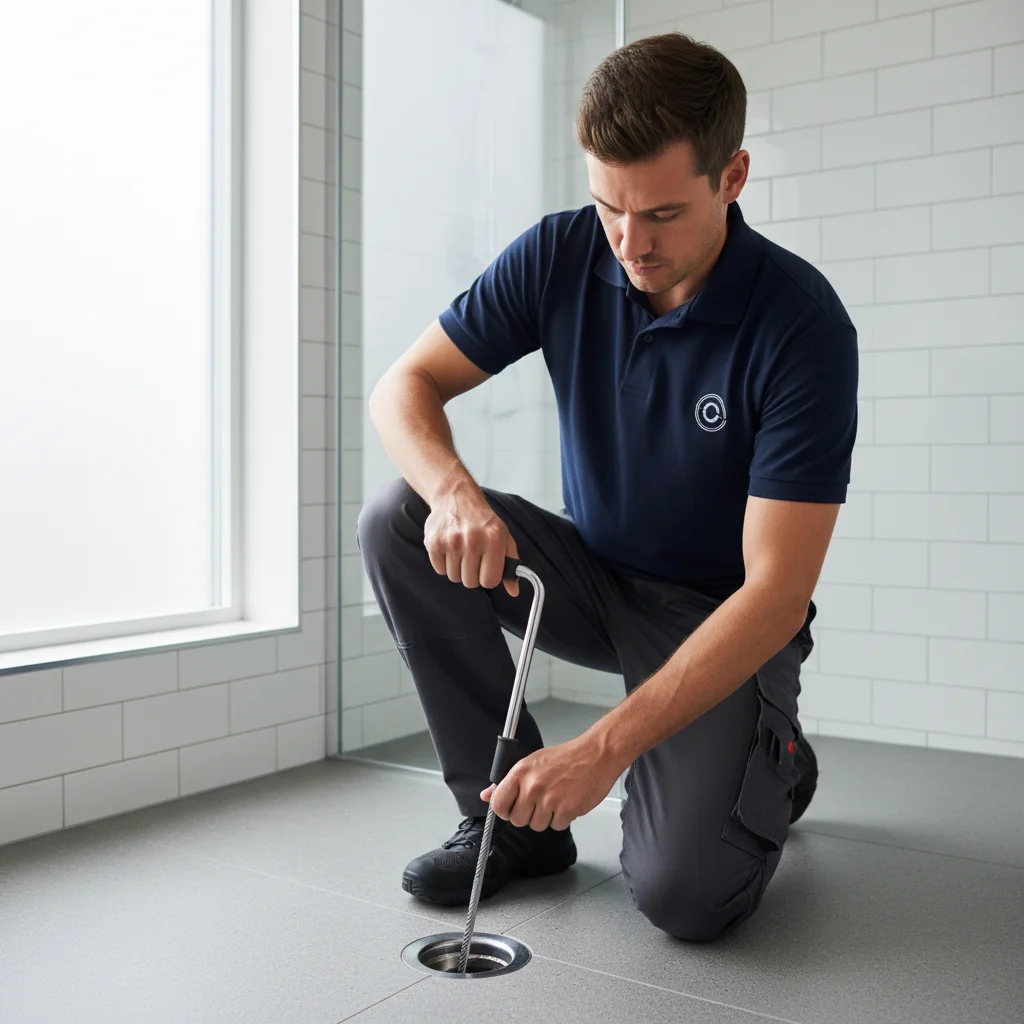
A drain snake, or auger, is a much safer and more effective tool. It’s a long, flexible steel cable that you feed into the pipe. When it reaches the clog, you can use it to either break up the obstruction or hook onto it and pull it out completely. This physical removal of the clog is a far more permanent solution than what chemicals offer. While small, hand-cranked snakes are available for homeowners, professional plumbers use powerful, motorized augers that can reach much deeper into your plumbing system to clear even the most stubborn blockages.
Signs the clog is deeper than the trap
Most shower clogs happen in the P-trap, the U-shaped pipe directly beneath the drain. Its purpose is to hold water and block sewer gases from entering your home, but its curves also make it a prime spot for hair and debris to collect. The DIY fixes we’ve discussed are designed to work on these shallow clogs. But sometimes, the problem lies much deeper in your home’s drainage system.
Here are four clear signs that your clog is more serious than a simple P-trap blockage:
- Multiple Fixtures are Clogged: If your bathroom sink and toilet are also draining slowly or backing up when you use the shower, the problem isn’t in the shower drain. It’s in the main branch line that serves the entire bathroom, or even the main sewer line for your house.
- Gurgling Sounds: When you run the shower, do you hear gurgling noises coming from your toilet or sink drain? This indicates that water is struggling to get past a blockage downstream, forcing air back up through the other fixtures.
- Water Backs Up in Another Drain: The most serious sign is when running the shower causes water to back up into a different, lower drain, like a floor drain or even the toilet bowl. This means the main line is blocked and the water has nowhere else to go.
- The Clog Keeps Coming Back: If you manage to clear the drain only for it to slow down again within a few days or weeks, you’re likely only removing a small part of a much larger clog located further down the line.
If you experience any of these symptoms, it’s time to stop the DIY attempts. You’re dealing with a main line issue that requires professional tools and expertise to resolve without causing damage to your plumbing.
What professional drain cleaning costs in San Diego
When you need to call a plumber for a clogged shower, it’s helpful to have an idea of the potential cost. The price for professional drain cleaning in the San Diego area can vary based on a few key factors.
For a standard, straightforward clog located in the shower’s P-trap or the immediate drain line, homeowners can typically expect to pay between $150 and $350. This service usually involves a plumber using a professional-grade motorized snake or auger to quickly and effectively remove the blockage.
The final cost will depend on:
- Location and Severity: A simple hair clog is much faster (and therefore cheaper) to clear than a deep, compacted blockage in the main branch line.
- Accessibility: If the drain is difficult to access, it may add to the labor time.
- Time of Service: An emergency call on a weekend or after hours will cost more than a scheduled appointment during regular business hours.
For severe or recurring clogs, especially those caused by years of hard water scale and grease buildup, a standard snaking might not be enough. In these cases, we often recommend hydro-jetting. This is a more advanced technique that uses a high-pressure stream of water to scour the inside of your pipes, removing 100% of the buildup and restoring them to a like-new condition. While the upfront cost is higher than snaking, it’s a far more permanent solution for stubborn lines. You can learn more about our comprehensive approach in our post on drain cleaning in San Diego.
When to call us
If you’ve tried the DIY fixes without success, or if you’re seeing signs of a deeper clog like multiple backed-up drains, don’t wait for the problem to get worse. A stubborn clog can put stress on your pipes and eventually lead to a messy, damaging overflow. The licensed, experienced technicians we connect you with have the professional tools and expertise to diagnose the problem accurately and clear it safely.
Call us at (858) 400-4417 and we’ll connect you with a plumber.
Areas this guide covers
We connect homeowners with licensed plumbers in these San Diego County communities.
Keep reading
Need a Plumber in San Diego?
Licensed, insured plumbers, ready across San Diego County. The plumber quotes you before any work starts.
Call (858) 400-4417Call any time, day or night, anywhere in San Diego County