Last updated: April 23, 2026
How to Prevent Clogged Drains in San Diego Homes
Skip the $85–$200 drain snake call. Room-by-room prevention for San Diego's 200–350 PPM hard water, best drain screens, and early warning signs of buildup.
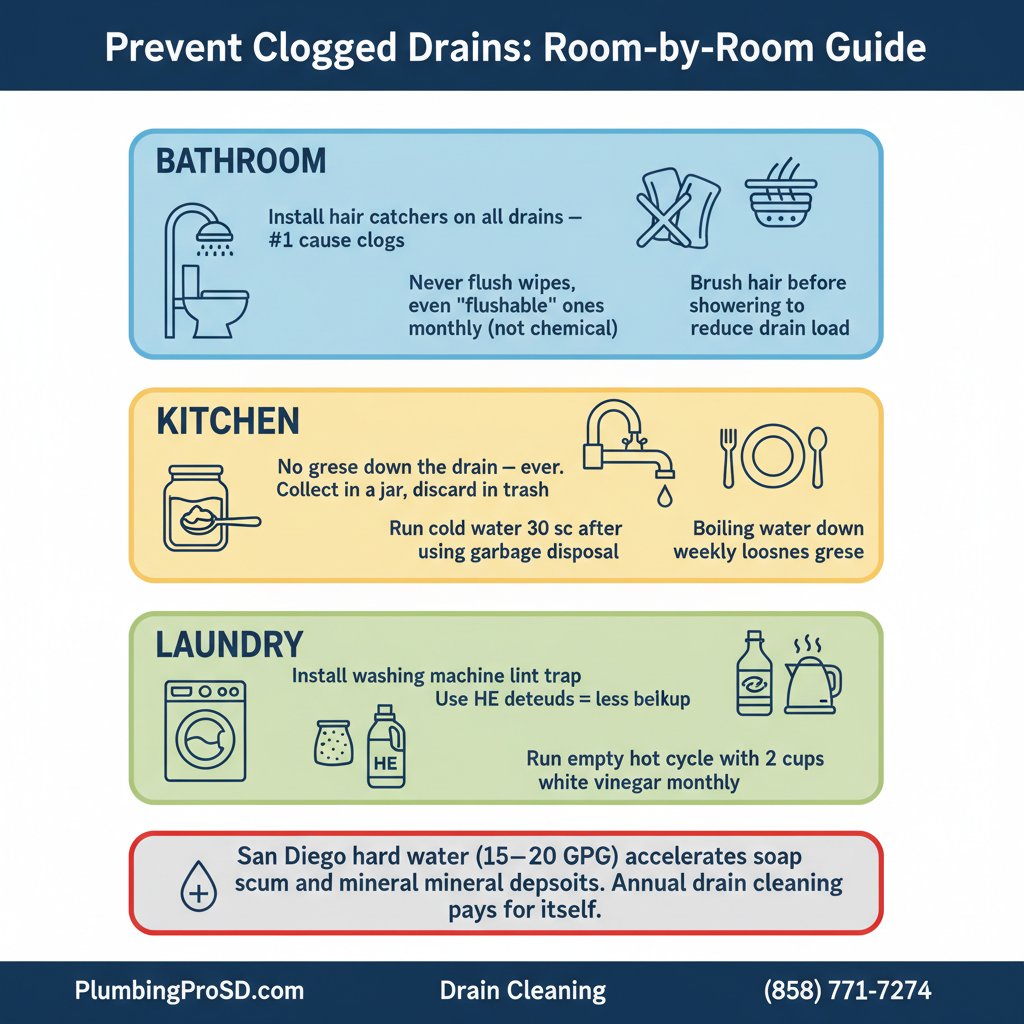
The short answer
- Most San Diego drain clogs are preventable; the habits that keep drains clear cost almost nothing and avoid $85 to $200 snake calls.
- Never pour grease or oil down a drain, and keep fibrous foods, coffee grounds, and 'flushable' wipes out of the disposal and toilet.
- Install mesh sink strainers and shower hair catchers (TubShroom, ShowerShroom, OXO); they are the single most effective fix per room.
- San Diego's hard water (200 to 350 ppm) builds scale that grabs grease and soap; monthly vinegar flushes and annual hydro-jetting handle it.
- Skip chemical cleaners (they damage pipes and don't touch scale); if a plunger won't clear it or multiple drains are slow, call a pro.
Clogged drains are the most common plumbing service call in San Diego, and the majority of them are entirely preventable. The habits that keep drains clear are simple, cost almost nothing, and save hundreds of dollars a year in service calls. The ones that cause clogs are equally predictable.
This guide covers the real causes of drain clogs by room, what never to put down any drain, the best products for prevention, maintenance routines that actually work, how San Diego’s hard water specifically complicates drain maintenance, and the warning signs that tell you a developing clog is on its way before it becomes an emergency.
Why do drains clog?
Clogs rarely happen overnight. The usual pattern: a thin film of residue coats the inside of a pipe. Over weeks and months, that film thickens. The rough surface catches debris that passes by. Debris catches more debris. Eventually the pipe narrows enough to restrict flow, then blocks entirely.
The specific residue depends on the drain’s location and what flows through it. Kitchen drains deal with grease and food particles. Bathroom drains deal with hair, soap scum, and skin cells. San Diego adds an additional layer of challenge: the mineral scale from the city’s famously hard water coats pipe interiors just as it coats showerheads and faucet aerators, creating rough surfaces that accelerate clog formation.
Understanding this mechanism is why prevention matters more than treatment: keeping the pipe interior clean means clogs have nothing to build on.
What causes kitchen drain clogs?
Kitchen drains carry more varied and potentially damaging waste than any other drain in the house. The most common causes of kitchen drain clogs:
Cooking Grease and Oils
This is the number one kitchen drain problem, in San Diego and everywhere else. Grease, cooking oil, butter, and meat fat appear completely liquid when hot and seem to rinse down the drain easily. They don’t. As they cool inside the pipe, which starts immediately after leaving the hot water, they solidify and coat the pipe walls in a sticky, accumulating film.
Hard water compounds the problem significantly. Grease and mineral scale combine into a particularly stubborn compound that narrows kitchen drain lines much faster than either would alone.
Prevention rules:
- Never pour any cooking fat, oil, or grease down any drain under any circumstances
- Let grease cool in the pan, scrape it into a sealable container (an old can or jar), and dispose in the trash
- Wipe greasy pots and pans with paper towels before washing to prevent even small amounts of grease from entering the drain
- This rule applies even when using hot water, hot water moves grease further into the pipe, where it cools and solidifies out of reach
Garbage Disposal Misuse
A garbage disposal grinds food waste, but it’s not designed to handle everything, and many common kitchen items cause blockages or damage the unit.
Never put these in the disposal:
- Fibrous foods: Celery, artichokes, asparagus, and corn husks create strings that wrap around the grinder
- Starchy foods: Potato peels, pasta, and rice expand and create paste-like blockages in the drain line
- Coffee grounds: They seem harmless but accumulate rapidly in pipe bends and combine with grease to form dense blockages
- Eggshells: A persistent myth holds that eggshells sharpen disposal blades, they don’t, and the fine ground shell material coats pipe walls
- Large bones or hard pits: Beyond the mechanical damage, they don’t break down in the drain
- Grease, oil, or fats: See above, the disposal doesn’t change the physics of grease in pipes
Proper disposal technique: Run cold water (not hot, cold keeps grease in solid form so it gets chopped) for 15–20 seconds before, during, and after use. Cold water carries the waste through the line before it can accumulate.
What to Use at the Kitchen Sink
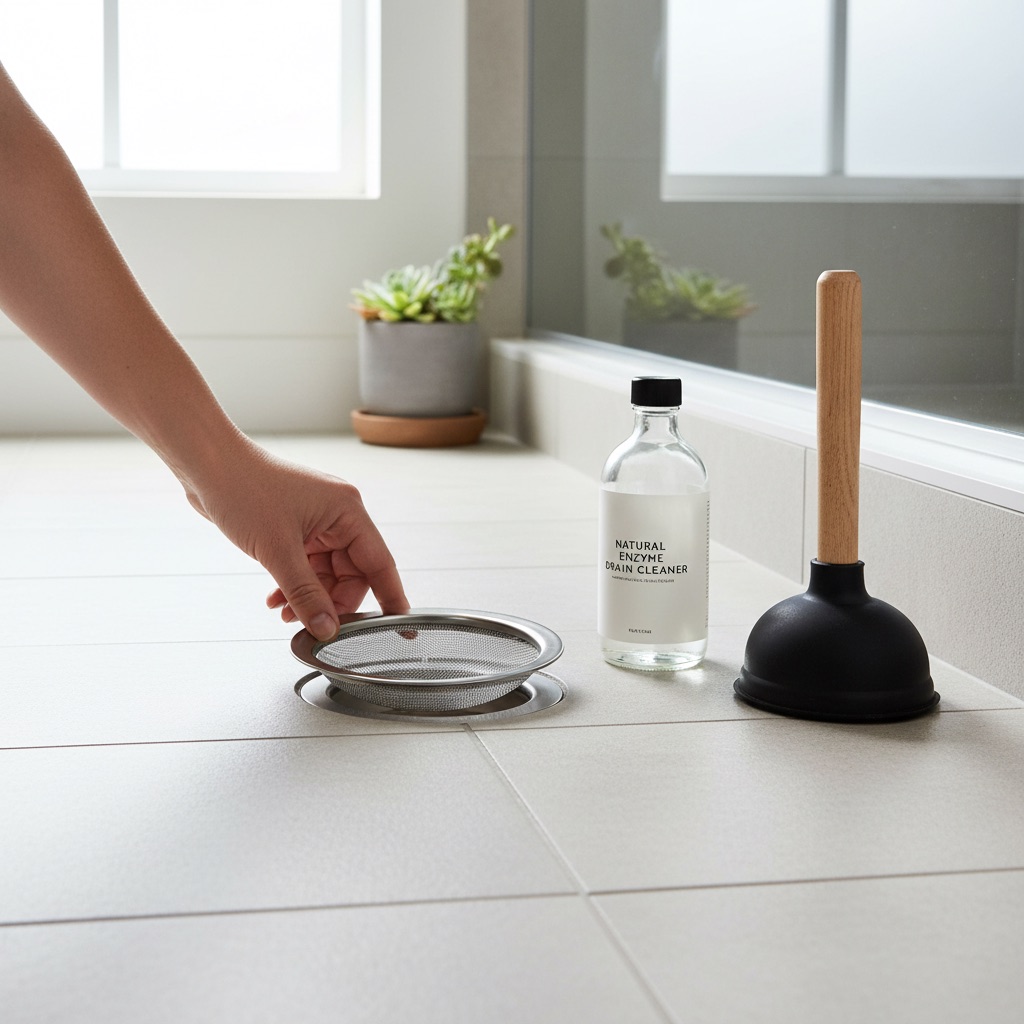
A fine-mesh sink strainer that catches food particles before they enter the pipe is the single most effective kitchen drain preventive measure. Install one, they cost $8–$25 at any hardware store and save their cost many times over. Clean them after every washing session.
What causes bathroom drain clogs?
Bathroom drains have their own distinct clog profile: hair is the primary culprit, followed by soap scum, toothpaste residue, and the mineral scale from San Diego’s hard water.
Hair Accumulation
A single shower produces a meaningful amount of shed hair. Over days and weeks, hair that enters the drain catches on any rough surface inside the pipe, which in San Diego homes means the mineral scale deposits from hard water, and accumulates into dense mats. Hair mats catch soap scum, which catches more hair and debris, eventually creating a total blockage.
Prevention:
- Install a drain screen or hair catcher in every shower and bathtub, these are the single most effective bathroom drain preventive measure
- The best hair catchers have a raised dome design that catches hair above the drain surface, making them easy to clean
- Brush hair before showering, removes loose hairs before they shed in the drain
- Clean hair catchers after every shower; don’t let hair accumulate for days
Soap Scum
Traditional bar soaps are made with animal fats or plant oils that bond with the minerals in hard water to form soap scum, a sticky, greasy residue that coats pipe walls much like kitchen grease. Liquid soaps and gels produce less hard residue, but still contribute to buildup over time.
Prevention:
- Consider switching to synthetic detergent bars or liquid body wash, which produce less soap scum than traditional bar soap
- Clean drain stoppers and visible pipe sections near the drain opening monthly
- Hot water flushes help move residue through the system before it adheres
The Pop-Up Stopper Trap
Bathroom sinks have a pop-up drain stopper, the mechanism that raises and lowers to fill the sink. These stoppers have a pivot rod below the drain that inevitably accumulates hair and soap scum in a very short section of the drain pipe. This is the source of slow bathroom sink drains in probably 80% of cases.
Maintenance: Once a month, reach under the sink and unscrew the pivot rod, pull out the stopper, and remove the hair and soap scum that has accumulated. It’s unpleasant for 30 seconds and prevents a service call.
Toothpaste and Personal Care Products
Toothpaste, shaving cream, facial cleansers, and other personal care products contribute to drain buildup over time. These products are generally water-soluble and manageable with regular flushing, but they add to the overall burden in pipes that are already accumulating hair and soap scum.
What causes toilet drain clogs?
Toilet clogs are almost entirely caused by flushing things that shouldn’t be flushed. The only materials designed for toilet disposal are human waste and toilet paper, everything else is a clog risk or will pass through your lateral and create problems downstream.
Never flush:
- “Flushable” wipes, the most common source of toilet clogs and sewer line blockages in San Diego, despite the label. They do not disintegrate the way toilet paper does and they accumulate in sewer lines
- Feminine hygiene products, these expand in water and catch in any restriction in the pipe
- Paper towels or facial tissues, neither is designed to disintegrate in water like toilet paper
- Cotton balls and swabs, don’t break down and accumulate in pipe bends
- Dental floss, wraps around pipe obstructions and catches other debris
- Medications, not a clog issue, but pharmaceutical contamination of the San Diego water system is a real environmental concern; dispose via pharmacy take-back programs
Toilet paper: Not all toilet paper is equal from a drain perspective. Multi-ply, “ultra-soft” toilet paper dissolves more slowly than standard single or double-ply. In older San Diego homes with clay sewer pipe where flow is already restricted, heavy toilet paper use can contribute to backups.
Utility and Laundry Drains
Laundry room floor drains and washing machine standpipes have their own clog profile: lint, fabric softener buildup, and mineral scale.
- Install a lint trap on the washing machine discharge hose, these clip onto the hose end and capture lint before it enters the drain
- Clean floor drains quarterly, remove the grate and clear any accumulated debris from the drain opening
- Avoid powder laundry detergents if you have hard water, they can clump and coat pipe walls; liquid detergents dissolve more cleanly
How does San Diego’s hard water complicate drain maintenance?
Hard water doesn’t just affect supply pipe, it affects drain maintenance in several ways that San Diego homeowners should understand.
San Diego’s water supply from the Colorado River and State Water Project carries dissolved calcium and magnesium at 200–350 parts per million throughout much of the county. The EPA’s WaterSense program notes that hard water creates maintenance challenges throughout home plumbing systems.
Lime scale inside drain pipes: Drain pipes carry both wastewater and some amount of the supply water that carries the mineral load. Over years, calcium scale accumulates inside drain pipes, particularly in hot water drain lines from showers and sinks, creating rough interior surfaces.
Grease-scale compound: Hard water mineral scale and grease don’t just coexist in pipes, they combine. The rough scale surface provides adhesion points for grease. The grease traps more scale. This compound builds up faster and harder than either component alone, which is why San Diego kitchen lines can develop severe buildup in homes with careful grease disposal habits.
Soap scum acceleration: The calcium and magnesium in hard water react with soap to form soap scum at a higher rate than soft water. San Diego bathroom drains deal with more soap scum per shower than homes on soft water supplies.
What helps with hard water drains:
- White vinegar flushes (monthly in showers and sinks) dissolve calcium scale that hot water can’t remove
- Enzymatic drain cleaners (not chemical cleaners, see below) work more consistently in hard water environments
- A whole-house water softener eliminates the mineral load entirely, but is a significant investment; under-sink or showerhead filters help at individual fixtures
What drain maintenance routines actually work?
Weekly (Takes 2 Minutes)
- Clear hair catchers and drain screens of accumulated debris
- Wipe bathroom drain stoppers clean
Monthly (Takes 10 Minutes Total)
Bathroom sinks: Remove the pop-up stopper, clean the stopper and the surrounding drain pipe section of accumulated hair and soap scum, reinstall.
Kitchen drain flush: Pour 1/2 cup of baking soda down the drain, followed immediately by 1/2 cup of white vinegar. Let the fizzing reaction work for 10–15 minutes, then flush with the hottest tap water for 60 seconds. This dissolves soap and grease residue before it can accumulate.
Shower and tub drains: Same baking soda and vinegar flush as above.
Hard water treatment: Pour 1 cup of undiluted white vinegar down any drain that shows slow drainage or mineral buildup. Let it sit 30 minutes, then flush with hot water. The acetic acid in vinegar dissolves calcium carbonate scale.
Quarterly (Takes 30 Minutes)
Enzymatic drain treatment: Enzymatic drain cleaners use bacteria to digest organic buildup, grease, soap scum, hair, food residue, inside the pipe without chemicals that can damage pipe material. Pour per the product instructions into kitchen and bathroom drains; they work best overnight when the pipe isn’t in use. Bio-Clean, Drain Care, and Green Gobbler’s Enzyme Cleaner are reputable options.
Inspect under-sink areas: Check for slow drips at P-trap connections, evidence of past leaks, or corrosion at fittings. Catching a minor leak early prevents mold damage to cabinets.
Annual
Professional drain cleaning: Even with diligent maintenance, grease, mineral scale, and organic buildup accumulate in drain lines, particularly kitchen lines. Annual hydro-jetting is the only method that removes mineral scale from pipe walls (enzymatic cleaners handle organic buildup but not scale). For homes with heavy cooking, large households, or San Diego’s hard water, annual professional cleaning of kitchen lines is a sound investment.
Main line camera inspection: For older San Diego homes (pre-1980) with mature trees near the sewer lateral, an annual sewer camera inspection catches root intrusion before it causes a backup.
What products are worth buying for drain maintenance?
Drain screens and hair catchers: TubShroom (for tub drains), ShowerShroom (for shower drains), and OXO Good Grips mesh strainers for sinks are consistently well-rated. Invest in the right size for your drain opening, measure before buying.
Enzymatic cleaners: Bio-Clean, Zep Drain Defense, Green Gobbler Enzyme Cleaner. These digest organic buildup. Use quarterly or monthly in high-use drains.
White vinegar: Generic grocery-store white vinegar (5% acidity) is entirely effective for hard water scale treatment. No specialty product needed.
Zip-It or similar drain snakes: A cheap plastic barbed drain snake ($5–$10) can pull hair clogs out of shower and tub drains in seconds. A worthwhile tool to keep under the bathroom sink.
Why are chemical drain cleaners counterproductive?
Drano and similar chemical drain cleaners belong in this section only because they’re so frequently misused. The short version:
- They work by generating heat to dissolve organic material, and that heat softens PVC, corrodes metal fittings, and damages rubber gaskets
- They dissolve enough of a clog to temporarily restore flow but leave residue that re-clogs quickly
- They don’t touch mineral scale, San Diego’s biggest drain maintenance challenge
- If the drain is fully blocked, the chemical sits in pooled water, concentrating against the pipe and fitting materials
- Any plumber who opens that drain faces exposure to caustic chemicals
For a drain that a plunger won’t clear, the right call is always a professional plumber, not repeated chemical treatments that damage the pipe system over time.
What are the warning signs of a developing clog?
Catching developing clogs early makes the fix cheap and simple. Watch for:
- Gradually slowing drainage, If a drain that used to clear in 10 seconds now takes 30, buildup is occurring
- Water pooling in the shower, If you’re standing in an inch of water by the end of a shower, the drain can’t keep up with the flow rate
- Gurgling from drains after use, Partial blockages create air displacement that manifests as gurgling
- Odors from drains, Organic buildup in a drain line creates a persistent sulfur or musty smell, particularly in kitchen drains
- Water backing up in unexpected places, Dishwasher water backing up into the sink, or water in the tub when you flush the toilet, signals a main line issue
For main line warning signs or recurring clogs that don’t respond to the above measures, see our drain cleaning guide for professional options. And if you notice water pooling near your indoor AC unit, that’s a different drain entirely, the AC condensate line clogs with algae and mineral buildup in San Diego’s hard water, but that’s HVAC territory. A licensed HVAC contractor handles condensate drain maintenance as part of routine AC service.
Frequently Asked Questions
Q: How often should I professionally clean my drains in San Diego?
For kitchen lines in cooking-heavy households: annually. For main sewer lines in older homes with trees near the lateral: annual camera inspection, hydro-jetting as needed. For bathroom drains with consistent maintenance: every 2–3 years professional cleaning is adequate for most households. Homes with hard water may benefit from more frequent professional kitchen drain cleaning due to mineral scale accumulation.
Q: Is it worth buying a water softener to protect my drains?
A whole-house water softener addresses the hard water factor that accelerates drain buildup, scale deposits, and soap scum. It also extends the life of water heaters, dishwashers, and supply pipes. The upfront cost ($1,500–$3,500 installed) can be worth it for San Diego homeowners who want to reduce maintenance burden across all plumbing systems. It’s most beneficial if your water hardness is above 200 ppm, which applies to most of San Diego County.
Q: What’s the best drain screen for shower drains?
The TubShroom and ShowerShroom products consistently get strong recommendations from plumbers for their ability to catch hair at the drain opening without significantly reducing water flow. They’re easy to clean (hair collects around the outside, wipes off quickly) and fit most standard drain sizes. For a more premium option, OXO makes stainless steel basket strainers that work well and don’t corrode.
Q: Does boiling water actually help prevent clogs?
Boiling water (212°F) melts grease and flushes soft soap deposits effectively. However, it should not be poured directly into PVC drain pipes in large quantities, the temperature can soften PVC fittings, particularly if done repeatedly. Boiling water is safe for metal drains (cast iron, stainless) and for small quantities in PVC lines (a cup or two). A safer alternative for PVC is the hottest water from the tap, run continuously for 60 seconds, which clears soft debris without risking PVC damage.
Q: When should I stop trying DIY methods and call a plumber?
If a drain doesn’t clear after one attempt with a plunger, if you’ve used a Zip-It and found no obvious hair clog, or if multiple drains are slow simultaneously, call a professional. Repeated DIY attempts with no result often mean the blockage is in a section of pipe you can’t reach, or there’s an underlying structural problem that DIY tools can’t address. Chemical cleaners at this point only delay the professional call while causing additional damage.
Related reading
When prevention isn’t enough and you need a professional, our drain cleaning guide for San Diego explains the difference between snaking and hydro-jetting and what each costs. Kitchen drain clogs often start with the garbage disposal. Our garbage disposal maintenance guide covers the habits that keep your disposal and the drain line below it running clean. If you’re noticing small flying insects near your sinks or drains, read our guide on how to get rid of drain flies before the infestation grows.
Consistent prevention, drain screens, no grease down drains, monthly maintenance flushes, and annual professional cleaning, is what separates San Diego households that never think about their drains from the ones calling a plumber every few months. When prevention isn’t enough, Plumbing Pro San Diego provides professional drain cleaning throughout San Diego County, including hydro-jetting for the hard water scale and grease buildup that DIY methods can’t touch. Homeowners in Lemon Grove, Santee, and Lakeside can call (858) 400-4417 to schedule service.
Areas this guide covers
We connect homeowners with licensed plumbers in these San Diego County communities.
Keep reading
Need a Plumber in San Diego?
Licensed, insured plumbers, ready across San Diego County. The plumber quotes you before any work starts.
Call (858) 400-4417Call any time, day or night, anywhere in San Diego County