
Drain flies in your San Diego home? How to get rid of them
Drain flies in San Diego breed in biofilm inside slow drains. Learn how to identify them, eliminate them with enzyme cleaners, and when slow drains need a pro.
The short answer
- Drain flies breed in the organic biofilm coating the inside of slow or partially clogged drains, not in standing water.
- The fix is mechanical: scrub the biofilm out with a drain brush, then treat with an enzyme-based drain cleaner.
- San Diego's warm year-round climate means drain fly season never really ends here the way it does in colder cities.
- Tape a piece of plastic wrap over each suspect drain overnight to find out which ones are infested.
- If multiple drains keep producing flies after cleaning, the problem may be deeper than the trap, and a professional drain cleaning can clear it.
Drain flies breed in the thick layer of organic slime that coats the inside of slow or partially blocked drains, not in standing water. The single most important fix is removing that biofilm from the pipe wall. Spray-killing the adult flies you see does nothing because the larvae in the drain keep hatching. Clean the drain itself, and the population collapses within a week or two.
San Diego’s warm climate makes this worse than in most cities. Drain fly season never really ends here. The mild winters that make San Diego so livable also keep larvae active and hatching year-round, so an untreated slow drain can produce flies every month.
Drain flies vs. fruit flies vs. fungus gnats: which one do you have?
Getting the ID right matters because each pest has a different source. Treating the wrong thing wastes time.
Drain flies are small (about 2mm), fuzzy-winged, and moth-like. They rest with their wings flat against surfaces and tend to sit still on walls and tile near drains. They’re weak fliers. Find them near bathroom sinks, showers, utility sinks, and floor drains.
Fruit flies are smooth-bodied, reddish-brown, and much more active in the air. They circle fruit bowls, wine glasses, compost bins, and overripe produce. If the flies are swarming around food or the kitchen counter, these are your problem, not drain flies.
Fungus gnats are slender and dark with long, dangling legs. They hover around houseplant soil, not drains, because they breed in moist soil with high organic content. If you have several houseplants and small dark flies, start there.
The clearest drain fly tell: they cluster on the wall or ceiling near a specific drain and sit still for long periods. That’s a drain fly.
The tape test: find out which drain is the source
You don’t have to guess. Cover each suspect drain with a piece of clear tape or plastic wrap, leaving a small gap for airflow, and leave it overnight. Drain flies trying to exit will stick to the tape or get caught under the plastic. Check every drain in the house, including utility sinks, floor drains in the garage or laundry room, and rarely-used guest bathrooms.
In San Diego homes, the usual suspects are:
- Bathroom sink drains with accumulated soap and hair
- Shower drains, especially in a guest bath that doesn’t get used often
- Floor drains in laundry rooms or garages
- The overflow drain on a bathroom sink (the small hole below the faucet rim)
The overflow drain is one people miss. Biofilm builds up inside that little channel and it’s hard to see. A small bottle brush gets in there.
What actually causes drain flies: biofilm, not standing water
The common misconception is that drain flies need standing water to breed. They don’t. What they need is organic biofilm, the thick, slimy coating that builds up inside drain pipes from hair, soap residue, skin cells, grease, and food particles. That gunk stays wet even when the drain runs clear. It’s what the larvae eat and where the eggs get laid.
This is why slow drains are the main risk factor. A drain that’s even slightly restricted holds moisture longer and accumulates biofilm faster. In older San Diego homes with cast-iron pipes, the rough interior surface gives biofilm extra grip. Homes in coastal neighborhoods also tend to have higher humidity inside, which speeds up organic buildup.
Step-by-step: how to get rid of drain flies
Step 1: Remove the biofilm mechanically
This is the most important step and the one people skip. A drain brush (the long, flexible kind that reaches into the pipe) physically scrubs the biofilm off the pipe wall. Don’t just pour something down; scrub first.
Remove the drain cover or stopper, push the brush down, and scrub the sides of the pipe in a circular motion as you pull it back out. The gunk that comes up will be dark and may smell. That’s the breeding habitat. Get it out.
Step 2: Treat with an enzyme-based drain cleaner
After scrubbing, treat the drain with an enzyme drain cleaner, not a caustic chemical drain cleaner like Drano. Enzyme cleaners (products like Bio-Clean, Green Gobbler Enzyme, or similar) work by digesting the organic material left behind. They keep working for hours after you pour them in.
Follow the product directions. Most call for pouring the solution in and letting it sit overnight with the drain unused. Repeat every few days for two weeks to make sure you’re catching any newly hatched larvae.
Step 3: Hot water flush (not boiling)
After the enzyme treatment sits, flush with the hottest water from the tap. Do not use boiling water from a kettle on PVC drain pipes. Boiling water can soften the cement at PVC joints over time. Very hot tap water is fine and won’t damage the pipes.
Step 4: Address the overflow drain
If your bathroom sink has an overflow port (the small hole below the faucet, on the inside of the basin), clean that separately. Use a small bottle brush or an old toothbrush. Pour a little enzyme cleaner down the overflow opening too.
Step 5: Don’t forget rarely-used drains
A drain that rarely runs is the perfect breeding ground because nothing disturbs it. Run water down every floor drain, utility sink, and guest bath drain at least once a week. That alone can prevent a future infestation.
San Diego-specific factors
San Diego’s year-round warmth keeps drain fly populations active every month. Most cold-winter cities see infestations drop off from December through February when pipes cool. That doesn’t happen here. If you’ve had an infestation once, the conditions that caused it, a slow drain with biofilm buildup, will cause it again next month without preventive maintenance.
Older neighborhoods across San Diego, including North Park, Mission Hills, Hillcrest, Normal Heights, and South Park, have a higher share of cast-iron drain pipes from before the 1970s. Cast iron corrodes from the inside, and the rough oxidized surface holds biofilm much more aggressively than smooth PVC does. If your home has older plumbing and drain flies keep coming back, a professional drain cleaning that clears the buildup from inside the pipe is often what finally breaks the cycle.
Coastal areas like Ocean Beach, Pacific Beach, and La Jolla tend to have higher indoor humidity, which accelerates organic buildup in drains. Running bathroom exhaust fans during and after showers helps slow that down.
When the problem is deeper than the trap
A DIY drain brush and enzyme cleaner handles most infestations. But if flies keep coming back after two weeks of consistent treatment, or if multiple drains in the house are producing flies at the same time, the biofilm is likely deeper in the pipe than a brush reaches.
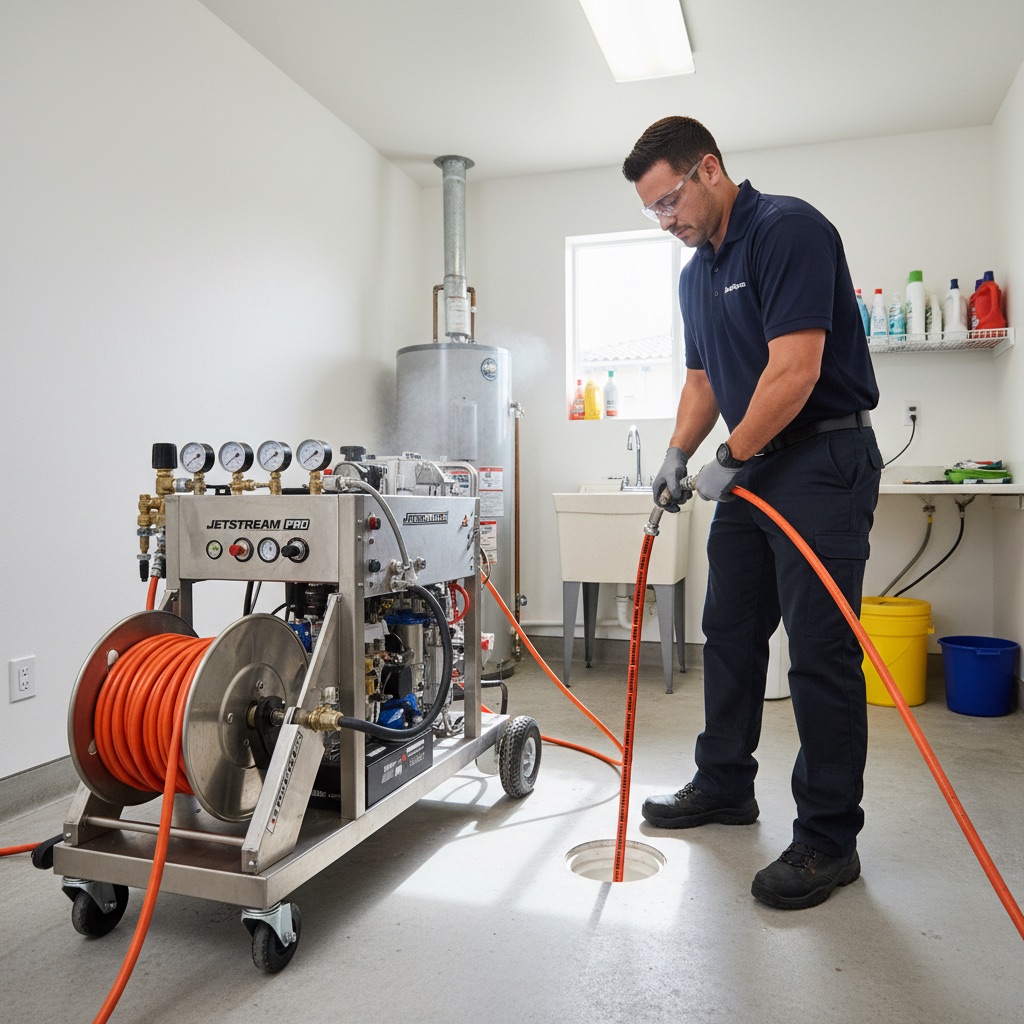
That’s what professional drain cleaning clears. A drain snake or hydro-jetting reaches the part of the pipe that a brush can’t get to and removes the buildup completely. If the drain was also draining slowly before the flies showed up, that slow drain is the root cause, and clearing it properly solves both problems.
Persistent drain flies in multiple locations can also occasionally signal a cracked or offset pipe that’s letting organic material collect in a section that never fully drains. If your home has older plumbing and the flies won’t quit, it’s worth having someone look at it. Related reading: signs your drains need professional attention.
For prevention, the habits that stop drain flies are the same ones that keep drains clear: rinse with hot water after every use, clean drain stoppers monthly, run water through unused drains weekly, and treat all drains with an enzyme cleaner every month or two. A little consistent maintenance is much easier than getting rid of an established infestation. See how to prevent clogged drains for the full routine.
To schedule a drain cleaning or ask about persistent slow drains, call (858) 400-4417. We connect San Diego homeowners with local plumbers for drain cleaning, hydro-jetting, and related plumbing needs.
Frequently asked questions
What are drain flies and where do they come from?
Drain flies (also called moth flies or sewer gnats) are small, fuzzy-winged insects about 2mm long that lay their eggs in the organic slime coating the inside of drains. They come from your own plumbing, not from outside. A slow or partially blocked drain that holds wet organic matter is ideal breeding habitat. You’ll most often find them in bathroom sinks, showers, floor drains, and utility sinks.
How do I tell drain flies apart from fruit flies or fungus gnats?
Drain flies are fuzzy, moth-like, and tend to sit still on walls near drains. Fruit flies are smooth-bodied and reddish-brown, and they circle food, fruit bowls, or compost bins. Fungus gnats are slender and dark with long legs, and they hover around houseplant soil. If the flies are near a drain and rest on tile or walls instead of flying around food, they’re almost certainly drain flies.
Does pouring boiling water down a drain kill drain flies?
Boiling water can kill some larvae on contact, but it doesn’t remove the biofilm they live in, so the population bounces back quickly. It also carries real risk on PVC pipes, where repeated boiling water can soften joints over time. Hot tap water combined with a drain brush to physically scrub the pipe wall is safer and more effective.
How long does it take to get rid of drain flies?
With consistent treatment, most infestations clear up in one to two weeks. The adult flies you see live only a few days. The key is breaking the breeding cycle by removing the biofilm. Killing adults with spray won’t solve anything if the larvae in the drain keep hatching.
When should I call a plumber about drain flies?
Call when flies keep coming back after you’ve cleaned the visible drain and treated with enzyme cleaner, when multiple drains are affected at once, or when the drain itself is slow. Persistent infestations often mean the biofilm is deeper in the pipe than a brush can reach. A professional drain cleaning with a hydro-jet or snake clears that buildup completely. Call (858) 400-4417 if you’re dealing with multiple slow, fly-producing drains.
Areas this guide covers
We connect homeowners with licensed plumbers in these San Diego County communities.
Keep reading
Need a Plumber in San Diego?
Licensed, insured plumbers, ready across San Diego County. The plumber quotes you before any work starts.
Call (858) 400-4417Call any time, day or night, anywhere in San Diego County