
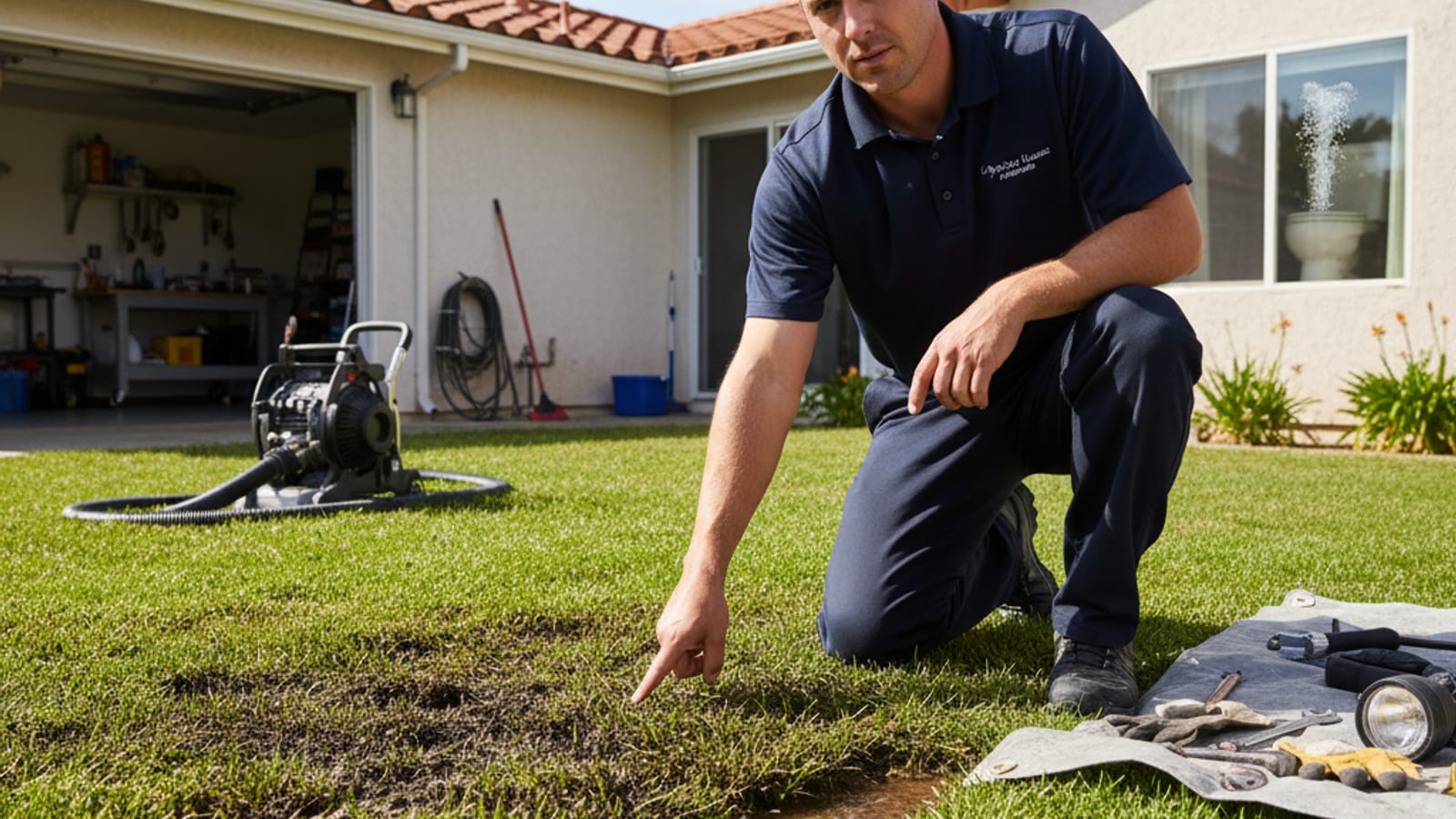
7 warning signs of a sewer line problem in San Diego
How to tell if you have a sewer line problem in San Diego: gurgling toilets, multiple slow drains, sewage smell, soggy yard, and when to camera-inspect.
The short answer
- The clearest early signs of a sewer line problem are multiple slow or backing-up drains at once, gurgling toilets, a sewage smell, and soggy patches in the yard.
- One slow drain is usually a fixture clog. Several fixtures acting up together points to the main sewer line.
- In San Diego, aging clay and cast-iron laterals in older neighborhoods plus tree-root intrusion are the top causes.
- A sewer camera inspection ($150 to $350 in San Diego) is the only way to confirm the cause and location.
- Sewage backing up into tubs or floor drains is an emergency. Call (858) 400-4417 for a camera inspection.
The clearest early signs of a sewer line problem are multiple slow or backing-up drains at once, gurgling toilets, a sewage smell, and soggy patches in the yard. A single slow sink is usually a local clog. When several fixtures act up together, the trouble is in the main line that carries everything out of the house. If you see any of these, get a sewer camera inspection before it turns into a backup.
In San Diego, this matters more than in most cities. A lot of homes in older neighborhoods still run wastewater through clay or cast-iron laterals laid before 1970. Those pipes crack, corrode, and let tree roots in. Knowing the warning signs early is the difference between a $250 cleaning and a five-figure replacement.
How to tell a sewer line problem from a single clogged drain
This is the question that decides everything. A clog in one fixture and a failing main sewer line look similar at first, but they need very different fixes.
The simple rule: count how many fixtures are affected and which ones. One slow drain means a clog in that fixture’s branch line. Several slow drains, especially the lowest ones in the house, mean the shared main line is blocked or broken. Wastewater backs up at the lowest point first, so a ground-floor tub or floor drain is often the first to overflow.
| Clue | Single fixture clog | Main sewer line problem |
|---|---|---|
| How many drains affected | Just one | Several at once |
| Which drains | The one you used | Lowest fixtures back up first (tub, shower, floor drain) |
| Gurgling | Rare | Toilet gurgles when you run the sink or washer |
| Toilet behavior | Normal | Water rises or bubbles when other fixtures drain |
| Smell | Usually none | Sewage odor near drains, cleanout, or yard |
| Fix | Plunger, snake, or a single drain cleaning | Camera inspection, then cleaning or repair |
If the right column describes your house, stop running water and book a sewer camera inspection. Running a washer or dishwasher while the main is blocked is how sewage ends up on the bathroom floor.
The 7 warning signs of a sewer line problem
1. Several drains are slow at the same time
One slow sink is a clog. Slow sinks, tubs, and showers across the house at once is a main-line problem. The line that all of them share is restricted, so everything drains sluggishly. This is the most reliable early sign, and it shows up well before a full backup.
2. Toilets gurgle or bubble
When you flush a toilet, run a sink, or start the washing machine and a toilet gurgles or its water level moves, air is getting trapped behind a blockage in the main line. The drains are fighting each other for a path through a pipe that’s choking. A healthy sewer line is silent.
3. A sewage or sulfur smell you can’t place
A sealed sewer system shouldn’t smell. A persistent rotten-egg or sewage odor near a drain, a floor cleanout, or out in the yard means wastewater or gas is escaping through a crack or a loose joint. If the smell is strongest in one spot of the yard, that’s often right over the break.
4. Sewage backs up into tubs, showers, or floor drains
This is the alarm. When you flush and dirty water rises in a shower or tub instead, the main line is blocked downstream of both fixtures. Backups always hit the lowest drain first. This one is an emergency. Stop using water and call a plumber the same day.
5. Soggy or unusually green patches in the yard
A broken lateral leaks wastewater into the soil. That shows up as a soft, soggy, or sunken patch in the lawn, or a stripe of grass that’s greener and faster-growing than everything around it because it’s being fertilized by the leak. In San Diego’s dry months, a wet patch with no sprinkler nearby is a strong tell. Many laterals run under the front yard toward the street.
6. Drains across the house got slower over months, not overnight
A sudden single clog happens fast. A failing sewer line declines slowly. If everything has been emptying a little slower for half a year, that’s often tree roots building into a mesh inside the pipe, narrowing it month by month. Homeowners write this off as “old pipes” until it backs up.
7. Pests, cracks, or recurring clogs that keep coming back
Drain flies or a rat problem can point to a cracked sewer line giving them a way in. So can a foundation crack or a small slab dip over the line’s path. And if you’ve snaked the same drain three times in a year and it keeps clogging, the cause usually isn’t the drain. It’s roots or a broken section in the main line that a snake can’t fix for good.
Why San Diego sewer lines fail: the local angle
National checklists stop at the symptoms. Here’s what’s actually behind them in San Diego.
Aging clay and cast-iron laterals. Older neighborhoods like North Park, Kensington, Normal Heights, South Park, and parts of La Mesa are full of homes built before 1970. Many still have the original clay or cast-iron lateral. Clay turns brittle and cracks at the joints. Cast iron rusts from the inside until it scales over and flakes apart. Both create the openings everything else exploits.
Tree roots. Roots are the number one cause of sewer failure in San Diego. Ficus, eucalyptus, and other thirsty trees are everywhere here, and their roots hunt for moisture. A hairline crack or a loose clay joint is all they need. Once inside they grow into a root ball that snags waste and chokes flow. Our guide to tree roots in a sewer line covers the fix.
Soil movement and slab-on-grade homes. A lot of San Diego homes sit on slab-on-grade foundations, and the region’s expansive clay soils shift with wet and dry cycles. That movement stresses pipe joints under the slab and yard, opening cracks and creating low spots, called bellies, where waste pools and clogs.
You own more pipe than you think. In the City of San Diego, the homeowner is responsible for the entire sewer lateral, from the house all the way to the city main, which is often in the middle of the street. A broken section out under the parkway or street is still your repair, not the city’s. That’s why catching problems early matters so much here.
What to do next: when to camera-inspect and how urgent it is
You can’t fix what you can’t see, and you shouldn’t pay to dig blind. A sewer camera inspection is the definitive diagnostic. A plumber feeds a camera down the line and shows you the exact problem, the type of pipe, and how far down it sits. In San Diego that runs about $150 to $350, and it tells you whether you need a $250 cleaning or a real repair. See our breakdown of sewer camera inspection cost for what’s included.
Here’s how to triage what you’re seeing:
- Emergency, call today: sewage backing up into tubs, showers, or floor drains, or raw sewage in the yard. Stop running water until a plumber clears it.
- Soon, this week: several slow drains, gurgling toilets, or a sewage smell that won’t go away. The line is restricted but hasn’t failed. A camera and a cleaning now usually beats a backup later.
- Worth checking, this month: a slow, house-wide decline over months, recurring clogs in the same drain, or a soft patch in the yard. Likely roots or a slow leak that gets cheaper to fix the earlier you catch it.
If the camera shows roots or a cracked section, you’ve usually got options short of tearing up the whole yard. Many San Diego laterals can be fixed with trenchless sewer repair or relined without a full open-cut trench, depending on what the footage shows. For the repair side of things, see our sewer line service.
The takeaway: one slow drain is a clog you can probably handle. Several fixtures acting up together, gurgling, or any sewage smell is the main line talking, and in older San Diego homes it’s usually roots or aging pipe. Get a camera on it before it gets worse.
Frequently asked questions
How do I know if I have a sewer line problem or just a clogged drain?
If only one fixture is slow or clogged, it’s almost always a local clog in that fixture’s drain. If several fixtures act up at the same time, especially the lowest ones like a tub or floor drain, the problem is in the shared main sewer line. Gurgling in one fixture when you run another is the giveaway.
What are the first signs of a sewer line problem?
The earliest signs are gurgling toilets, drains that empty slower than they used to across the house, and a faint sewage smell near drains or in the yard. These show up before a full backup. Catching them early in San Diego often means a cleaning or spot repair instead of a full replacement.
Why do sewer lines fail so often in older San Diego neighborhoods?
Homes in areas like North Park, Kensington, Normal Heights, South Park, and parts of La Mesa often still have clay or cast-iron laterals from before 1970. Clay gets brittle and cracks at the joints, and cast iron corrodes. Both give tree roots an easy way in, which is the leading cause of sewer failure in San Diego.
Can tree roots cause sewer line problems?
Yes, and in San Diego they’re the most common cause. Roots from ficus, eucalyptus, and other thirsty trees seek moisture and slip into any crack or loose joint in an aging pipe. Once inside they grow into a mesh that catches waste and slowly chokes the line.
How much does a sewer camera inspection cost in San Diego?
A sewer camera inspection runs about $150 to $350 in San Diego, depending on access and line length. It’s the definitive diagnostic. The camera shows the exact problem and how far down the line it is, so you only pay for the repair you actually need.
Is a sewer line problem an emergency?
Sewage backing up into tubs, showers, or floor drains is an emergency because it’s a health hazard and can damage flooring fast. Stop running water and call a plumber the same day. Slow drains and faint odors aren’t emergencies, but they won’t fix themselves and get more expensive the longer you wait.
Who is responsible for the sewer lateral in San Diego?
In the City of San Diego, the homeowner owns and maintains the sewer lateral from the house all the way to where it connects to the city main, often in the middle of the street. That means a broken or root-filled lateral is the property owner’s repair, not the city’s.
Areas this guide covers
We connect homeowners with licensed plumbers in these San Diego County communities.
Keep reading
Need a Plumber in San Diego?
Licensed, insured plumbers, ready across San Diego County. The plumber quotes you before any work starts.
Call (858) 400-4417Call any time, day or night, anywhere in San Diego County