
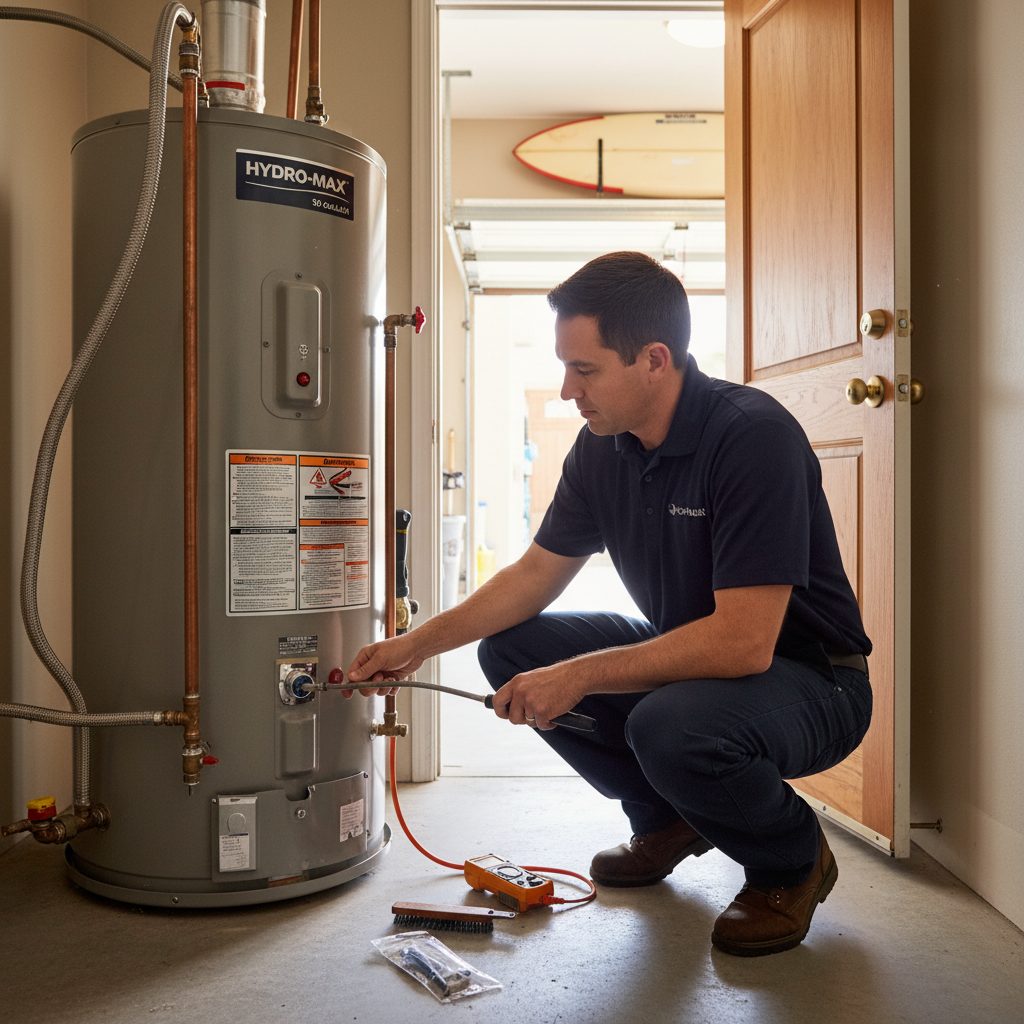
Last updated: April 26, 2026
Water Heater Pilot Light Won't Stay Lit: Causes and Fixes
Water heater pilot light won't stay lit in San Diego? Learn common causes like a faulty thermocouple or gas valve and how to troubleshoot or fix the problem.

The short answer
- A pilot that won't stay lit is most often a faulty thermocouple, the safety sensor that keeps the gas valve open.
- Other causes include a dirty pilot orifice, a draft blowing out the flame, or a failing gas control valve.
- Thermocouple replacement, the most common fix, runs about $150 to $250 in San Diego; a gas valve runs $300 to $600.
- After lighting, hold the pilot button 30 to 60 seconds so the thermocouple heats up before you release it.
- If you smell gas or the problem keeps returning, stop and call a licensed plumber.
Nothing disrupts a San Diego morning like a cold shower when your water heater’s pilot light refuses to stay lit. It’s a common plumbing headache, especially in homes with traditional tank water heaters, leaving you scrambling for hot water. While it can be frustrating, understanding why this happens and what steps you can take can often save you time and discomfort.
At Plumbing Pro San Diego, we’ve seen every variation of this problem across San Diego County, from the older homes in North Park and Hillcrest with their original units to newer builds facing unexpected issues. This guide will walk you through the most frequent causes of a flickering or uncooperative pilot light, offer practical troubleshooting steps, and help you determine when it’s time to call in a professional San Diego plumber.
Water Heater Pilot Light Repair Costs (San Diego)
Why Your Water Heater Pilot Light Matters
Your water heater’s pilot light is a small, constant flame that serves a single, vital purpose: to ignite the main burner when the tank’s water temperature drops below the thermostat setting. When that tiny flame goes out, or won’t stay lit, the main burner can’t fire up, and your water heater stops heating water. It’s the core of your hot water supply in a conventional gas water heater system.
Immediate Safety First: What to Do
Before attempting any troubleshooting, safety is paramount. Working with gas appliances requires caution. If you suspect a gas leak, your immediate priority is to ensure the safety of everyone in your home.
Recognizing a Gas Leak
A gas leak can present several clear warning signs:
- Smell of rotten eggs: Natural gas is odorless, but utility companies add a distinct sulfuric odorant called mercaptan to make leaks detectable. If you smell this, act quickly.
- Hissing or whistling sound: This could indicate gas escaping from a pipe or appliance.
- Dead or dying vegetation: If outdoor gas lines are leaking, plants above them may die or show unusual growth.
- Bubbles in standing water: If there’s standing water near a gas line, bubbles could indicate a leak.
Steps for Your Safety
- Do NOT try to light the pilot light or any other flame.
- Do NOT operate electrical switches, phones, or garage door openers. A spark could ignite the gas.
- Immediately evacuate everyone from the house.
- Once outside and a safe distance away, call SDG&E’s emergency line at 1-800-411-7343 and 911.
- Do NOT re-enter your home until emergency services confirm it is safe.
If you don’t detect any signs of a gas leak and feel comfortable proceeding, you can begin troubleshooting the pilot light issue. For any doubt or strong suspicion of a leak, always err on the side of caution and call the professionals. If you need immediate assistance for a plumbing emergency, we’re ready to connect you with help through our /services/emergency-plumbing/ services.
Common Reasons Your Water Heater Pilot Light Won’t Stay Lit
Most pilot light issues stem from a handful of common culprits. Understanding these can help you diagnose the problem more accurately.
Faulty Thermocouple
The thermocouple is arguably the most frequent reason a pilot light won’t stay lit. This small copper rod is positioned directly in the pilot flame. Its job is to generate a tiny electrical current when heated, signaling to the gas control valve that the pilot flame is present and it’s safe to allow gas to flow to the pilot.
- How it fails: If the thermocouple is dirty, bent, or simply worn out, it can’t generate enough current. The gas control valve then interprets this as an absent pilot flame and shuts off the gas supply as a safety measure, preventing unburnt gas from accumulating.
- San Diego context: San Diego’s hard water (averaging 15–20 GPG, primarily sourced from the Colorado River via the San Diego County Water Authority (SDCWA)) can contribute to mineral buildup. While less direct, this hard water can lead to sediment accumulating around the pilot assembly over time, indirectly affecting the thermocouple’s ability to sense the flame or causing other components to degrade faster.
Dirty Pilot Tube or Orifice
The pilot tube delivers gas to the pilot light, and the pilot orifice is a tiny opening that shapes the gas into a small, steady flame.
- How it fails: Over time, dust, debris, or even small insect nests can clog the pilot tube or orifice. This restricts gas flow, leading to a weak, flickering, or yellow pilot flame that may not be hot enough to properly heat the thermocouple, or simply blows out easily.
- Symptoms: A weak pilot flame, difficulty lighting the pilot, or a pilot light that extinguishes shortly after being lit.
Problematic Thermostat or Gas Control Valve
The gas control valve (also known as the gas valve or gas control unit) is the brain of your water heater’s gas system. It regulates the flow of gas to both the pilot light and the main burner. The thermostat is integrated into this unit, sensing the water temperature.
- How it fails:
- Gas Control Valve Malfunction: If the valve itself is faulty, it may not allow sufficient gas to the pilot, or the safety mechanism that senses the thermocouple signal might be defective, causing it to shut off the gas even when the thermocouple is hot.
- Thermostat Issues: A failing thermostat could send incorrect signals, leading the gas control valve to shut down the system.
- Complexity: These are more complex issues, often requiring professional diagnosis and replacement.
Insufficient Gas Supply
Sometimes the problem isn’t with the water heater components themselves, but with the gas supply to the unit.
- How it fails:
- Main Gas Shut-off Valve: The gas supply valve to the water heater might be partially closed.
- Other Gas Appliances: If other gas appliances (like a furnace or stove) were recently serviced or if there’s a problem with the main gas meter, your water heater might not be getting enough pressure.
- Sediment in Gas Line: Less common, but sediment or rust can accumulate in the gas line leading to the water heater, reducing flow.
- Symptoms: Pilot light struggles to light, or goes out quickly; other gas appliances might also be affected.
Drafts or Airflow Issues
While less common indoors, sometimes environmental factors can cause the pilot light to extinguish.
- How it fails: A strong draft from an open window, an exhaust fan, or even an improperly installed vent pipe could blow out a delicate pilot flame.
- San Diego context: While we don’t experience the freeze/thaw cycles of colder climates that can lead to pipe damage, improper ventilation or a blocked flue can still create drafts or backdrafts affecting the pilot. Ensure your water heater’s vent is clear and not obstructed, especially if your unit is in a garage or utility closet.
Water Heater Age and Wear
Like any appliance, water heaters have a lifespan. Most tank water heaters last 10-15 years. Units in older San Diego neighborhoods like Ocean Beach or Logan Heights might be pushing or exceeding this age.
- How it fails: Older units are simply more prone to component failures, including the thermocouple, gas control valve, and pilot assembly due to general wear, corrosion, and sediment buildup.
- Decision point: If your water heater is nearing the end of its life, recurring pilot light issues can be a sign that it’s time to consider a replacement rather than continuous repairs.
DIY Troubleshooting Steps
If you’ve ruled out a gas leak, you can attempt some basic troubleshooting. Always follow your water heater’s specific instructions, which are usually on a label affixed to the tank or in the owner’s manual.
Tools You Might Need:
- Screwdriver (flathead or Phillips, depending on access panel)
- Small wire brush or sandpaper (fine-grit)
- Vacuum cleaner with a narrow attachment
- Flashlight
1. Locating the Pilot Light Assembly
Most gas water heaters have a small access panel near the bottom. This panel usually covers the burner assembly, including the pilot light and thermocouple.
- Turn off power: If your water heater has a power switch, turn it off. For gas, locate the main gas supply valve to the water heater and turn it to the “OFF” position before removing any panels.
- Remove the access panel: Use your screwdriver to carefully remove the cover.
2. Cleaning the Thermocouple and Pilot Tube
This is often the simplest and most effective fix for a pilot light that won’t stay lit.
- Identify: The thermocouple is a thin copper rod, usually about 3-4 inches long, positioned so its tip is directly in the pilot flame. The pilot tube is a small metal tube that delivers gas to the pilot orifice.
- Clean the thermocouple: Gently wipe down the thermocouple with a cloth. If there’s visible corrosion or carbon buildup, you can carefully use a fine-grit sandpaper or a small wire brush to lightly abrade the tip. The goal is to remove any insulating material that prevents it from heating properly.
- Clear the pilot tube/orifice: Use a small, soft brush or a vacuum cleaner with a narrow attachment to clear any dust or debris from around the pilot tube and orifice. Ensure the tiny hole in the pilot orifice is clear. Do NOT poke anything into the orifice as you could enlarge or damage it, creating a dangerous gas flow.
3. Relighting the Pilot Light Properly
This step requires careful adherence to your water heater’s instructions. While specific steps vary by model, the general process is:
- Turn the gas control valve to “PILOT”: This usually involves rotating a dial.
- Push and hold the “PILOT” button: This manually opens the gas valve to the pilot light.
- Light the pilot: While holding the button, use the igniter button (if present) or a long lighter to ignite the pilot flame.
- Hold the button: Continue holding the “PILOT” button for 30-60 seconds after the pilot lights. This allows the thermocouple to heat up and generate enough current to keep the gas valve open.
- Release the button: Slowly release the “PILOT” button. The pilot flame should remain lit.
- Turn the gas control valve to “ON”: Once the pilot is stable, turn the dial to “ON” and set your desired temperature. The main burner should ignite shortly after.
If the pilot light goes out when you release the button, it strongly suggests a faulty thermocouple or insufficient gas flow to the pilot.
4. Checking the Gas Control Valve
Ensure the gas shut-off valve on the gas line leading to the water heater is fully open. Sometimes it can be accidentally nudged or partially closed during other maintenance or work in the area.
When to Call a Professional Plumber
While some troubleshooting can be done yourself, there are clear instances when calling a licensed San Diego plumber is the smartest and safest choice.
Persistent Issues
If you’ve tried cleaning and relighting multiple times and the pilot light still won’t stay lit, or if the problem recurs frequently, it’s a sign of a deeper issue. This often points to a failing gas control valve or a completely dead thermocouple that needs replacement. These components should be handled by a professional to ensure proper installation and safety.
Gas Leaks or Odors
As discussed, any suspicion of a gas leak warrants immediate evacuation and a call to SDG&E and 911. Never attempt to fix a gas leak yourself. The professional plumbers we connect you with are trained and equipped to handle gas line issues safely, but your first call should always be to the gas company in an emergency.
Complex Diagnoses
If the issue isn’t a simple dirty thermocouple or weak flame, diagnosing problems with the gas control valve, internal components, or gas pressure requires specialized knowledge and tools. A professional can quickly identify the root cause, whether it’s a specific component failure or a wider issue with your home’s gas supply.
Water Heater Replacement
If your water heater is old (over 10-12 years) and experiencing recurring problems, especially in older San Diego homes in areas like Kensington or Normal Heights, replacement might be more economical than repeated repairs. A professional plumber can assess your unit, provide an honest evaluation, and recommend suitable new models. They can also ensure proper permitting through the San Diego Development Services Department (DSD) for a new installation. Learn more about when to replace versus repair by reading our blog post on /blog/water-heater-not-working-san-diego/.
Preventative Maintenance for Your San Diego Water Heater
Regular maintenance can extend the life of your water heater and prevent common issues like a flickering pilot light.
- Regular Flushing: Due to San Diego’s hard water, sediment buildup in the tank is a significant problem. This sediment can reduce efficiency, corrode the tank, and even indirectly impact the pilot assembly if severe enough. We recommend flushing your water heater annually to remove these mineral deposits.
- Anode Rod Inspection: The anode rod sacrifices itself to prevent corrosion of your water heater tank. In hard water areas like ours, it depletes faster. Inspecting and replacing it every 3-5 years can dramatically extend your tank’s life.
- Annual Professional Check-ups: A yearly inspection by a licensed plumber can catch minor issues before they become major problems. They’ll check the pilot assembly, gas lines, pressure relief valve, and overall system health. Consider linking this with our /services/water-heater/ service page.
Choosing the Right Water Heater for San Diego Homes
When considering a replacement, San Diego homeowners have excellent options for efficiency and longevity.
Tank vs. Tankless
- Tank Water Heaters: Traditional, more affordable upfront, but less energy-efficient. Modern tank models, however, are far more efficient than older units.
- Tankless Water Heaters: Offer endless hot water on demand and significantly higher energy efficiency. They are a popular choice in San Diego, where gas is readily available via SDG&E. While the initial cost is higher, you can often find rebates through the California Energy Commission or local utility programs, making them a smart long-term investment. They also avoid many issues associated with sediment buildup in tanks, a plus for our hard water. For more information, see our post on /blog/tankless-water-heater-repair-san-diego/.
Considering Hard Water Solutions
Given San Diego’s notorious hard water, investing in a whole-house water filtration system can protect your water heater and other plumbing fixtures from mineral buildup. This can prevent premature failure of components like thermocouples and significantly extend the lifespan of your appliance. Explore our /services/water-filtration/ options.
Water Heater Repair vs. Replacement: A San Diego Perspective
Deciding whether to repair your existing water heater or invest in a new one is a common dilemma. Here’s a quick guide to help San Diego homeowners make an informed choice:
| Factor | Consider Repair If… | Consider Replacement If… |
|---|---|---|
| Age | Unit is under 8-10 years old. | Unit is 10+ years old (especially in hard water areas). |
| Cost | Repair cost is less than 50% of a new unit. | Repair cost exceeds 50% of a new unit. |
| Frequency | First major issue. | Repeated breakdowns, especially pilot light problems. |
| Efficiency | Still meets your hot water needs efficiently. | High energy bills; unit struggles to provide hot water. |
| Major Damage | Minor component failure (e.g., thermocouple). | Leaking tank, major rust, or significant internal damage. |
| Local Impact | Less impact from San Diego’s hard water or specific issues. | Significant sediment buildup or corrosion due to hard water. |
A licensed plumber from Plumbing Pro San Diego can provide an accurate assessment and help you weigh the costs and benefits, considering both immediate fixes and long-term value for your specific San Diego home. For insights into plumbing costs, check out our blog on /blog/how-much-does-a-plumber-cost-san-diego/.
Why Choose Plumbing Pro San Diego for Water Heater Services
When your water heater pilot light won’t stay lit, you need reliable, local expertise. Plumbing Pro San Diego connects you with California C-36 licensed plumbing contractors serving San Diego County. You can verify any contractor’s license on the CSLB website: https://www.cslb.ca.gov/onlineservices/checklicenseII/checklicense.aspx.
The plumbers we connect you with are familiar with the specific challenges of San Diego plumbing, including our unique water quality and the diverse age of homes from Padre Dam Water District areas to the older homes in Mission Hills or College Area. They provide honest diagnostics and efficient solutions for all your water heater needs, from pilot light repairs to full system replacements, with a clear price before any work starts.
It’s not just about fixing pipes; it’s about your home’s comfort and safety. From emergency repairs to routine maintenance, you can count on getting connected with a plumber who delivers.
Frequently Asked Questions
Q: How long should a water heater pilot light stay lit after I release the button?
A: Once you light the pilot, you typically need to hold the pilot button down for 30-60 seconds. This allows the thermocouple to heat up sufficiently. After you release the button, the pilot light should remain continuously lit without any flickering or dying out.
Q: Can a dirty pilot light cause my water heater to stop working entirely?
A: Yes, absolutely. If the pilot light is too weak, dirty, or goes out frequently, it won’t be able to ignite the main burner. Without the main burner firing, your water heater cannot heat the water in the tank, leading to a complete lack of hot water.
Q: Is it safe to try and fix the pilot light issue myself?
A: It can be safe to perform basic troubleshooting steps like cleaning the thermocouple or relighting the pilot, provided you follow your water heater’s manual and prioritize safety by checking for gas leaks first. However, if you’re uncomfortable, smell gas, or the issue persists, it’s always safer to call a qualified plumber.
Q: How often should a water heater’s thermocouple be replaced?
A: Thermocouples don’t have a fixed replacement schedule; they typically last for several years. They are replaced only when they fail, which is often indicated by a pilot light that won’t stay lit even after cleaning. On average, you might replace one every 5-10 years, but it can vary.
Q: What is the average lifespan of a water heater in San Diego’s hard water conditions?
A: In San Diego, with our hard water, the average lifespan of a traditional tank water heater can be slightly reduced compared to areas with softer water, typically ranging from 8-12 years. Regular maintenance, especially annual flushing and anode rod inspection, can help extend this lifespan significantly.
If your water heater pilot light just won’t cooperate, don’t face a cold shower alone. Plumbing Pro San Diego is here to help. Contact us today at (858) 400-4417 for expert water heater repair, maintenance, or replacement services across San Diego County. Visit our dedicated services page to learn more about our comprehensive water heater solutions: /services/water-heater/.
Areas this guide covers
We connect homeowners with licensed plumbers in these San Diego County communities.
Keep reading
Need a Plumber in San Diego?
Licensed, insured plumbers, ready across San Diego County. The plumber quotes you before any work starts.
Call (858) 400-4417Call any time, day or night, anywhere in San Diego County