Backwater valve vs. backflow preventer in San Diego
Learn how a backwater valve differs from a backflow preventer, what each protects, and what San Diego property owners should verify before arranging service.
Sewage rising through a floor drain calls for a different device than water moving toward a drinking-water supply. In San Diego, choosing the right device starts with one distinction. A backwater valve addresses reverse sewer flow, while a backflow preventer protects potable water.
What a backwater valve is designed to address
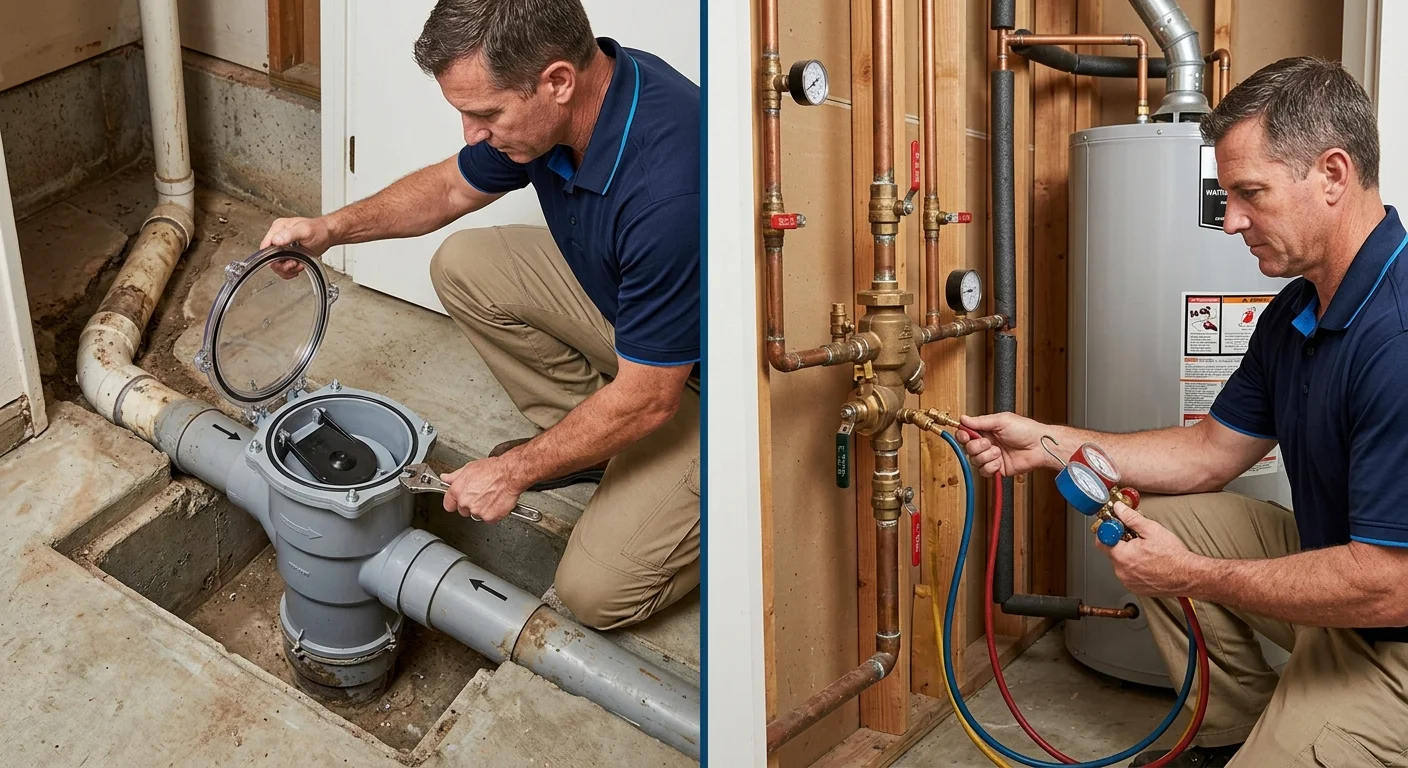
A backwater valve belongs to the wastewater side of a plumbing system. It’s intended to limit sewage flowing backward from the sewer side toward the building. You may also hear it called a sewer backwater valve.
That distinction matters when wastewater appears where it shouldn’t. Warning signs may include sewage at a floor drain, shower, bathtub, or low fixture. Those symptoms don’t prove that a missing or failed valve caused the problem. A blockage, damaged lateral, or another drainage problem may be involved.
The plumber should first identify where the wastewater came from. That evaluation may include the building drains, accessible cleanouts, and the sewer lateral. The goal is to separate a building-side stoppage from a problem farther along the line.
San Diego property owners have a specific local responsibility. Within the City of San Diego, owners maintain their sewer lateral from the property to its connection with the sewer main. That responsibility can continue past the property line into a street, easement, or canyon. It includes clearing roots, grease, and debris, along with repairing breaks or cracks.
The City says it may clear or repair a problem beyond the property line, within the City right-of-way, when the home has lost all sewer facilities. The City doesn’t reimburse private plumbing expenses. Properties outside the City of San Diego should confirm responsibility with their own jurisdiction.
A backwater-valve evaluation is therefore part of a broader sewer-line assessment. The device addresses reverse wastewater flow. It doesn’t protect the drinking-water supply.
What a backflow preventer is designed to address
A backflow preventer belongs to the water-supply side. It’s intended to stop water from moving in an unwanted direction toward the potable supply. This is separate from sewage traveling backward through a drain or sewer lateral.
The relevant connection may be outside near irrigation equipment. It may also serve another water connection that needs separation from potable water. The property’s actual piping determines which device and service apply.
A notice about backflow testing points toward this water-supply issue. It doesn’t mean the home needs a sewer backwater valve. Likewise, sewage appearing at a low drain doesn’t automatically create a backflow-testing problem.
Testing schedules, device mandates, and approved tester rules can vary by location and provider. A single countywide requirement couldn’t be confirmed from the approved claims available for this page. Contact the city or water provider serving the property before arranging testing, repair, or installation. Ask which device records and testing forms they require.
Our backflow testing and prevention service can connect you with an independent licensed plumber for the water-supply side. For more detail about preparing for that appointment, read our San Diego backflow testing guide.
Don’t rely on the word “backflow” alone when requesting help. Tell the referral service whether you’re dealing with wastewater, potable water, or a written notice. That small detail points the request toward the correct plumbing specialty.
Why the two devices aren’t interchangeable
A backwater valve and a backflow preventer manage different plumbing paths. Similar names don’t make them substitutes.
| Comparison | Backwater valve | Backflow preventer |
|---|---|---|
| Plumbing side | Drainage and wastewater | Potable water supply |
| Main concern | Sewage moving toward the building | Water moving toward the potable supply |
| Starting point | Sewer symptoms or a drainage evaluation | A water connection, device issue, or testing notice |
| Authority to contact | The city or sewer agency serving the address | The city or water provider serving the address |
| Related service | Sewer-line diagnosis | Backflow testing or prevention |
This difference shapes the entire service request. The plumber needs to inspect the correct piping, identify the installed device, and understand the reported problem. Asking for the wrong device can send the conversation toward an unrelated part of the property.
It also affects which public agency can answer local questions. Sewer-lateral responsibility doesn’t establish backflow-testing rules. A water provider’s testing instructions don’t establish what’s happening inside a private sewer lateral.
Start with the material moving in the wrong direction. Sewage or drain water points toward the backwater-valve discussion. A concern involving potable-water separation points toward a backflow preventer.
If the source remains unclear, don’t select equipment from a photo or name alone. Request a diagnosis and describe what you observed. A licensed plumber can then explain which system is involved and whether an installed device needs service.
What to verify before testing, repair, or installation
Begin with the property address. San Diego County includes several cities, unincorporated areas, and water-service boundaries. Don’t assume that guidance for a City of San Diego address also governs a property elsewhere.
For a City of San Diego property, start with City Development Services for permit questions. Contact Public Utilities for city water or sewer questions. Elsewhere, contact the city, sewer agency, or water provider serving that address. The San Diego County Water Authority can help residents identify regional water information, but the serving provider should confirm property-specific requirements.
No approved countywide testing schedule, device mandate, installation fee, or permit rule could be confirmed for this page. Ask the serving authority these questions:
- Is this address subject to a current device or testing requirement?
- Which device type appears in the property record?
- Does the authority require an approved tester or submitted report?
- Is a permit required for the proposed repair or installation?
- Who receives the completed paperwork?
- Are there deadlines listed on an existing notice?
Photograph the device and surrounding piping when it’s safe to do so. Capture any manufacturer label, model information, and notice from the provider. For a sewer concern, record which fixtures were affected and whether all sewer service was lost. These details help the plumber understand the request without guessing.
Verify the contractor through the CSLB license lookup. It supports searches by license number, business name, or personnel name. Results include license status, expiration dates, classifications, bond information, and workers’ compensation insurance. The database is unavailable from Sunday at 8 p.m. through Monday at 6 a.m. for scheduled maintenance.
Individual contractor capabilities vary, so confirm experience with the specific device. Inland homeowners can also review our Poway plumber guide before choosing a contractor for a Poway property.
How to request a referral for the correct device
A useful referral request begins with the symptom or notice. Don’t lead with a device name unless you’ve confirmed it. Clear descriptions help us match the request with an independent licensed plumber who handles that part of the system.
For a possible sewer backwater valve, describe any wastewater backup and the fixtures involved. Mention an accessible cleanout or existing valve if you know where it is. The contractor may need to evaluate the sewer line before discussing repair or installation.
For a backflow preventer, mention the water connection and any written notice. Include the serving water provider, device information, and stated deadline when available. If you need testing, say whether the provider supplied a form.
Every plumber in our network is licensed and insured. You’ll contract with and pay the independent plumber directly. Plumbing Pro San Diego doesn’t perform the work, set prices, issue permits, or approve testing records.
Before accepting a proposed scope, ask the contractor to identify the device and affected piping. The scope should distinguish diagnosis, testing, repair, replacement, and new installation. It should also state who will contact the relevant city or provider.
A referral doesn’t replace approval from a public agency or water provider. Confirm current requirements with the authority serving the address. That’s especially important when a notice, inspection, property sale, or planned alteration prompted the request.
When to call us
Call when sewage is moving toward the building, a backflow device needs service, or an authority has sent a testing notice. Those situations need a licensed plumber who understands the correct side of the plumbing system. Call us at (858) 400-4417 and we’ll connect you with a licensed plumber.
Areas this guide covers
We connect homeowners with licensed plumbers in these San Diego County communities.
Keep reading
Need a Plumber in San Diego?
Licensed, insured plumbers, ready across San Diego County. The plumber quotes you before any work starts.
Call (858) 400-4417Call any time, day or night, anywhere in San Diego County