
Last updated: September 11, 2026
Water heater relief valve leaking: what it may mean
Water near a heater relief valve needs a source check. Learn what to document and how to connect with a licensed San Diego plumber for a local inspection.
Water near a relief valve doesn’t confirm where the leak began. Note the first wet spot, the amount of water, and whether it returns. Those details can help a licensed plumber trace the source.
A temperature and pressure (T&P) valve can drip once after a heating cycle and then stop. A drip that keeps going, or a stream, is not a “let it be” situation. Do not cap or plug the discharge pipe. That valve is a safety device. High house water pressure, a failing valve, or sediment in the tank can all cause it. If water is spreading, shut the heater’s cold-water supply and call (858) 400-4417. For replacement or a wider heater problem, use water heater repair.
Where water around the relief valve may come from
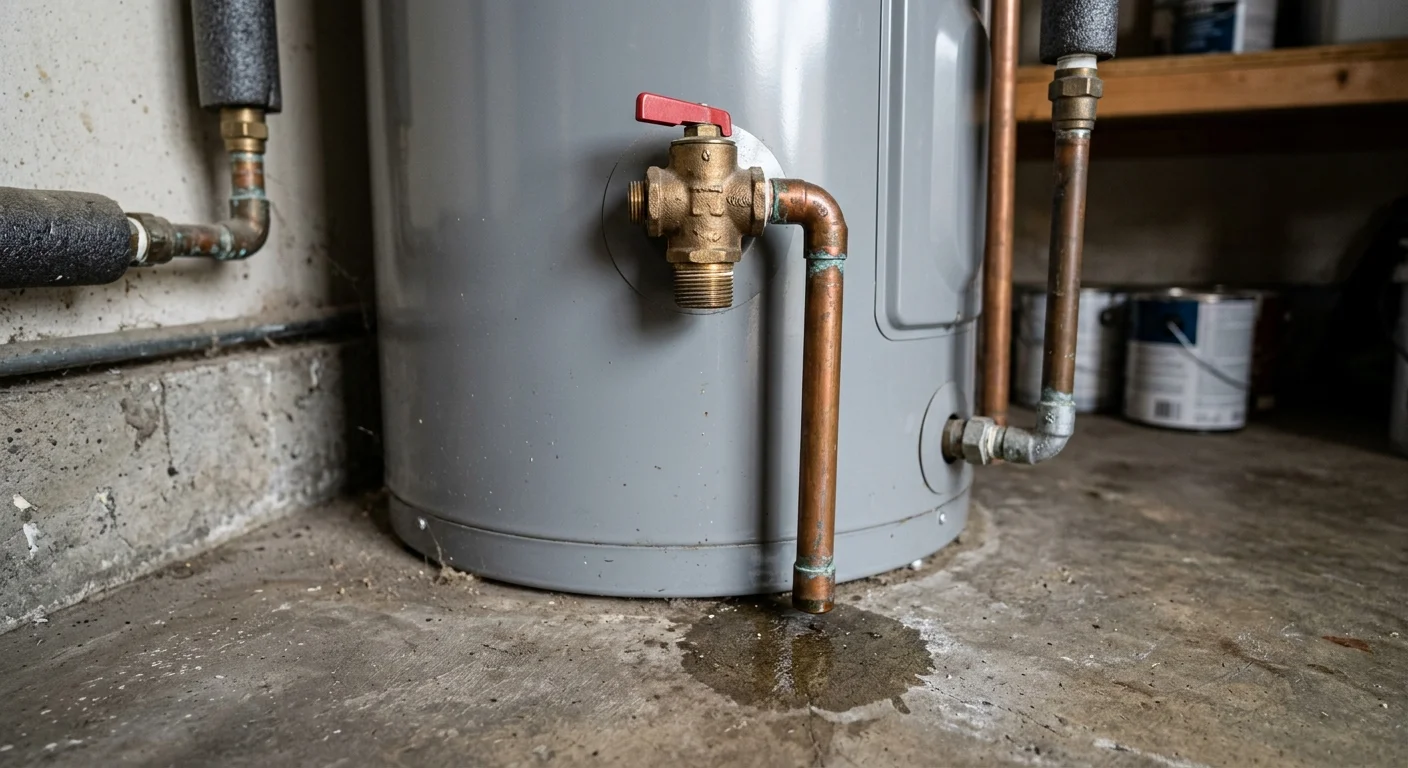
Start with the exact location of the water. “The water heater is leaking” is useful, but a more precise description helps. Say whether you see moisture on the valve body, around its connection, along the discharge pipe, or beneath the pipe’s open end.
Also look at the area directly above the relief valve. Water visible near the valve may have reached it from another wet surface. A photo showing the valve, nearby connections, and the floor gives the contractor more context.
Describe what you can see without trying to name the cause. Useful observations include a single drop, a damp streak, dried residue, a wet floor, or water collecting in a drain pan. Mention whether the water appeared once or keeps returning.
San Diego’s water conditions add local context, but they don’t diagnose this symptom. The City of San Diego reports average drinking-water hardness of about 16 grains per gallon, or 276 parts per million. The city also says hardness varies by location and demand. You can confirm current information through the city’s water quality resources.
Visible residue may give a plumber another detail to examine. It doesn’t prove why the water appeared or whether the valve needs replacement. The contractor must evaluate the actual heater and its installation.
For a broader leak affecting the tank, connections, or surrounding floor, read our guide to a water heater leaking and what to do. This page stays focused on water found at the relief valve or discharge pipe.
What the discharge pipe can reveal
The discharge pipe gives you a useful reference point when describing the leak. Report whether the pipe is wet near the valve, farther down its length, or only at its open end. Those locations help the contractor plan an inspection, but they don’t establish the underlying cause.
Timing also matters. Tell the referral service whether the pipe is dripping now, showed moisture earlier, or only has old marks. If the symptom comes and goes, note what was happening when you noticed it. Don’t turn that timing into a diagnosis. Simply pass the pattern to the plumber.
A clear description might sound like this: “The pipe is dry near the valve, but the open end has fresh water beneath it.” Another useful report is: “The connection beside the heater is damp, while the rest of the pipe looks dry.” These statements separate observation from speculation.
Photos can preserve details that disappear before the appointment. Take one wider photo showing the heater’s setting. Then take a closer photo of the valve, pipe, and first visible wet area. Include the heater’s manufacturer label if it’s readable.
Don’t rely on water color, residue, or the size of a puddle to choose a repair. This article’s approved research doesn’t establish a universal meaning for those signs. A licensed contractor can compare the visible condition with the heater’s label, manufacturer instructions, and the installation itself.
If water is actively spreading beyond the heater area, request an emergency plumbing referral. Explain where the water is moving and what parts of the property are affected. We’ll use those details to connect you with an independent licensed plumber.
What the contractor you’re matched with may inspect
The contractor may begin by confirming which surface becomes wet first. The inspection may include the relief valve, its connection, the discharge pipe, nearby piping, the heater surface, and the area beneath the unit. The exact process depends on the heater and what the contractor finds onsite.
Expect questions about the symptom’s history. The plumber may ask when you first noticed it, whether it stopped, and whether earlier plumbing work occurred nearby. Share observations, photos, and any manufacturer information you have. Don’t worry about assigning a cause before the visit.
The contractor may also review the heater’s label and installation details. Any temperature or pressure findings must be evaluated against the applicable equipment instructions and current requirements. This article’s verified claims ledger doesn’t provide a universal setting or diagnostic threshold for a leaking relief valve, so we won’t invent one.
Water hardness can be relevant background for the inspection. San Diego’s reported average is about 16 grains per gallon, with variation by location and demand. That local figure doesn’t show that hardness caused the leak. It simply gives the contractor another verified condition to consider alongside the physical evidence.
Ask the plumber to explain three points after the inspection: the confirmed source, the proposed scope, and whether another condition needs attention. If the cause remains uncertain, ask what additional check would separate the possibilities.
California’s C-36 classification covers water-heating equipment and repairs within the classification’s defined plumbing scope. Individual contractor capabilities still vary. You can verify a contractor’s current license before approving work through the CSLB license lookup.
The lookup includes license status, classifications, bond information, and workers’ compensation information. It accepts searches by license number, business name, or personnel name. The database is scheduled to be unavailable from Sunday at 8 p.m. through Monday at 6 a.m.
How repair and water heater replacement differ
A valve-related repair and a complete water heater replacement are different scopes. The onsite contractor should identify which scope is being proposed and why. Symptoms alone can’t confirm whether work should stay limited or extend to the whole heater.
For a focused repair proposal, ask the contractor to name the component involved. The written scope should also identify any related connection or discharge-pipe work. If replacement is proposed, ask what inspection finding supports replacing the entire unit.
Don’t choose between repair and replacement from a generic lifespan or price claim. No government or academic source in this site’s approved research defines a typical water heater lifespan. Actual performance varies by model, usage, maintenance, water quality, and installation. The claims ledger also doesn’t contain a verified average price for either option.
Instead, compare the contractor’s findings and written scope. Ask what labor, materials, permit work, and equipment are included. Plumbing Pro San Diego doesn’t set the contractor’s price. The homeowner contracts with and pays the independent plumber directly.
Permitting also separates some replacement projects from smaller scopes. Inside the City of San Diego, water heater replacement requires a permit. A standard replacement, except a tankless type, may qualify for a Simple No-Plan Plumbing/Gas Permit when the property isn’t historically designated.
The city says tankless installations don’t qualify for that simplified process. Historically designated properties also require plan-based review. HERS verification is required for final inspection approval under the city’s stated process. Specific requirements can vary with the building and project scope.
Those verified statements apply to the City of San Diego. Requirements for Chula Vista, Escondido, Oceanside, an unincorporated community, or another jurisdiction weren’t confirmed for this article. Ask the contractor which authority governs the address and verify the current process with that authority.
Our water heater service referral page can help you request a licensed contractor for an onsite evaluation.
How to request a water heater referral
Begin with a plain description of the first wet location. Mention whether the water is on the relief valve, at its connection, along the discharge pipe, or below the pipe’s end. Add whether the moisture is active, intermittent, or no longer visible.
Include the property’s city or community. That matters because San Diego County contains separate permitting jurisdictions. An address inside the City of San Diego may follow a different process from one in Escondido or an unincorporated area.
If the property is in inland North County, our Escondido plumber guide explains how to request local plumbing help there. Homeowners elsewhere in the county can still use our water heater referral service.
Share the heater type only when you can identify it from the unit or its label. A photo of that label may help the plumber understand what equipment is onsite. Also mention nearby wet surfaces, visible residue, and any earlier work around the heater.
Tell us whether you need an evaluation of the narrow relief-valve symptom or a wider water heater concern. That distinction helps us understand the request. It doesn’t replace the contractor’s onsite diagnosis.
Plumbing Pro San Diego is a referral service. We connect homeowners with independent C-36 licensed plumbing contractors. We don’t perform the work, employ plumbers, set prices, or own service vehicles. The homeowner chooses, contracts with, and pays the plumber directly.
Before approving work, verify the contractor through CSLB. Confirm the active status and suitable classification shown for that business. Individual capabilities vary even when the classification covers the general type of work.
When to call us
A licensed plumber should evaluate an active or recurring relief-valve leak when the source and needed scope aren’t clear. If water is spreading, tell us where it’s moving when you request the referral. Call us at (858) 400-4417 and we’ll connect you with a licensed plumber.
Areas this guide covers
We connect homeowners with licensed plumbers in these San Diego County communities.
Keep reading
Need a Plumber in San Diego?
Licensed, insured plumbers, ready across San Diego County. The plumber quotes you before any work starts.
Call (858) 400-4417Call any time, day or night, anywhere in San Diego County