Reverse osmosis system San Diego: cost and how it works
A reverse osmosis system in San Diego strips out the minerals behind our hard tap water. What it removes, what installation involves, and what it costs.
The short answer
- A reverse osmosis (RO) system forces water through a membrane that blocks nearly all dissolved solids, so it targets drinking-water purity, not whole-house hardness.
- San Diego's imported water runs about 16 grains per gallon (276 ppm), and RO is the fix homeowners reach for when they want that mineral load out of their drinking glass, not just off their pipes.
- Installed cost depends on the number of filter stages, whether a remineralization cartridge is included, and how accessible the supply line is under your sink, so get a firm quote before you commit to a specific unit.
- RO and a whole-house water softener solve different problems and work well paired: the softener protects your pipes and appliances, the RO unit purifies what you actually drink.
- Cutting into a supply line for a new RO faucet is plumbing work. Call (858) 400-4417 and we'll connect you with a licensed San Diego plumber who installs it correctly.
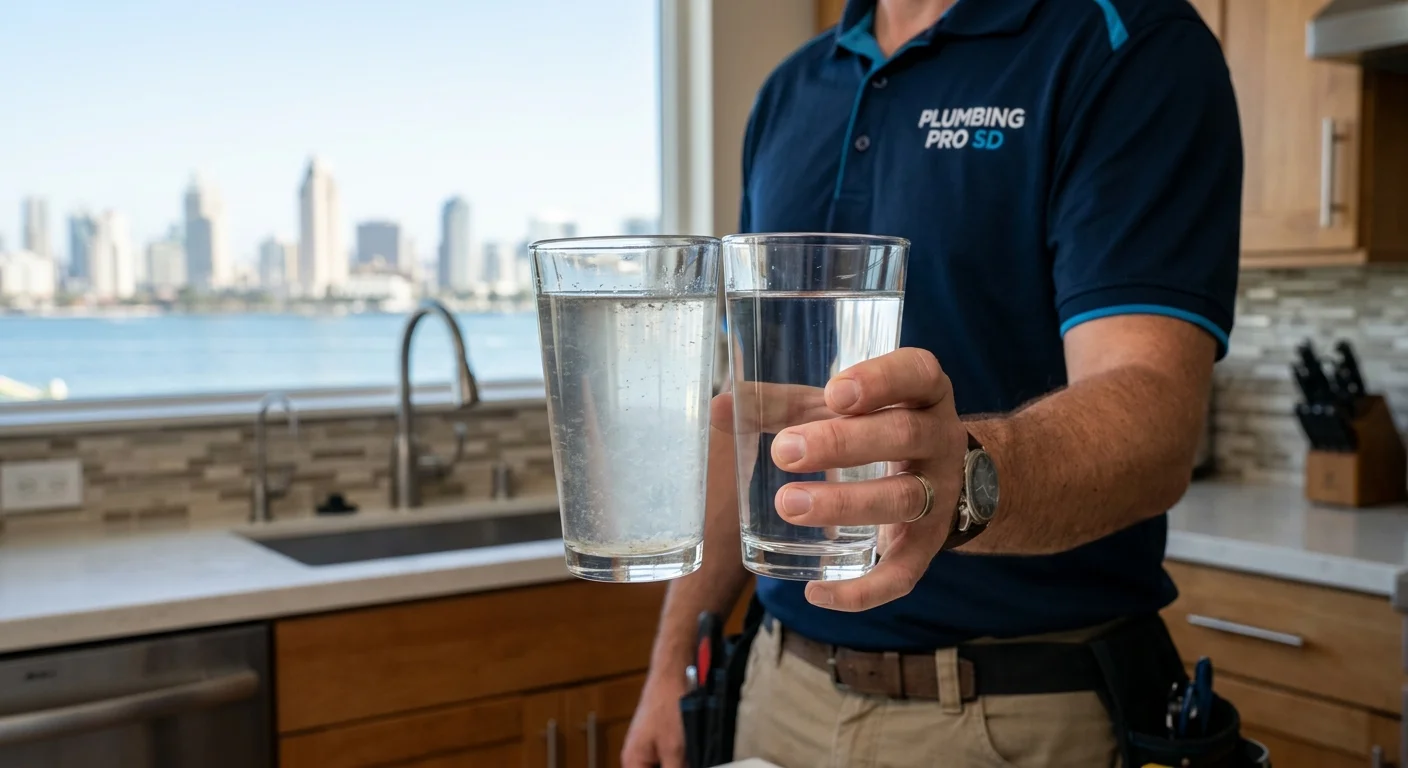
If you’ve ever wondered why San Diego tap water tastes flat or leaves a film on your glass, the answer is dissolved minerals, not something wrong with your plumbing. A reverse osmosis system is the fix most San Diego homeowners land on when they want that mineral load out of their drinking water specifically, not just off their pipes. Here’s how it works, what it costs installed, and what it actually solves that a whole-house softener doesn’t.
Why San Diego’s water pushes people toward RO
Most of San Diego County’s water arrives by way of the Colorado River, picking up dissolved minerals on that long trip before it reaches your tap. The City of San Diego’s own water quality data puts average hardness at about 16 grains per gallon, or 276 parts per million. That’s high enough that most homeowners notice it: soap that won’t lather well, spots on glassware straight out of the dishwasher, and a taste at the kitchen sink that bottled water doesn’t have.
A whole-house water softener addresses that hardness for your pipes, water heater, and appliances. It doesn’t do much for how your drinking water tastes, because ion exchange trades calcium and magnesium for sodium rather than removing dissolved solids outright. That gap is exactly what a reverse osmosis system fills at the tap you actually drink from.
How a reverse osmosis system actually works
An RO system isn’t one filter, it’s a short sequence of them, and each stage has a specific job:
The water first passes through a sediment filter that catches dirt, rust flakes, and sand, protecting the finer filters downstream. Next comes a carbon block stage, which pulls out the chlorine San Diego’s water authority uses for disinfection along with whatever gives tap water its chemical aftertaste. The core of the system is the RO membrane itself: a semipermeable barrier with pores small enough to block nearly everything except water molecules, so calcium, magnesium, sodium, and most other dissolved solids get flushed to the drain rather than passed through. What comes out the other side sits in a small storage tank until you open the dedicated faucet, at which point it runs through one more carbon polishing filter to catch any last taste before it reaches your glass.
That’s why an RO system removes a noticeably wider range of contaminants than a carbon filter alone. It’s also why it’s slower and produces some wastewater, which is a fair tradeoff most homeowners accept for water that tastes closer to bottled.
RO versus a whole-house softener: two different jobs
It’s worth being direct about this because a lot of San Diego homeowners buy one when they meant to buy the other. A water softener protects your entire plumbing system: it prevents scale from building up inside pipes, inside your water heater tank, and inside every appliance that runs water through it. It’s the reason a softened home’s water heater tends to outlast an unsoftened one. But softened water still carries dissolved sodium, and it’s not designed to purify drinking water.
A reverse osmosis system does the opposite. It doesn’t touch the water going to your shower, your washing machine, or your dishwasher. It treats water at one faucet, usually the kitchen sink, and does it thoroughly. Homes with genuinely hard water in North County or East County often end up running both: a softener sized to the house, plus an RO unit under the kitchen sink for drinking and cooking water. Neither system replaces the other, and a plumber sizing a water softener installation for your home shouldn’t tell you it makes an RO system unnecessary.
What installation actually involves
Installing an under-sink RO system is real plumbing work, even though the unit itself is compact. The licensed plumbers we connect you with tie a feed line into your existing cold water supply under the sink, drill a hole through the counter or sink deck for the new dedicated faucet, mount the filter housings and storage tank in the cabinet, and run a small drain line to carry away the water the membrane rejects. Every one of those connections needs to be watertight, because a slow drip under a sink cabinet can run for weeks before anyone notices it, by which time it’s soaked into the cabinet floor.
Most installs are a same-visit job. Where it gets more involved is older San Diego homes with galvanized supply lines or limited space under the sink, where the plumber may need to adapt the connection point or reroute slightly to fit the unit.
What it costs and what upkeep looks like
There’s no single, honest price to quote here. What an installed under-sink reverse osmosis system costs in San Diego comes down to the number of filter stages, whether the unit adds a remineralization stage to put a small amount of mineral taste back in after the membrane strips it out, and how much labor your specific under-sink layout takes, especially in older homes where the cold supply line isn’t easy to reach. Ask for an itemized quote that separates the unit from the installation labor so you can compare it against other options.
After installation, the ongoing cost is filters, not labor, and how often you swap them depends on the manufacturer’s schedule for the specific unit you install and how hard your household’s water use runs the sediment stage. San Diego’s mineral-heavy water tends to load that sediment filter faster than a lower-mineral market would, which is a fair question to put to whoever installs your system: ask them what check-in schedule they’d recommend for your home rather than assuming every unit runs on the same clock. Staying on whatever that schedule turns out to be is what keeps the water at the faucet tasting the way it did on install day, since a saturated pre-filter shortens the membrane’s working life and a spent membrane simply stops doing its job.
Does RO strip out water you’d actually want to keep?
This comes up a lot, and it’s a fair question. Because the membrane doesn’t distinguish between calcium that causes scale and calcium your body can use, a reverse osmosis system does remove essentially all dissolved minerals, not just the ones responsible for San Diego’s hard water reputation. For most households, that’s not a meaningful health tradeoff since drinking water is a minor source of dietary minerals compared to food. Some RO units add a remineralization cartridge as a final stage specifically to put a small amount of mineral content back in, mostly for taste rather than nutrition. If that matters to you, it’s worth asking about when you’re comparing systems rather than assuming every RO unit works the same way.
Getting an RO system installed in San Diego
If your water tastes off, your glassware never comes out clear, or you’re tired of buying bottled water, a reverse osmosis system solves that at the source. It’s a smaller project than a whole-house softener and a faster one to install, but it still needs to be done by someone who can make a clean, code-compliant tie-in to your supply line. Check out our full water filtration services page for the whole range of options, from softeners to whole-house filtration to RO, or read more about whether San Diego really has hard water if you’re still deciding whether treatment is worth it for your home.
Homeowners from La Jolla to inland communities call us for the same reason: they want water that tastes clean without hauling bottles from the store. Call (858) 400-4417 and we’ll connect you with a licensed San Diego plumber who can size and install the right RO system for your kitchen.
Areas this guide covers
We connect homeowners with licensed plumbers in these San Diego County communities.
Keep reading
Need a Plumber in San Diego?
Licensed, insured plumbers, ready across San Diego County. The plumber quotes you before any work starts.
Call (858) 400-4417Call any time, day or night, anywhere in San Diego County