
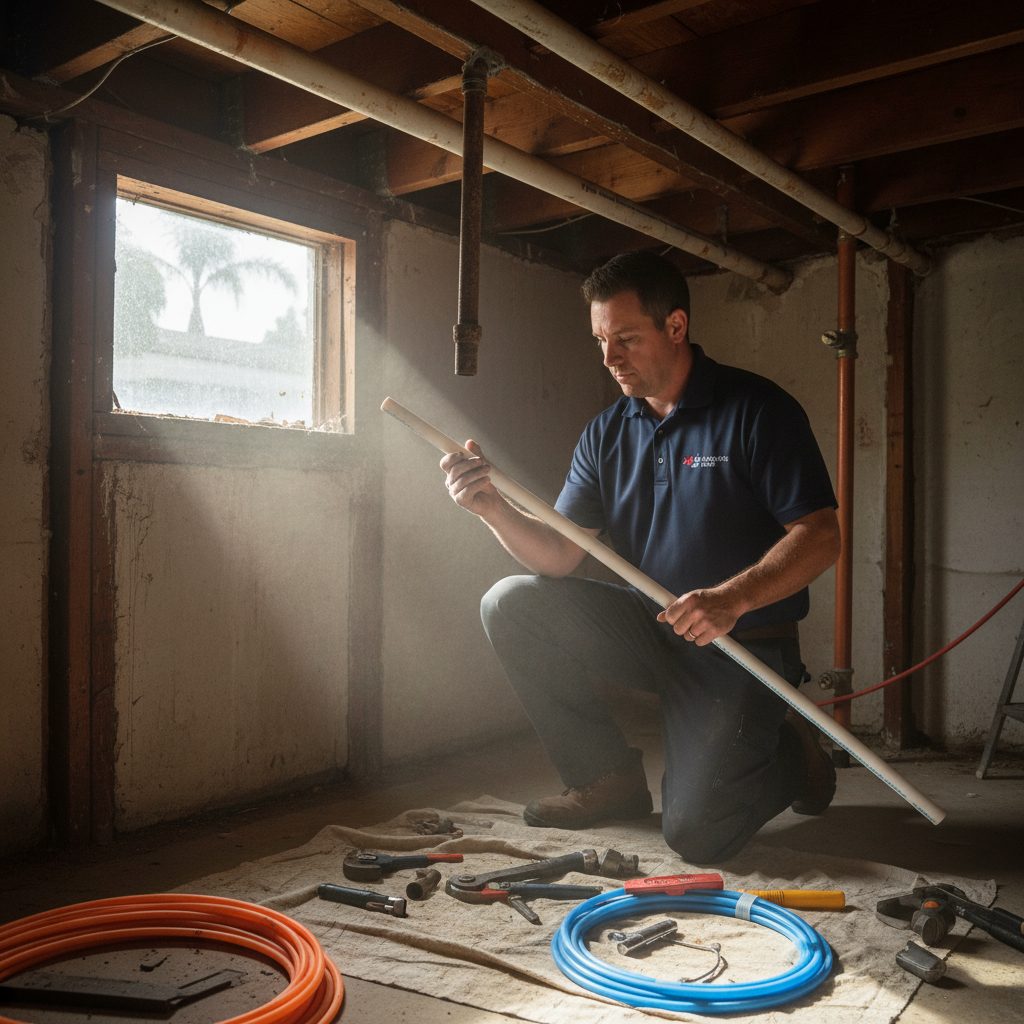
Whole-house repipe cost in San Diego (2026 guide)
Real 2026 whole-house repipe costs in San Diego by home size and pipe material, with PEX vs copper vs CPVC, financing, and sell-vs-stay guidance.
The short answer
- A whole-house repipe in San Diego runs about $4,500 to $18,000 for plumbing only, $6,500 to $25,000 all-in with drywall and paint.
- Home size, bath count, and foundation drive the price; slab homes cost 15 to 25 percent more than raised-foundation homes.
- PEX-A is the cheapest path with a 40 to 50 year life; copper Type L lasts 50 to 70 years but costs 40 to 60 percent more.
- Avoid CPVC for a full repipe; it goes brittle after 15 to 20 years in San Diego's hot attics.
- A documented repipe with permit records typically returns 60 to 90 percent of cost at resale, especially on pre-1970 homes.
A whole-house repipe in San Diego runs about $4,500 to $18,000 for plumbing only. With drywall patching and paint, the all-in number lands between $6,500 and $25,000. PEX is the cheapest path. Copper Type L is the longest-lasting. Your home’s age, bath count, and foundation type drive most of the price. Slab homes cost more than raised-foundation homes because the pipe has to go up and over.
Whole-house repipe cost in San Diego (2026)
Here’s what local homeowners are actually paying this year. The plumbing-only number covers labor, fittings, fixtures hookup, permit, and inspection. The all-in number adds drywall repair, texture, and paint to a builder-grade finish.
| Home size | PEX (plumbing only) | PEX (all-in) | Copper Type L (plumbing only) | Copper Type L (all-in) | CPVC (plumbing only) | CPVC (all-in) |
|---|---|---|---|---|---|---|
| 1 bath, 900-1,200 sqft | $4,500-$6,500 | $6,500-$9,500 | $7,500-$10,500 | $9,500-$13,500 | $4,000-$6,000 | $6,000-$9,000 |
| 2 bath, 1,200-1,800 sqft | $6,500-$9,500 | $9,500-$14,000 | $10,500-$15,000 | $14,000-$19,500 | $6,000-$8,500 | $9,000-$13,000 |
| 3 bath, 1,800-2,500 sqft | $9,500-$13,500 | $14,000-$19,000 | $14,500-$19,500 | $19,000-$25,000 | $8,500-$12,000 | $13,000-$17,500 |
| 4+ bath, 2,500-4,000 sqft | $13,500-$18,000 | $19,000-$25,000 | $19,500-$28,000 | $25,000-$36,000 | $12,000-$16,500 | $17,500-$23,500 |
Two big variables move the number inside those ranges. Slab vs raised foundation can swing it 15 to 25 percent. Pipe access through tight stucco walls, vaulted ceilings, or finished basements adds labor hours fast. A second-story bathroom stacked over a first-floor kitchen is fast. A guest bath at the far end of an older slab ranch with finished ceilings is slow.
If you want a tighter quote for one material, our San Diego copper repipe cost guide breaks down copper-specific pricing.
PEX vs copper vs CPVC: which material fits your home
Three real options. Each one trades cost for something else.
PEX-A or PEX-B (cross-linked polyethylene). Flexible plastic tubing, color-coded red for hot and blue for cold. Snakes through walls with fewer fittings than copper. Resists San Diego’s hard water and chloramine treatment well. Expected life is 40 to 50 years. The cheapest path on most homes. The catch: UV degrades it, so any exposed run needs a sleeve. Rodents can chew through it in attics, which matters in older La Jolla and Point Loma homes with rat pressure.
Copper Type L. The premium choice. Lasts 50 to 70 years in most San Diego conditions. Doesn’t off-gas, doesn’t leach plastic taste, holds value at resale. Buyers and inspectors love it. Two reasons not to default to copper: it’s roughly 40 to 60 percent more expensive than PEX, and our local water can cause pinhole leaks from formicary corrosion in some neighborhoods. More on that below.
CPVC. Rigid white plastic. Cheapest material, similar labor cost to PEX. Becomes brittle after 15 to 20 years in warm attics. We rarely recommend it for a full repipe in San Diego. It shows up most in older tract homes that were originally built with it. If you’re replacing failing CPVC, switch to PEX or copper.
Quick decision rule. If you plan to stay 10+ years and the budget allows it, do copper Type L. If you want the most pipe per dollar and a long warranty, do PEX-A. If a contractor pushes CPVC for a full repipe, get a second opinion. For a deeper material breakdown, read our PEX vs copper pipes comparison.
Which San Diego homes most need a repipe
Three eras account for most of the repipes homeowners need.
Galvanized steel, pre-1970. Galvanized was standard plumbing material. The zinc coating wears off from the inside. Rust builds up. Pressure drops. The water turns brown when a fixture sits unused. San Diego neighborhoods with heavy galvanized populations include Kensington, Normal Heights, North Park, South Park, Hillcrest, Mission Hills, Point Loma, older La Jolla, University Heights, Golden Hill, parts of El Cajon, older Lemon Grove, and the original sections of Chula Vista south of E Street. If your home is in one of these areas and the plumbing hasn’t been touched, plan on a repipe. Our galvanized pipe replacement guide for San Diego covers the timing in detail.
Polybutylene, 1978-1995. Gray plastic pipe, sometimes blue. Looks like PEX but isn’t. Reacts with chlorine and chloramine and fails from the inside. The class action settlement ended years ago, so the cost falls on the homeowner now. If your home was built or repiped between 1978 and 1995 and the pipes are gray plastic with crimped metal or plastic fittings, you have polybutylene. It will fail. Replace it before it does.
Copper with formicary corrosion. Copper Type M (thinner wall) installed can develop pinhole leaks driven by sulfur compounds in the water plus interior copper chemistry. Type L on a slab can do it too if conditions are wrong. The tell is repeated pinholes in different rooms over two or three years. One pinhole is bad luck. Three is a pattern.
Signs you need a repipe, not just a patch
A single fix makes sense once. When you see two or more of these, you’re patching a system that’s already failing.
Rust-colored water at the first draw in the morning. Recurring pinhole leaks in copper. Water pressure that drops when more than one fixture runs. Visible green or white scale around fittings. Multiple slab leaks in two or three years. Galvanized pipe that bends easily when you push it because the wall is paper thin. A water bill creeping up with no usage change.
If you’re chasing leaks across multiple rooms, a repipe ends the cycle. Our hidden water leak signs guide walks through the early warning signs, and if you’re still on the fence about whether you need a whole-house repipe, we cover that decision in full.
Slab foundation vs raised: how it changes the cost
Foundation type is the single biggest cost variable after home size.
Raised foundation. Most homes built before 1955 in San Diego sit on a raised foundation with a crawlspace. Plumbers can reach the cold and hot mains from underneath. Pipe runs follow the joists. Drywall damage is minimal because most pipe stays under the house. Expect the all-in cost to land at the lower end of our table above.
Slab foundation. Most homes built after 1960 sit on a concrete slab. Original copper or galvanized was buried in the slab itself. The modern repipe answer is to abandon the slab pipe in place and reroute everything overhead through the attic, dropping down inside the walls to each fixture. That means more drywall cuts, more patching, more paint. Expect the all-in to land at the upper end of the table.
Manifold strategy on slab homes. A good crew installs a PEX manifold in the garage or a utility closet on a slab repipe. Each fixture gets its own home-run line. Pressure stays balanced. A leak at one fixture doesn’t pressure-drop the rest of the house. The manifold approach adds a few hundred dollars in materials and saves real headaches later.
Two-story homes are usually faster than single-story slab homes because pipe can drop down interior walls without needing attic reroutes for upstairs fixtures.
Permit, inspection, and timeline
A whole-house repipe in San Diego County needs a plumbing permit. Any contractor pulling that permit is on record. If a quote skips the permit, that’s a red flag.
Typical timeline. Three to seven working days for the plumbing work itself. One day to rough in the new lines. Half a day for city inspection. One to two days for tie-ins and pressure testing. Two to four days for drywall repair, texture, and paint if you’re doing the all-in scope. Total project from start to walking-around-finished: usually one to two weeks.
Water-off windows. Your water stays on during most of the rough-in. The crew opens walls and runs new lines parallel to the existing system. The water shuts off only during the final tie-in, usually a four to eight hour window on one day. We coordinate that window with your schedule.
Inspection. The county or city inspector checks the rough-in before walls close up. Then a final after everything is buttoned up. Both are included in the permit fee, which runs $300 to $700 in most San Diego jurisdictions.
What a repipe doesn’t fix
A whole-house repipe replaces your potable water lines. It doesn’t touch three other systems that can also fail.
Sewer lateral. The pipe from your house to the city main. Clay or cast iron on older homes. If you have root intrusion or belly issues, you need a separate sewer lateral repair or trenchless replacement.
Gas lines. Black iron or copper gas piping is a separate system. Galvanized gas lines do exist on older homes and they fail differently. Don’t assume a water repipe covers gas.
Main water service line. The line from the street meter to your house. If it’s old galvanized, it’s likely the lowest-pressure section of your system. A good repipe quote will note whether the service line is being replaced too. Adding that to the scope usually adds $1,500 to $4,500.
For active leak issues outside the repipe scope, see our pipe leak repair guide and San Diego leak repair cost breakdown. For slab-specific failures, our slab leak repair page covers the diagnosis and fix.
Financing options
A repipe is one of those projects that’s hard to spread across a credit card. Most homeowners use one of these.
HELOC or home equity loan. The cheapest financing for most owners with equity. Rates are tied to prime. Interest may be tax deductible if used for home improvement. The trade-off is the application process, which takes two to four weeks.
Plumbing-specific financing. Most reputable plumbing contractors in San Diego partner with a lender like GreenSky, Synchrony, or Service Finance. Approval in minutes, terms from 12 to 84 months, sometimes 0 percent promotional periods. Rates after the promo period are higher than a HELOC. Read the fine print on deferred interest.
Cash-out refinance. Worth considering if you were planning a refi anyway and rates work. Not worth doing for a repipe alone.
Insurance. Standard homeowner’s insurance does not cover a planned repipe. It may cover the water damage from a specific leak event that triggered the repipe decision. Document everything if you’re filing a claim.
Repipe before vs after selling
Two valid paths. The math depends on your timeline.
Repipe before selling. California disclosure rules require you to share known plumbing issues with buyers. A pre-listing repipe removes the issue from disclosure, removes a negotiation point, and lets you advertise new plumbing in the listing. Buyers in San Diego pay a premium for copper or PEX over galvanized. Expect to recover 60 to 90 percent of the repipe cost in sale price, plus a faster sale.
Sell as-is. Disclose the plumbing condition. Expect buyers to ask for a credit or to walk after inspection. Cash investor buyers and flippers will price the repipe in at retail, then do it themselves at wholesale. You leave money on the table but skip the project.
The break-even logic: if your timeline to sell is more than 90 days and the plumbing is actively failing, repipe first. If you’re listing next month and pipes are functional, disclose and let the buyer decide.
FAQ
How long does a whole-house repipe take in San Diego?
Three to seven working days for the plumbing. One to two weeks total if you’re including drywall repair and paint. Your water stays on for most of it. The final tie-in needs a four to eight hour water-off window.
Do I need to move out during a repipe?
Most homeowners stay. The crew works one section at a time, dust barriers go up, and the water is only off briefly. Families with small kids or anyone working from home sometimes book a hotel for the heaviest two days.
Will a repipe raise my home’s value in San Diego?
Yes, especially in pre-1970 neighborhoods where galvanized is the default. Buyers and home inspectors flag galvanized hard. A documented repipe with permit records typically returns 60 to 90 percent of cost at sale.
Can I do part of the house instead of the whole thing?
You can, and it’s a common compromise. A partial repipe of just the hot lines or just one bathroom runs $2,500 to $6,000. The risk is that the untouched lines fail next, and you pay twice for drywall work.
What’s the cheapest pipe material that still lasts?
PEX-A. Cheapest install on most layouts, 40 to 50 year expected life, performs well in San Diego water. Copper Type L lasts longer but costs more. CPVC is cheap up front and short-lived in our attic temperatures.
Do you handle permits and inspections?
A complete repipe quote should include the city or county permit, both inspections, and pressure testing. If a quote doesn’t list the permit as a line item, ask why.
Get a real number for your home
The table above gets you close. A walkthrough gets you exact. Foundation type, attic access, fixture count, and existing material all change the quote. The plumber will come out, look at what’s actually behind your walls, and give you a written price on the spot.
Call (858) 400-4417 to get connected with a plumber for a whole-house repipe estimate in San Diego County. They’ll walk the house with you, show you what they’d do, and tell you straight whether you need a full repipe or whether a partial fix buys you time. For broader repipe context across the county, our San Diego repipe overview covers the full project.
Areas this guide covers
We connect homeowners with licensed plumbers in these San Diego County communities.
Keep reading
Need a Plumber in San Diego?
Licensed, insured plumbers, ready across San Diego County. The plumber quotes you before any work starts.
Call (858) 400-4417Call any time, day or night, anywhere in San Diego County