Last updated: May 10, 2026
Slab Leak Repair in San Diego: Signs, Cost, Options
Suspect a slab leak in your San Diego home? Learn the signs, how plumbers detect them, what repair options exist, and typical costs. Get expert help now.

The short answer
- A slab leak is a water pipe leaking through or under your concrete foundation, common in older San Diego homes with copper pipe and hard water.
- Warning signs: warm spots on the floor, a spiking water bill, the sound of running water with everything off, cracked flooring, low pressure, or a musty smell.
- Plumbers use electronic detection to pinpoint the leak before breaking any concrete.
- Repair options are spot repair (least expensive), reroute or repipe, and epoxy lining; cost ranges from a few thousand dollars to over $10,000.
- Act fast to avoid foundation damage and mold. Call (858) 400-4417 for slab leak repair.
Finding out you might have a slab leak can feel like a punch to the gut. It’s a serious plumbing problem that can cause significant damage and stress for San Diego homeowners. Understanding the signs, detection methods, and your repair options can help you respond quickly and effectively.
Think you have a slab leak? Don’t wait. Slab leaks cause foundation damage, mold, and water waste the longer they run. The plumbers we connect you with use electronic detection to find the leak before touching your floor. Get slab leak repair in San Diego or call (858) 400-4417 now.
What a slab leak actually is and why San Diego homes get them
A slab leak occurs when a water pipe running through or under your home’s concrete foundation develops a leak. These pipes are typically part of your fresh water supply or a hot water line. Because the pipes are encased in concrete, the leak isn’t immediately visible, often leading to hidden damage.
San Diego homes are particularly susceptible to slab leaks for a few key reasons. Many older homes were built with copper piping, which can corrode over time due to mineral content in the water or reactions with the concrete itself. Coastal areas are hit especially hard, and calls for slab-related issues in Coronado run well above the county average because salt-air humidity compounds the internal corrosion process. The constant expansion and contraction of the earth due to temperature changes, even subtle ones in our mild climate, can also stress pipes embedded in rigid concrete. Ground movement, however slight, combined with the age of the pipes, can lead to pinhole leaks or even small ruptures. High water pressure can also contribute to the problem, putting extra strain on aging pipes. Inland neighborhoods see it too: the plumbers we connect you with in Rancho Bernardo field frequent slab-leak calls in the 1970s slab-foundation homes there, where hard water accelerates the same copper corrosion.
When a leak develops beneath the slab, water starts to saturate the soil and potentially seep into your home’s structure. This isn’t just about wasted water; it’s about potential foundation damage, mold growth, and a significant disruption to your household.
Warning signs: warm spots on the floor, a spiking water bill, the sound of running water, cracked flooring
Catching a slab leak early is crucial for limiting damage and repair costs. While the leak itself is hidden, its effects often aren’t. Keep an eye out for these common warning signs:
- Warm spots on the floor: If a hot water line is leaking, you might feel a distinct warm spot on your floor, especially on tile or concrete surfaces. This warmth is the heat from the leaking water transferring through the slab.
- A spiking water bill: One of the most common and alarming indicators is a sudden, unexplained increase in your water bill. If your usage habits haven’t changed, but your bill has skyrocketed, it’s a strong sign of a hidden leak. This is often the first clue homeowners get, prompting them to search for a plumber for water leak San Diego. You can check out our post on high water bill no leak for more information.
- The sound of running water: Do you hear the sound of water running or dripping when no faucets are on and no appliances are using water? This sound, often faint but persistent, could be water escaping from a pipe under your foundation. Listen particularly when your home is quiet.
- Cracked flooring or foundation: Persistent moisture under the slab can cause the ground to shift, leading to cracks in your floor tiles, buckling hardwood, or even visible cracks in your home’s foundation. While other factors can cause these issues, coupling them with other signs points to a slab leak.
- Reduced water pressure: If a significant amount of water is leaking from a pipe, you might notice a drop in water pressure throughout your home, particularly in hot water lines.
- Persistent mildew or musty odors: Constant moisture under your home creates a breeding ground for mold and mildew. If you notice a persistent musty smell, especially near floors, without an obvious source, it could be a sign of hidden water damage.
Any one of these signs warrants further investigation. Don’t dismiss them; acting quickly can save you a lot of trouble and expense down the road.
How a slab leak is found, electronic leak detection, not jackhammering blind
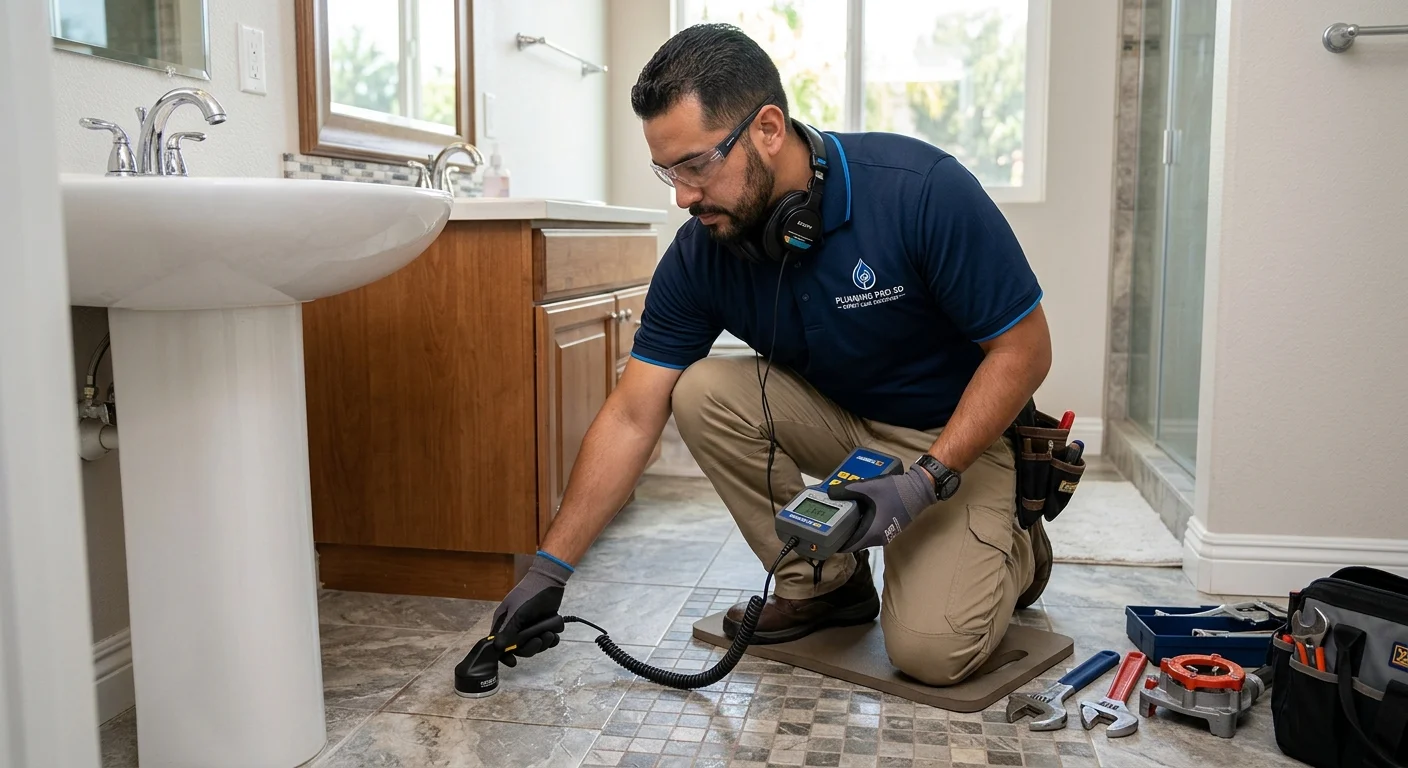
The thought of a plumber tearing up your floors to find a hidden leak is daunting. Thankfully, modern plumbing technology has advanced significantly. The plumbers we connect you with use non-invasive methods to accurately locate slab leaks, meaning there’s no jackhammering your home blind. Their approach to leak detection is precise and minimally disruptive.
The plumbers we connect you with bring sophisticated electronic leak detection equipment. This includes:
- Acoustic sensors: These highly sensitive listening devices can detect the faint sound of water escaping from a pipe under concrete. Even tiny trickles create a distinct sound the equipment amplifies, helping pinpoint the source with surprising accuracy, often within inches.
- Thermal imaging cameras: Hot water leaks can be identified using infrared cameras, which detect temperature differences on the floor surface. The area directly above a hot water leak will appear warmer, creating a clear visual map of the leak’s location.
- Tracer gas detection: In some challenging cases, a non-toxic, inert gas is introduced into the water line. This gas escapes through the leak and can be detected by specialized sensors on the surface, offering another layer of precision.
By combining these technologies, the plumbers in our network can zero in on the exact location of the slab leak. This precision is critical because it minimizes the amount of concrete that needs to be disturbed for the repair, saving you time, money, and hassle. They aim to find leaks efficiently, addressing the problem at its source with minimal impact on your San Diego home.
Repair options: spot repair, reroute/repipe, epoxy lining, and when each makes sense
Once a slab leak is precisely located, you’ll have several repair options. The best approach depends on factors like the leak’s location, the condition of your existing pipes, your budget, and how many other leaks your system might have. We’ll walk you through each option to help you make an informed decision.
Spot repair
A spot repair involves breaking through the concrete slab directly above the leak to access and repair the damaged section of pipe. This is often the most straightforward and least expensive option if:
- The leak is isolated and there’s no evidence of widespread pipe corrosion.
- The pipe material in question is generally in good condition.
- The leak is easily accessible without damaging critical structural elements.
The process involves carefully breaking open the concrete, repairing the pipe (often by replacing a section), and then patching the concrete and flooring. While effective for single, isolated leaks, it doesn’t address potential future leaks in aging pipe systems.
Reroute or repipe
A reroute or full pipe repair involves bypassing the damaged section of pipe under the slab entirely. Instead, a new pipe is run through the walls or attic to supply water to the affected fixture or area. A full repipe means replacing all the old pipes with new ones, often PEX or copper. This option is often recommended when:
- There are multiple slab leaks, indicating a systemic issue with the pipes.
- The existing pipes are old, corroded, or made of problematic materials.
- The leak is under a difficult-to-access area, like directly under a load-bearing wall or irreplaceable flooring.
- You want a long-term solution that eliminates the risk of future slab leaks.
While more involved than a spot repair, a reroute or repipe offers peace of mind and often improves water pressure and reliability throughout your home. The plumbers we connect you with tie new pipes into your existing system, so your plumbing functions like new.
Epoxy lining
Epoxy pipe lining is a trenchless repair method that involves cleaning the inside of the existing pipe and then applying a special epoxy resin that cures to form a new, durable pipe within the old one. This option is suitable when:
- The existing pipes are structurally sound but suffer from pinhole leaks or minor corrosion.
- You want a less invasive repair that avoids breaking through concrete or walls.
- The leak is in a location that’s particularly difficult or costly to access.
Epoxy lining effectively seals leaks and prevents future corrosion, extending the life of your plumbing system without significant demolition. It’s a great option for homeowners looking for a non-destructive solution.
The plumber assigned to your job will assess your specific situation and provide clear recommendations, explaining the pros and cons of each option for your San Diego home.
What slab leak repair costs in San Diego and what insurance may cover
The cost of slab leak repair in San Diego can vary significantly, typically ranging from a few thousand dollars for a simple spot repair to over $10,000 for more extensive rerouting or repiping. Several factors influence the final price:
- Detection complexity: Harder-to-find leaks might require more specialized equipment and time.
- Repair method: Spot repairs are generally the least expensive, while rerouting or repiping costs more due to increased labor and materials. Epoxy lining falls somewhere in between.
- Location of the leak: Leaks under kitchens, bathrooms, or areas with intricate flooring often cost more to access and repair due to demolition and restoration.
- Type of pipe: Replacing certain pipe materials can be more expensive than others.
- Extent of damage: If the leak has caused significant water damage to flooring, cabinets, or your foundation, the restoration costs will add to the overall expense.
It’s important to get a detailed estimate from a qualified plumber. Call Plumbing Pro San Diego and get connected with one; the plumber quotes you directly so you know exactly what to expect.
Regarding insurance coverage, it’s a bit nuanced. Most homeowners’ insurance policies cover sudden and accidental damage, which can include the damage caused by a slab leak (e.g., ruined flooring, drywall, mold remediation) but often not the cost of repairing the pipe itself. However, policies vary widely. It’s crucial to:
- Contact your insurance provider immediately after discovering a potential slab leak.
- Understand your specific policy: Check your declarations page and policy details regarding hidden water damage, mold, and plumbing repairs.
- Document everything: Take photos, keep records of communication, and save all repair estimates and invoices.
Often, if the leak was sudden and hidden, and you acted promptly to mitigate damage, a portion of the repair and restoration costs might be covered. However, damage from long-term, neglected leaks is usually excluded. We recommend reviewing your policy or speaking directly with your agent. You can also read our guide on does homeowners insurance cover plumbing.
Why you can’t wait on a slab leak, foundation and mold risk
A slab leak isn’t a problem that will fix itself or one you can afford to put off. Delaying repairs can lead to much more severe and costly issues for your San Diego home:
- Foundation damage: Water constantly saturating the soil beneath your foundation can cause it to shift, settle, or crack. This can compromise the structural integrity of your entire home, leading to costly and extensive foundation repairs that dwarf the cost of a plumbing fix. Signs like sticking doors, windows that won’t close, or new wall cracks can indicate foundation movement.
- Mold growth: Constant moisture in a dark, enclosed space like under your slab and within your walls creates the perfect environment for mold and mildew to flourish. Mold can spread rapidly, leading to poor indoor air quality, allergic reactions, and respiratory issues for your family. Mold remediation can be a complex and expensive process, often requiring specialized professionals.
- Pest infestations: Moist environments are attractive to pests like termites, ants, and cockroaches. A slab leak can create ideal conditions for these unwelcome guests to thrive and potentially damage your home further. If you start seeing insects around baseboards or damp areas after a leak, a San Diego pest control company can check whether the moisture has already drawn them in.
- Increased water bills: Every day a slab leak goes unrepaired, you’re literally pouring money down the drain. A continuous leak can waste hundreds or even thousands of gallons of water each month, significantly inflating your utility bills from the San Diego County Water Authority.
- Further pipe degradation: A leak in one spot might indicate that other sections of your plumbing are also compromised. Ignoring a single leak can lead to more leaks popping up in the future if the underlying pipe health isn’t addressed.
Acting quickly is the best way to protect your home, your health, and your wallet. If you suspect a slab leak, getting a professional diagnosis without delay is critical.
How to get a slab leak diagnosed today with Plumbing Pro San Diego
Don’t let the anxiety of a potential slab leak paralyze you. If you’ve noticed any of the warning signs, a warm spot on the floor, a rising water bill, the sound of running water, or mysterious cracks, it’s time to act. Plumbing Pro San Diego connects homeowners with plumbers who specialize in accurate, non-invasive leak detection and effective slab leak repair across San Diego County.
The plumbers in the network use advanced technology to pinpoint leaks quickly, minimizing disruption to your home. They’ll provide you with a clear explanation of the problem, discuss all your repair options, and quote you directly before any work starts. The goal is restoring your peace of mind and protecting your home from further damage.
When to call us
A suspected slab leak isn’t a DIY project. It requires specialized tools, expertise, and a licensed plumber to accurately diagnose and repair the issue without causing further damage to your home’s foundation or plumbing system. We cover all of San Diego County, including plumber in La Jolla where aging copper lines in pre-1980s homes make slab detection calls especially common. Call us at (858) 400-4417 and we’ll connect you with a plumber.
Areas this guide covers
We connect homeowners with licensed plumbers in these San Diego County communities.
Keep reading
Need a Plumber in San Diego?
Licensed, insured plumbers, ready across San Diego County. The plumber quotes you before any work starts.
Call (858) 400-4417Call any time, day or night, anywhere in San Diego County