
Last updated: August 19, 2026
Slab leak found: repair in place, reroute, or repipe
A slab leak is located. Now the real decision: open the slab, reroute the line overhead, or repipe the run. What actually drives that call in San Diego.
The short answer
- Once a slab leak is located, the real decision is whether to open the slab, reroute the line overhead, or repipe the run.
- Prior leak history on the same line, the pipe's material and age, and what sits above the leak all weigh on the choice.
- A second leak in the same line changes the math even when a single spot repair looked like the smaller job.
- Every option disturbs something: concrete and flooring for a spot repair, attic and wall access for a reroute, both for a full repipe.
- Restoration and what triggers a permit should be settled in writing before anyone touches the slab.
Finding the slab leak is only step one. The harder call is what to do about the pipe once you know where it is. A plumber has pinpointed the leak with electronic detection, and now three paths sit in front of you: open the concrete and fix that one section, reroute the line overhead through the attic and walls, or repipe the whole run. Each one solves the immediate leak. They do not solve the same problem, and they do not cost the same thing to live through.
Plenty of San Diego County homes sit on a concrete slab with the original copper water lines still running through or under it. That pipe material corrodes with age, and a leak in one spot is rarely the only weak point in the line. If you are not sure what your own home has, the plumber doing the detection work can identify the pipe material and its approximate age from the exposed sections at the water heater or under a sink, which tells you a lot before you ever get to this decision.
You found the leak. Now the real decision.
A spot repair opens the slab directly above the break, replaces the damaged section, and patches the concrete and flooring back. It is the smallest disturbance to the house on the day of the work. What it does not do is touch any other section of that same pipe run.
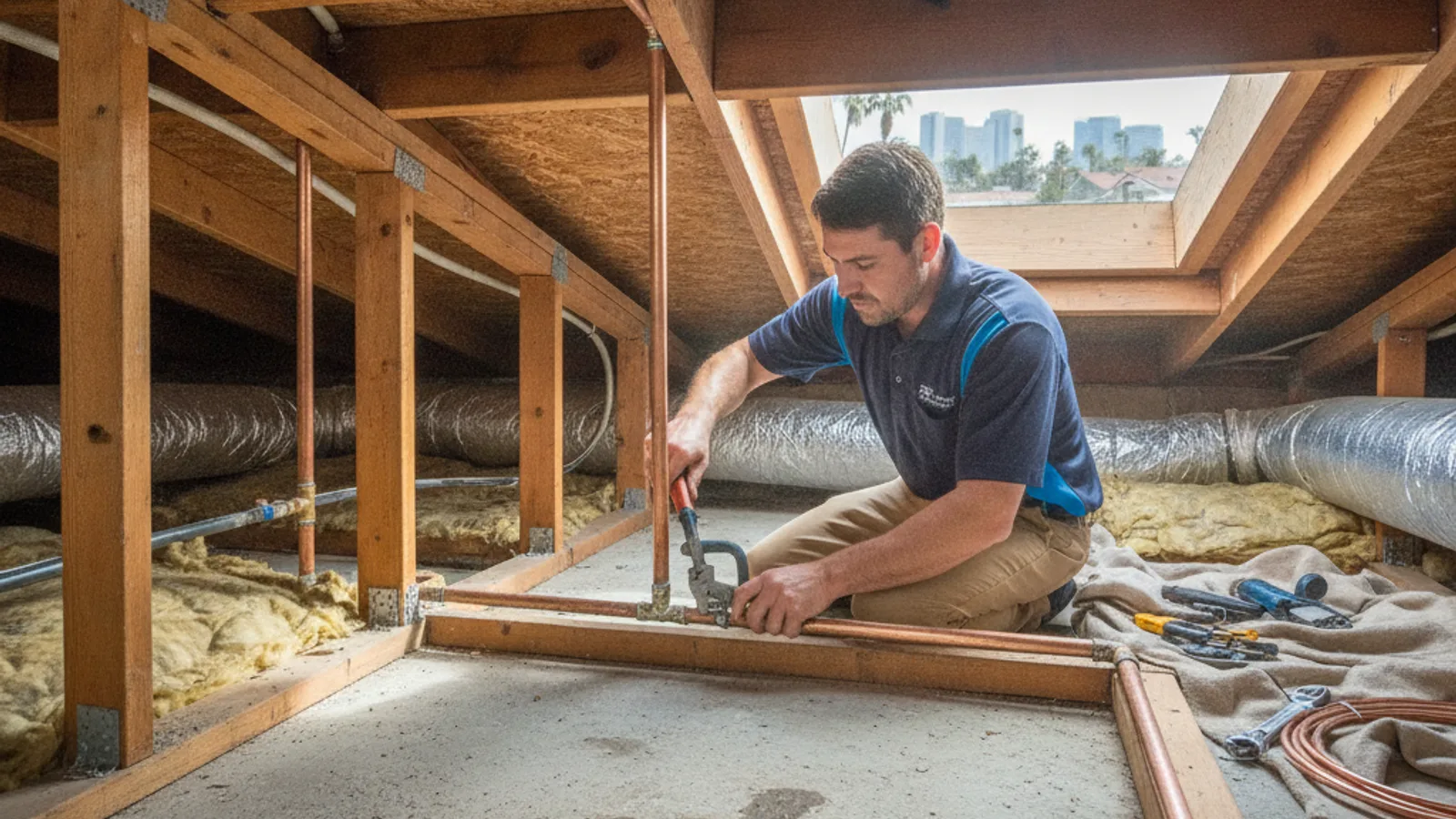
An overhead reroute abandons the under-slab section entirely and runs a new line through the attic and down through interior walls to reach the fixture. It sidesteps the slab altogether, but it needs a real path: attic space above the run, and wall cavities the plumber can open and close again to drop the new pipe down to the fixture.
A full repipe of the affected run replaces the entire line, not just the leaking segment, using new material end to end. It is the most invasive option up front and the one most likely to prevent a repeat call on that same line.
None of these is automatically right. The correct one depends on what already happened to the line, what the house physically allows, and how much risk you are willing to carry forward.
The fork, side by side
| Open the slab (spot repair) | Overhead reroute | Repipe the run | |
|---|---|---|---|
| What it disturbs | Concrete and flooring directly above the leak | Ceiling and wall sections along the new path, plus whatever sits in the attic above them | Both: the old under-slab line stays abandoned, new line replaces it end to end |
| What the house has to allow | Access to the exact leak location, usually through tile or slab flooring | Usable attic space and a wall path down to the fixture | Either an overhead path or, less often, a second slab opening |
| What it does and does not solve | Fixes this leak. Leaves the rest of the line, and its history, unchanged | Removes this section from service. Other under-slab runs on the same system are untouched | Removes the entire run from under-slab risk for that fixture or zone |
| Best fit | A first, isolated leak on a line with no other known problems | A house with attic access and a line serving a fixture with a workable route down | A line with more than one leak, or corrosion visible along its length |
When a spot repair is the right call
A first leak, on a line with no history of prior leaks, in a spot that is reasonably accessible, is the case where opening the slab makes sense. The plumber replaces the failed section, ties it back into sound pipe on either side, and patches the floor.
This works because a single pinhole leak does not prove the rest of the line is compromised. Pipe corrodes unevenly. A weak joint or a spot where the pipe sits against aggregate in the concrete can fail years before the rest of the run shows any wear. If detection confirms an isolated point of failure and the surrounding pipe tests sound, there is no reason to disturb more of the house than the leak itself requires.
Where a spot repair sits under decorative flooring, tile, engineered hardwood, natural stone, that restoration work has to be priced and planned with the same seriousness as the plumbing itself. A patch that does not match the original tile is still a hole in the floor as far as most homeowners are concerned.
When the second leak decides it for you
The math changes the moment a second leak shows up on the same line, even in a different spot. One leak can be bad luck. Two leaks on one run is the pipe telling you it is failing broadly, not at a single weak point.
At that stage, a spot repair addresses the leak you can see and says nothing about the leak you cannot. Copper piping that has already produced two pinhole failures is very likely to produce a third, somewhere else along the same run, on its own schedule. Repeating a spot repair each time a new leak surfaces means repeating the demolition, the patch, and the restoration cost each time too.
This is the point where a reroute or full repipe of that run, while more disruptive on the day it happens, removes the recurring risk instead of managing it one leak at a time. The pipe’s age and material matter here as much as the leak count. Older copper under a slab with a documented second failure is a different conversation than a newer PEX line with an isolated fitting problem.
Where the leak sits also weighs in. A leak under a load-bearing wall or beneath flooring that cannot be matched or repaired cheaply pushes the decision toward routing around the problem rather than opening that specific spot a second time.
Restoration is part of the job, not an afterthought
Every one of these three options ends with something that has to be put back together, and none of that work is optional. A spot repair leaves a hole in the slab and in whatever sits on top of it: tile, hardwood, carpet pad, or bare concrete. A reroute leaves opened wall and ceiling sections along its path, and a disturbed attic above them. A repipe combines both, plus the old abandoned line sitting inside the slab.
Ask specifically what restoration is included before work starts, and what is not. Matching an existing tile pattern, refinishing hardwood around a patched section, and repainting a wall that was opened for pipe access are all real costs that belong in the same conversation as the plumbing itself, not a separate surprise once the leak is fixed.
What to get in writing before demolition
Before anyone opens concrete, drywall, or a ceiling, get the following down on paper:
- Which option was chosen and why. The plumber’s stated reasoning, leak count, pipe condition, access, and route, should be in the estimate, not just the price.
- Exact scope of demolition. Which flooring, walls, or ceiling sections will be opened, and which will not.
- Restoration scope. What gets patched, matched, repainted, or replaced, and by whom. If restoration is a separate contractor, say so in writing.
- Permit responsibility. Confirm with the plumber whether the scope of work you are approving requires a permit from the city or county where the home sits, and who is filing it. The City of San Diego’s plumbing permit page is the place to confirm current requirements for your address.
- What happens if the reroute path does not work once walls are opened. Attic paths sometimes hit an obstruction that was not visible beforehand. Know the plan before that happens, not during.
A leak detection visit that ends with a clear, written scope for whichever repair path follows is doing its job right. If you have not yet confirmed the location of the leak, our guide to signs of a hidden water leak covers what to watch for before you get to this decision at all. Our broader slab leak guide covers detection and the general repair process if you are earlier in the process than this post assumes.
If the answer for your home ends up being a full repipe, our posts on whole-house repiping and PEX versus copper cover the material choice and what the project looks like beyond the slab leak that started it. Pipe repair and whole-house repipe are the two service pages that match the smaller and larger ends of this decision.
Frequently asked questions
Is a spot repair always the cheaper option after a slab leak?
Not necessarily. A spot repair disturbs less concrete on day one, but access and depth drive the bid more than the fixture does, and a second leak on the same line often means a second demolition and a second restoration bill. A reroute or repipe that avoids that repeat can cost less over the life of the line even when the first number looks bigger.
Can any San Diego home reroute a slab leak line through the attic instead of opening the floor?
Only if the house has attic space above the affected run and a workable path down into the walls serving the fixture. A single-story home with open attic access has more room to reroute than a home with a flat roof or a second story over the leak.
Does opening a slab or rerouting a water line need a permit in San Diego?
Often, depending on the scope and the jurisdiction. Confirm the current requirement with the City of San Diego Development Services or your city’s building department before demolition starts.
Why does a second leak in the same line matter more than the first?
One leak can be isolated. A second leak on the same run usually means the pipe is corroding along its length, and the next pinhole is a matter of when, not if.
Who decides between spot repair, reroute, and repipe?
The homeowner does, working from the plumber’s diagnosis. The plumber can describe the leak site, the pipe’s condition, and what the house’s layout allows, but the tradeoff between disruption now and risk later is yours to weigh.
When to call us
Deciding between these three paths takes a licensed plumber’s eyes on the actual leak, the pipe, and the house, not a guess over the phone. Call (858) 400-4417 with the leak’s location, whether this is a first or repeat leak on that line, and whether you have attic access above the affected fixture, and we’ll connect you with a licensed and insured local plumber.
Areas this guide covers
We connect homeowners with licensed plumbers in these San Diego County communities.
Keep reading
Need a Plumber in San Diego?
Licensed, insured plumbers, ready across San Diego County. The plumber quotes you before any work starts.
Call (858) 400-4417Call any time, day or night, anywhere in San Diego County