
Toilet leaking at the base? San Diego causes and fix
Water pooling around your toilet base usually means a failed wax ring. Learn to diagnose it, fix it, and what San Diego plumbers charge to reset it.
The short answer
- Water around the base of a toilet is almost always a failed wax ring, the seal between the toilet and the closet flange, usually because the toilet rocked loose over time.
- Dry the floor and watch the pattern. Water that returns only after a flush points to the wax ring or flange. Water that's always there points to a supply line or tank condensation.
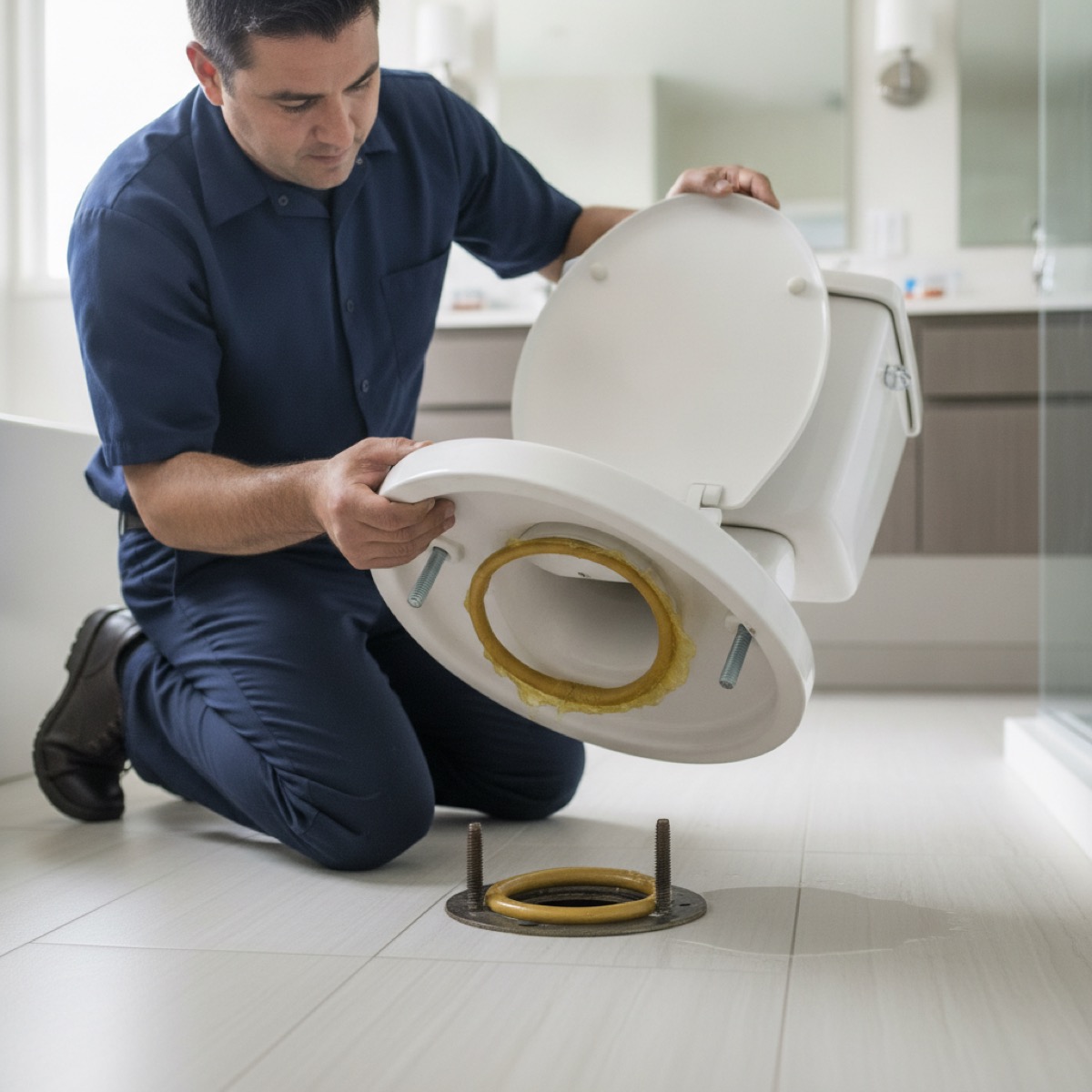
- The fix is pulling the toilet, replacing the wax ring, checking the closet flange, and resetting it on new bolts. A rocking toilet is the most common reason the seal breaks in the first place.
- A professional toilet reset in San Diego typically runs $150 to $350, more if the flange is cracked or the subfloor took water damage.
- If the floor around your toilet won't stay dry, call (858) 400-4417 and a licensed San Diego plumber can diagnose it and reset the toilet the same day.
Most water pooling around the base of a toilet comes from a failed wax ring, the seal between the toilet and the closet flange in the floor. A wax ring almost never fails on its own. It fails because the toilet rocked loose and broke the seal, which means resetting the toilet without fixing the wobble just buys you the same leak again in a few months.
Here’s how to tell where the water is actually coming from, how the fix works, and what it costs to get it done right in San Diego.
What causes water around the base of a toilet?
A handful of things cause it, and they’re not all equally common. Work through them in order.
A failed wax ring is the most frequent cause. It’s the seal between the bottom of the toilet, called the horn, and the closet flange that connects to the drain pipe below the floor. Once that seal breaks, water escapes underneath the toilet with every flush.
A loose or rocking toilet is usually why the wax ring failed in the first place. If the toilet isn’t bolted down tight and evenly, it rocks slightly every time someone sits down or stands up, and that constant motion works the wax ring loose over months.
A cracked or corroded closet flange can leak even with a brand new wax ring on it. Older San Diego homes, especially inland areas like El Cajon and La Mesa, sometimes have cast-iron flanges that have corroded and cracked with age.
Loose closet bolts or a loose tank can let water escape from a different point than the base seal, though it often looks like the same puddle.
Tank condensation, sometimes called a sweating tank, is a false alarm that only looks like a base leak. Cold water in the tank meets warm, humid San Diego coastal air and beads up on the outside, then drips down and pools at the base.
A dripping supply line or shutoff valve behind or beside the toilet can also mimic a base leak, since gravity pulls that water down to the floor near the toilet.
A cracked toilet base or bowl is rare but real, usually from an impact or from over-tightening the closet bolts during a past repair.
How to tell where the leak is coming from
Don’t guess. A few minutes of testing tells you exactly which cause you’re dealing with.
Start by drying the floor completely around the base of the toilet with a towel, including under the toilet as far as you can reach. Then watch what happens.
If water only reappears after someone flushes, the leak is almost certainly the wax ring or the flange seal, since that’s the only time water under pressure moves through that connection. If water is there constantly, even with no one using the toilet, think supply line, shutoff valve, or tank condensation instead.
Add a few drops of food coloring to the tank water and wait 15 minutes without flushing. If colored water shows up at the base, you’ve got a tank-to-bowl connection issue rather than a flange seal problem.
Grab the toilet bowl near the top and gently rock it side to side. Any movement at all means the toilet isn’t secured properly, and that’s very likely what broke the wax ring seal.
Finally, notice the smell. Clean water points to condensation or a supply line. A sewer smell means the wax ring seal is broken and gas or waste is escaping, which is the clearer signal to get it fixed soon.
How the fix works and what it costs in San Diego
Fixing a wax ring leak means pulling the toilet off the flange, not just caulking around the base and hoping.
The typical repair goes like this. Shut off the water and drain the tank and bowl. Disconnect the supply line and remove the closet bolts, then lift the toilet straight off the flange. Scrape off the old wax ring completely and inspect the flange for cracks, corrosion, or a flange sitting too low relative to the finished floor. Set a new wax ring, or a modern waxless rubber seal, which some plumbers prefer because it doesn’t deform if the toilet has to come off again. Reset the toilet on new closet bolts, tightening evenly so the porcelain doesn’t crack. Re-caulk around the base, but leave a small gap at the back, so if a leak ever happens again, you’ll see it instead of it hiding under the seal.
| Scope of repair | Typical San Diego cost |
|---|---|
| Wax ring only, flange in good shape | $150 to $250 |
| Wax ring plus new closet bolts and caulk | $200 to $350 |
| Flange repair or replacement needed | $350 to $600+ |
| Subfloor repair from water damage | Add $300 to $1,000+ depending on extent |
DIY-ing the part itself is cheap, a wax ring runs a few dollars at any hardware store. What you’re paying a plumber for is doing it once, correctly, without cracking the porcelain, missing a cracked flange, or leaving the toilet slightly rocking again.
Why a base leak matters more in San Diego homes
A few things about local housing stock make this worth taking seriously instead of just re-caulking and moving on.
Many San Diego homes sit on a concrete slab foundation, which means water leaking under a toilet doesn’t drain away, it wicks sideways under tile or vinyl flooring and sits trapped, which can take weeks to show up as a stain or a soft spot.
Older homes in El Cajon, La Mesa, and other inland communities more often have cast-iron closet flanges that corrode and crack with age, so a wax ring replacement alone won’t hold if the flange underneath it has failed.
The coastal humidity that makes San Diego pleasant also makes tank condensation a genuinely common false alarm, so it’s worth ruling that out before assuming the worst and pulling the toilet.
If the leaking toilet is on a second floor, a base leak that goes unnoticed can eventually show up as a stain on the ceiling below, which is a much more expensive repair than the toilet itself. If that’s already happening in your home, see our guide on water dripping from the ceiling.
And a broken wax ring seal isn’t just a water problem. It can let sewer gas into the bathroom, which is the smell test mentioned above and a good reason not to let this sit indefinitely.
If you’re not sure whether what you’re seeing is a toilet issue or something bigger moving through your slab, our guide to slab leak repair in San Diego covers how to tell the difference.
When to call a plumber
Dry the floor, run the flush test, and check whether the toilet rocks. That tells you most of what you need to know. If the leak only shows up after a flush, if the toilet moves when you rock it, or if you catch a sewer smell, that’s a wax ring and flange job, not a caulk job.
Call (858) 400-4417 and we’ll connect you with a licensed San Diego plumber who can confirm the cause, replace the wax ring and flange if needed, and reset the toilet so it stays put. Plumbers in the Plumbing Pro San Diego network cover all of San Diego County. Call any time for leaks that can’t wait.
For a broader look at pricing across different toilet issues, read our guide to toilet repair costs in San Diego. If you’d rather have someone vetted come do the work, see the best toilet repair options in San Diego. And if your toilet’s problem is water running constantly rather than pooling at the base, that’s a different fix, covered in why your toilet keeps running.
A plumber can also handle it directly through our toilet repair service, and if you’re not sure whether the water is coming from the toilet at all, leak detection can trace it to the source.
Frequently asked questions
Why is water leaking around the base of my toilet?
The most common cause is a failed wax ring, the seal between the bottom of the toilet and the closet flange in the floor. Once that seal breaks, water and sometimes waste escapes underneath the toilet every time it’s flushed. A loose or rocking toilet is the usual reason the wax ring fails, since the constant shifting breaks the seal over months or years.
Is a leaking toilet base an emergency?
It’s not a burst-pipe emergency, but it’s not something to leave either. Water sitting under a toilet can soak into the subfloor, especially on older homes with wood subfloors, and it can lead to rot, mold, or a damaged ceiling below if the toilet is on a second floor. Dry it up, stop using the toilet if you can, and get it looked at within a day or two.
Can I fix a toilet base leak myself?
If you’re comfortable pulling a toilet, yes. A wax ring costs a few dollars and the job is a common DIY repair. The parts most people get wrong are setting the toilet straight the first time, torquing the closet bolts evenly without cracking the porcelain, and checking the flange itself isn’t cracked or sitting too low, which a new wax ring won’t fix on its own.
How much does it cost to fix a toilet leaking at the base in San Diego?
A professional toilet reset with a new wax ring in San Diego usually runs $150 to $350. That covers pulling the toilet, replacing the seal, resetting it on new closet bolts, and re-caulking the base. Costs move higher, often $350 to $600 or more, if the closet flange is cracked and needs replacement or the subfloor underneath needs repair from water damage.
What is a toilet wax ring and how often does it fail?
A wax ring is a donut-shaped seal made of wax or a modern rubber alternative that sits between the base of the toilet and the closet flange, sealing the connection to the drain. There’s no set replacement schedule, wax rings can last decades undisturbed, but they fail early on a toilet that rocks, gets removed and reset without a new ring, or sits on a flange that’s cracked or sitting at the wrong height.
Does a toilet base leak mean I need a new toilet?
Almost never. A base leak is a seal and flange problem, not a toilet problem, and the toilet itself is almost always fine to reuse. The rare exception is a toilet with a cracked base or a chipped horn, the porcelain outlet on the bottom, which won’t seal no matter how many times you replace the wax ring. A plumber can tell you in minutes whether that’s the case.
Areas this guide covers
We connect homeowners with licensed plumbers in these San Diego County communities.
Keep reading
Need a Plumber in San Diego?
Licensed, insured plumbers, ready across San Diego County. The plumber quotes you before any work starts.
Call (858) 400-4417Call any time, day or night, anywhere in San Diego County