
Last updated: April 25, 2026
Toilet Keeps Running? How to Fix It (San Diego Guide)
Toilet constantly running in San Diego? Learn common causes, DIY fixes, and when to call Plumbing Pro San Diego for expert repair, especially with hard water.
The short answer
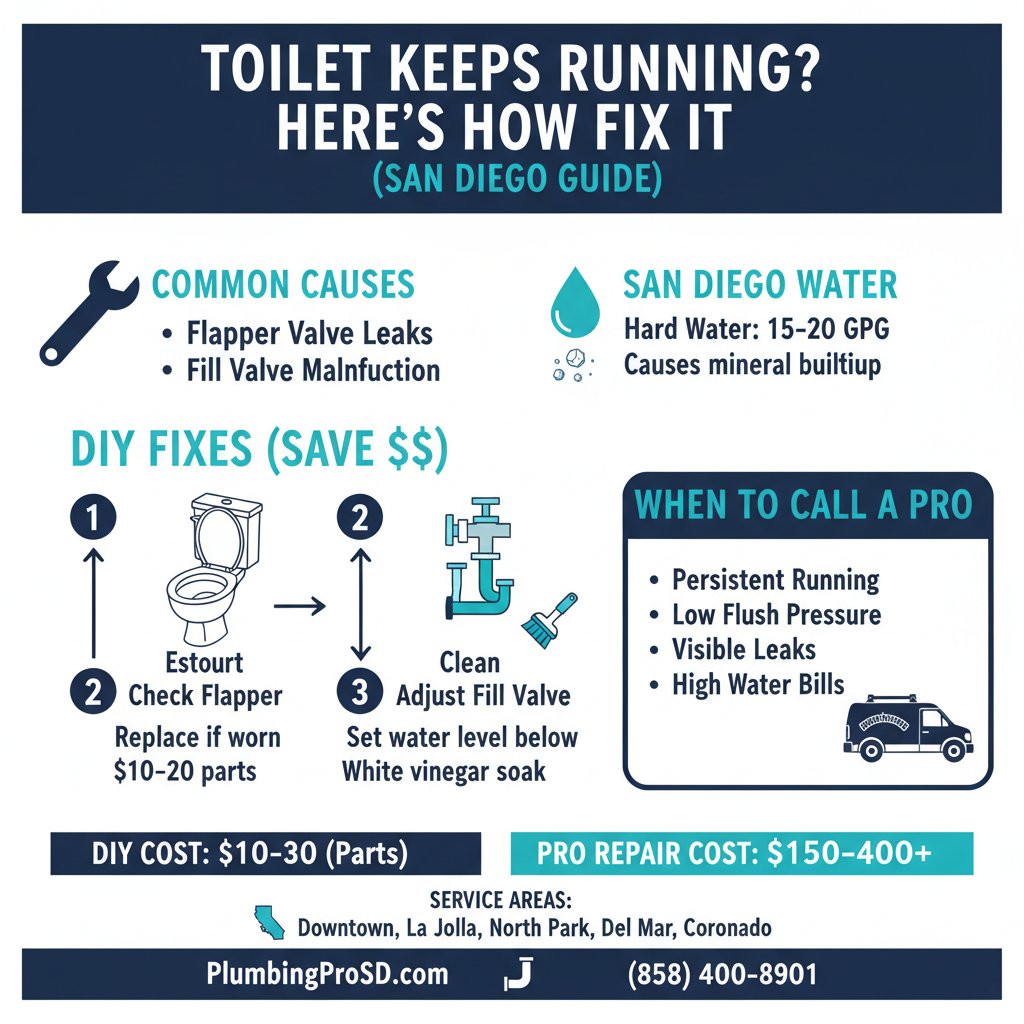
- A running toilet is almost always a worn flapper, a misadjusted fill valve or float, or a chain that is too long or too short.
- Confirm a leaky flapper with the food coloring test: add dye to the tank, wait 15 to 20 minutes, and check if color seeps into the bowl.
- Most fixes are cheap DIY: replace the flapper, clean the flush valve seat, or adjust the float height; a flapper is an inexpensive part.
- San Diego hard water (about 16 grains per gallon) degrades rubber flappers and builds limescale on the seal, so it happens more often here.
- A running toilet can waste hundreds of gallons a day. If DIY fixes do not stop it, call (858) 400-4417.
That persistent sound of a running toilet isn’t just annoying; it’s a stealthy water thief, silently driving up your San Diego water bill. Whether it’s a soft hiss, an intermittent gurgle, or a full-blown continuous flush, a running toilet can waste hundreds of gallons of water per day, impacting both your wallet and our region’s precious water resources. Understanding what causes this common plumbing problem can save you money, conserve water, and often empower you to tackle simple fixes yourself.
At Plumbing Pro San Diego, we understand the unique challenges San Diegans face with their home’s plumbing, from the impact of hard water to the aging infrastructure in many of our beloved neighborhoods. This guide will walk you through the most common culprits behind a running toilet, provide clear steps for DIY troubleshooting, and explain when it’s time to call in a professional San Diego plumber.
Understanding Your Toilet’s Inner Workings
Before we troubleshoot, let’s quickly review the main components inside your toilet’s tank. When you flush, the flush valve (which includes the flapper) opens, allowing water to rush into the bowl. As the tank empties, the flapper valve closes, and the fill valve (or ballcock) opens to refill the tank. A float mechanism rises with the water level, eventually signaling the fill valve to shut off once the tank is full. The refill tube directs a small amount of water from the fill valve into the overflow tube to replenish the toilet bowl. A problem in any of these components can lead to your toilet constantly running.
Common Causes of a Running Toilet & How to Fix Them
Most running toilet issues stem from a few key components. With a little investigation, you can often pinpoint the problem and resolve it without specialized tools.
1. The Flapper Valve Isn’t Sealing Properly
The flapper valve is a rubber or plastic disc that sits at the bottom of the toilet tank. It lifts when you flush and then drops back down to seal the drain hole, holding water in the tank. If the flapper doesn’t seal correctly, water will continuously leak into the bowl, causing the fill valve to periodically activate to refill the tank – a phenomenon sometimes called “ghost flushing.”
Symptoms:
- You hear water refilling the tank every few minutes or so, even when no one has flushed.
- The water level in the tank drops noticeably over time.
- To test, add a few drops of food coloring to the tank water. Wait 15-20 minutes without flushing. If color appears in the bowl, your flapper is leaking.
San Diego Context: San Diego’s hard water, with an average of about 16 grains per gallon (GPG), can accelerate the degradation of rubber flappers. Mineral deposits (limescale) from the Colorado River water supplied by the SDCWA can also build up on the flapper’s edges or the flush valve seat, preventing a tight seal.
DIY Fix:
- Shut off the water: Turn the water supply valve clockwise, located on the wall near the base of the toilet.
- Drain the tank: Flush the toilet to empty most of the water from the tank.
- Inspect the flapper:
- Check the chain: Ensure the chain connecting the flapper to the flush handle isn’t too long (can get caught under the flapper) or too short (prevents full closure). Adjust if necessary, leaving a slight amount of slack.
- Inspect the flapper itself: Look for signs of wear, cracks, warping, or mineral buildup. Rub your finger along the rubber edge to feel for rough spots.
- Clean the flush valve seat: Gently wipe down the area where the flapper rests to remove any grime or mineral deposits. Use a non-abrasive scrubber if needed.
- Replace if necessary: If the flapper is old, stiff, or visibly damaged, it’s best to replace it. They are inexpensive and widely available. Make sure to get a universal fit flapper or one specifically designed for your toilet’s brand and model (often stamped inside the tank).
- Restore water: Turn the water supply back on and check for a proper seal.
2. The Fill Valve is Malfunctioning
The fill valve (also called the ballcock assembly) is responsible for refilling the toilet tank and bowl after each flush. If it’s faulty, it might not shut off completely, leading to continuous running water into the tank, often spilling into the overflow tube.
Symptoms:
- Water continuously runs into the overflow tube (the tall, narrow pipe in the center of the tank).
- You can clearly hear water running, even when the tank appears full.
- The water level in the tank is consistently higher than the overflow tube.
DIY Fix:
- Shut off the water and flush the toilet.
- Check the float:
- Most modern toilets use a cup-style float that slides up and down the fill valve shaft. Ensure it moves freely.
- Older toilets may have a ball float attached to a float arm. Make sure the arm isn’t bent or obstructed.
- Adjust the water level: The water level in the tank should ideally be about 1 inch below the top of the overflow tube.
- For cup-style floats, there’s usually an adjustment screw or clip on the fill valve itself. Turn the screw clockwise to lower the float and counter-clockwise to raise it.
- For ball floats, gently bend the float arm down slightly to lower the water level.
- Inspect for damage: Look for cracks or damage to the fill valve body or its components.
- Restore water: Turn the water back on. The fill valve should shut off cleanly once the water reaches the desired level.
When to Call a Professional: If adjusting the float doesn’t stop the running, or if the fill valve is visibly old, corroded, or damaged, it likely needs replacement. A faulty fill valve can be particularly wasteful and might indicate broader issues, especially in older homes in areas like North Park or Kensington where original plumbing fixtures might be nearing the end of their lifespan.
3. The Float Arm is Misaligned or Obstructed
Related to the fill valve, the float is what tells the fill valve to stop. If it’s not positioned correctly or if something is interfering with its movement, the tank might overfill or never fully signal the fill valve to stop.
Symptoms:
- Similar to a malfunctioning fill valve, water spilling into the overflow tube.
- Visible obstruction preventing the float from rising.
DIY Fix:
- Shut off water and flush the toilet.
- Clear obstructions: Look inside the tank for anything that might be snagging the float or the float arm (e.g., chains, hoses, debris). Remove any obstructions.
- Reposition the float: For ball floats, ensure the arm is straight and moves freely. For cup-style floats, check that it’s correctly seated on the fill valve shaft.
- Adjust water level as described for fill valve issues.
4. The Refill Tube is Too Long or Misdirected
The refill tube is a small, flexible hose that connects the fill valve to the overflow tube. Its purpose is to send a small stream of water into the overflow tube to refill the toilet bowl after each flush, ensuring there’s enough water for the next flush. If it’s too long or improperly positioned, it can continuously siphon water.
Symptoms:
- You hear a constant trickle of water, specifically into the overflow tube, even after the tank has finished filling.
- Water level in the bowl may seem too high.
DIY Fix:
- Shut off water and flush the toilet.
- Inspect the refill tube:
- Ensure the end of the refill tube is above the water level inside the tank, and that it’s directing water into the overflow tube, not below the water line or outside of it.
- Trim the refill tube if it’s too long, so it sits just above the top of the overflow tube. You can usually clip it to the side of the overflow tube with a small clip provided with new fill valves.
5. Sediment and Mineral Buildup
San Diego’s hard water, rich in calcium and magnesium, can lead to mineral buildup (limescale) over time. This sediment can interfere with the moving parts of your toilet’s fill valve and flapper, preventing them from seating or operating correctly.
Symptoms:
- Visible white or yellowish crusty deposits on internal tank components.
- Intermittent running that seems to improve or worsen randomly.
- Reduced flushing power.
San Diego Context: This is a particularly common issue for homes in our service area, especially in older homes built in the 1950s-70s in neighborhoods like Ocean Beach or Hillcrest that may still have original plumbing fixtures. The constant flow of mineral-rich water can eventually seize up components.
DIY Fix:
- Shut off water and flush the toilet.
- Inspect and clean: Carefully examine the flapper, flush valve seat, and fill valve for mineral deposits.
- Use vinegar or a descaler: For stubborn buildup, you can try cleaning affected parts with white vinegar or a calcium/lime/rust remover designed for plumbing fixtures. Allow it to soak, then scrub gently with a brush. Never use harsh chemicals like bleach inside the toilet tank, as they can damage rubber components.
- Consider replacement: If components are heavily encrusted and cannot be cleaned effectively, replacement is often the best solution.
6. Faulty Flush Handle
While less common, a stuck or poorly adjusted flush handle can also cause a running toilet. If the handle doesn’t return to its full upright position, it can keep the flapper slightly open, allowing water to leak.
Symptoms:
- The flush handle feels loose or doesn’t spring back completely after flushing.
- You might need to jiggle the handle to stop the toilet from running.
DIY Fix:
- Inspect the chain: Ensure the flapper chain isn’t too taut, pulling the flapper open. There should be a small amount of slack.
- Check the handle nut: The nut on the inside of the tank that secures the handle can sometimes loosen, causing the handle to bind. Tighten it carefully.
- Lubricate: A little silicone lubricant on the handle’s pivot points can sometimes help.
- Replace the handle: If the handle mechanism is bent, broken, or corroded, a new handle assembly is an easy and inexpensive fix.
DIY Troubleshooting vs. Professional Repair
Here’s a quick guide to help you decide when to roll up your sleeves and when to call Plumbing Pro San Diego:
| Problem | DIY Fix Complexity | When to Call Plumbing Pro San Diego |
|---|---|---|
| Flapper Valve Leak | Easy | If the leak persists after replacement, the flush valve seat is damaged, or you’re unsure which flapper type to buy. |
| Fill Valve Malfunction | Moderate | If adjustments don’t work, the valve is visibly old/damaged, or you suspect internal issues not accessible by simple cleaning. Especially important in older homes where parts might be seized. |
| Float Arm Issues | Easy | If the float mechanism is physically broken or part of a larger, malfunctioning fill valve. |
| Refill Tube Problems | Easy | If the fill valve itself needs replacement, or if adjusting the tube doesn’t solve the problem, indicating a deeper issue within the valve. |
| Sediment Buildup | Moderate | If heavy scale has caused damage to plastic/rubber components, or if buildup returns quickly. This can indicate a need for more thorough water treatment solutions in San Diego’s hard water environment. |
| Faulty Flush Handle | Easy | If tightening/lubricating doesn’t work, or the entire flush mechanism (handle, chain, flapper assembly) needs to be replaced due to significant wear. |
| ”Ghost Flushing” (Intermittent Runs) | Moderate | If the cause isn’t clear after checking flapper and fill valve. Could indicate a very slow leak that’s hard to trace or an internal fill valve issue that’s not easily diagnosed. |
| Continuous Running into Overflow | Moderate | If adjusting the float and checking the refill tube don’t stop the flow. This points directly to a failing fill valve that needs professional replacement. |
| Water Level Never Reaches Shut-Off | Moderate | This often means the fill valve is defective or improperly installed. |
| Water Appearing on Floor | High (Call a Pro Immediately) | This is often a sign of a larger, more serious issue like a tank crack, a faulty wax ring, or even a slab leak beneath your toilet. This requires immediate leak detection services to prevent significant water damage and mold growth. |
When to Call a Professional San Diego Plumber
While many running toilet issues are DIY-friendly, some signs point to problems best left to licensed professionals. Knowing when to call can save you time, further damage, and ultimately, money.
- Persistent Problems: If you’ve tried the common fixes and your toilet is still running, there might be a more complex internal issue or a part that requires professional expertise to diagnose and replace correctly.
- Visible Damage or Cracks: If you notice cracks in the toilet tank or bowl, especially around the base or the fill valve connection, this is beyond a DIY fix and necessitates replacement.
- Water on the Floor: Any water pooling around the base of your toilet could mean a compromised wax ring seal, a crack, or a connection leak. This can quickly lead to subfloor damage and mold. This could even indicate a slab leak in homes with slab-on-grade foundations, common in 1950s-70s San Diego architecture. These leaks require specialized pipe repair and leak detection services.
- Toilet is Old or Constantly Breaking: For very old toilets, especially those that pre-date water-saving regulations, it might be more cost-effective to replace the entire toilet than to keep patching up old components. Modern, EPA WaterSense certified toilets offer significant water savings.
- Root Intrusion: In neighborhoods with mature landscaping like Logan Heights or where drought-tolerant but aggressive root systems (ficus, eucalyptus, pepper trees) are common, running toilets can sometimes be a symptom of a much larger problem: tree roots invading your sewer line. The constant flow of water attracts roots, which can create blockages and even crack pipes. If you suspect deeper sewer line issues, especially if accompanied by other drain problems, professional drain cleaning or even a sewer camera inspection might be needed.
- Unusual Odors: A running toilet combined with foul odors could indicate a failing sewer connection or an issue with your vent stack.
At Plumbing Pro San Diego, we connect you with licensed plumbers for all types of toilet repairs and replacements. From simple flapper swaps to complex fixture installation and diagnosing elusive leaks, the licensed plumbers we connect you with have the tools and experience to get your bathroom plumbing running perfectly again. If you’re experiencing a persistent running toilet, especially if it leads to concerns about potential leaks or deeper problems, don’t hesitate to reach out for emergency plumbing services or schedule a service call.
The San Diego Difference: Why Our Local Context Matters
San Diego isn’t just a beautiful place to live; it also presents unique plumbing challenges that influence how we approach a running toilet.
- Hard Water & Mineral Buildup: As mentioned, our water’s mineral content is high. This means internal toilet components (flappers, fill valves, seals) are more prone to limescale buildup and premature wear. Regular inspection and cleaning, or considering a whole-home water filtration system, can be particularly beneficial for San Diego residents.
- Aging Infrastructure: Many of San Diego’s charming, established neighborhoods – think Normal Heights, Grant Hill, Old Town, or parts of Point Loma – feature homes built decades ago. These homes often have original plumbing fixtures and piping systems that are simply past their prime. A running toilet in these areas can sometimes be an early warning sign of broader plumbing fatigue, necessitating more frequent repairs or eventual system upgrades.
- Slab Leaks: For homes built on slab-on-grade foundations, common from the 1950s through the 1970s, a running toilet that seems to have no obvious cause in the tank could potentially indicate a slab leak. This is when a pipe beneath the concrete foundation leaks. The constant water flow from a running toilet could mask the sound of a slab leak, or the leak itself could be causing pressure fluctuations that affect the toilet’s fill cycle. Slab leaks require specialized leak detection and repair techniques to avoid extensive damage.
- Aggressive Tree Roots: While not directly causing a running toilet, the attraction of water to thirsty tree roots is a significant issue for sewer lines in San Diego. A consistently running toilet can feed a small leak or compromise in your drain line, drawing in roots from mature ficus, eucalyptus, or pepper trees often used in our drought-tolerant landscaping. This can lead to serious sewer line blockages and eventually pipe damage. Unlike colder climates, San Diego’s lack of freeze/thaw cycles makes trenchless sewer repair particularly well-suited for addressing root-damaged pipes without tearing up your yard. You can learn more about trenchless sewer repair options in our dedicated guide.
- Water Conservation: With our history of droughts and water awareness, every gallon wasted by a running toilet in San Diego is significant. Fixing a running toilet isn’t just about saving money; it’s about being a responsible steward of our local resources. The San Diego Water Authority (SDCWA) emphasizes efficient water use for all residents.
Preventative Maintenance Tips for Your Toilet
A little proactive care can go a long way in preventing a running toilet and extending the life of your plumbing fixtures.
- Regular Inspection: Once or twice a year, perform the food coloring test on your flapper and visually inspect the tank components for wear, mineral buildup, or misalignment.
- Clean the Tank: Periodically clean out the toilet tank to remove sediment and grime that can accumulate. Shut off the water, flush, and then scrub the interior with a toilet brush and a mild cleaner (avoid bleach).
- Check the Chain: Ensure the flapper chain has just enough slack (about 1/2 inch) so it doesn’t get caught or pull the flapper open.
- Avoid Tank Drop-Ins: Chemical “blue tablet” tank cleaners can damage rubber and plastic components over time, leading to premature flapper or fill valve failure.
- Listen and Observe: Pay attention to unusual sounds or changes in your toilet’s operation. Catching a problem early can prevent it from escalating.
For more general plumbing maintenance tips, check out our blog post on how to prevent clogged drains.
Trust Plumbing Pro San Diego with Your Toilet Repair Needs
When a running toilet goes beyond a simple DIY fix, or when you suspect a deeper issue with your home’s plumbing, you need a local expert you can trust. Plumbing Pro San Diego is a referral service connecting homeowners across San Diego County with vetted, C-36 licensed plumbing contractors. You can verify any contractor’s license at the CSLB. The plumbers in the network are intimately familiar with the unique plumbing challenges of our region, from addressing hard water impacts to navigating the complexities of older home plumbing in areas like University Heights and Gaslamp Quarter.
The plumbers we connect you with pride themselves on honest assessments and efficient, lasting repairs, and quote you a price before any work starts. Whether it’s a simple toilet repair or a more involved bathroom and kitchen plumbing project, the goal is plumbing that operates smoothly and efficiently, helping you conserve water and avoid unnecessary costs. Learn more about how much a plumber costs in San Diego before you call.
Frequently Asked Questions About Running Toilets
Q: Why does my toilet run sometimes but not always?
A: Intermittent running, often called “ghost flushing,” usually indicates a slow leak from the toilet tank into the bowl. The most common culprit is a flapper valve that isn’t sealing perfectly, allowing water to slowly seep out. Once enough water has leaked, the fill valve activates briefly to refill the tank. Mineral buildup from San Diego’s hard water can often cause this by preventing a tight seal.
Q: How much water does a running toilet waste in San Diego?
A: A continuously running toilet can waste anywhere from a few gallons to several hundred gallons of water per day, depending on the severity of the leak. Even a seemingly small, slow leak can add thousands of gallons to your San Diego Water Authority bill over a month, significantly impacting your costs and our local water conservation efforts. The EPA WaterSense program (EPA WaterSense) highlights the importance of fixing leaks promptly.
Q: Can a running toilet cause other plumbing problems?
A: Yes, a running toilet can mask or contribute to other issues. The constant flow of water can attract tree roots to your sewer line, exacerbating blockages. It can also put extra strain on your plumbing system, potentially shortening the lifespan of components. More seriously, if the running water indicates a crack or a failing wax ring, it can lead to water damage to your subfloor, mold growth, or even signal a deeper slab leak.
Q: Is it okay to use chemical drop-in tablets to clean my toilet tank?
A: While convenient, most chemical drop-in toilet tank cleaners (the “blue tablets”) are not recommended. The harsh chemicals they contain can degrade the rubber and plastic components inside your toilet tank, such as the flapper and fill valve seals, leading to premature failure and causing your toilet to run. It’s best to clean the tank manually with a mild cleaner and brush, or use an in-bowl cleaner.
Q: My toilet runs, but I don’t see any water spilling into the overflow tube. What could it be?
A: If your toilet runs but the water level isn’t exceeding the overflow tube, the issue is most likely a leaky flapper or a problem with the flush valve seat. Water is slowly escaping into the bowl, and the fill valve is topping off the tank. Perform the food coloring test to confirm a flapper leak. If the flapper is fine, consider inspecting the flush valve for imperfections or debris.
Need Expert Toilet Repair in San Diego?
Don’t let a running toilet drain your wallet or your peace of mind. While many common issues can be fixed with a little DIY effort, sometimes the problem lies deeper, especially with the unique challenges presented by San Diego’s hard water and diverse housing stock. If you’ve tried the fixes above and your toilet is still running, or if you suspect a more serious plumbing issue, trust the experienced professionals at Plumbing Pro San Diego. We’re here to connect you with reliable, efficient, and lasting solutions for all your bathroom and kitchen plumbing needs.
Call Plumbing Pro San Diego today at (858) 400-4417 for friendly service anywhere in San Diego County.
Areas this guide covers
We connect homeowners with licensed plumbers in these San Diego County communities.
Keep reading
Need a Plumber in San Diego?
Licensed, insured plumbers, ready across San Diego County. The plumber quotes you before any work starts.
Call (858) 400-4417Call any time, day or night, anywhere in San Diego County