Commercial plumbing San Diego: What to expect
Commercial plumbing San Diego guide for property managers and businesses, covering shared lines, fixture compliance, backflow notices, repairs, and bids.
The short answer
- Commercial plumbing in San Diego covers shared systems, tenant access, compliance checks, repairs, diagnostics, and planned upgrades.
- California SB 407 set a January 1, 2019 fixture replacement deadline for multifamily and commercial properties, subject to listed exemptions.
- Backflow testing procedures come from the water agency serving the property, so check the current agency notice before scheduling.
- Commercial pricing depends on the building, access, diagnostic work, materials, and project scope. Request an itemized bid.
- Plumbing Pro San Diego connects property managers and business owners with licensed and insured local plumbers.
Commercial plumbing in San Diego needs a building-specific diagnosis, a tenant access plan, and an itemized bid from a licensed local plumber. A shared drain backing up in a North Park duplex isn’t the same job as a single fixture leak in a Poway office suite, even though both get called “commercial.” We connect property managers, landlords, HOA boards, and business owners with local pros who actually assess the property in front of them instead of quoting off a phone call.
Commercial work isn’t limited to storefronts. It covers multi-tenant housing, mixed-use buildings, restaurants, salons, offices, medical spaces, warehouses, and light industrial properties. Shared systems and public-facing spaces bring planning questions a single-family service call just doesn’t have to answer.
What counts as commercial plumbing in San Diego?
Commercial plumbing covers the water, waste, gas, fixture, and water-heating systems serving a commercial or multi-tenant property. It can involve one leaking fixture or a building-wide piping project.
The first planning question depends on the property:
| Property type | First questions to answer |
|---|---|
| Multi-tenant or mixed-use | Which units share the affected line? Who can authorize access and shutoffs? |
| Retail store or salon | Which fixtures or equipment connect to the line? When can the work area close? |
| Restaurant | Which grease interceptor or FOG rules apply through the serving wastewater agency? |
| Office or medical space | Which rooms need uninterrupted service? Are specialty connections involved? |
| Warehouse or light industrial | Which lines serve the building, and which serve installed equipment? |
In North Park and University Heights, apartments may sit above retail suites. One tenant’s clog can surface in another space when lines are shared. Access may require coordination between residents, businesses, and the property manager.
Older storefronts in North Park, Hillcrest, and downtown may contain galvanized or cast-iron sections. Newer office and strip-mall buildings in Poway, Rancho Bernardo, and Otay Mesa may use copper or PEX. These are starting points, not diagnoses. The plumber should confirm the actual material before recommending work.
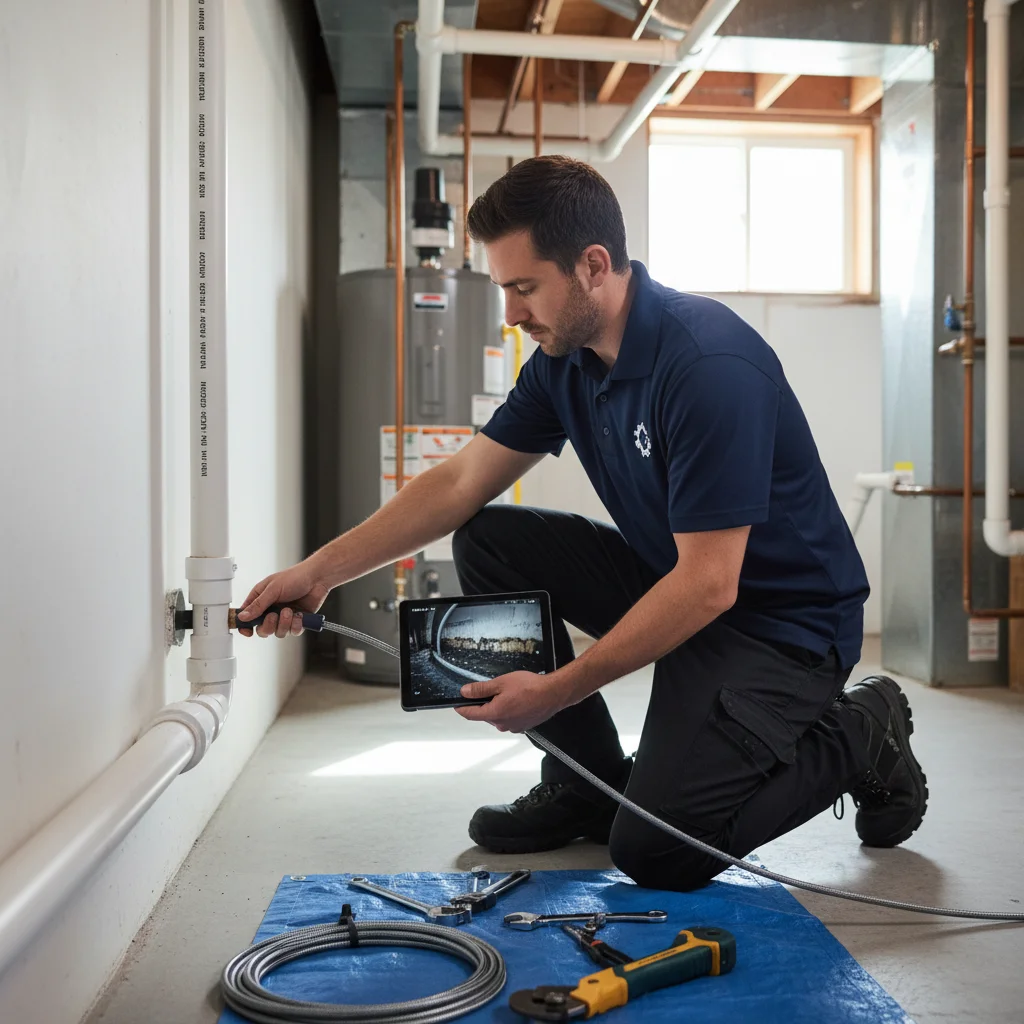
A recurring shared-line problem may justify a commercial sewer camera inspection. Recorded footage can separate a local fixture problem from a larger drain or sewer issue. Our San Diego sewer camera guide explains what information to request from the inspection.
How is commercial plumbing different from residential work?
Commercial plumbing often involves more users, shared lines, and controlled access. A repair may affect several suites instead of one household.
Four differences shape the work:
- Tenant coordination. The plumber needs the affected suite numbers, access contacts, and operating hours.
- Water shutoff planning. A shared shutoff can interrupt several tenants. The property manager should approve the window before work begins.
- System documentation. Building plans, prior repair records, camera footage, and agency notices can shorten the diagnostic process.
- Property-specific requirements. Permits, accessibility, grease management, and backflow procedures depend on the building and local authority.
A single-family plumber may have the correct license but lack the right commercial experience. California’s C-36 classification covers plumbing in all structures and fixed works. Its scope includes water and gas piping, waste disposal, water heating, and specified safety devices. Forced warm-air units fall outside that classification, and individual contractor capabilities vary.
Check the contractor through the CSLB license lookup. The database shows license status, classifications, bond information, complaint history, and workers’ compensation information. You can search by license number, business name, or personnel name.
For more screening steps, use our guide to choosing a plumber in San Diego. Ask the contractor to explain who will handle access, diagnostics, permits, testing, and restoration.
Which compliance checks matter for a commercial property?
Commercial compliance begins with the property’s use and location. Don’t carry a rule from one water district or city into another.
Check older fixtures against SB 407
California SB 407 required all noncompliant high-water-use fixtures in multifamily and commercial properties to be replaced by January 1, 2019. That deadline has passed.
Earlier replacement triggers began January 1, 2014. They covered additions exceeding 10% of floor area, alterations costing more than $150,000, and alterations to rooms containing noncompliant fixtures.
The law lists exemptions for historical sites, technically infeasible installations, and buildings with permanently disconnected water service. If property records don’t confirm a completed retrofit, have the installed fixtures checked now. A licensed plumber can discuss commercial fixture replacement options after the property requirements are confirmed.
Read the current backflow notice
San Diego County doesn’t use one countywide backflow office. The City of San Diego, Helix, Otay, Sweetwater, Olivenhain, Padre Dam, Rincon del Diablo, and Vallecitos handle their respective customers.
If an agency has placed the property’s backflow assembly on its testing program, follow its current notice. The notice should identify the deadline and accepted submission process.
Our San Diego backflow testing guide provides the agency breakdown and device overview. Confirm current details directly with the provider named on the water bill.
Confirm use-specific requirements
Food-service operators should ask their wastewater agency what grease interceptor and FOG rules apply. The property’s agency sets the current requirement.
Public restroom renovations can raise accessibility questions about fixtures and clearances. Confirm those requirements with the building department serving the address before approving a layout.
These checks belong near the start of a project. They shouldn’t appear as surprise line items after work begins.
What should a commercial plumbing visit and bid include?
A productive service visit starts before the plumber arrives. Gather the property address, building type, affected suites, access contact, operating hours, and any agency notice. Include photos, prior invoices, and existing camera footage when available.
During the visit, the plumber should identify the affected system and document access conditions. Larger drain problems may need camera work before a repair method is selected. Building-wide piping problems may require a separate pipe repair or replacement scope.
Ask for a written bid with these items separated:
| Bid item | What it should clarify |
|---|---|
| Diagnosis | The observed problem and affected areas |
| Testing or camera work | What diagnostic work is included |
| Access and shutdowns | Required spaces, tenants, and water-off windows |
| Labor and materials | What the contractor will provide |
| Permits and agency testing | Who handles each requirement |
| Restoration | Wall, floor, ceiling, or pavement work included |
| Exclusions | Work that requires a separate contractor or approval |
| Schedule | Work window and any after-hours conditions |
Commercial plumbing doesn’t have one useful fixed price. A repair visit, building repipe, and water-heater project have different scopes. Building size, access, materials, diagnostics, and restoration can change the total.
Compare itemized bids, not headline totals. A lower bid may exclude testing, permits, access work, or restoration. Those exclusions matter when several tenants share the system.
North inland properties can start with our Poway plumbing service page or Rancho Bernardo plumbing service page. Both areas include office, retail, and multi-tenant properties alongside residential neighborhoods.
Frequently asked questions
What counts as commercial plumbing in San Diego?
Commercial plumbing covers work in retail spaces, restaurants, offices, medical offices, warehouses, mixed-use buildings, and multi-tenant residential properties. The scope may include shared drains, supply piping, fixtures, water heating, sewer diagnostics, gas piping, or backflow devices.
Do commercial properties need backflow testing?
Follow the current notice from the water agency serving the property. If the agency has placed a backflow assembly on its testing program, the notice will identify the deadline and accepted process.
Check the water bill and device records first. Requirements aren’t administered through one countywide office.
What was the SB 407 fixture deadline?
California SB 407 required all noncompliant high-water-use fixtures in multifamily and commercial properties to be replaced by January 1, 2019. That deadline has already passed.
The law lists exemptions for historical sites, technically infeasible installations, and buildings with permanently disconnected water service.
Can a residential plumber perform commercial work?
Possibly. California’s C-36 classification covers plumbing in all structures and fixed works. Individual contractor capabilities still vary.
Verify the license and classification through CSLB. Then confirm the contractor can handle the building’s systems, tenants, and access requirements.
How is commercial plumbing priced?
Commercial plumbing is priced from the actual building scope. Access, diagnostics, materials, permits, testing, restoration, and scheduling can change the bid.
Request each item as a separate line. That makes competing bids easier to compare.
Do multi-tenant buildings need different plumbing planning?
Yes. Shared lines, common areas, tenant access, and planned water shutoffs require added coordination.
Confirm permit, accessibility, grease-management, and backflow questions with the agencies serving the property.
Call (858) 400-4417 with the property type, location, affected suites, and access contact, and we’ll connect you with a licensed and insured local plumber who can talk through the commercial scope with you.
Areas this guide covers
We connect homeowners with licensed plumbers in these San Diego County communities.
Keep reading
Need a Plumber in San Diego?
Licensed, insured plumbers, ready across San Diego County. The plumber quotes you before any work starts.
Call (858) 400-4417Call any time, day or night, anywhere in San Diego County