
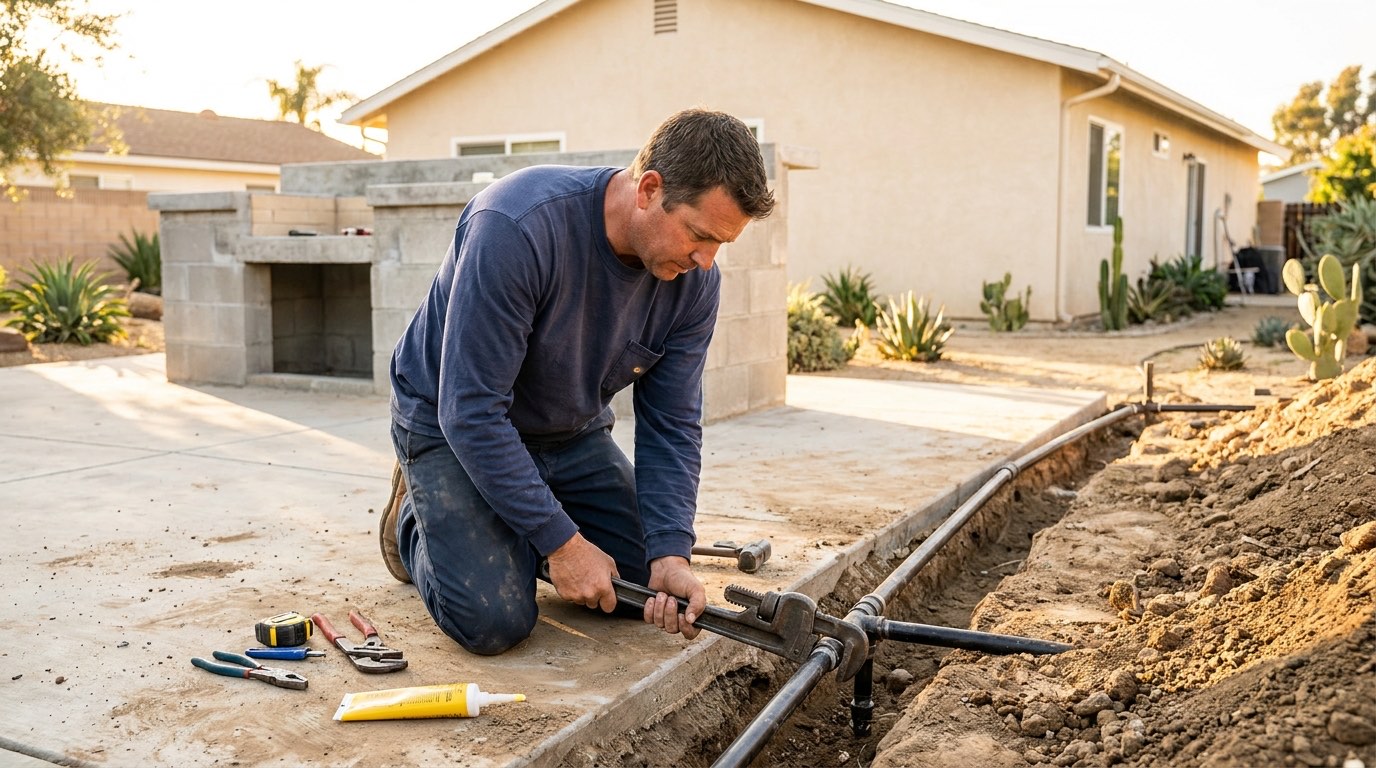
Gas Line Installation Cost in San Diego (2026)
Gas line installation cost in San Diego for 2026: appliance runs, fire pit and BBQ lines, permits, and who can legally do the work. Call (858) 400-4417.
The short answer
- Installing a new gas line in San Diego typically costs $500 to $2,500 in 2026, with long trenched runs to a pool heater or detached structure reaching $3,000 to $8,000.
- Most quotes work out to $12 to $25 per linear foot, plus trenching, concrete cutting, and the permit.
- California requires a licensed contractor for gas piping, plus a city permit and a pressure test before the line goes live.
- SDG&E owns the line up to the meter. Everything after the meter is yours, and big additions like a pool heater can require a meter capacity check.
- The cheapest install is a short run from an existing line to a nearby appliance. Distance, digging, and pipe sizing drive everything else.
Installing a new gas line in San Diego costs $500 to $2,500 for most residential projects in 2026, and most quotes work out to $12 to $25 per linear foot. A short run to a new range sits at the bottom of that range. A trenched line across the yard to a pool heater or a detached studio can reach $3,000 to $8,000. The pipe itself is cheap. What you’re paying for is distance, digging, and the licensed, permitted, pressure-tested work that gas demands.
Here’s what each type of project costs, what drives the number, and how the permit and inspection process works in San Diego.
How much does gas line installation cost in San Diego?
The honest answer is per project, because a gas line is priced by its route. These are the typical 2026 ranges for San Diego jobs.
| Project | Typical 2026 cost |
|---|---|
| Hookup to an existing nearby stub | $150 to $650 |
| New line to a range or dryer (short interior run) | $500 to $1,500 |
| Outdoor fire pit or BBQ island | $700 to $2,500 |
| Line resize for a tankless water heater | $400 to $1,200 |
| Pool or spa heater, long trenched run | $2,500 to $6,000 |
| Detached structure with distance and hardscape | $3,000 to $8,000 |
| Concrete or paver cutting and patching | add $500 to $1,500 |
Two of those rows deserve a note. The tankless row exists because many older homes have a 1/2-inch line feeding the water heater, and a tankless water heater demands more gas than that pipe can carry. Resizing the run is priced like a new install. The pool heater row runs high for the same reason at a bigger scale: heaters pull a lot of gas, so the line is larger, longer, and usually trenched.
Permits ride on top, and they’re modest. A simple residential job in the City of San Diego uses the no-plan plumbing/gas permit at around $115, the same permit type that covers a water heater swap. Complex projects can push permit costs toward $300.
What drives the price up or down?
Distance is the biggest lever. At $12 to $25 per foot, a 15-foot garage run and a 60-foot backyard run are different jobs even before anyone digs. The route matters as much as the straight-line distance, because the pipe follows walls, joists, and trenches, not a tape measure.
What’s between the pipe and its destination comes second. A run through dirt or landscaping is cheap to trench. A run under a patio means saw cutting and a patch that cures for days, which is the same $500 to $1,500 hardscape adder that shows up in sewer work. Crawl spaces and open garages are easy. Finished walls and slab foundations aren’t.
Pipe material moves the labor number. Traditional black iron pipe is threaded and assembled joint by joint, which is durable and slow. Flexible CSST tubing installs faster in tight interior routes but has bonding requirements and isn’t right for every application. Your plumber picks per route, and the quote reflects the hours.
Sizing calculations catch what eyeballs miss. Gas appliances are rated in BTUs, and every appliance on the system shares the same supply. A plumber doing this right totals the demand, checks the meter, and sizes each branch so the farthest appliance still gets full pressure with everything running. Skipping that math is how a new fire pit makes the furnace flame drop.
Who does the work is not a variable. Gas piping in California is licensed contractor work, inspected and pressure-tested before it goes live. That’s the same licensing bar that applies to any gas repair, and it exists because the failure mode is a leak, not a drip. Labor for licensed San Diego plumbers runs $100 to $180 per hour.
What does a gas line installation actually involve?
Most projects follow the same sequence. The plumber runs the sizing calculation and maps the route. The permit gets pulled, around $115 for a simple City of San Diego job, issuing in about two business days. The crew runs the pipe, whether that’s threading black iron through a garage or trenching a line across the yard to a stub-out. Then the whole system gets pressure-tested, the city inspector signs off, and the line is connected and put into service.
The SDG&E boundary is worth understanding before you plan a big addition. SDG&E owns the gas infrastructure up to and including your meter. Everything downstream, the houseline, is the homeowner’s, which is why a plumber rather than the utility runs your new line. If you’re adding serious BTU load, a pool heater being the classic case, the meter itself may need a capacity check, and your plumber coordinates that with SDG&E as part of the project.
One more San Diego-specific note: an earthquake shutoff valve, which closes the gas automatically in a strong quake, isn’t required on existing homes here, but a new line project is the natural time to add one. Installed, it typically runs $300 to $800.
Which projects are actually worth a new gas line?
Outdoor living is the big one in San Diego, because the season never really ends. A plumbed fire pit or BBQ island replaces the propane-tank shuffle with a burner that just works, and it’s the kind of upgrade that gets used year-round here in a way it wouldn’t in most of the country. Inland homes with room to build, from Poway to Santee, are where these backyard runs show up most.
Appliance conversions are the practical case. Moving a laundry from an electric dryer to gas, or swapping an electric range for the gas one you actually want, is usually a short run at the low end of the cost table. If the appliance sits near an existing line, the hookup might be a few hundred dollars, not a few thousand.
Capacity upgrades are the quiet third category. If your water heater is being replaced with a tankless unit, the gas line resize is often part of the real cost, and it’s better priced into the project than discovered mid-install.
A caution that saves money: if a gas smell or a hissing line is what brought you here, that’s not an installation project. That’s a gas leak, and the right response is to leave the house and get an emergency plumber on it. Repairs to existing lines are their own topic, with their own costs, covered in our gas line repair guide.
At Plumbing Pro San Diego, we connect homeowners with licensed plumbers who handle gas line work across all of San Diego County, 24/7. If you’re pricing a new run for a range, a fire pit, or a tankless upgrade, call (858) 400-4417 and describe the project. A real quote needs a site visit, but you’ll get straight answers on whether the job is a $600 hookup or a $3,000 trench before anyone rolls a truck.
Frequently asked questions
How much does it cost to install a new gas line in San Diego?
A new gas line in San Diego runs $500 to $2,500 for most residential projects in 2026. A short run to a range or dryer sits at the low end, while an outdoor fire pit or BBQ island lands between $700 and $2,500 depending on distance and digging. Long trenched runs to a pool heater or detached structure reach $3,000 to $8,000. Most quotes price out at $12 to $25 per linear foot before trenching and permits.
How much does it cost to run a gas line to a fire pit or BBQ island?
Plan on $700 to $2,500 for a typical San Diego backyard project. The spread comes down to distance from the meter, whether the crew trenches through dirt or cuts concrete, and the burner’s BTU demand. Cutting and patching hardscape adds $500 to $1,500. A stub-out placed during other yard work costs far less than a standalone retrofit, so timing the gas run with a patio or outdoor kitchen project saves real money.
Do I need a permit to install a gas line in San Diego?
Yes. New gas piping requires a plumbing/gas permit, and in the City of San Diego a simple residential job uses the no-plan permit that runs around $115 as of 2026. Larger or more complex projects can push permit costs toward $300. The city inspects the work and requires a pressure test before the line is put into service. A licensed plumber normally pulls the permit as part of the quote.
Who is allowed to install gas lines in California?
Gas piping is licensed contractor work in California. For residential projects that usually means a licensed plumbing contractor, and the permit and inspection process assumes one is on the job. DIY gas work is a safety risk and an insurance problem: an unpermitted line can void coverage and complicates any future sale. The labor rate for licensed San Diego plumbers runs $100 to $180 per hour.
How long does gas line installation take?
A short interior or garage run usually finishes in half a day to a day. Outdoor projects with trenching take one to two days, plus concrete cure time if hardscape was cut. The permit itself normally issues within about two business days in the City of San Diego, and the final inspection is scheduled after the pressure test passes.
Can my existing gas line handle a tankless water heater or pool heater?
Often not without an upgrade. Many older San Diego homes have a 1/2-inch line serving the water heater, and a tankless unit or pool heater demands far more gas than that pipe can deliver. The fix is resizing the run, usually to 3/4-inch or 1-inch pipe, which is priced like a new line install. A plumber confirms it with a sizing calculation of every appliance on the system, not a guess.
Need a Plumber in San Diego?
Licensed, insured plumbers, available 24/7 across San Diego County. Upfront pricing, no surprises.
Call (858) 400-4417Available 24/7, no voicemail, no answering service