Last updated: May 14, 2026
Gas Line Repair in San Diego: Warning Signs and Costs
Smell gas? Hear a hiss? Learn the critical warning signs of a gas leak in San Diego, what repair costs, and why fast, professional service is essential.

The short answer
- Gas line warning signs: a rotten-egg odor, a hissing sound, blowing dirt, or dead vegetation over a buried line.
- If you suspect a leak, avoid sparks, evacuate, then call 911 and your gas utility from a safe distance.
- Common San Diego causes: corrosion, ground shift and seismic stress, bad connections, and aging appliance connectors.
- Repair fits isolated damage; replace for widespread corrosion or multiple leaks; reroute when the line is inaccessible.
- California law requires a licensed plumber plus a permit ($100 to $300) and inspection. Call (858) 400-4417.
A gas line problem isn’t just an inconvenience; it’s a serious safety hazard that demands immediate attention. Whether it’s a subtle odor or a distinct hiss, recognizing the warning signs and knowing what to do next can protect your San Diego home and family. Don’t delay if you suspect an issue; swift action is crucial for gas line repair.
Smell gas or suspect a gas line issue? Leave the home, don’t use any switches, and call us from outside. Plumbing Pro San Diego connects you with licensed C-36 plumbers for gas line repair and installation. Gas line repair in San Diego or call (858) 400-4417 now.
What a gas line problem looks/smells/sounds like, and the immediate steps to take
The most critical indicator of a gas line problem is often your nose. Natural gas is odorless, but utility companies add a distinct sulfuric, rotten-egg smell (mercaptan) for safety. If you smell this odor, especially near appliances, gas meters, or within your home, it’s a strong sign of a leak. Don’t ignore it. Even a faint smell warrants concern.
Beyond odor, listen for a distinct hissing or whistling sound near gas lines or appliances. This can indicate gas escaping under pressure. Visually, look for any dust, dirt, or debris blowing from a hole in the ground or discolored vegetation over a buried gas line. In rare cases, you might see a shimmering or fog in the air near the leak.
If you suspect a gas leak, here’s what to do immediately:
- Don’t operate anything that can create a spark. This includes light switches, phones, appliances, or vehicle ignitions. Even a small spark can ignite leaking gas.
- Evacuate everyone from the building and surrounding area. Get to a safe distance, well away from the smell.
- Once safely outside, call 911 (emergency services) and your gas utility company. They will dispatch emergency responders and shut off your gas supply from the main line if necessary.
- Do not re-enter your home until emergency personnel or your utility company confirms it’s safe.
Remember, a gas leak is an emergency. It’s not something you should try to locate or fix yourself. For more detailed steps on what to do during a gas leak, you can read our guide on what to do during a gas leak in your house.
Common causes of gas line failure in San Diego homes
Gas lines are designed for durability, but several factors can lead to failure over time, especially in a region like San Diego. Understanding these causes helps you recognize potential risks.
Corrosion
Corrosion is a leading cause of gas line failure, particularly with older metallic pipes, both underground and exposed. San Diego’s coastal climate can contribute to rust on exterior pipes, while interior pipes can corrode from moisture or chemical exposure. Underground lines are susceptible to electrochemical corrosion from soil conditions. This weakens the pipe walls, leading to small pinhole leaks or larger breaches. Regular maintenance and proper pipe coatings can help mitigate this.
Ground shift and seismic activity
San Diego is no stranger to seismic activity and minor ground shifts. Even subtle movements can stress underground gas lines, causing joints to weaken or pipes to crack. Older, rigid piping materials are more vulnerable to this stress than modern, more flexible options. Tree roots growing near underground lines can also exert pressure, leading to similar damage.
Bad connections or faulty installations
Many gas line problems stem from improper installation or poorly made connections. This could be due to DIY attempts, work done by unlicensed handymen, or even errors during original construction or appliance hook-ups. Loose fittings, incorrect threading, or using incompatible materials can all create weak points where gas can escape. Over time, vibrations from appliances or house settling can further exacerbate these issues. This is why always hiring a licensed professional for any gas line work is non-negotiable.
Old or deteriorating appliances
The connections to your gas-powered appliances, like water heaters, furnaces, stoves, and dryers, are frequent spots for leaks. Flexible connectors, especially older brass ones, can become brittle, crack, or corrode over time. Appliance valves themselves can fail. If you have an older appliance, have a plumber inspect its gas connection during routine maintenance or before replacement. For a gas dryer specifically, the vent run matters as much as the gas connection, and dryer vent installation and cleaning covers what a blocked run does. Many appliance issues are often resolved through water heater repair in San Diego or a similar service.
What gas line repair costs in San Diego, and what a permit/inspection adds
The cost of gas line repair in San Diego can vary significantly based on the severity of the leak, its location, and the complexity of the repair. Minor leaks at an exposed connection might be relatively inexpensive to fix, potentially ranging from a few hundred dollars. However, more extensive repairs, like replacing a section of buried line or rerouting a long run, can easily move into the thousands.
Factors influencing the cost include:
- Leak detection difficulty: Finding a hidden leak can take time and specialized equipment, adding to labor costs.
- Location of the leak: Leaks behind walls, under floors, or underground are more labor-intensive to access and repair.
- Type of repair: A simple fitting replacement is cheaper than cutting out and replacing a long section of pipe.
- Materials needed: The cost of piping (e.g., black iron, corrugated stainless steel tubing) varies.
- Emergency vs. scheduled service: After-hours or weekend calls typically incur higher rates.
Permits and inspections
Crucially, any gas line work in California, including repairs, almost always requires a permit from your local building department and subsequent inspection. This isn’t an optional step; it’s a legal requirement designed to ensure safety and compliance with the California Plumbing Code.
Here’s what a permit and inspection add:
- Cost: Permit fees typically range from $100 to $300 or more, depending on the scope of work and specific city/county regulations.
- Time: The permitting process can add a few days to the repair timeline. The inspection itself must be scheduled after the work is completed and before the line is re-pressurized or enclosed.
- Assurance: While it adds cost and time, the permit and inspection provide peace of mind. A licensed inspector verifies that the repair meets all safety codes and standards, protecting your property and family. A plumber who tries to bypass this process should be a red flag.
When you get an estimate for gas line repair, make sure it clearly outlines whether permit fees are included or if they’re a separate cost you’ll be responsible for. A reputable plumber will always discuss the permitting requirements upfront.
Repair vs. replace vs. reroute, when each is the right call
When dealing with a gas line issue, your plumber will assess whether a repair, a full replacement, or a reroute is the most appropriate and safest solution. Each option has specific scenarios where it makes the most sense.
Repair
A repair is typically suitable for isolated, minor issues. This includes:
- Small leaks at exposed connections: If a fitting is loose, corroded, or a minor section of pipe is damaged at an accessible point.
- Damage to a short segment of pipe: If a specific, small section of the line has failed due to a localized issue, like a single point of corrosion or a minor impact, and the rest of the line is in good condition.
- Faulty valves or regulators: Problems with components rather than the main line itself can often be fixed by replacing the specific part.
Repairs are usually the quickest and most cost-effective option when feasible. However, they’re only recommended if the overall integrity of the existing line is sound.
Replace
Full gas line replacement becomes necessary when the existing line is compromised in multiple areas or has widespread deterioration. This is often the case with:
- Extensive corrosion: If an old galvanized steel or black iron pipe shows significant corrosion throughout its length, making repeated repairs impractical or unsafe.
- Multiple leaks: If several leaks develop along the same line, it indicates a systemic problem rather than an isolated incident.
- Outdated materials: Very old gas lines made from materials no longer up to current code standards may need full replacement for safety and compliance.
- Serious structural damage: If a line has been severely crushed, bent, or otherwise compromised beyond localized repair.
Replacing the entire line, while more expensive and time-consuming upfront, provides a long-term solution and brings the system up to modern safety standards.
Reroute
A gas line reroute involves installing a new gas line along a different path, often leaving the old, problematic line in place but disconnected. This is the right call when:
- The existing line is inaccessible: If the current gas line runs under a concrete slab, through a difficult-to-access wall, or beneath extensive landscaping that would be costly or damaging to disturb.
- Frequent ground movement: In areas prone to settling or ground shift, rerouting a line away from these zones can prevent future damage.
- Major renovations: When you’re undertaking a large remodel, it can be opportune to reroute an old, inconveniently placed, or undersized gas line to better serve new appliances or layouts.
Rerouting can sometimes be more cost-effective than attempting to excavate and replace an inaccessible line, especially for underground runs. Your Plumbing Pro San Diego technician will assess your specific situation and recommend the safest and most efficient solution.
Why a licensed plumber (not a handyman) has to do gas line work in california
When it comes to gas line work in California, there’s no room for shortcuts. This isn’t a DIY project, and it’s certainly not a job for an unlicensed handyman. State law and safety regulations mandate that all gas line installations, repairs, and alterations be performed by a licensed plumbing contractor. Here’s why this requirement is so critical, especially in San Diego:
Safety first
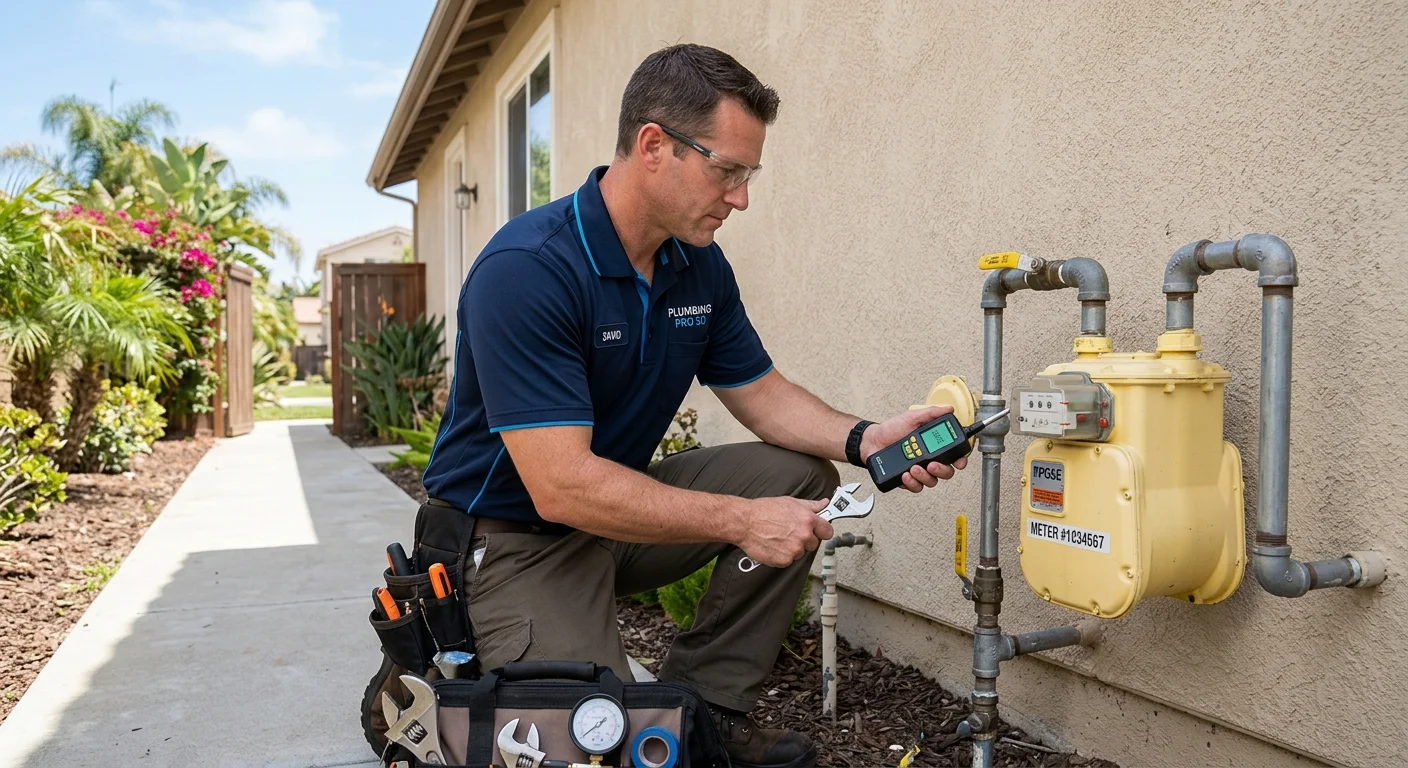
Natural gas is highly flammable and explosive. A small error in a gas line repair can have catastrophic consequences, including fires, explosions, serious injury, or even death. Licensed plumbers are trained to handle gas lines safely, understanding the specific pressures, fittings, and testing procedures required to prevent leaks. They use specialized tools and detectors to ensure the work is done correctly.
Knowledge of california plumbing code
California has stringent plumbing codes that govern gas line work, including materials, installation methods, and safety distances. These codes are designed to protect public safety. Licensed plumbers are required to stay current with these codes. A handyman, even if skilled in other areas, typically lacks this specialized knowledge. Improper installation could lead to code violations, failing inspections, and ongoing safety risks.
Permits and inspections
As mentioned earlier, gas line work requires permits and inspections. Only a licensed contractor can pull the necessary permits for gas line work. The city or county building department won’t issue a permit to an unlicensed individual. These inspections are a crucial layer of safety, ensuring that the work meets all regulatory standards before the gas is turned back on.
Insurance and liability
A licensed plumber carries liability insurance that protects you, the homeowner, in case something goes wrong during the repair. If an unlicensed individual causes damage or injury, you could be held personally liable for the costs. Using a licensed professional means you’re protected. You can always check a contractor’s license on the CSLB website.
Proper tools and training
Gas line work requires specific equipment, such as gas leak detectors, pressure test gauges, proper pipe threading tools, and specialized sealants. Licensed plumbers have invested in this equipment and possess the training to use it correctly. They also know how to properly cap off lines, test for leaks, and restore gas service safely.
Hiring an unlicensed individual for gas line repair might seem like a way to save money upfront, but the potential risks and legal repercussions far outweigh any perceived savings. For your family’s safety and your home’s integrity, always choose a licensed and insured professional for gas line services in San Diego. It’s an investment in peace of mind.
How to get a gas line inspected or repaired fast with Plumbing Pro San Diego
If you suspect a gas leak or need a gas line inspection in San Diego, time is of the essence. At Plumbing Pro San Diego, we understand the urgency and seriousness of gas line issues. We connect you with highly trained, licensed, and insured plumbers ready to respond quickly and efficiently, ensuring your safety and restoring the integrity of your gas system.
Here’s how the process works, fast and reliable:
Emergency response
For active gas leaks or strong suspicions, your first call should be to 911 and your utility company from a safe location. Once the immediate danger is contained and the gas has been shut off, call Plumbing Pro San Diego. We offer emergency plumbing services in San Diego and prioritize gas line issues to connect you with a technician as quickly as possible. The plumbers we connect you with are equipped to handle immediate detection and temporary securement if needed, working in conjunction with utility services.
Expert diagnostics
The plumbers we connect you with use advanced gas leak detection equipment to pinpoint the exact location and severity of any leak. This precise diagnosis prevents unnecessary work and ensures the repair targets the actual problem. They inspect all accessible gas lines, connections, and appliance hook-ups.
Transparent estimates
After a thorough assessment, the plumber provides a clear, upfront estimate for the recommended repair, replacement, or reroute, explaining the scope of work, material costs, and any necessary permit fees, so you know exactly what to expect. No hidden costs.
Permitting and code compliance
The licensed plumber pulls the necessary permits from the City of San Diego or your local jurisdiction. The work strictly adheres to the California Plumbing Code, so the repair passes inspection the first time and complies with all safety regulations. The network’s expertise extends to all forms of pipe repair, for comprehensive service.
Professional repair and testing
The licensed plumbers we connect you with execute repairs using high-quality materials and proven techniques. Once the repair is complete, they perform rigorous pressure testing and further leak detection to confirm the safety and integrity of the gas line before it’s re-pressurized.
Customer education
The plumbers we connect you with don’t just fix the problem, they help you understand it. They’ll explain the cause of the leak, preventive measures you can take, and answer any questions you have about your home’s gas system.
Don’t wait if you suspect a gas line problem. For reliable, safe, and prompt gas line repair and inspection services throughout San Diego County, trust the licensed experts Plumbing Pro San Diego connects you with.
When to call us
Any suspected gas leak or gas line malfunction warrants immediate attention from a licensed professional. If you smell gas, hear a hiss, or notice any other warning signs, evacuate your property and then call for emergency services. Once the immediate danger is handled by the utility, contact Plumbing Pro San Diego and we’ll connect you with a plumber for expert repair.
Areas this guide covers
We connect homeowners with licensed plumbers in these San Diego County communities.
Keep reading
Need a Plumber in San Diego?
Licensed, insured plumbers, ready across San Diego County. The plumber quotes you before any work starts.
Call (858) 400-4417Call any time, day or night, anywhere in San Diego County