Last updated: September 3, 2026
Toilet supply line leaking: what the wet spot tells you
Learn what a wet spot behind your toilet may reveal about the supply line, connections, or shutoff valve, and request a licensed San Diego plumber referral.
A wet spot behind the toilet puts the toilet supply line under suspicion. The location where moisture first appears can help separate several possible sources. That clue also helps a plumber prepare for the repair.
Where toilet supply lines usually leak
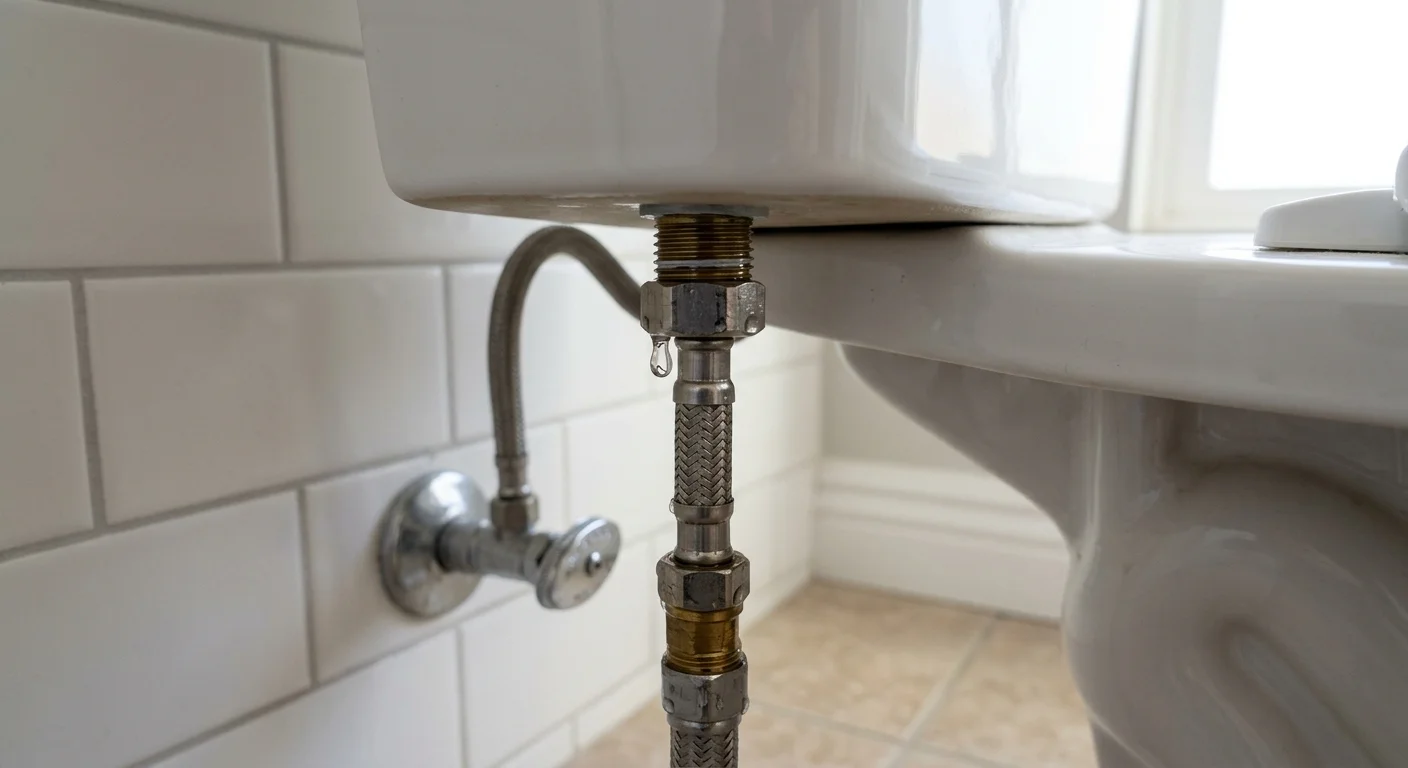
The toilet supply line runs between the wall shutoff valve and toilet tank. When water appears along that path, note its highest visible point. Water can travel down the line before reaching the floor.
Start with the connection beneath the toilet tank. Moisture directly below that point gives the contractor a useful clue. Next, look along the visible length of the supply line. Then note any moisture around the connection at the shutoff valve.
You don’t need to decide which part failed. Your goal is to describe where the water first becomes visible. A photo can preserve that detail before the wet spot spreads.
Also note whether moisture appears while the toilet sits unused. Tell the contractor if it becomes more noticeable after flushing. These observations can help focus the inspection, but they don’t confirm the source.
Water behind a toilet isn’t automatically a supply line problem. It may be coming from another part of the fixture or nearby plumbing. If the moisture is centered around the floor connection, read our guide to a toilet leaking at the base. That symptom requires a different inspection.
Avoid using the floor puddle alone as your diagnosis. Water tends to collect at low points. The first visible moisture usually provides more useful information than the final puddle location.
A referral for toilet repair can connect you with a contractor who evaluates the full fixture. Describe the wet spot, visible source, and whether the leak changes after flushing.
How to separate a connection leak from a damaged hose
A connection leak and a damaged supply line can leave similar wet spots. The visible pattern helps the plumber decide where to begin. It doesn’t replace a hands-on inspection.
Look at both ends of the toilet supply line. Moisture concentrated around either connection suggests that joint needs evaluation. Water appearing along the middle of the line points the inspection toward the line itself.
Don’t assume the nearest fitting is responsible. Water at the upper connection can run along the hose. It may then drip near the shutoff valve or reach the floor farther away. A clear photo of the entire line can show that path.
Describe what you can see without labeling the failure. Useful details include the highest wet point and the location of each drip. You can also report whether the line looks bent, worn, or visibly altered. Those observations help the contractor, but they don’t establish that a part is damaged.
No approved primary source in the site’s claims ledger provides a universal test for diagnosing a toilet hose at home. The ledger also doesn’t support a standard replacement interval for these lines. Because the correct diagnosis depends on the actual assembly, ask the licensed contractor to inspect it.
The contractor may determine that the connection needs attention. The line itself may instead require repair or replacement. Another nearby source may also explain the water.
This is distinct from a toilet that keeps running inside the tank. It’s also separate from water appearing only around the base. Giving the referral service a precise symptom helps match your request to the right service.
When the shutoff valve is part of the problem
The shutoff valve sits where the toilet’s water supply reaches the fixture. If moisture appears on or around that valve, include it in your repair request. Don’t report only that the supply line is leaking.
The valve, its connection, and the nearby line can all be wet at once. That makes the first visible moisture especially helpful. Note whether it’s above the line connection, at the connection, or closer to the wall.
This article doesn’t provide instructions for operating or repairing a leaking shutoff valve. The approved claims ledger doesn’t contain a verified, universal procedure for that situation. A licensed plumber should determine what the installed valve and surrounding piping require.
California’s C-36 plumbing contractor classification includes water piping and the repair or replacement of covered plumbing components. Individual contractor capabilities still vary. Property owners can use the official CSLB license lookup to review license status, classification, bond information, and complaint history.
The database accepts searches by license number, business name, or personnel name. It’s unavailable during scheduled maintenance from Sunday evening through Monday morning. Check the current record before hiring and contracting directly with a plumber.
Mention access conditions when requesting a referral. Tell us if the toilet sits in a narrow alcove or beside fixed cabinetry. Condos around central San Diego can present different access than detached homes elsewhere in the county. The contractor still needs to inspect the actual room before defining the work.
What the contractor you’re matched with may inspect
The contractor may begin by tracing the visible moisture upward. That can include the toilet tank connection, the full supply line, and the shutoff valve area. The surrounding floor and wall may also show where water traveled.
Expect questions about when you first saw the wet spot. The contractor may ask whether it appears continuously or changes after flushing. Share photos if the area was dry by the time of the visit.
A plumber may also check whether the water originates from the toilet supply assembly. That distinction matters because moisture behind the toilet can move across flooring. A leak elsewhere on the fixture can create a misleading puddle.
The inspection may consider:
- The point where the supply line connects beneath the tank
- The visible condition and path of the supply line
- The connection between the line and shutoff valve
- Moisture around the valve and nearby wall
- Other visible toilet components near the wet area
- Signs that water has spread beyond the original spot
This list describes possible inspection points, not a confirmed diagnosis. The contractor decides what applies after seeing the installation. Plumbing Pro San Diego doesn’t inspect fixtures or perform repairs.
Every plumber in the referral network is licensed and insured. You’ll contract with and pay the independent plumber directly. Plumbing Pro San Diego doesn’t set the contractor’s scope, price, or terms.
The claims ledger doesn’t provide a verified standard price or labor time for toilet supply line repairs. Those details depend on the installed parts, access, and findings. Ask the contractor to explain the proposed work and its terms before you approve it.
How to request a toilet repair referral in San Diego County
Start with the exact symptom: “I have water behind the toilet near the supply line.” Then describe the highest place where you saw moisture. Mention whether it was near the tank, along the line, or around the shutoff valve.
Include the property location and bathroom access details. Plumbing Pro San Diego serves cities throughout San Diego County, from coastal North County to the South Bay. Referrals also cover central San Diego and East County communities.
If you’re in La Mesa, our local La Mesa plumber guide explains how referrals work in that area. The repair itself remains a direct agreement between you and the independent contractor.
Share any photos showing the original wet pattern. A wide photo can show the toilet and wall connection. A closer photo can document the damp fitting or section of line. Don’t claim that a specific part failed unless a contractor has confirmed it.
Tell us if the water is actively spreading when you request the referral. That information helps identify the type of request. For an active failure that may require urgent attention, use the emergency plumbing referral page.
No arrival time, repair price, or contractor availability can be promised here. Those details must be confirmed with the plumber you choose. You can also verify the contractor through CSLB before agreeing to the work.
A clear description keeps the referral focused. “Toilet supply line leaking near the tank connection” is more useful than “bathroom leak.” The better the symptom description, the easier it is for the matched contractor to understand why you’re calling.
When to call us
Request a licensed plumber when moisture keeps appearing around the supply line, its connections, or the shutoff valve. Call us at (858) 400-4417 and we’ll connect you with a licensed plumber.
Areas this guide covers
We connect homeowners with licensed plumbers in these San Diego County communities.
Keep reading
Need a Plumber in San Diego?
Licensed, insured plumbers, ready across San Diego County. The plumber quotes you before any work starts.
Call (858) 400-4417Call any time, day or night, anywhere in San Diego County