
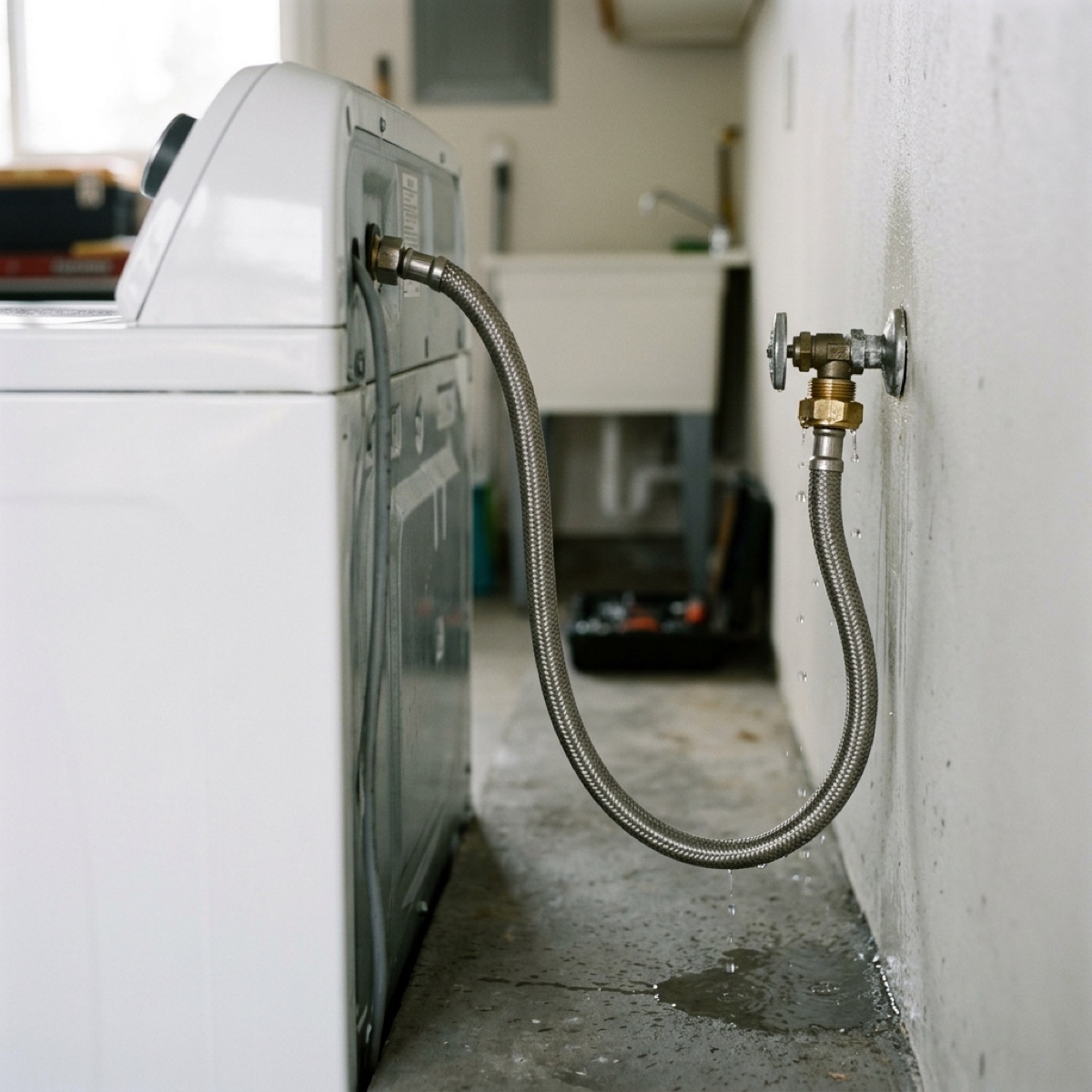
Washing machine hose leaking or burst in San Diego
A burst washing machine hose can flood a room in minutes. How to spot a failing hose, shut the water off, and what San Diego plumbers charge to fix it.
The short answer
- A washing machine hose carries full household water pressure around the clock, so when one fails it can pour several hundred gallons an hour onto the floor, not just during a wash.
- Rubber supply hoses are the usual culprit. They swell, crack, and blister with age, and a bulge or a damp spot at either end is your warning to swap them before they let go.
- Replace rubber hoses with braided stainless steel, and plan to change even braided hoses every five years or so. Both cost a few dollars in parts.
- If a hose bursts, shut off the water at the laundry valves or the main, unplug the washer, and start drying to limit water damage.
- If your hose is leaking, bulging, or already burst, call (858) 400-4417 and a licensed San Diego plumber can replace the hoses, add a proper shutoff box, and check the pressure feeding them.
A washing machine hose carries your home’s full water pressure twenty-four hours a day, so when one fails it doesn’t wait for wash day. A burst supply hose can pour several hundred gallons an hour onto the floor, which is why a failed washing machine hose is one of the most common sources of household water damage. The good news is it’s cheap to prevent and the warning signs are easy to spot.
Here’s how to tell if your hoses are about to go, what to do if one already burst, and what it costs to make it right in San Diego.
Why washing machine hoses burst
The hose isn’t the part doing the work, but it’s holding back pressure every minute of the day, and that’s what wears it out.
Age is the number one cause. A standard black rubber supply hose hardens, cracks, and blisters over several years. Once the rubber loses its flex, a weak spot balloons out and eventually splits, usually at a bend or right at the crimped fitting on each end.
High water pressure speeds it up. Plenty of San Diego homes read 90 to 120 PSI at the tap, well above the 50 to 70 PSI that plumbing is designed around. That extra strain sits on the hose constantly and fatigues an already-aging one faster. If you’ve noticed banging pipes or short-lived fixtures elsewhere in the house, read our guide to high water pressure in San Diego, because the same pressure that’s chewing through faucet cartridges is working on your laundry hoses too.
Kinks and crimps fail early. When a washer gets pushed back against the wall, the hoses fold behind it. A sharp kink weakens the hose at that exact spot, and it’s a frequent failure point months later.
Loose or corroded connections at the valve or the washer inlet can start as a slow drip and work into a real leak, especially with San Diego’s hard water leaving mineral buildup on the threads over time.
How to tell a hose is about to fail
You don’t have to wait for the flood. Pull the washer out a foot or two every so often and look the hoses over.
Feel along each hose for a bulge or a soft, spongy spot. That’s the rubber failing, and it means the hose is on borrowed time. Look for cracks, dry rot, or blistering on the surface, and check both ends for rust, corrosion, or a damp ring around the fittings. A little moisture or a mineral crust at a connection is a slow leak announcing itself.
Check the age while you’re back there. If you can’t remember when the hoses went on, or they’re the original black rubber ones that came with the washer years ago, treat that as reason enough to replace them.
Notice whether the hoses are kinked behind the machine. If they are, that fold is a weak point, and giving the washer a few inches of breathing room from the wall takes the strain off.
What to do if a hose bursts
A burst hose is a real emergency because the water doesn’t stop on its own. Move in this order.
Shut off the water. Turn the two valves behind the washer clockwise to close them. If you can’t reach them, or they’re seized and won’t turn, shut off the main water supply to the house instead. If you’re not sure where that is, our guide on how to find your main water shut-off valve walks through it.
Cut the power. Unplug the washer or switch off its breaker so electricity and standing water don’t meet.
Start drying immediately. Move water out with towels, a wet vac, and fans. The faster you dry drywall and flooring, the less it soaks in. If the laundry is upstairs, water can travel down and show up as a stain on the ceiling below, covered in our guide to water dripping from the ceiling.
Document it. Photograph the hose and the damage before cleanup if you plan to file a claim. Whether it’s covered depends on your policy, and our guide on whether homeowners insurance covers plumbing explains what usually is and isn’t.
What replacement and prevention cost in San Diego
Fixing this is one of the cheapest jobs a plumber does, and it’s a fraction of the cleanup if you skip it.
| Scope of work | Typical San Diego cost |
|---|---|
| Replace both supply hoses with braided stainless steel | $75 to $175 |
| Add or replace a single-lever laundry shutoff box | $150 to $400 |
| Install a water hammer arrestor at the washer | $100 to $250 |
| Water damage cleanup after a burst | $1,000 to $5,000+ depending on extent |
The hoses themselves cost only a few dollars, so most of a replacement bill is the trip and the labor. If you’re handy, swapping hoses is a reasonable DIY job. What a plumber adds is catching the things people miss: a shutoff box so you can kill the water with one handle, a check on the home’s pressure so the new hoses don’t fail for the same reason, and a look at the supply valves, which are often as old and stiff as the hoses. For older or corroded supply lines feeding the laundry, pipe repair may be the better long-term fix.
Why this matters more in some San Diego homes
A few things about local housing make burst hoses worth heading off early.
Many laundry setups here sit in the garage on a concrete slab, where a burst can run under the wall into the house before anyone notices, and slab construction means the water wicks sideways instead of draining away.
Older homes in El Cajon, La Mesa, and other inland areas often still have the original rubber hoses and stiff, decades-old supply valves, both overdue for replacement.
And San Diego’s combination of high municipal pressure and hard water is hard on every rubber and threaded connection in the house, hoses included. If you’ve had unexplained moisture or a jump in your water use, our guide to a high water bill with no visible leak covers how to track it down, and a plumber can run leak detection to pinpoint a hidden one.
When to call a plumber
If a hose is bulging, leaking, or already burst, don’t wait for it to get worse. Shut the water off, dry what you can, and get the hoses replaced along with a look at whatever caused it.
Call (858) 400-4417 and we’ll connect you with a licensed San Diego plumber who can replace the supply hoses, add a single-lever shutoff box, and test the pressure feeding the laundry. Plumbers in the Plumbing Pro San Diego network cover all of San Diego County. Call any time for a burst that can’t wait. If a hose has already let go and you’re dealing with fast-moving water, our guide to burst pipe repair in San Diego covers how to keep the damage down until help arrives.
Frequently asked questions
Why do washing machine hoses burst?
Most burst because the hose material aged out. Rubber supply hoses harden, crack, and blister after several years, and the connection holds full household pressure every hour of the day, not just during a wash. High water pressure makes it worse. Many San Diego homes read 90 to 120 PSI at the tap, well above the 50 to 70 PSI a hose is happiest at, and that constant strain fatigues a weak hose faster. A hose that gets kinked when the washer is pushed back against the wall also fails early at the crimp.
How often should I replace washing machine hoses?
Replace standard rubber hoses every three to five years, and braided stainless steel hoses about every five years even though they last longer. There’s no dashboard warning light, so most people forget them until one leaks. An easy habit is to write the install date on the hose with a marker, or just swap them whenever you buy a new washer. The parts cost a few dollars, which is nothing next to a flooded laundry room.
Are braided stainless steel hoses better than rubber?
Yes. A braided stainless steel hose wraps a rubber core in a woven metal sleeve that resists bulging and bursting far better than bare rubber. They’re the standard a plumber installs and they cost only a little more. They still aren’t forever, the rubber core inside can degrade, so replace them on a schedule too. Look for a hose rated for washing machine use, not a generic supply line, since it’s built for the constant pressure.
What should I do if my washing machine hose bursts and floods?
Shut off the water first. Turn the two valves behind the washer clockwise, or if you can’t reach them or they won’t budge, shut off the main water supply to the house. Then unplug the washer or kill its breaker so no electricity meets the water. Start moving water out and drying the area with towels and fans to limit soaking into drywall and flooring. Once it’s under control, call a plumber to replace the hose and check why it failed, since a pressure problem will just take out the next one.
How much does it cost to replace washing machine hoses in San Diego?
Replacing both supply hoses with braided stainless steel usually runs $75 to $175 in San Diego, most of which is the trip and labor since the hoses themselves are cheap. Adding or replacing a single-lever laundry shutoff box runs $150 to $400 depending on access and whether the wall is open. Those numbers are trivial compared to water damage cleanup after a burst, which routinely runs $1,000 to $5,000 or more once drywall, flooring, and drying equipment are involved.
Should I turn off the water to my washing machine between loads?
It’s the cheapest insurance there is, and yes, it helps. A hose only bursts while it’s under pressure, so shutting the valves off between loads takes the strain off the hose the vast majority of the time. The catch is that manual valves are a hassle and easy to forget. A better long-term fix is a single-lever laundry box that shuts both hot and cold with one handle, or an automatic leak-shutoff valve that senses water on the floor and closes on its own.
Areas this guide covers
We connect homeowners with licensed plumbers in these San Diego County communities.
Keep reading
Need a Plumber in San Diego?
Licensed, insured plumbers, ready across San Diego County. The plumber quotes you before any work starts.
Call (858) 400-4417Call any time, day or night, anywhere in San Diego County