
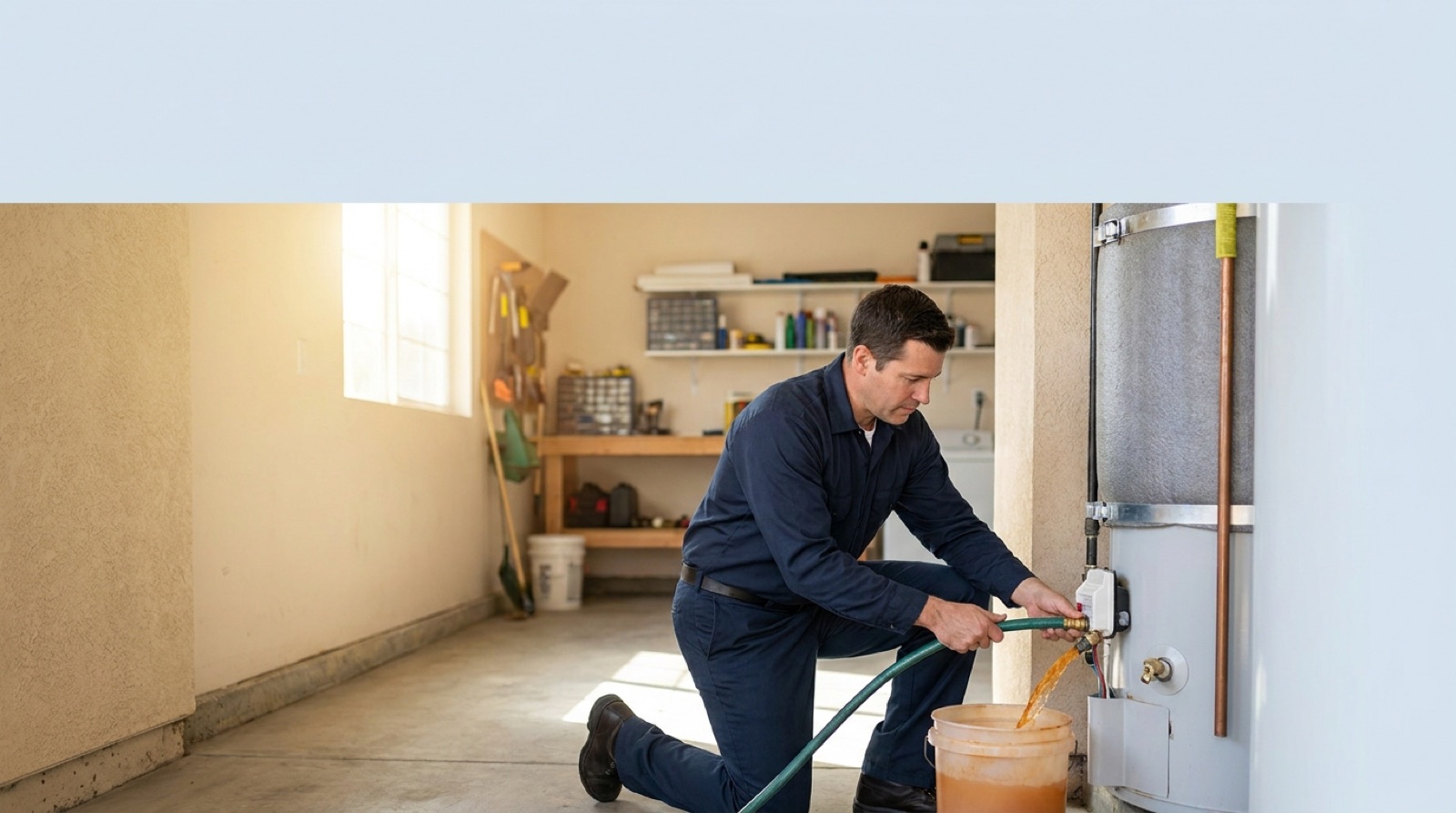
Water Heater Flush in San Diego: How Often, DIY Steps, Cost
How often to flush a water heater in San Diego, DIY steps, and typical cost. Hard water speeds up sediment buildup here more than most cities.
The short answer
- Flush your water heater once a year nationally, but every 6 months in San Diego because our water runs about 16 grains per gallon.
- A DIY flush takes about 45 to 60 minutes once you've got the garden hose connected to the drain valve.
- A professional flush in San Diego typically runs $100 to $200, often bundled into annual maintenance.
- Skip it and you'll hear popping and rumbling, pay higher gas bills, and cut years off the tank's life.
- If the drain valve won't budge or nothing comes out, call (858) 400-4417 and a licensed San Diego plumber will handle it.
Flush your water heater once a year almost anywhere in the country, but plan on every 6 months here in San Diego. Our tap water runs about 16 grains per gallon of hardness, delivered largely from the Colorado River through the San Diego County Water Authority, and that mineral load turns into sediment inside your tank about twice as fast as it would in a soft-water city. A water heater flush is one of the cheapest things you can do to protect the unit, and it’s also one of the most skipped.
Here’s how often to do it, what a DIY flush actually involves, and what it costs if you’d rather hand it to a professional.
Why San Diego water heaters need flushing more often
San Diego’s water hardness sits at about 16 grains per gallon, which puts it firmly in the “very hard” category. Most of that water travels down from the Colorado River through the San Diego County Water Authority before it reaches your tap, picking up calcium and magnesium along the way. Every gallon that passes through your water heater leaves a little mineral residue behind, and it settles at the bottom of the tank as sediment.
In a city with soft water, that layer might take a full year to build up enough to matter. In San Diego, it happens closer to six months. If you want the full picture on why the water here is so mineral-heavy, our breakdown of San Diego’s hard water covers the source and what it does to plumbing beyond just water heaters.
How often should you flush your water heater?
Flush a standard tank water heater every 6 months in San Diego. That’s twice the national once-a-year recommendation, and it’s not overkill. Sediment doesn’t just sit quietly at the bottom of the tank. It insulates the burner or heating element from the water above it, which forces the unit to run longer and hotter to do the same job.
Homes with a water softener installed can usually stretch back toward the annual interval, since a softener strips out most of the calcium and magnesium before it ever reaches the tank. If you’re tired of fighting scale on every fixture in the house, not just the water heater, a whole-house water filtration system cuts the mineral load at the source and extends the life of everything downstream, including your pipes and appliances.
How to flush a water heater yourself (step by step)
A DIY flush takes about 45 to 60 minutes and doesn’t require any special tools beyond a garden hose and a bucket. Here’s the process:
- Turn off the power or gas. Flip the breaker for an electric unit, or turn the gas control valve to “pilot” for a gas unit. Let the water inside cool for a bit if you’ve used hot water in the last hour or two.
- Shut the cold water supply valve at the top of the tank. This stops new water from refilling the tank as you drain it.
- Connect a garden hose to the drain valve near the bottom of the tank and run the other end to a floor drain, outside, or a large bucket.
- Open the drain valve and a hot water tap somewhere in the house. Opening a tap breaks the vacuum so the tank drains fully instead of glugging.
- Let the tank drain completely. You’ll likely see cloudy or gritty water at first, which is the sediment coming out.
- Flush with short cold water bursts. With the drain valve still open, crack the cold supply valve on and off a few times to stir up and clear out any remaining sediment, until the water runs clear.
- Close the drain valve, disconnect the hose, and refill the tank before you turn the power or gas back on. Never fire up the burner or element on an empty tank.
If the drain valve is stiff, corroded, or won’t fully close again after you’re done, stop and call a plumber rather than forcing it.
Signs your water heater is overdue for a flush
Your tank usually tells you before it fails outright. Watch for:
- Rumbling or popping sounds coming from the tank, which is water boiling underneath a layer of trapped sediment.
- Longer heat-up times or water that never quite gets as hot as it used to.
- Lukewarm water even with the thermostat set correctly.
- A gas or electric bill that’s crept up without a change in usage.
- Gritty or rust-colored water out of the hot tap.
If your tank is making noise, our guide to water heater noises in San Diego homes walks through what each sound usually means and when it’s more than a sediment problem.
Water heater flush cost in San Diego
A standalone professional flush in San Diego typically costs $100 to $200. Where you land in that range depends mostly on whether the drain valve cooperates. An original plastic valve that’s never been touched can be stubborn or clogged, which adds labor time.
Most San Diego plumbers bundle the flush into a broader annual maintenance visit that also checks the anode rod and tests the temperature and pressure relief valve. That combined visit is often cheaper than booking a flush and an inspection separately, and it’s a smart pairing since both services protect the same tank. For the full picture on what keeps a tank running longest, see our guide on how long water heaters last in San Diego and our anode rod replacement guide.
Descaling a tankless unit costs more, usually $150 to $300, since it requires a small pump and a descaling solution circulated through the heat exchanger rather than a simple gravity drain.
Do tankless water heaters need flushing too?
Yes, tankless water heaters need descaling every 6 to 12 months in San Diego’s hard water. They don’t build sediment at the bottom of a tank the way a traditional unit does, since there’s no standing reservoir of water. Instead, mineral scale coats the inside of the heat exchanger, a compact component that’s far more sensitive to buildup than a tank’s drain valve.
A scaled-up heat exchanger shows up as reduced hot water flow, longer wait times, or error codes on the unit’s display well before a traditional tank would show similar symptoms. If your tankless unit is already acting up, our tankless water heater repair guide covers the most common failure points, and descaling is often the fix that resolves them.
When to call a plumber instead of DIY
A flush is usually a job you can do yourself, but a few situations call for a professional:
- The drain valve is stuck, leaking, or won’t reseal after you’ve drained the tank.
- Nothing comes out when you open the valve, which usually means sediment has packed the opening solid.
- You smell gas at any point during the process. Stop immediately and call for service.
- The tank is older than 8 to 10 years and you’re not sure it’s worth continuing to maintain versus replacing it outright.
If your tank is past its prime, our guide to repairing versus replacing a water heater in San Diego can help you decide before you sink more money into maintenance. And if flushing hasn’t fixed a lingering odor, check our post on hot water that smells like rotten eggs, since sediment and bacteria can both play a role.
Need a water heater flush in San Diego?
A water heater flush is cheap insurance against a much bigger repair bill down the road, and in a hard water city like ours, it’s not optional maintenance, it’s routine upkeep. Whether you want a one-time flush or an annual plan that covers the anode rod and relief valve too, the licensed plumbers in the Plumbing Pro San Diego network handle it start to finish.
Call (858) 400-4417 to schedule a flush anywhere in San Diego County, day or night. Learn more about our water heater services here.
Areas this guide covers
We connect homeowners with licensed plumbers in these San Diego County communities.
Keep reading
Need a Plumber in San Diego?
Licensed, insured plumbers, ready across San Diego County. The plumber quotes you before any work starts.
Call (858) 400-4417Call any time, day or night, anywhere in San Diego County