Gate valve or ball valve for a main water shutoff
Compare gate and ball valves for a San Diego main shutoff, then plan access, licensing checks, inspection, and questions for a local plumber.
An aging main shutoff can turn a simple repair into a larger decision. If replacement is being discussed, the choice between a gate valve and ball valve depends on the existing line, available space, and contractor’s findings.
How gate valves and ball valves operate differently
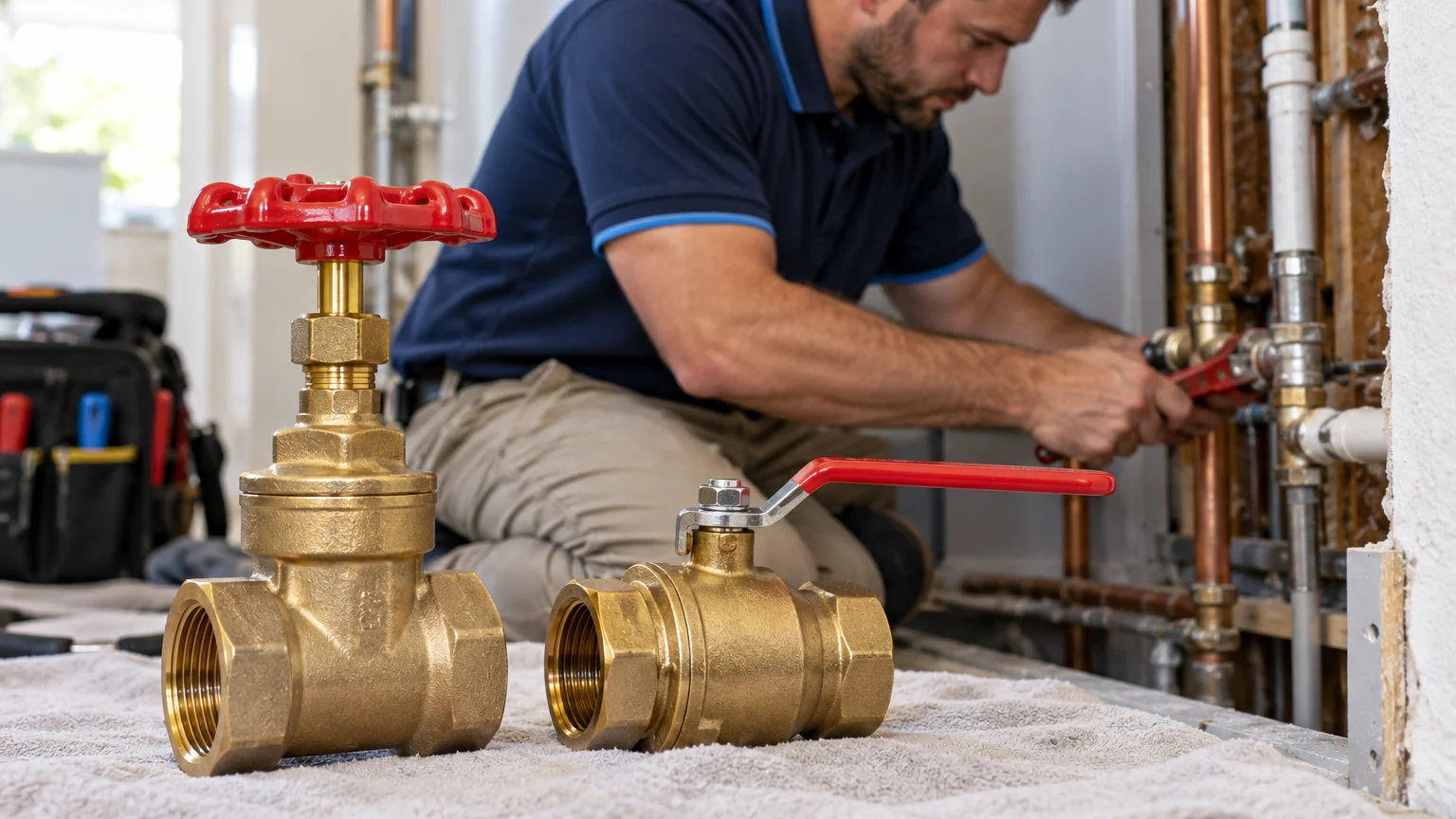
Homeowners commonly use “gate valve” for a shutoff with a round handwheel. “Ball valve” usually describes a valve controlled by a lever. That visual shortcut helps during a contractor conversation, but it doesn’t confirm the exact valve type or its internal construction.
The verified claims available for this page don’t establish universal operating specifications for either design. They also don’t support saying one valve always lasts longer, seals better, or belongs on every main water line. Product specifications and the conditions at the property still matter.
Start by asking the contractor to identify the installed valve. Body markings, handle style, pipe connections, and nearby components can help with that inspection. The contractor can then explain how the proposed replacement operates and how its position can be checked.
A gate valve versus ball valve discussion should focus on the actual installation. Ask how the replacement will fit, how someone will reach it, and whether its handle can move without hitting a wall or enclosure. The contractor should also explain whether the proposed valve is intended to serve as a full main shutoff.
Don’t force a valve that has become difficult to operate. Forcing it doesn’t identify the fault and may complicate the condition. If your immediate problem is that the main water shutoff valve won’t close, treat that failure as the first issue. The replacement comparison comes after the existing assembly has been inspected.
What an existing shutoff problem can and cannot reveal
A stiff handle, visible moisture, corrosion, or incomplete shutoff gives the contractor a starting point. None of those observations alone proves which internal part has failed. They also don’t establish whether the valve body, a nearby joint, or the connected pipe needs replacement.
Write down what you observed without testing the valve repeatedly. Note whether moisture appears at the handle, valve body, or pipe connection. Tell the contractor if the problem appeared during another plumbing repair. A clear description helps separate an operating complaint from visible pipe damage.
San Diego’s drinking water averages about 16 grains per gallon, or 276 parts per million, according to the City of San Diego. The level can vary with location and demand. That verified regional fact doesn’t diagnose a stuck or leaking gate valve. A plumber still needs to examine the specific assembly before connecting water conditions to its condition.
The failure also can’t prove that a ball valve is automatically the correct replacement. Suitability depends on details the contractor can see at the property. Those details include the valve’s location, the connected pipe, and the space available around it.
First confirm that you’ve found the home’s actual main control. Our guide to finding the main water shutoff valve explains where to begin that search. Don’t confuse a fixture valve, irrigation control, or another local shutoff with the valve serving the house.
If there’s damage beyond the valve, the conversation may shift toward pipe repair rather than a valve-only replacement.
How access and pipe condition affect replacement planning
Access is part of the replacement decision. A valve in an open utility area presents different planning questions than one crowded by a wall, cabinet, enclosure, or other piping. The contractor needs enough information to recommend a valve and connection method for that particular space.
A ball valve for a main water line may have a lever that needs clear movement. A gate valve may present a different handle arrangement. Ask the plumber to demonstrate the proposed control’s full movement before you approve the plan. The exact clearance needed should come from the selected product and the inspected layout.
The connected pipe deserves equal attention. Visible discoloration, patched sections, moisture, movement, and mismatched materials are observations to show the plumber. They aren’t diagnoses. The independent contractor determines whether the nearby pipe can remain or whether more of the assembly needs attention.
Location changes the planning conversation across San Diego County. A shutoff beside an exposed exterior wall in Santee isn’t the same access situation as one inside a tight utility area in a central San Diego home. Coastal and inland properties may also have different layouts. The address alone still can’t determine the right valve.
If the affected section connects with a larger problem outside the home, review the broader signs discussed in our guide to water main repair in San Diego. Homeowners in East County can also use the local context in our Santee plumber guide when preparing for a service conversation.
Before replacement, ask what must be opened or removed to reach the valve. Also ask what will remain visible afterward. Those answers help define the real scope without guessing about labor, materials, or finished surfaces.
What local requirements still need confirmation
The approved claims ledger doesn’t confirm a San Diego County-wide permit rule specifically for main water shutoff valve replacement. It also doesn’t establish that one valve type is required throughout every city and water service area. Confirm current requirements for the property before work begins.
The contractor should identify the authority that governs the address. That may depend on whether the property sits within the City of San Diego or another incorporated city. The scope can also matter, especially when valve work becomes part of a larger pipe repair.
California’s C-36 plumbing classification covers water piping from the property owner’s side of the utility meter to structures. It also covers repair and replacement within the classification’s stated scope. Individual contractor capabilities still vary.
California requires a contractor license when the aggregate contract price reaches $1,000 or more for labor, materials, and all other items. That threshold took effect January 1, 2026. The exemption below that amount is limited to work that is casual, minor, or inconsequential and doesn’t require a building permit. It doesn’t apply when someone advertises as a contractor, hires help, divides a larger job to avoid the threshold, or treats the work as part of a major operation.
Even work below that threshold may require a plumbing permit. Don’t use price alone to decide whether licensing or permitting applies.
You can check a contractor through the CSLB license lookup. It supports searches by license number, business name, or personnel name. The listing includes license status, classifications, bond information, expiration dates, and workers’ compensation information.
What to ask the contractor you’re matched with
A useful estimate should identify more than “replace gate valve.” Ask the contractor to name the existing valve, describe the proposed replacement, and explain why it suits the inspected pipe and location.
These questions can keep the discussion focused:
- What identifies the existing valve as a gate valve or another type?
- Is the visible problem limited to the valve?
- Does the connected pipe show conditions that change the scope?
- Which replacement model and size are being proposed?
- How will the handle move within the available space?
- Can the valve’s position be checked clearly after installation?
- Will nearby piping, a wall, or an enclosure need to be disturbed?
- Which local authority governs this address?
- Does this exact scope require a permit?
- Who will obtain any required permit?
- What parts and labor are included in the written estimate?
- What conditions could change that estimate after work begins?
- What manufacturer documentation applies to the selected valve?
Don’t rely on a broad claim that ball valves are always superior. Likewise, don’t assume another gate valve is automatically the closest replacement. Ask for a property-specific explanation that connects the recommendation to access, pipe condition, product specifications, and local requirements.
Every plumber in our network is licensed and insured. You’ll contract with and pay the independent plumber directly. Plumbing Pro San Diego doesn’t perform the work or set the contractor’s price.
For a larger project, ask the contractor to separate valve replacement from additional pipe work in writing. That makes the proposed scope easier to compare and helps prevent a small component name from hiding a broader repair.
When to call us
Call when the main shutoff is difficult to operate, won’t close, leaks visibly, or needs evaluation during related pipe work. A licensed plumber should inspect the existing assembly and determine which replacement suits the property. Call us at (858) 400-4417 and we’ll connect you with a licensed plumber.
Areas this guide covers
We connect homeowners with licensed plumbers in these San Diego County communities.
Keep reading
Need a Plumber in San Diego?
Licensed, insured plumbers, ready across San Diego County. The plumber quotes you before any work starts.
Call (858) 400-4417Call any time, day or night, anywhere in San Diego County