
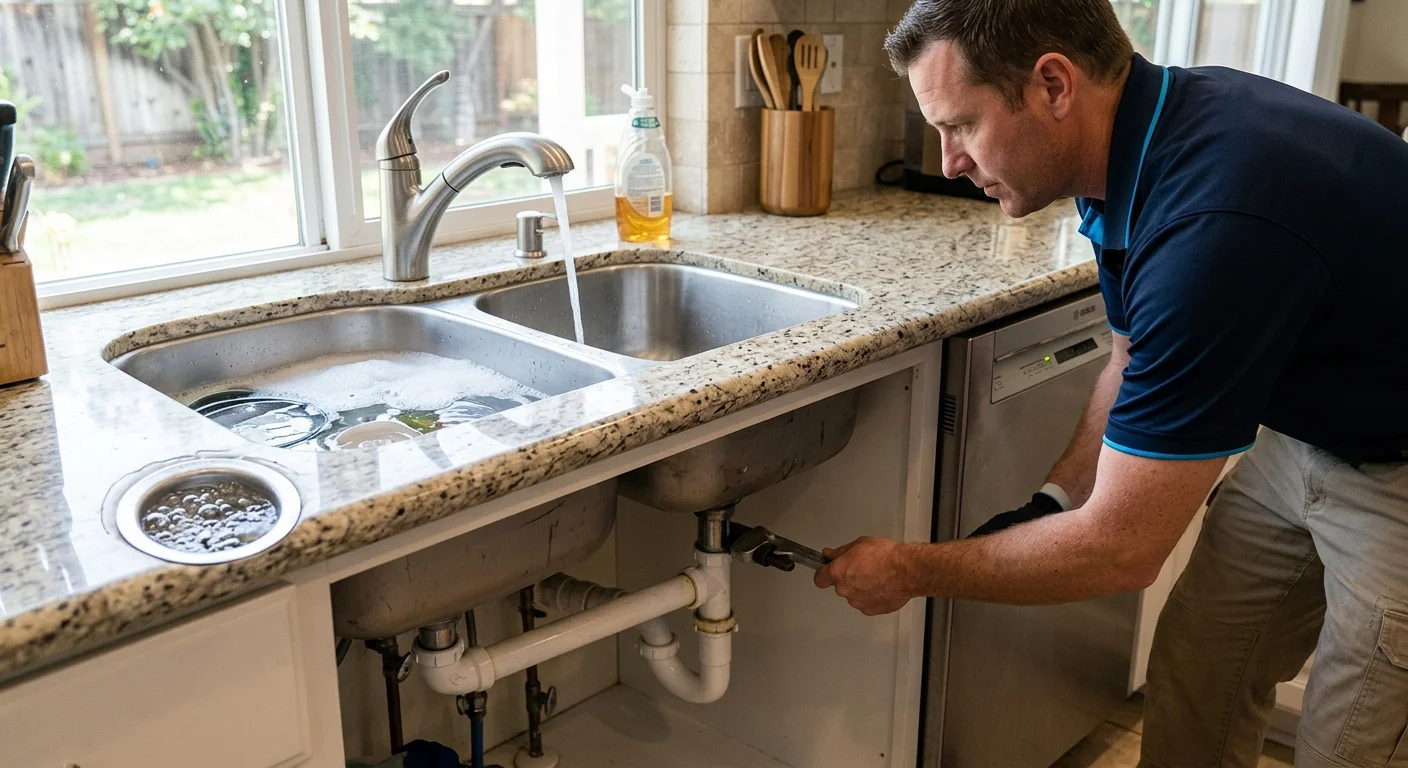
Kitchen sink gurgles when the dishwasher drains
Learn why a kitchen sink drain may gurgle during a dishwasher cycle, what the timing can reveal, and how to request a licensed San Diego plumber referral.
A sink that bubbles only during a dishwasher cycle provides useful timing evidence. The dishwasher is sending water into the kitchen drain system, but the sound alone doesn’t identify the problem. A plumber may need to check several connected parts.
What the timing of the gurgle can tell a plumber
First, note exactly when the kitchen sink drain begins making noise. It may start as the dishwasher releases water, continue briefly afterward, or appear later in the cycle. Those patterns can help a plumber narrow the inspection.
Watch the sink during one normal cycle if you can do so without disturbing anything. You don’t need to restart the dishwasher repeatedly. Write down what you observe:
- The gurgle begins as soon as water enters the drain.
- The noise starts after the dishwasher has been running.
- Bubbles appear around the sink drain opening.
- Water rises into the basin during discharge.
- The sink also drains slowly when the dishwasher is off.
- The symptom happens only when the garbage disposal is used.
A short phone video can preserve the sound and timing. It also helps the contractor see whether water moved inside the basin. Avoid opening pipes or changing connections before recording what happened.
Timing helps separate an appliance-related event from a broader drainage pattern. A plumber may consider the dishwasher connection when the sink behaves normally at every other time. If the faucet, disposal, and dishwasher all produce symptoms, the contractor may look farther along the kitchen drain path.
A double-basin sink adds another observation point. Water moving between bowls is a different symptom from sound alone. Our guide to a kitchen sink backing up into the other basin explains that separate pattern.
How the sink drain, disposal connection, and branch line differ
These components sit close together, but they serve different parts of the drainage path. Knowing their names makes it easier to describe the problem accurately.
The sink drain begins at the basin opening. Under the sink, its fittings carry water toward the curved trap and the line entering the wall. A dishwasher uses a separate discharge hose. Depending on the installed layout, that hose may connect at the garbage disposal or another sink-side drain fitting.
A disposal-equipped kitchen adds another possible inspection point. A plumber may check where the dishwasher hose meets the unit, how the disposal drains, and whether both fixtures produce the same symptom. If the disposal itself hums, leaks, jams, or fails to drain, request a garbage disposal repair referral as part of the call.
The branch line is farther downstream. It receives drainage after water passes through the sink-side fittings. A restriction there may affect the faucet, dishwasher discharge, and disposal rather than one connection alone. The plumber must inspect the actual layout before deciding where the symptom begins.
Don’t treat a gurgle as proof that the dishwasher was installed incorrectly. It may be connected correctly while another part of the drainage path needs attention. If the symptom began after replacement or relocation, mention that timing. Our article about whether a plumber can install a dishwasher covers the installation question separately.
Skip chemical drain cleaners when the location hasn’t been identified. A chemical doesn’t show which connection or section is involved, and it can change the conditions the contractor needs to assess.
What standing water or odor adds to the diagnosis
Sound matters, but visible water changes the description. Tell the contractor whether the basin stays empty, collects a shallow amount, or receives water during the dishwasher’s discharge. Don’t estimate a cause from the water level alone.
Standing water between dishwasher cycles may point the inspection toward the kitchen sink drain itself. Water appearing only during discharge gives the plumber a different pattern to evaluate. If it rises, stop adding water through the faucet and report where the water appeared.
Odor also needs a precise description. Note whether it comes from the sink opening, the disposal side, the cabinet, or the dishwasher interior. Record whether it appears constantly or only during discharge. Don’t label it as sewer gas or another specific substance unless a qualified contractor identifies it.
Check the cabinet visually without removing plumbing parts. Report moisture, staining, or dripping as a separate symptom. A noise at the basin and moisture below the sink may require the contractor to examine more than drainage flow.
San Diego’s water quality is another detail homeowners sometimes connect to sink symptoms. The City of San Diego reports average drinking-water hardness of about 16 grains per gallon, or 276 parts per million. Hardness can vary by location and demand. That figure doesn’t diagnose a dishwasher-related gurgle, so don’t assume mineral deposits are responsible. Customers outside the City of San Diego should confirm current hardness information with their own water provider.
What the contractor you’re matched with may inspect
The contractor will usually begin by tracing the visible drain arrangement. That includes the dishwasher hose, its connection point, the disposal when present, the sink fittings, and the accessible branch-line entry. The goal is to determine which fixtures reproduce the symptom.
Expect questions about recent changes. Mention a new dishwasher, disposal replacement, cabinet work, or drain service. Give the contractor the sequence, even if the work seemed unrelated. A symptom that started immediately after a change deserves different attention from one that developed gradually.
The contractor may also compare several conditions:
- How the sink drains with the dishwasher off
- Whether one or both sink basins react
- Whether the disposal changes the drainage pattern
- Whether the hose or connection shows visible movement
- Whether water remains in the basin after discharge
- Whether the symptom extends beyond the kitchen
Inspection findings determine the next step. The contractor may recommend work at an accessible connection or professional drain cleaning. Broader symptoms may lead them to inspect another part of the drainage system. Equipment, access, and methods vary between independent contractors.
California’s CSLB says the C-36 plumbing classification includes work involving the proper disposal of fluid waste, along with repairs and replacements within that scope. Individual contractor capabilities still vary. You can confirm a contractor’s current status, classification, bond information, and complaint history through the CSLB license lookup. Search by license number, business name, or personnel name. The database may be unavailable from Sunday at 8 p.m. through Monday at 6 a.m. for scheduled maintenance.
How to request a drain cleaning referral
Start with the exact symptom: “My kitchen sink gurgles when the dishwasher drains.” Then describe the cycle timing, visible water, odor, and whether the sink drains normally at other times. This gives the matched contractor a useful starting point without declaring the cause.
Include these details when requesting the referral:
- Your San Diego County city or neighborhood
- Whether the sink has one basin or two
- Whether a garbage disposal is installed
- When the noise begins during the cycle
- Whether water or bubbles enter the basin
- Whether the faucet produces the same symptom
- Any moisture visible inside the cabinet
- Any recent dishwasher, disposal, or sink work
Mention other affected fixtures, but keep their symptoms separate. A kitchen-only problem and a wider drainage problem may lead to different questions. Photos of the cabinet layout can also show the contractor which visible connections are present.
Plumbing Pro San Diego is a referral service. We connect homeowners throughout San Diego County with independent, licensed and insured plumbing contractors. The matched contractor performs the inspection, recommends the work, sets the price, and receives payment directly.
Location still helps with matching. A homeowner in Chula Vista can review our Chula Vista plumber guide before requesting a referral. We also serve coastal, central, inland, East County, and South Bay communities. The actual drain arrangement matters more than the ZIP code, so give the contractor details about your kitchen rather than assuming every local home has the same setup.
When to call us
Call when the gurgling repeats, the kitchen sink drain slows, or water enters the basin during a dishwasher cycle. Those symptoms need an on-site diagnosis before anyone selects a repair or cleaning method. Call us at (858) 400-4417 and we’ll connect you with a licensed plumber.
Areas this guide covers
We connect homeowners with licensed plumbers in these San Diego County communities.
Keep reading
Need a Plumber in San Diego?
Licensed, insured plumbers, ready across San Diego County. The plumber quotes you before any work starts.
Call (858) 400-4417Call any time, day or night, anywhere in San Diego County