Kitchen sink backs up into the other basin: what it means
One kitchen sink basin backing into the other usually points to a shared drain blockage. Learn what it means and when to call a San Diego plumber.
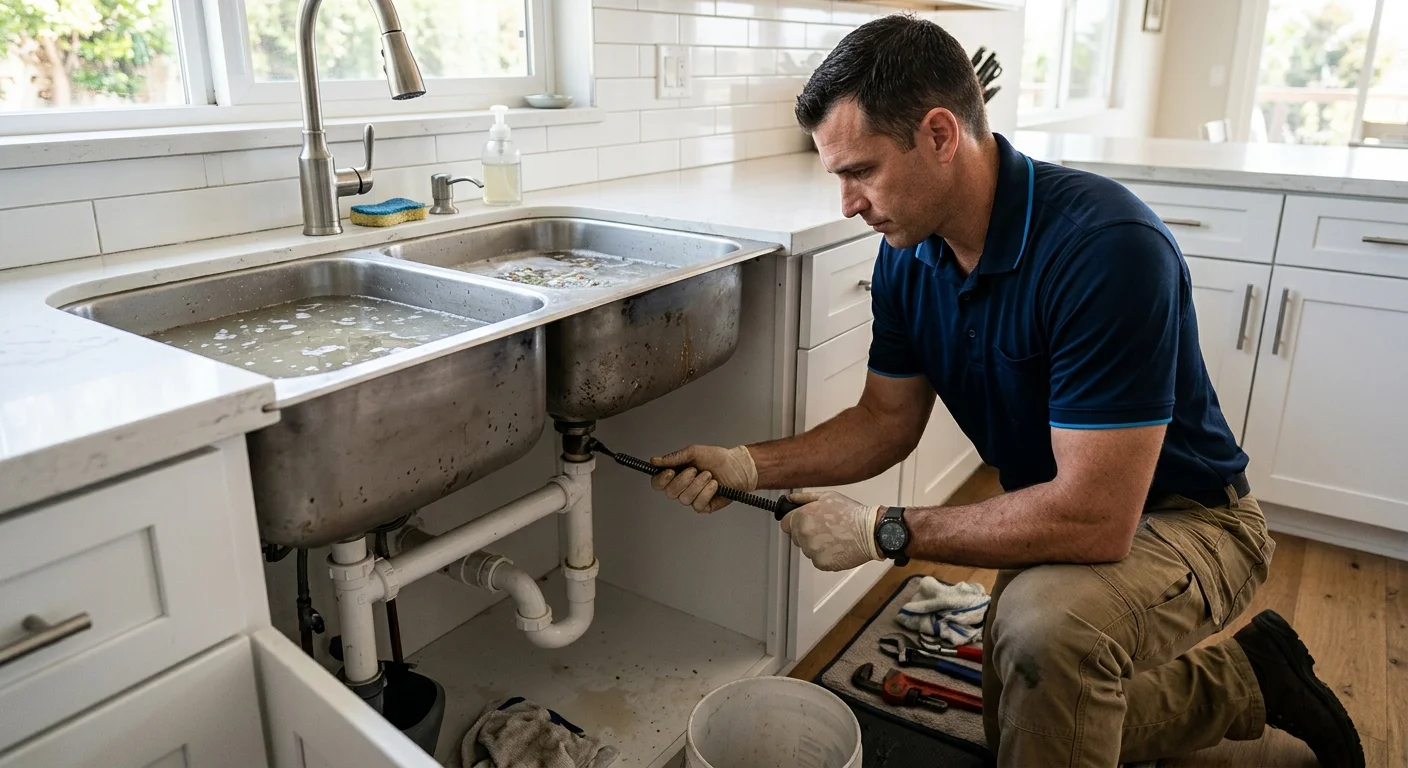
Water flowing into one basin and rising through the other points toward a shared drain restriction. A plumber for a clogged sink can locate that restriction and clear it without treating the two basins as separate problems. The exact diagnosis depends on where their drain connections join.
Why one sink basin backs up into the other
Both basins usually feed a shared drain path beneath the sink. Their tailpieces may meet before the trap, or each side may connect differently. Either way, water must pass through a common downstream section.
When that shared section is restricted, incoming water loses its normal exit. It follows the nearest open path instead. In a double sink, that path may lead upward into the other basin.
This symptom provides more information than a generally slow sink. If water added to the left basin appears on the right, the kitchen sink drain blockage is likely past the point where those sides connect. A restriction inside one strainer or tailpiece may affect only that basin.
The pattern can change when a garbage disposal is present. The disposal outlet, connecting tube, baffle tee, trap, and wall drain all become possible locations. A dishwasher connection may also add water to the same assembly. That doesn’t prove the dishwasher or disposal caused the blockage.
Watch what happens without repeatedly filling the sink. Note which basin receives water, whether either side drains, and whether the backup contains food debris. Those observations help the plumber understand the layout before opening the drain.
This article focuses on the shared-drain symptom. For dripping faucets, damaged strainers, or leaks around the basin, see our broader San Diego sink repair guide.
How the blockage location changes the diagnosis
The first useful dividing line is the connection between both basins. A blockage before that junction tends to affect one side. A blockage after it can affect both.
If one basin drains normally until water enters the second, the connecting waste assembly deserves attention. A poorly draining disposal outlet, a restricted tee, or buildup near the junction can redirect water across the sink. The visible backup still doesn’t reveal the exact condition inside the pipe.
When both sides hold water, the restriction may sit in the trap or beyond it. The trap is the curved section beneath many sinks. The wall arm carries water from that assembly into the kitchen branch drain.
A plumber can follow the symptoms in order:
- Whether one basin drains when used alone
- When water begins entering the opposite basin
- Whether the disposal changes the flow
- Whether the dishwasher causes water to appear
- Whether nearby fixtures show similar drainage trouble
The last point matters. A sink-only problem suggests a restriction serving that fixture or kitchen area. Slow drainage at several fixtures may indicate a blockage farther along the drainage system.
Pipe layout also affects access. A sink in a detached San Diego house may connect differently from one in a condo or multi-unit building. The visible plumbing beneath the cabinet tells only part of that story. Shared building lines and concealed branch connections can change which party must authorize work.
A licensed plumber can inspect the accessible assembly first, then determine whether the kitchen branch needs cleaning. That sequence keeps the diagnosis tied to what the system actually shows.
When a kitchen backup points beyond the sink trap
A double kitchen sink clogged on both sides doesn’t automatically mean there’s a sewer-line problem. Many restrictions remain within the sink assembly or the kitchen branch. Other fixture symptoms provide the stronger clue.
Pay attention when the sink backup happens alongside slow drainage elsewhere. Water appearing in another fixture, repeated gurgling from nearby drains, or several fixtures losing drainage together can point beyond the trap. The plumber may then inspect a larger branch or the building drain.
A backup that returns soon after the accessible trap was cleared also deserves a deeper look. The removed material may have been only part of the restriction. Grease, food residue, or other debris can remain farther inside the line. The cause can’t be confirmed from the basin alone.
The boundary between a kitchen branch issue and a broader sewer issue matters in San Diego. Within the City of San Diego, property owners are responsible for maintaining their sewer lateral from the property to its connection with the sewer main. That responsibility can extend beyond the property line. Other cities and unincorporated areas may follow different procedures, so confirm responsibility with the utility serving the address.
Our sewer line referral service covers problems that appear to extend beyond a single fixture. Tell us if toilets, tubs, or other sinks are also affected. That detail helps distinguish an isolated kitchen stoppage from a broader drainage concern.
A plumber should verify the blockage location before discussing major line work. One backed-up double sink, by itself, doesn’t establish that the sewer lateral needs repair.
What drain cleaning options a plumber may discuss
The cleaning method should match the location and condition found. A plumber may begin by inspecting the strainers, connecting tubes, disposal outlet, and trap. Accessible buildup can sometimes be removed during that inspection.
When the restriction sits beyond the trap, the plumber may discuss a drain cable or auger. The cable enters the line through an available access point and works through the obstruction. Cable size and access route depend on the actual piping.
A plumber may also discuss hydro jetting for certain lines and types of buildup. Pressurized water cleans differently from a mechanical cable, but it isn’t automatically the right choice for every kitchen drain. Pipe condition, access, layout, and the suspected material all affect that decision.
Camera inspection may come up when the problem repeats or the blockage location remains unclear. Some kitchen branches have bends or dimensions that limit camera access. The contractor can explain what the equipment can show in that specific line.
Our drain cleaning service connects San Diego County customers with independent licensed plumbers who can evaluate those options. The contractor you hire sets the scope and price after reviewing the system. No official rate schedule establishes a typical drain-cleaning price, so request the proposed work and total contract terms directly from that contractor.
Ask what section will be cleaned and which access point will be used. Also ask what changed after cleaning. Better flow confirms an improvement, while a recurring backup may justify further diagnosis.
How to request a drain cleaning referral in San Diego County
Start with the exact symptom: water from one kitchen basin rises into the other. Mention whether both sides eventually drain, whether a disposal is installed, and whether the dishwasher affects the backup.
Include symptoms from other fixtures, even if they seem unrelated. A slow bathroom drain or another backed-up fixture can change the likely blockage location. Also identify whether the property is a detached house, condo, apartment, or commercial space.
Location matters across San Diego County. A referral in Oceanside or Encinitas may involve a different utility and permitting jurisdiction than one in El Cajon, Chula Vista, or the City of San Diego. Give the full service address so the independent contractor can identify the correct jurisdiction if the problem extends beyond the sink.
South Bay customers can also review our local information for finding a plumber in National City. The same referral model applies throughout the county. We connect customers with independent plumbing contractors, while the homeowner hires and pays the chosen contractor directly.
Every plumber in the network is licensed and insured. You can independently check a contractor’s license status, classification, bond information, and complaint history through the CSLB license lookup. Search by license number, business name, or personnel name before signing a contract.
Don’t rely on “double kitchen sink clogged” as the full description. Explain what water moves where. That short account gives the plumber a clearer starting point.
When to call us
Call when both basins stop draining, water crosses into the other basin, or the backup keeps returning after the accessible plumbing was checked. Call us at (858) 400-4417 and we’ll connect you with a licensed plumber.
Areas this guide covers
We connect homeowners with licensed plumbers in these San Diego County communities.
Keep reading
Need a Plumber in San Diego?
Licensed, insured plumbers, ready across San Diego County. The plumber quotes you before any work starts.
Call (858) 400-4417Call any time, day or night, anywhere in San Diego County