Outdoor sink won't drain: where the blockage may be
Standing water in an outdoor sink may point to its strainer, trap, or downstream line. Learn what to check and when to request a San Diego referral.
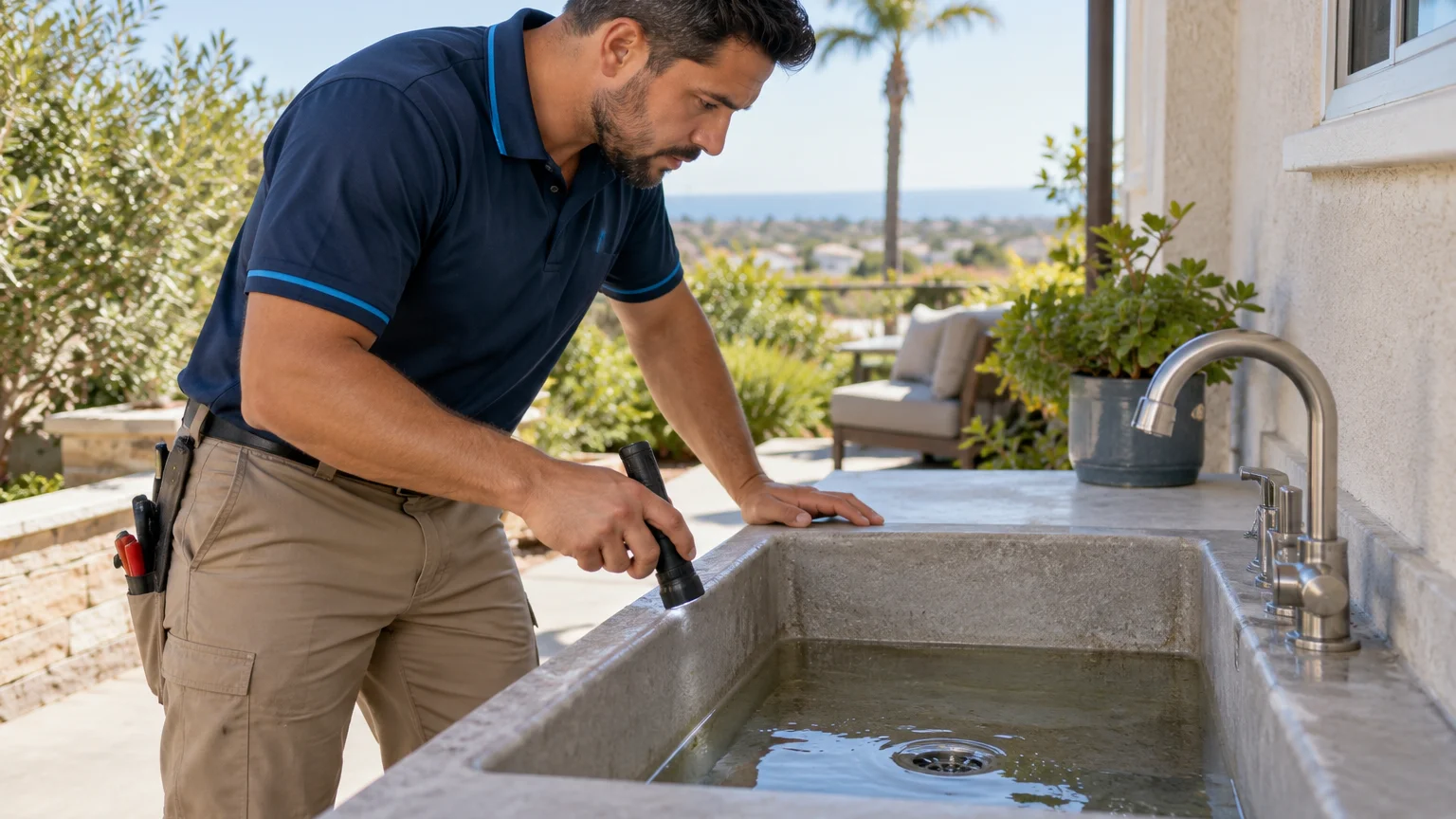
A stopped outdoor sink usually points to a blockage near the basin, inside the trap, or farther along the drain line. The standing water alone can’t identify which part is affected. Pause using the sink, note what you observe, and avoid assuming where its drain leads.
What a stopped outdoor sink can and cannot confirm
Standing water confirms that water isn’t leaving the basin normally. It doesn’t confirm the blockage’s location, cause, or depth. A slow drain and a fully stopped drain may involve different conditions, but either symptom needs inspection before anyone names the repair.
Start with details that don’t require taking anything apart. Note whether the water level falls while the sink sits unused. Look for visible debris around the strainer. Check whether water appears beneath the cabinet, counter, or exposed drain assembly. Odors, unusual sounds, or damp ground nearby are also useful details for the contractor.
An outdoor sink may be part of a built-in kitchen, a patio bar, or a portable station. Those setups don’t necessarily share the same drainage arrangement. The basin could connect to building plumbing, another approved system, or a removable container designed for that particular unit. Its appearance won’t confirm the connection.
The approved research didn’t establish one drainage rule covering every outdoor sink across San Diego County. Don’t guess where water may be discharged. Ask the property owner how the sink was installed, then confirm the applicable requirements with the city or county authority responsible for that address. Within the City of San Diego, Development Services is the appropriate starting point for permit questions.
This distinction keeps an outdoor sink drain problem separate from ordinary kitchen plumbing concerns. The symptoms may look similar, but the outdoor fixture’s connection and exposure need their own inspection.
How the strainer, trap, and downstream line differ
The strainer sits at the basin opening. It catches material before water enters the drain assembly. If debris is visible there, it may be restricting flow. That observation doesn’t rule out another obstruction below it.
The trap is the curved section beneath many fixed sinks. On an outdoor installation, it may be exposed or hidden inside a cabinet. A contractor may inspect it for collected material, a poor connection, damage, or another condition affecting drainage. A wet cabinet or dripping joint can point to a second problem, even when the main complaint is slow drainage.
The downstream line begins after the trap and carries water away from the fixture. A blockage there may be less visible. If the basin remains stopped after the accessible opening is clear, the contractor may need to inspect farther along the line. The correct method depends on the actual installation, access, and pipe condition.
Nearby fixtures can provide context, but they don’t prove where the restriction sits. If another connected fixture also drains poorly, tell the contractor. If only the outdoor sink is affected, report that too. Let the plumber trace the layout before deciding whether the issue is isolated.
The pipe route, material, and connection haven’t been confirmed. Tell the plumber about anything already placed into the drain, including the product name when available.
A fixed sink with damaged or unsuitable components may need more than cleaning. The contractor can explain whether fixture installation service is relevant after inspecting the existing assembly. Individual contractor capabilities vary, so describe the full setup when requesting a match.
When weather exposure changes what needs inspection
Outdoor plumbing sits where wind, rain, irrigation, landscaping, and stored patio items can affect what reaches the sink area. Weather exposure doesn’t diagnose the blockage. It simply gives the contractor more places to inspect.
After rain or yard work, note any leaves, soil, mulch, or other material around the basin and cabinet. Don’t push that material into the drain. If the sink has a cover, tell the contractor whether it was in place. Also mention recent cleaning, construction, or landscaping near the fixture.
Sun and open-air exposure may leave visible wear on hoses, seals, cabinets, and exposed drain parts. Visible wear doesn’t establish that a component has failed. Photos of the basin, the area below it, and the surrounding patio can help the matched contractor understand access before discussing the visit.
Location also matters. A built-in sink near a Pacific Beach patio may face different exposure than a sheltered installation farther inland. Those differences don’t justify guessing about pipe condition. They do help explain why the inspection should include the fixture’s surroundings, not only the water in the bowl. Homeowners near the coast can also review our Pacific Beach plumbing guide for local service context.
If water is approaching the rim, stop using the faucet. Don’t continue testing a stopped basin by adding more water.
What the contractor you’re matched with may check
The contractor may begin by identifying the sink type and asking where its water supply and drain are believed to run. If the connection isn’t documented, the plumber may need to trace accessible piping instead of relying on assumptions.
The inspection may include the basin opening, strainer, tailpiece, trap, joints, and accessible downstream pipe. The plumber may also look for leakage, loose connections, visible damage, or an installation that limits access. Any recommendation should follow the observed condition and confirmed layout.
For a blockage beyond the visible assembly, the contractor may discuss an appropriate cleaning method. The choice depends on where the obstruction appears to be, how the line is configured, and what access is available. A drain cleaning referral can connect you with an independent plumber who can assess those factors at the property.
California’s C-36 plumbing classification covers systems involving safe water supply and proper disposal of fluid waste. It also includes repair and replacement within that classification’s described scope. Individual contractor capabilities still vary.
Every plumber in the network is licensed and insured. You can independently check a contractor through the CSLB license lookup. The database can be searched by license number, business name, or personnel name. It includes license status, classifications, bond information, complaint history, expiration details, and workers’ compensation information. The database has scheduled maintenance from Sunday evening through Monday morning.
If the plumber finds that the sink’s drainage destination can’t be confirmed, ask what documentation or local review is needed before changing the connection. The approved research didn’t confirm a universal outdoor-sink connection rule for every San Diego County jurisdiction.
How to request a drain cleaning referral
A clear request helps us match you with the right type of independent contractor. Start with the phrase “outdoor sink won’t drain,” then describe whether the basin is slow or completely stopped. Include the property city, the sink’s location, and whether it’s built in or portable.
Share what you can see without dismantling the fixture. Useful details include visible debris, standing-water depth, damp areas, drips beneath the sink, odors, or sounds. Mention whether another nearby fixture has similar symptoms. If the problem followed rain, landscaping, a gathering, or recent work, include that context.
Photos can show the basin, cabinet, exposed trap, and access around the sink. Don’t claim that a photo proves the blockage’s location. It gives the contractor a clearer view of the installation and working area.
Also explain anything already attempted. Name any drain product placed in the sink. Report any tool inserted into the opening and whether a component was removed. This can affect how the contractor approaches the inspection.
Plumbing Pro San Diego is a referral service. We connect homeowners with independent C-36 licensed plumbing contractors. The homeowner hires and pays the matched plumber directly. That contractor sets the scope and price after considering the actual installation. We don’t set contractor prices, and no verified standard drain-cleaning price or labor time was established in the approved research.
When to call us
Request a referral when an outdoor sink stays stopped, repeatedly drains slowly, leaks below the basin, or has an unknown drainage connection. Call us at (858) 400-4417 and we’ll connect you with a licensed plumber.
Areas this guide covers
We connect homeowners with licensed plumbers in these San Diego County communities.
Keep reading
Need a Plumber in San Diego?
Licensed, insured plumbers, ready across San Diego County. The plumber quotes you before any work starts.
Call (858) 400-4417Call any time, day or night, anywhere in San Diego County