
Last updated: August 10, 2026
Pacific Beach plumbing: renters, owners, and salt air
Pacific Beach plumbing for renters, owners who rent out units, and anyone dealing with salt-air corrosion on outdoor fixtures a few blocks from the ocean.
The short answer
- A leak in a Pacific Beach rental has a different chain of command than a leak in a house you own and live in; know which one applies before you call anyone.
- If you own a PB rental, your tenant's first call should go through you or your lease's stated contact, not straight to a plumber.
- Salt air a few blocks from the ocean is genuinely harder on exposed fixtures, hose bibs, and shutoff valves than it is further inland.
- Find your main shutoff valve before you need it. In a multi-unit PB building, it may not be where you'd expect.
- Sand and sunscreen residue are a real cause of slow outdoor and bathroom drains in a beach neighborhood, separate from any other clog.
Plumbing in Pacific Beach runs into two things a lot of San Diego guides skip: what happens when you rent instead of own, and what salt air does to fixtures a few blocks from the ocean. Whether you rent, own and live there, or own a unit you rent out, PB’s coastal location means both the responsibility question and the salt-air question can apply to you. That combination shapes two separate problems worth covering on their own terms.
The first is who’s actually responsible when something leaks, which depends on whether you rent, own and live there, or own and rent it out. The second is what year-round coastal air does to plumbing that’s exposed to it, which most inland guides never mention because it doesn’t apply to them.
If you rent
If you’re renting in Pacific Beach and you find a leak, a running toilet, or a fixture that’s stopped working, your first move isn’t to search for a plumber. It’s your lease.
Most residential leases in California require the tenant to notify the landlord or property manager of a needed repair, often in writing, before any work gets scheduled. Read the maintenance and repair section of your specific lease rather than assuming a general rule applies. We can’t tell you what your lease says. Only your own document can.
Report the issue as soon as you notice it, and put it in writing even if you also call or text. A dated message documenting when you reported a leak and what you described protects you if the timeline ever becomes a question, particularly if the leak causes damage before it’s addressed.
If you share the unit with roommates, it helps to have one person coordinate reporting so the landlord isn’t getting three different accounts of the same issue. That’s not a legal requirement, just a practical one that speeds up the response.
If you own and rent it out
If you own a Pacific Beach property and rent it out, the chain runs the other direction, but it still starts with a document rather than a phone call to a plumber.
Check what your own lease requires for response time and access before arranging a repair. If your rental is a condo or part of an HOA, check whether the reported issue might involve a common-area or shared line, since that could shift part of the responsibility, or at least the access approval, to the association rather than sitting entirely on you.
Short-term rentals add a wrinkle that long-term leases don’t: a plumbing issue during a booked stay affects a guest who has no lease relationship with you at all, just a booking agreement. How you handle access and communication in that situation is a business decision for you to make, not something we can advise on, but knowing the plumbing issue itself before the guest checks out matters either way.
Once you’ve sorted out the responsibility question, a plumber can assess leak detection or a suspected slab leak the same way as any other property. The ownership question and the plumbing question are separate, and it helps to settle the first one before the visit so access and payment aren’t being figured out while the plumber is standing there.
What the salt air is doing to your outdoor plumbing
A few blocks from the ocean, the air itself carries salt, and that air is in constant contact with anything metal and exposed outside. This is real and worth taking seriously, separate from anything happening inside the house.
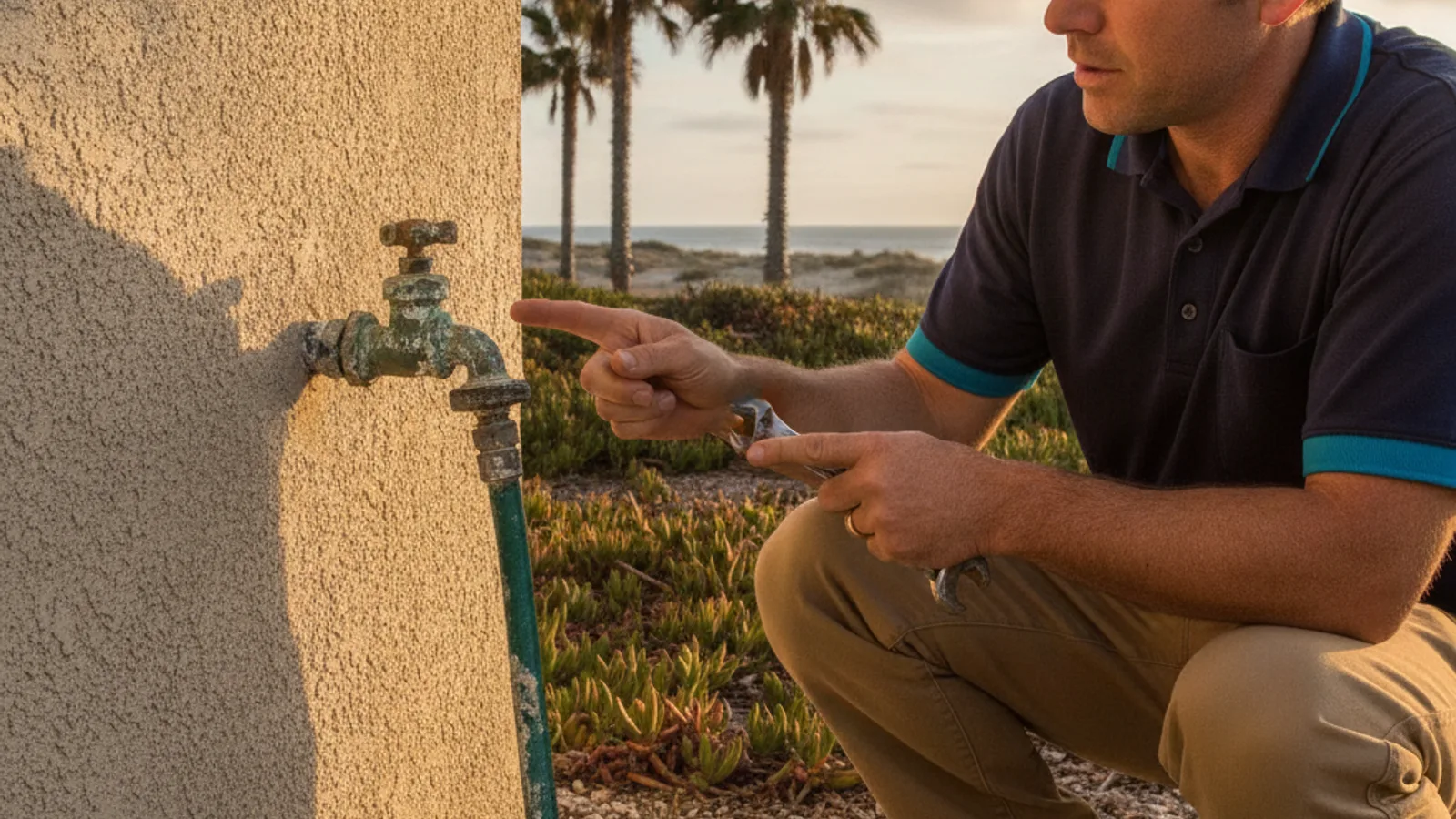
Outdoor hose bibs, exposed shutoff valves, outdoor shower fixtures, and any exposed metal piping near a patio or yard take that exposure every day, year-round. Unprotected metal corrodes faster under that kind of constant salt exposure than it would set back from the coast, and a hose bib that looks fine on the outside can be corroding internally at the same time.
The practical result is that outdoor fixtures in PB are worth a periodic visual check, not because something is wrong right now, but because corrosion on an exposed valve or bib tends to show up as a slow drip or a stuck handle well before it becomes a bigger failure. If a hose bib is hard to turn, drips constantly even when closed, or shows visible white or green corrosion at the joint, that’s worth having looked at before it fails outright, rather than after.
The shutoff valve you should find today
Every home needs a known main shutoff valve, but in a PB condo or multi-unit building, it’s often somewhere less obvious than “under the kitchen sink.”
In many multi-unit coastal buildings, the main shutoff sits in a shared utility closet, a garage, or a mechanical room rather than inside any one unit. If you rent or own in a building like that and you don’t already know where it is, that’s worth solving now, not during an active leak. Ask your property manager or HOA where the shutoff is and how to access it.
If you’re in a detached PB house, confirm your own valve works and turns without a fight. A shutoff that’s corroded stuck from salt-air exposure over the years does you no good in an actual emergency. Our guide to finding your main water shutoff valve covers what to look for and how to test it.
| Exposed fixture | What to check |
|---|---|
| Outdoor hose bib | Corrosion at the joint, difficulty turning, drips when closed |
| Exposed shutoff valve | Whether it still turns fully, visible white or green corrosion |
| Outdoor shower fixture | Loose fittings, slow drain at the base, corroded handle |
| Exposed exterior piping | Discoloration, pitting, or a chalky residue on the metal surface |
The sand-and-sunscreen drain problem
Beach living adds a drain problem that inland neighborhoods rarely deal with: sand and sunscreen residue washing into drains that weren’t built to handle either one regularly.
Sand tracked in from the beach settles in drain lines rather than flushing through cleanly, building up in low spots over time the way any solid debris would. Sunscreen and after-sun lotion residue, rinsed off in outdoor showers, bathtubs, and even kitchen sinks after a beach day, adds an oily coating that traps more sand and hair than either substance alone would.
If an outdoor shower or a bathroom drain used heavily after beach trips is running slower than the rest of the house, this combination is a realistic explanation worth ruling in before assuming it’s a typical hair clog. Drain cleaning handles it the same way it handles any buildup, but knowing the likely cause helps you describe the problem accurately when you call.
For fixture-level problems like a slow or leaking outdoor shower valve, faucet repair and installation covers that end of it. Our signs of a hidden water leak guide is also worth a read if you’re noticing water use creeping up without an obvious source. Anyone in the broader Pacific Beach plumbing service area deals with the same coastal exposure, whether you’re a block from the boardwalk or further up toward Soledad.
Frequently asked questions
I’m renting in Pacific Beach and found a leak. Who do I call?
Check your lease’s maintenance section and contact your landlord or property manager first, ideally in writing. Most leases expect the tenant to report the issue before a repair gets scheduled.
I own a rental in Pacific Beach. What’s my first step when a tenant reports a leak?
Confirm what your lease requires for response and access, then arrange a plumber. If the property is part of an HOA, check whether the issue involves a common-area line first.
Does salt air actually damage plumbing fixtures?
Yes, in exposed metal components. Outdoor hose bibs, shutoff valves, and outdoor shower fixtures near the coast corrode faster than the same fixtures set back from the ocean.
Where is the main water shutoff valve in a Pacific Beach condo or multi-unit building?
It varies by building, often in a shared utility closet, garage, or mechanical room rather than inside your unit. Ask your property manager or HOA now if you don’t already know.
Why do my outdoor and bathroom drains run slow in Pacific Beach?
Sand and sunscreen residue from beach trips are common contributors in coastal neighborhoods, building up separately from a typical hair or soap-scum clog.
When to call us
A corroded shutoff that won’t close, a leak that crosses the responsibility line between tenant and owner, or a drain that stays slow after cleaning are all worth a licensed plumber’s look. Have your address, whether you rent or own, and what you’ve noticed ready when you call. Call (858) 400-4417 and we’ll connect you with a licensed and insured local plumber.
Areas this guide covers
We connect homeowners with licensed plumbers in these San Diego County communities.
Keep reading
Need a Plumber in San Diego?
Licensed, insured plumbers, ready across San Diego County. The plumber quotes you before any work starts.
Call (858) 400-4417Call any time, day or night, anywhere in San Diego County