
Last updated: September 2, 2026
Bathtub drains slowly: where the clog may be hiding
A slow bathtub drain may point to the stopper, drain opening, or a nearby line. Learn what a San Diego plumber checks before recommending drain cleaning.
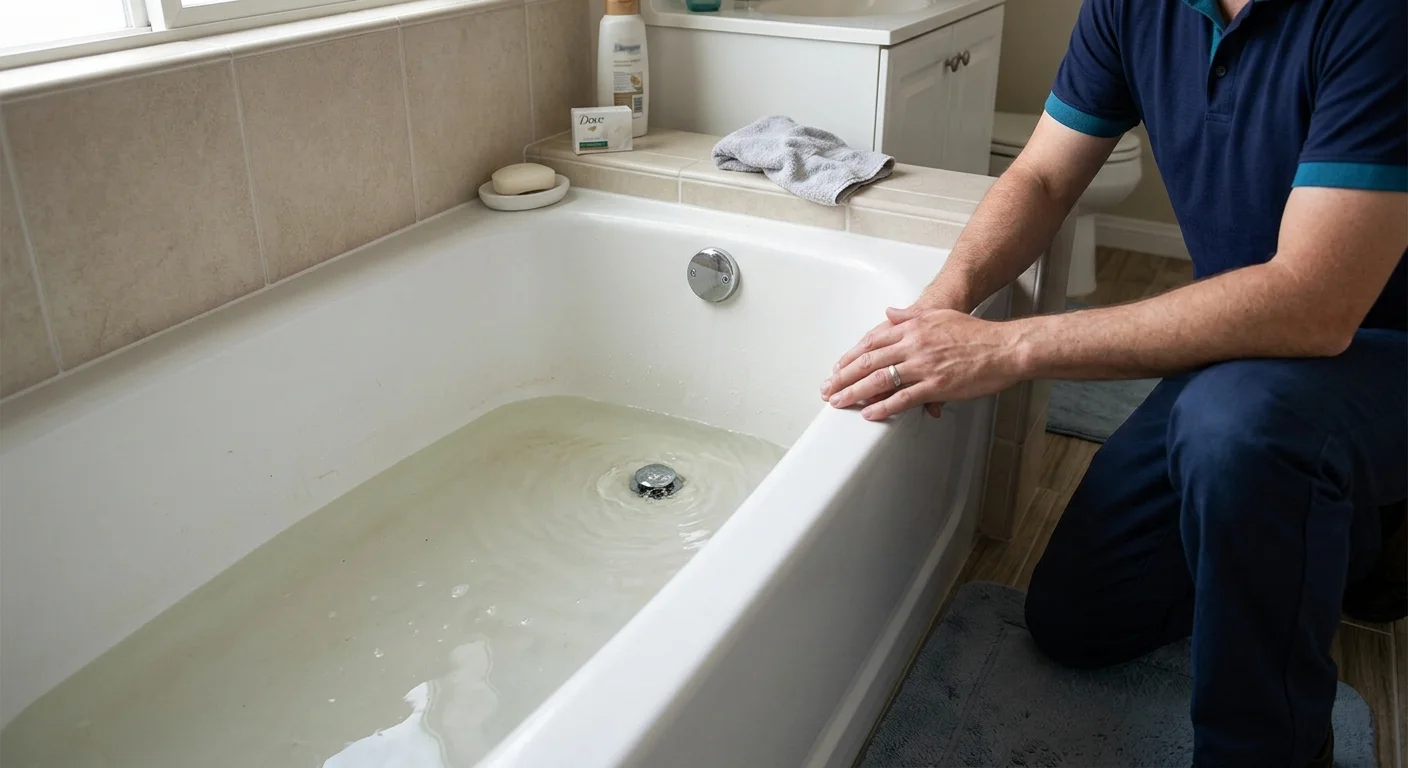
Water pooling around your feet usually means the bathtub drain is restricted somewhere nearby. The exact location can’t be confirmed without checking the stopper, drain opening, and connected piping.
A plumber can inspect those points without treating every slow tub as a larger sewer problem. That distinction matters because the right cleaning method depends on where the restriction sits.
Why a bathtub can drain slowly while other fixtures work
A bathtub has its own drain opening and connection to nearby waste piping. When the tub drains slowly but the bathroom sink and toilet seem normal, a plumber may start the inspection close to the tub.
That pattern doesn’t prove the restriction is inside the drain opening. It simply gives the plumber a useful starting point. The contractor may consider the stopper assembly, the reachable section below the opening, and the piping serving that part of the bathroom.
Pay attention to exactly what happens during a normal bath or shower. Does the water begin pooling immediately, or only after several minutes? Does the tub eventually empty completely? Does it slow down when another bathroom fixture is used? Those observations help describe the symptom without guessing at its cause.
Check other fixtures in the same bathroom and nearby rooms. A normal sink or toilet doesn’t rule out every shared-line issue. Likewise, a slow fixture elsewhere doesn’t automatically connect the two symptoms. The plumber needs to compare what each fixture does.
Keep this problem separate from water appearing outside the tub. Water below or beside the fixture calls for a different inspection. Our guide to water leaking below a bathtub explains that separate symptom.
San Diego County covers a wide service area, from Oceanside and coastal North County to La Mesa, East County, and Chula Vista. When requesting help, give the exact property location and describe which fixtures are affected. That helps the referral match your bathtub drain problem with the right independent contractor.
What the stopper and drain opening can reveal
The stopper is the first visible checkpoint. Depending on the tub, it may sit directly in the opening or connect to another control. A plumber can identify the assembly before deciding how to access the drain.
Tell the contractor if the stopper feels loose, sits unevenly, or no longer moves normally. Also mention whether the drainage changed after the stopper was adjusted or removed. These details don’t confirm a clog location, but they help separate a control problem from a restriction farther inside.
Visible material around the opening is another clue. Note what you can see without forcing anything into the drain. A clear photo can help during the referral call, especially when the stopper design isn’t easy to describe.
San Diego drinking water averages about 16 grains per gallon, or 276 parts per million. The City says hardness can vary with location and demand. That local water fact doesn’t identify what is slowing your bathtub. Still, any visible residue around the fixture is worth showing the contractor instead of assigning it a cause.
Avoid presenting earlier cleaning attempts as proof that the line is clear. Tell the plumber exactly what was tried and whether the drainage changed afterward. That history can affect how the contractor approaches the opening.
If the stopper, trim, or surrounding fixture also needs attention, ask whether the referral should include broader bathroom and kitchen plumbing service. The contractor can then review the drain symptom and the fixture concern during the same conversation.
How a plumber separates a local clog from a branch-line problem
The inspection starts with the pattern, not an assumption. A plumber may compare the bathtub with the nearby sink, shower, and toilet. The goal is to learn whether the symptom appears limited to one fixture or follows water use elsewhere.
You can make that comparison easier by sharing a short symptom record. Note when the slow drainage began, whether it changed gradually, and which fixtures were used near the same time. Include any sounds, movement at the drain opening, or changes in the standing-water level.
The contractor may then inspect the accessible parts of the bathtub drain. What can be reached depends on the fixture and the property. Access may differ between a detached home, a condo, and a multifamily building. The plumber should explain the proposed inspection before moving beyond the visible opening.
A local restriction may be treated at or near the bathtub connection. A suspected branch-line problem may call for a different access point or more investigation. The final choice belongs to the independent plumber after inspecting the actual plumbing layout.
Don’t assume a bathtub symptom matches a shower problem. Although both fixtures handle bathing water, their openings, stoppers, and connections can differ. If the affected fixture is a separate shower, read our guide to a clogged shower drain in San Diego instead.
The same rule applies when waste appears in the tub after another fixture is used. That isn’t the same search problem as a tub that simply empties slowly. Describe the sequence accurately so the contractor can decide what needs inspection.
When professional drain cleaning becomes the practical next step
Professional drain cleaning service becomes a practical option when the bathtub remains slow and the restriction’s location isn’t clear. It also makes sense when the visible opening doesn’t explain the symptom or prior attempts haven’t produced a lasting change.
A plumber can choose a cleaning approach after inspecting the drain and available access. The method shouldn’t be selected from the search phrase alone. The contractor needs the fixture type, stopper design, symptom pattern, and nearby plumbing behavior.
Ask what part of the system the proposed cleaning will address. You can also ask what the contractor found, which access point will be used, and what would change the planned scope. Clear answers help you understand whether the work is focused on the bathtub or a connected line.
No verified government source sets a standard drain-cleaning price for San Diego County. Pricing varies with the actual condition, access, scope, and contractor. Request the contractor’s written scope and price before authorizing work. Plumbing Pro San Diego doesn’t set or collect the plumber’s charges.
Water that eventually disappears can still leave the main question unanswered. The useful question isn’t whether the tub drains at all. It’s whether a contractor can identify the restricted area and recommend work tied to what was observed.
If you already know the property needs broader bathroom plumbing work, mention that during the referral. A drain-only request and a fixture-repair request may involve different preparation, even when both concern the same bathtub.
How to request a drain cleaning referral
Start with a direct description: “The bathtub drains slowly, while the sink and toilet appear normal.” Change that wording if other fixtures are also affected. Accuracy matters more than trying to diagnose the line yourself.
Include the property type, city, and bathroom location. Say whether the tub is upstairs, downstairs, or in a shared-wall unit. Mention the stopper style if you know it, but a photo is fine when you don’t.
Tell the referral service about any visible material and earlier cleaning attempts. State whether the tub empties completely and whether the problem changes during nearby water use. If water appears outside or below the fixture, identify that as a separate symptom.
Plumbing Pro San Diego refers homeowners to independent, licensed and insured plumbing contractors. The homeowner hires and pays the matched contractor directly. Individual contractor capabilities can vary, so confirm that the plumber accepts the requested scope.
California’s C-36 classification covers plumbing work involving water supply and fluid-waste disposal systems, among other listed work. You can check a contractor by license number, business name, or personnel name through the CSLB license lookup. The database includes license status, classifications, bond information, complaint history, and workers’ compensation information. It undergoes scheduled maintenance from Sunday at 8 p.m. through Monday at 6 a.m.
Location-specific information also helps. Homeowners in La Mesa can review our La Mesa plumber referral guide before requesting a match. We serve cities throughout San Diego County, so use the property’s actual city rather than the nearest major area.
When to call us
Call when the bathtub keeps draining slowly, the restriction isn’t visible, or other fixtures show related symptoms. This kind of inspection and drain cleaning may need a licensed plumber who can evaluate the actual piping and access.
Call us at (858) 400-4417 and we’ll connect you with a licensed plumber.
Areas this guide covers
We connect homeowners with licensed plumbers in these San Diego County communities.
Keep reading
Need a Plumber in San Diego?
Licensed, insured plumbers, ready across San Diego County. The plumber quotes you before any work starts.
Call (858) 400-4417Call any time, day or night, anywhere in San Diego County