
Last updated: August 29, 2026
Toilet rocks after installation: what the flange may reveal
A toilet that rocks after installation may point to the flange, fasteners, or floor. Learn what to check and when to call a San Diego plumber for help.
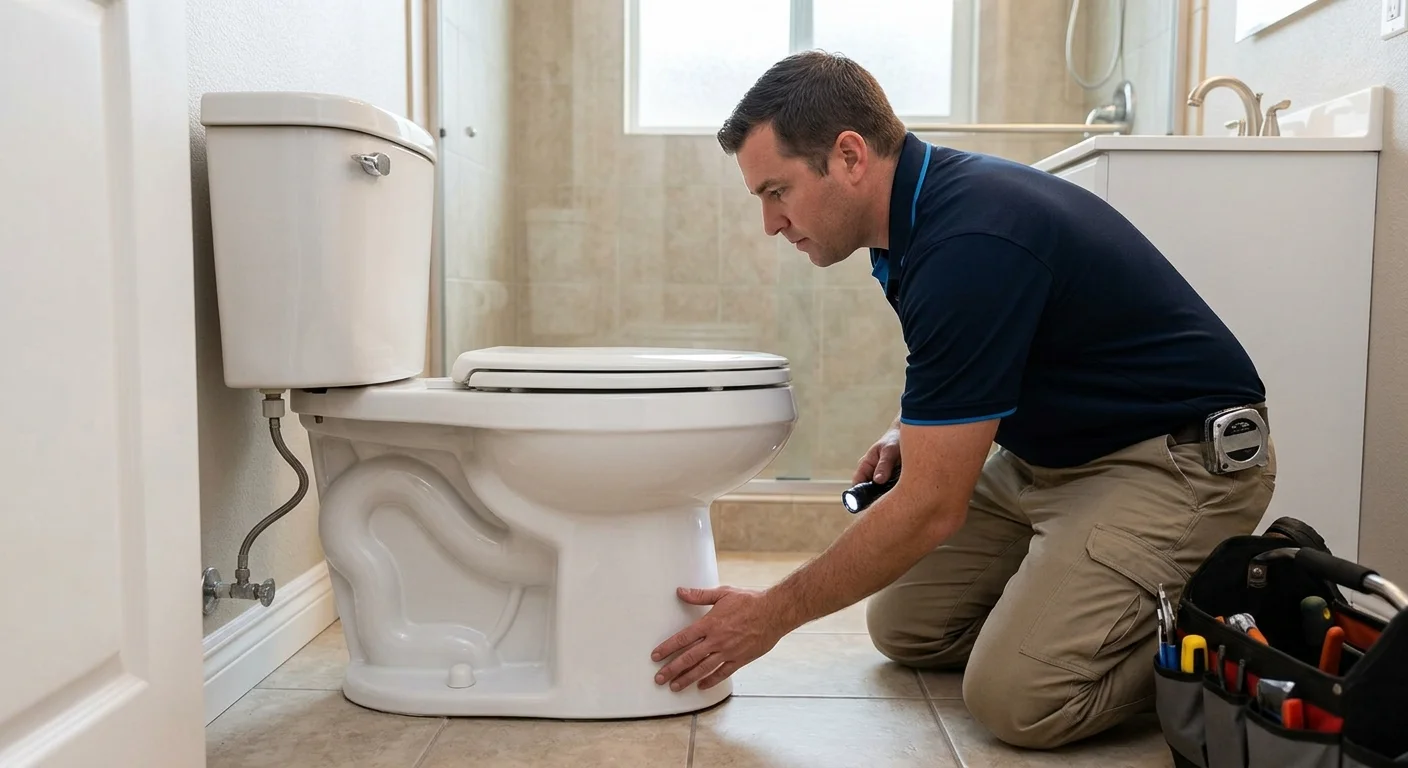
A newly installed toilet should sit firmly against the finished floor. If it rocks, your toilet plumbing installation needs another inspection. Movement alone doesn’t prove the flange, seal, fasteners, or floor caused the problem.
Why movement doesn’t identify one cause
A toilet that moves at the base presents a symptom, not a diagnosis. Several parts meet beneath the bowl. The toilet base rests on the finished floor. Fasteners connect the bowl to the flange area. A seal closes the drain connection.
Movement may relate to one part or several conditions together. The floor may not contact the entire base evenly. A fastener may be loose. The flange may sit differently than the toilet requires. Installation debris or poorly placed support material may also affect how the bowl sits.
The direction of movement offers useful context. A bowl that shifts sideways may present differently from one that tips toward a single corner. Movement only while someone sits down is also different from movement during a gentle hand check. These observations help a contractor focus the inspection, but none proves the cause.
Don’t treat visible fasteners as the whole answer. Tightening hardware without checking the mounting surface may hide the original issue. It also doesn’t show what sits beneath the toilet.
Start by noting when the movement began. Tell the contractor whether the toilet was newly installed, reset after flooring work, or replaced during a bathroom project. If another company completed the installation, keep its invoice and written scope. That record can show whether the job included flange work, floor preparation, or only a toilet reset.
Our fixture installation referral service can connect you with a licensed and insured independent contractor when the original installer isn’t available.
What the flange, fasteners, and floor add to the diagnosis
The flange is the mounting point around the drain opening. Its position, condition, and attachment affect how the toilet meets the drain and floor. A suspected loose toilet flange can’t be confirmed from bowl movement alone. The contractor may need to remove the toilet before describing what needs correction.
An inspection can separate three connected questions. First, does the toilet base make stable contact with the finished surface? Second, do the mounting points hold as intended? Third, does the flange provide a suitable connection for the toilet being installed?
The fasteners deserve inspection as part of that system. A visible bolt may appear loose even when the condition below it is the real concern. Hardware that won’t remain set may also call for a closer look beneath the bowl. Ask the contractor to explain what the fastener connects to, not merely whether it can be tightened.
Floor finish matters too. Tile edges, grout lines, replacement flooring, and transitions can change the contact beneath a toilet. That doesn’t automatically mean the floor is defective. It means the contractor should compare the toilet base with the surface supporting it.
This distinction helps across San Diego County. A bathroom near the I-5 corridor may involve a different floor assembly and access situation than a property in La Mesa or inland East County. The symptom can look identical while the appropriate scope differs. Homeowners east of central San Diego can also review our guide to finding a plumber in La Mesa.
A useful diagnosis identifies the condition found, explains how it affects movement, and connects that finding to the proposed work.
What moisture around the base can and can’t confirm
Moisture near a rocking toilet deserves attention, but its location doesn’t identify the source. Water can travel across tile or collect along the lowest edge of the base. A damp spot may appear where the water stops, not where it began.
Possible sources around a toilet include the supply connection, tank hardware, water on the outside of the fixture, cleaning water, and the concealed connection beneath the bowl. These are inspection paths, not conclusions. A contractor should trace the moisture before assigning a repair.
Note whether the area becomes wet after flushing, after the tank refills, or without recent toilet use. Also note whether moisture appears near the supply connection, behind the bowl, or only along the floor. Photos taken before wiping the area can preserve useful context.
Movement and moisture together still don’t prove that the hidden seal has failed. They do give the contractor two symptoms to evaluate. If the toilet was recently installed, share the installation date and describe whether both symptoms began together.
Avoid using caulk or another covering to hide the wet edge before inspection. That can obscure where moisture appears. If water is actively spreading, stop using that toilet and contact a plumbing contractor for guidance about the specific condition.
Our separate guide about a toilet leaking at the base focuses on tracing that symptom. This article focuses on movement after installation, even when the surrounding floor appears dry.
When repair differs from toilet reinstallation
A reinstallation generally means removing the toilet, evaluating the connection, and setting the fixture again with the needed installation materials. A repair addresses a condition that resetting alone won’t correct. The final scope depends on what the contractor finds beneath and around the bowl.
For example, a stable mounting area and suitable flange may point toward resetting the existing toilet. A flange condition that doesn’t provide a suitable mounting connection may require separate work. A floor-related concern may also change who needs to participate and what gets completed first.
The contractor should name the proposed scope clearly. “Reset toilet” doesn’t explain whether flange evaluation, mounting hardware, support at the base, or a new seal is included. Ask what happens if the toilet is lifted and the observed condition differs from the initial expectation.
The toilet itself also affects the decision. Its base needs to match the installation area, and its mounting points must accept secure attachment. If the contractor recommends replacement, ask which observed condition makes the existing fixture unsuitable for the proposed installation.
Cost can’t be confirmed without the condition, access, materials, and scope. Plumbing Pro San Diego doesn’t set contractor prices. For broader planning questions, see our guide to toilet installation costs in San Diego, then request a written proposal for your property.
Permit rules may also depend on the property and work scope. We couldn’t confirm from the approved sources whether every like-for-like toilet reset requires a permit across all San Diego County jurisdictions. Ask the permitting authority serving the property. For City of San Diego addresses, start with Development Services.
What to ask the contractor you’re matched with
A short set of specific questions can make the proposed work easier to compare. Begin with the diagnosis: what observed condition explains the movement, and does confirming it require lifting the toilet?
Ask the contractor to separate visible findings from possibilities. If the flange is described as loose, damaged, too high, or too low, ask how that conclusion was reached. Request photos after removal when the relevant parts aren’t normally visible.
Clarify what the written scope includes. It should distinguish a toilet reset from flange work, floor-related work, or fixture replacement. Ask which materials are included and what would cause the scope to change. If another trade may be needed, ask the plumber to identify that boundary before work continues.
You can also ask:
- Will the existing toilet be reused?
- Does the proposed work include new mounting hardware and a new seal?
- How will the toilet be checked for movement after installation?
- How will the contractor check for moisture after the reset?
- Who determines whether a permit applies to this address?
- How will an unexpected condition be documented and priced?
Individual contractor capabilities vary. California’s C-36 classification covers plumbing systems that provide water and dispose of fluid waste. You can verify a contractor’s status, classification, bond information, and complaint history through the CSLB license lookup. The database also lists workers’ compensation insurance information. It undergoes scheduled maintenance from Sunday evening through Monday morning.
Keep the proposal, photos, and final invoice together. Those records establish what the independent contractor found and agreed to complete.
How to request a toilet repair referral
Tell us that the toilet began rocking after installation. Include the property location within San Diego County and whether this was a new fixture, replacement, or reset. A nearby landmark or area, such as central San Diego, South Bay, coastal North County, or East County, can clarify the service location without replacing the street address.
Describe the movement in plain terms. Say whether the bowl shifts side to side, tips at one edge, or moves only under weight. Mention visible gaps, loose hardware, unusual sounds, and any moisture you’ve observed. Don’t diagnose the flange yourself. The contractor needs the symptoms and installation history first.
If available, gather the toilet model, the previous invoice, and photos of the base. Mention recent tile, flooring, or bathroom work because it may help explain when the movement started. Also tell the contractor whether the toilet remains in use.
We connect customers with independent, licensed and insured plumbing contractors. The homeowner contracts with and pays the matched plumber directly. Contractor capabilities, proposed scopes, and prices vary by the conditions found.
Use our toilet repair service to request a referral. State that the concern follows a recent installation so the matched contractor can discuss the right inspection scope.
When to call us
Call when a newly installed toilet rocks, shifts at the base, or shows moisture that hasn’t been traced. This kind of work needs a licensed plumber when inspection or correction involves the toilet’s plumbing connection. Call us at (858) 400-4417 and we’ll connect you with a licensed plumber.
Areas this guide covers
We connect homeowners with licensed plumbers in these San Diego County communities.
Keep reading
Need a Plumber in San Diego?
Licensed, insured plumbers, ready across San Diego County. The plumber quotes you before any work starts.
Call (858) 400-4417Call any time, day or night, anywhere in San Diego County