
P-trap keeps leaking under the sink: what to check
Learn which sink drain parts may be behind a leaking P-trap, how drip timing narrows the source, and when to request a local San Diego plumbing referral.
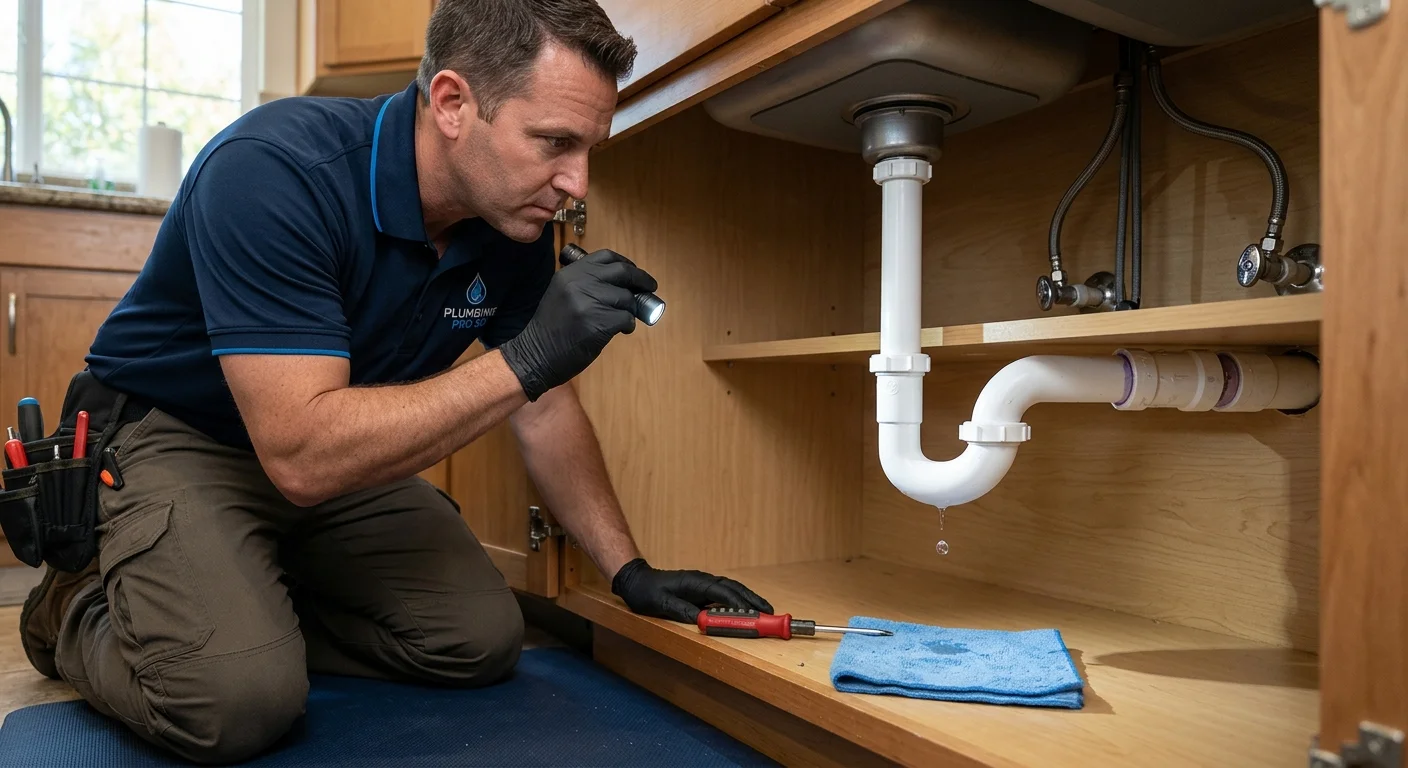
A drip beneath the curved drain pipe points to several possible connections. The sink drain parts in that area include the tailpiece, slip nuts, washers, P-trap, and trap arm. The drip’s location and timing help a plumber determine which connection deserves attention.
How the timing of the drip narrows the possible source
Start by noting when the water first appears. Don’t loosen the pipe or take the drain assembly apart. Watch the area during normal sink use and record what happens.
A drip that begins while water enters the basin gives one clue. Water appearing only as the basin drains gives another. A delayed drip may mean water is collecting elsewhere higher on the assembly before reaching the cabinet floor.
Look at the first wet point, not only the lowest drop. Water can move along a pipe before falling. A drop beneath the P-trap doesn’t prove that the curved section is the source. The moisture may have traveled from the sink drain opening, tailpiece, or another nearby connection.
The amount of water used also matters. Note whether the drip appears after a brief hand wash, a full basin drain, or dishwasher use. If the cabinet contains a garbage disposal, note whether the moisture appears when that appliance runs. These observations help separate an intermittent drain leak from a connection that stays wet.
Avoid repeatedly filling the sink just to force the problem. A short description is enough for a referral request. Useful details include which basin was used, when the first drop appeared, and where you saw moisture first.
This page focuses on a leak near the P-trap. Water rising into a second bowl is a different symptom. Read our guide to a kitchen sink backing up into the other basin if that’s what you’re seeing.
What slip nuts, washers, and pipe alignment may reveal
The visible drain assembly has several separate pieces. The straight section below the sink is commonly called the tailpiece. It meets the curved P-trap through a connection held by a slip nut. Another connection joins the trap to the pipe heading toward the wall.
A plumber may refer to the sealing pieces inside those connections as slip-joint washers. You usually can’t judge a washer’s condition from the outside. However, the exact location of the wet ring can identify which connection needs inspection.
Observe whether moisture circles a nut, begins above it, or appears from the pipe itself. A stain below a connection may show where water has traveled, but it doesn’t confirm the source. Fresh moisture during normal use gives the contractor better information.
Alignment is another useful detail. From outside the cabinet, note whether connected pipe sections appear centered or visibly pulled sideways. Don’t push them into position. A contractor can determine whether the assembly is aligned correctly and whether its parts fit the existing layout.
Also look for contact with stored items. A bottle or cleaning container may press against a drain pipe when the cabinet closes. Simply mention that contact when requesting help. The contractor can inspect the connection without relying on a photo alone.
Don’t assume that tightening every visible nut will solve the leak. The contractor may need to identify the fitting, inspect the washer, and confirm how the connected sections meet. That assessment is narrower than a complete sink repair visit, which may also involve faucets, disposals, and other fixtures.
San Diego County doesn’t have a confirmed neighborhood-specific distinction for these sink drain parts. The supplied primary sources don’t show that a P-trap connection behaves differently in coastal, inland, East County, or South Bay homes. The cabinet’s actual configuration is the useful local detail.
How drain seepage differs from a nearby supply leak
Several water connections can share a small sink cabinet. The drain assembly sits below the basin, while water supply connections lead toward the faucet. Moisture found beneath the P-trap may still begin elsewhere.
Timing is the clearest observation you can provide. Drain seepage may appear as water leaves the basin. A nearby supply connection may become wet while the faucet is running, even before water reaches the drain. Moisture may also start above the P-trap and track downward.
Use a flashlight to observe the outside of each visible connection. Don’t disconnect anything. Note the highest place where fresh moisture appears. A dry drain assembly with moisture above it points the inspection away from the trap. A wet ring forming directly around a drain joint points the contractor back toward that connection.
The water’s path can make the cabinet floor misleading. Check the underside of the basin and the vertical tailpiece before deciding the curved pipe is leaking. If there’s a garbage disposal, note whether moisture begins near its sink connection or farther down the drain.
Your description doesn’t need to diagnose the failed part. Say where the first drop appeared and what fixture was operating. Mention whether the faucet, dishwasher, or disposal was running. Photos taken during the drip may also help the contractor understand the cabinet layout.
For a broader fixture problem, our bathroom and kitchen plumbing referral service covers connections around sinks and related fixtures. A confirmed leak from a pipe or drain connection may fit a pipe repair referral instead.
San Diego’s water hardness doesn’t identify which connection is leaking. The City of San Diego reports an average of about 16 grains per gallon, with variation by location and demand. That verified local figure shouldn’t be used to guess the cause of one wet drain joint.
What the contractor you’re matched with may inspect
The contractor you’re matched with may begin by reproducing the symptom during normal sink use. Your notes help direct attention to the first wet connection. The contractor can then inspect the visible drain assembly and nearby water connections.
The inspection may include the sink drain opening, tailpiece, slip nuts, washers, P-trap, and trap arm. The contractor may also check where the drain enters the wall. Individual capabilities and the final scope can vary by contractor and property.
If the sink has two basins, a disposal, or a dishwasher connection, include that detail before the visit. Those parts can change the cabinet layout. A clear photo of the full space may help identify what access is available, but it doesn’t replace an on-site assessment.
Tell the contractor about earlier work on the same drain. Don’t guess when it happened if you don’t know. Say whether a connection was recently disturbed, whether the drip returned after an earlier repair, or whether you’re seeing it for the first time.
The contractor may also inspect for a nearby faucet or supply connection leak. That keeps the assessment tied to the observed water path instead of the lowest visible drop. If the issue extends beyond the sink assembly, the contractor can explain the proposed scope directly to you.
Every plumber in our network is licensed and insured. You can independently confirm a contractor’s license status, classification, bond information, and complaint history through the CSLB license lookup. Search by license number, business name, or personnel name. The database is unavailable from Sunday evening through early Monday morning for scheduled maintenance.
A C-36 plumbing contractor’s classification covers systems for proper fluid-waste disposal, along with other listed plumbing work. That describes the license classification, not every contractor’s individual capabilities.
How to request a pipe repair referral
Give us a short account of the leak when requesting a referral. Start with the room, sink type, and exact location of the first visible drop. Then explain when it appears.
For example, say that moisture forms around the nut below the tailpiece only while the basin drains. If the drip starts higher, describe that location instead. Mention a disposal, dishwasher connection, double basin, or crowded cabinet when present.
Don’t name a failed washer or pipe unless a contractor has confirmed it. “Water appears below the rear slip nut” is more useful than an uncertain diagnosis. It gives the matched plumber an observation to verify.
Include whether the leak is constant or intermittent. State which fixture was running and whether water appeared immediately or after draining. If stored items press against the assembly, mention that too. These details keep the referral focused on the sink drain connection.
We connect customers throughout San Diego County with independent plumbing contractors. If you’re in the South Bay, our National City plumber referral guide explains how the matching service works there. The same referral model serves other county communities.
Plumbing Pro San Diego doesn’t perform the repair, employ plumbers, dispatch workers, or set the contractor’s price. You’ll contract with and pay the independent plumber directly. Ask that contractor to explain the findings, proposed work, and price before you decide how to proceed.
When to call us
Call when a P-trap connection keeps dripping, the source remains unclear, or nearby sink connections also appear wet. This kind of diagnosis may need a licensed plumber when the drain assembly or connected piping requires repair. Call us at (858) 400-4417 and we’ll connect you with a licensed plumber.
Areas this guide covers
We connect homeowners with licensed plumbers in these San Diego County communities.
Keep reading
Need a Plumber in San Diego?
Licensed, insured plumbers, ready across San Diego County. The plumber quotes you before any work starts.
Call (858) 400-4417Call any time, day or night, anywhere in San Diego County