
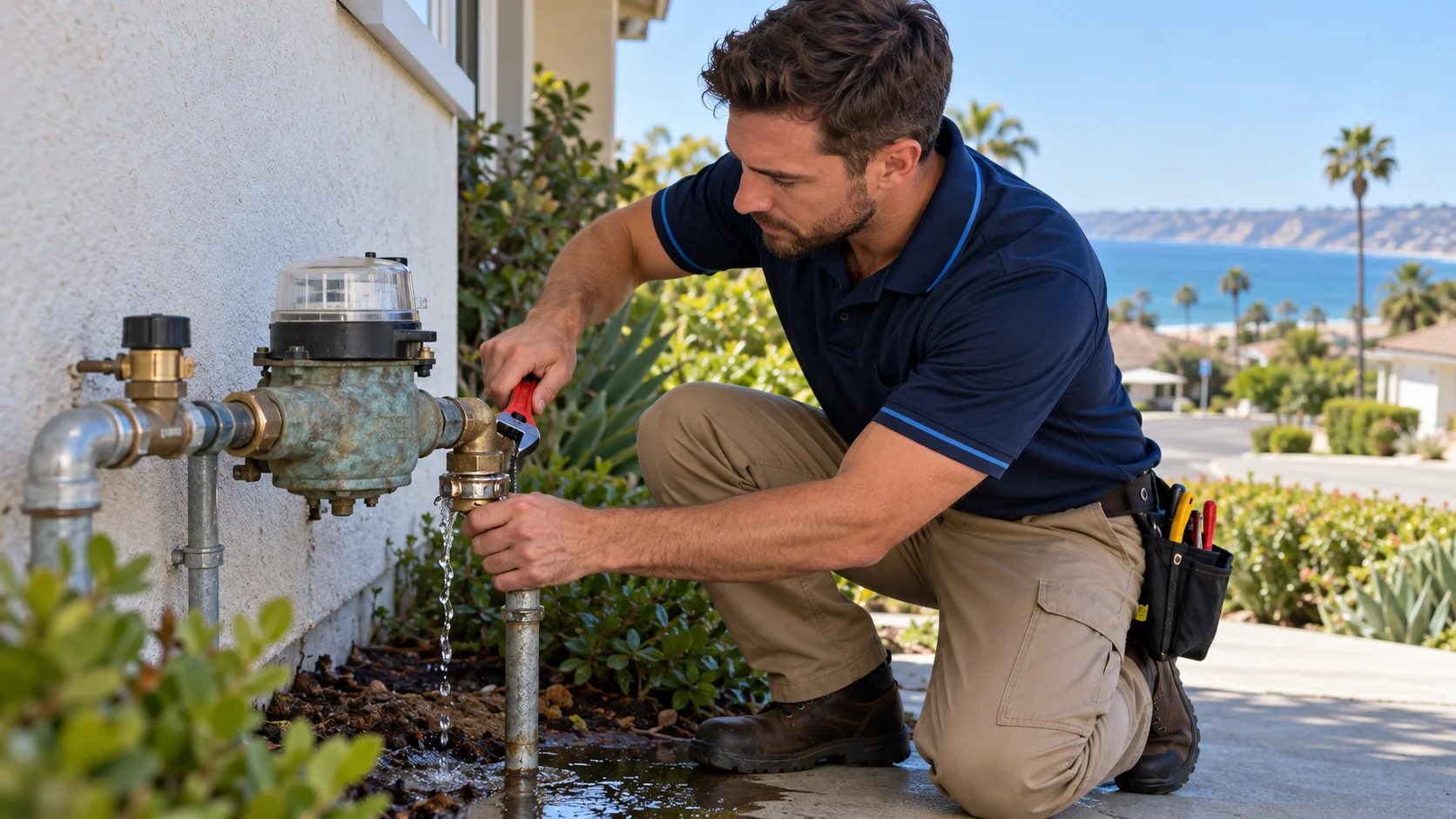
Main water line leak signs: what the meter can reveal
Learn what meter activity, damp soil, and low pressure may mean, how service-line and meter leaks differ, and who to call across homes in San Diego County.
Unexplained moisture outside can make a plumbing pipe leak hard to place. If indoor fixtures look dry, the water meter can provide another observation, but it can’t identify the damaged pipe by itself.
Which symptoms may point beyond an indoor fixture
Start with what you can see, hear, and document. Damp soil between the meter and house deserves attention when sprinklers and recent watering don’t explain it. So does water collecting near a driveway, walkway, foundation edge, or meter box.
Reduced pressure at several fixtures may also support a broader investigation. One weak faucet points to a different scope than a change noticed throughout the home. Neither observation proves an underground water line leak. They simply help the contractor decide where to begin.
Before focusing on the service line, check accessible indoor sources. Look beneath sinks and around toilets, water-using appliances, and exposed supply connections. Review irrigation schedules and confirm whether an automatic system operated recently. An ice maker, water treatment unit, or other automatic device may also use water without someone opening a faucet.
Keep the location in context. A wet cabinet identifies a different path than a damp strip crossing the front yard. Moisture beside the meter also differs from moisture closer to the building. Don’t assume the visible water sits directly above the source. Record the wet area’s edges instead of digging or applying a patch.
San Diego County properties vary widely. The route may cross a short Chula Vista yard, a Mission Valley patio, or a long North County driveway. Access and surface materials affect the inspection plan. They don’t establish where the pipe failed.
For signs involving walls, ceilings, or interior flooring, compare this situation with the broader guide to hidden water leak signs.
What a water meter observation can and cannot confirm
A meter observation should answer one narrow question: does the display change during a period when you expect no water use? It shouldn’t be treated as a complete diagnosis.
First, make sure no one uses a faucet, toilet, shower, appliance, or irrigation system during the observation. Note any equipment that can operate automatically. Photograph or write down the display, wait without using water, then compare it with the first record.
If the display changes, report exactly what you saw. Don’t translate that result into “the main line is broken.” The observation doesn’t identify a pipe, fitting, fixture, irrigation branch, or meter connection. It also doesn’t show whether visible moisture and meter activity share one cause.
If the display doesn’t appear to change, that single observation still doesn’t explain the damp soil or reduced pressure. Intermittent conditions can be absent during your check. Small changes may also be difficult for a homeowner to interpret from an unfamiliar display.
Avoid opening the meter assembly or attempting to seal it. A product intended for an exposed sink connection isn’t a diagnosis or repair plan for a buried, pressurized line. Tape and putty also can’t reveal the condition of the surrounding pipe.
Save clear photos of the display and meter box from outside the assembly. Include the date, observation period, and known water use. That gives the independent plumber better starting information for professional leak detection.
How a service-line leak differs from a meter leak
These labels describe suspected locations, not confirmed ownership. A service-line concern generally involves the water route between the metering area and the building. A meter leak refers to moisture appearing at the meter, its box, or a nearby connection. Water found in one location doesn’t prove which component released it.
Look at the pattern without disturbing the equipment. Moisture confined to the meter box is different from a wet trail continuing toward the house. A damp area near the building is also different from water appearing beside the street. Share those distinctions with the provider and contractor.
A plumber may need to separate the household plumbing from irrigation, fixtures, and other branches during the investigation. Conditions below concrete require the same location-first approach. A damp slab edge or driveway crack can guide inspection, but it doesn’t confirm a pipe’s exact position or condition.
There isn’t one confirmed method for finding every leak beneath concrete. Specific detection equipment and its accuracy also couldn’t be confirmed. Ask the matched contractor what testing fits the property, what each test can establish, and whether opening a surface is actually necessary.
Once the location and damaged component are known, the repair scope may involve an isolated section or a different plan. The contractor should explain that choice based on observed conditions. Our pipe repair referral service can connect you with an independent licensed professional for that evaluation.
For a separate explanation of public mains and private-side repair questions, read the guide to water main repair in San Diego.
Who may be responsible for each side of the connection
There isn’t a confirmed countywide responsibility rule for every water meter and service-line arrangement. San Diego County has multiple water providers, so don’t rely on a neighbor’s experience or a rule quoted for another service area.
Find the provider named on your water bill. Ask that provider where its responsibility ends for your specific connection. Describe whether the moisture appears before, inside, or beyond the meter box. Request instructions for reporting a suspected meter or connection leak.
Don’t assume that “street side” always means provider responsibility. Don’t assume that everything beyond the meter has the same ownership arrangement throughout the county. The provider should identify its own boundary and explain its process.
The San Diego County Water Authority can help readers understand the regional water landscape, but your bill remains the direct place to identify the provider serving the property. If the provider says the suspected location falls outside its scope, share that response with the contractor you hire.
Responsibility for damage, excavation, paving, or restoration can’t be confirmed for every case. Those questions depend on the connection, contract, property conditions, provider rules, and any applicable insurance policy. Ask for the repair scope in writing. Contact your insurer directly about coverage, exclusions, documentation, and claim requirements.
If water is visibly collecting at the meter, the dedicated guide on who to call for a leaking water meter offers a more focused decision path.
What to tell the contractor you’re matched with
Good notes reduce guesswork at the first conversation. Give the contractor the property address and the water provider shown on your bill. Explain where the meter sits and how the suspected line reaches the building.
Describe the symptoms in plain terms. Include the location of outdoor moisture, how far it extends, and whether it changes when irrigation runs. Mention reduced pressure and identify whether it affects one fixture or several. Share meter photos without claiming they prove a main-line failure.
Also provide:
- The first date you noticed the condition
- Photos showing the meter display and wet area
- Known irrigation or automatic equipment schedules
- Indoor fixtures and appliances you checked
- Any provider report or reference information
- Driveways, patios, walls, or landscaping along the route
- Previous plumbing documents available for the property
Ask the contractor to identify the suspected source before proposing a permanent repair. The explanation should distinguish observed evidence from possibilities. It should also state what surfaces may need access and what restoration is included.
A verified average repair price couldn’t be confirmed. Main-line pricing depends on the specific property, access, materials, and repair scope. Request a written, property-specific quote instead of relying on an online average.
California property owners can check a contractor through the CSLB license lookup. It supports searches by license number, business name, or personnel name. The database includes status, expiration dates, classifications, bond information, and workers’ compensation insurance. It’s unavailable from Sunday at 8 p.m. through Monday at 6 a.m. for scheduled maintenance.
Homeowners near the San Diego River corridor can also review the local Mission Valley plumber guide before discussing access and property layout.
When to call us
Call when unexplained meter activity, outdoor moisture, or reduced pressure needs a licensed plumber’s evaluation. Every plumber in our network is licensed and insured. Call us at (858) 400-4417 and we’ll connect you with a licensed plumber.
Areas this guide covers
We connect homeowners with licensed plumbers in these San Diego County communities.
Keep reading
Need a Plumber in San Diego?
Licensed, insured plumbers, ready across San Diego County. The plumber quotes you before any work starts.
Call (858) 400-4417Call any time, day or night, anywhere in San Diego County