Last updated: August 12, 2026
A plumber for North Park and Hillcrest
North Park and Hillcrest share dense blocks and narrow alleys. Here's how a plumber finds your actual drain pipe material and works out whose clog it is.
The short answer
- North Park and Hillcrest share dense central-city blocks, narrow alleys, and tight access. They're covered together, but remain distinct neighborhoods.
- Cast iron, galvanized steel, copper, PEX, and PVC fail differently. A plumber can identify the material from an exposed section.
- Several units may share one lateral. A clog can surface in another unit before appearing in yours.
- Narrow alleys and street parking affect equipment placement. Mention these access limits when you call.
- Replacing a fixture can trigger California's low-flow retrofit requirement depending on the property and the scope of work.
A drain problem in North Park or Hillcrest starts with two questions. What is this line made of, and whose is it? We’re covering these neighborhoods together because they share central-city building stock. These include some of San Diego’s oldest residential blocks. The area mixes pre-war homes, apartment courts, converted units, and retail apartments. That combination raises different questions than newer subdivisions in Otay Mesa or Rancho Bernardo.
None of this means every building has the same pipe or problem. It means the starting checklist is different. Knowing this helps during a flooded bathroom call. The San Diego plumber page covers the city. For backups, use drain cleaning.
What your drain line is probably made of, and how to find out
Early North Park and Hillcrest buildings commonly used cast iron drains. They often used galvanized steel for water supply. Neither material is automatically bad. Neither guarantees a problem in your specific building. On an older property, a plumber starts by identifying the material. The plumber doesn’t assume it.
Check an exposed section to identify the pipe without opening a wall. That may be in a basement, crawl space, or exterior cleanout. A plumber can recognize cast iron by its dull gray color and hub-and-spigot joints. Galvanized pipe has a threaded, silver-gray surface. Failing joints may show visible rust.
For a fuller picture, a sewer camera inspection can start at the cleanout. It shows the material, condition, and damage along the line. Our sewer camera inspection guide covers what that process finds and how it’s priced.
Cast iron and galvanized: what actually fails
These two materials fail in different ways. Knowing the material changes what a plumber checks first.
| Material | What failure looks like | What the plumber checks |
|---|---|---|
| Cast iron drain pipe | Slow drains, gurgling, a narrowing interior channel from decades of scale buildup, eventual cracking or a collapsed section | Interior diameter and scale buildup via camera, joint condition, any active leak points |
| Galvanized supply pipe | Discolored water, reduced pressure, rust bleeding at threaded joints, pinhole leaks | Zinc coating condition, joint corrosion, whether the failure is isolated or spreading |
| PVC or ABS drain (newer sections) | Typically stable; problems usually trace to a joint, a belly, or root intrusion rather than the pipe material itself | Joint integrity, slope, and any point where an older section connects to newer pipe |
| PEX or copper supply (newer sections) | Typically stable; issues usually trace to a fitting or an installation error rather than material failure | Fitting connections and transition points to any older galvanized section still in place |
Cast iron drain pipe corrodes from the inside over decades. Scale builds up on the interior wall and narrows the channel. The visible symptom is usually a slow drain. It often worsens gradually instead of failing suddenly. Galvanized supply pipe corrodes and sheds material into the water. Rust-colored water or dropping pressure can appear before a leak. Our galvanized pipe guide explains what that corrosion looks like. It also covers options after a plumber confirms the material.
Shared lines, and whose clog it is
Some North Park and Hillcrest buildings are apartment courts or converted duplexes. Others place residential units above retail storefronts. In those buildings, several units may join one lateral before the street connection.
That matters when something backs up. A shared clog can surface in a downstream unit first. The initial complaint can mislead unless someone checks the entire line. A camera inspection can start from an accessible cleanout. It shows whether the blockage serves one unit or the whole building.
Live in or manage a multi-unit property here? Find out whether the lateral is shared and locate the nearest cleanout. That information can save time during the next backup. The cause may sit in your unit or another one.
Access on a narrow block
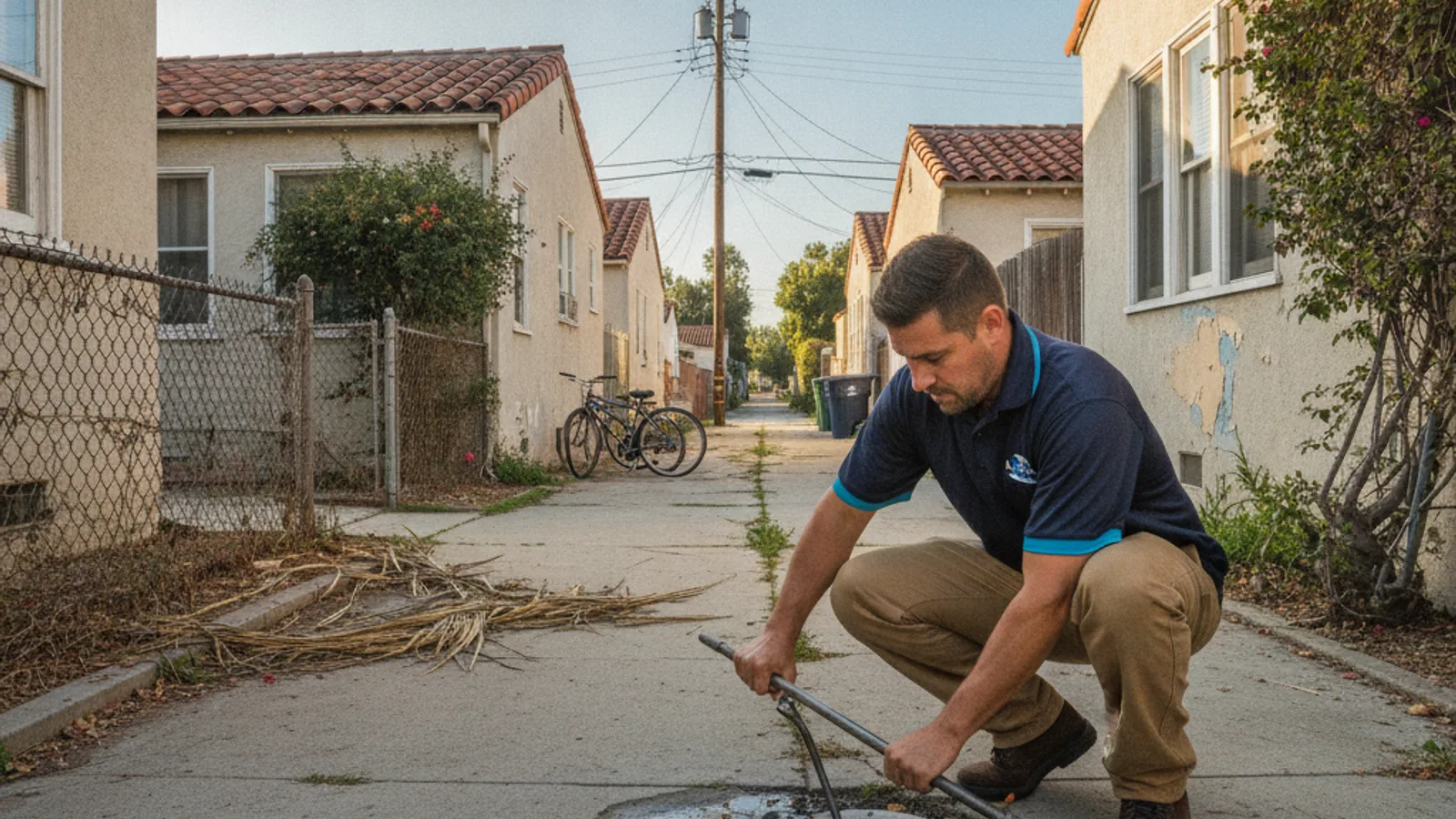
North Park and Hillcrest’s older blocks predate modern plumbing equipment. Narrow streets, tight alleys, and permit parking affect equipment placement. Tell the plumber about access before the visit. Don’t wait until the truck arrives.
Alley-facing cleanouts are common on these blocks. That can keep heavy equipment away from the front yard and street. It also means confirming that the alley and any gate are clear. Shared access with a neighbor should also be arranged. If the cleanout sits somewhere less obvious, share what you know. That helps the plumber plan the visit.
The retrofit question when you replace a fixture
Replacing a toilet, faucet, or showerhead may raise a retrofit question. California’s SB 407 ties requirements to certain permits, renovation costs, and transfer dates. The rules differ for single-family and multifamily buildings. Your requirement depends on the property type and work. Listed exemptions include historical properties.
This isn’t a reason to avoid the work. Ask about the rule before starting. Don’t wait for a permit inspector to raise it. During a fixture installation visit, confirm the rules for your address. Any noncompliant fixtures can be handled during that job. If a larger piping issue appears, discuss a whole-house repipe separately. That discussion may matter when original galvanized lines remain.
Frequently asked questions
How do I find out what my drain line is made of without cutting into a wall?
A plumber can identify the material at an exposed section. The line may be visible in a crawl space, basement, or exterior cleanout. A camera run through the cleanout shows the material and condition along the line.
What actually fails on cast iron and galvanized pipe?
Cast iron corrodes from the inside. Over decades, corrosion narrows the channel before cracks or collapse. Galvanized pipe corrodes and sheds zinc and rust into the water. Discoloration or reduced pressure may appear before an outright leak.
If my neighbor’s unit backs up, is it my problem too?
It depends on whether the line is shared. Multiple units may route into one lateral. A camera inspection can locate the clog. It also shows whether the affected section serves one unit or several.
Does replacing a toilet or faucet trigger a retrofit requirement?
California’s SB 407 ties retrofits to permits, renovation costs, and property transfers. The exact requirement depends on the property and work. Confirm your situation with the plumber or permitting department before starting.
Why does street parking matter for a plumbing job here?
Some equipment needs a specific position near the cleanout or street. Narrow blocks and permit parking can affect that setup. Mentioning access limits helps the plumber plan the visit.
When to call us
Recurring clogs, discolored water, or multi-unit backups need a licensed plumber. The plumber can identify the pipe material and check for shared lines. Call (858) 400-4417 with your address and what you’ve noticed. Mention whether the building has multiple units. We’ll connect you with a licensed and insured local plumber.
Areas this guide covers
We connect homeowners with licensed plumbers in these San Diego County communities.
Keep reading
Need a Plumber in San Diego?
Licensed, insured plumbers, ready across San Diego County. The plumber quotes you before any work starts.
Call (858) 400-4417Call any time, day or night, anywhere in San Diego County