
Last updated: August 2, 2026
Plumbing maintenance in Scripps Ranch: a prevention guide
Scripps Ranch sits on mesa-top lots cut by canyons, where root intrusion and drainage are worth checking. A practical prevention guide before something breaks.
The short answer
- Scripps Ranch sits on mesa tops cut by canyons around Miramar Lake, and that terrain shapes two recurring plumbing issues: root intrusion and canyon-lot drainage.
- Mature eucalyptus and other established trees near a sewer lateral are a common source of root intrusion, especially at the pipe's joints.
- A camera inspection is the only reliable way to confirm root intrusion before it becomes a full backup.
- Daily drain habits, what goes down a disposal and what doesn't, matter more on an older lateral than on a newer one.
- The search pattern here is broad and low-urgency, which makes this a good neighborhood for a maintenance mindset rather than a wait-for-the-emergency one.
Scripps Ranch plumbing searches are broad and mostly low-urgency: drains, toilets, a general plumber, not sewer emergencies, and that’s exactly the neighborhood where a little prevention goes further than an after-the-fact repair. This is a guide for reading before something breaks, not after.
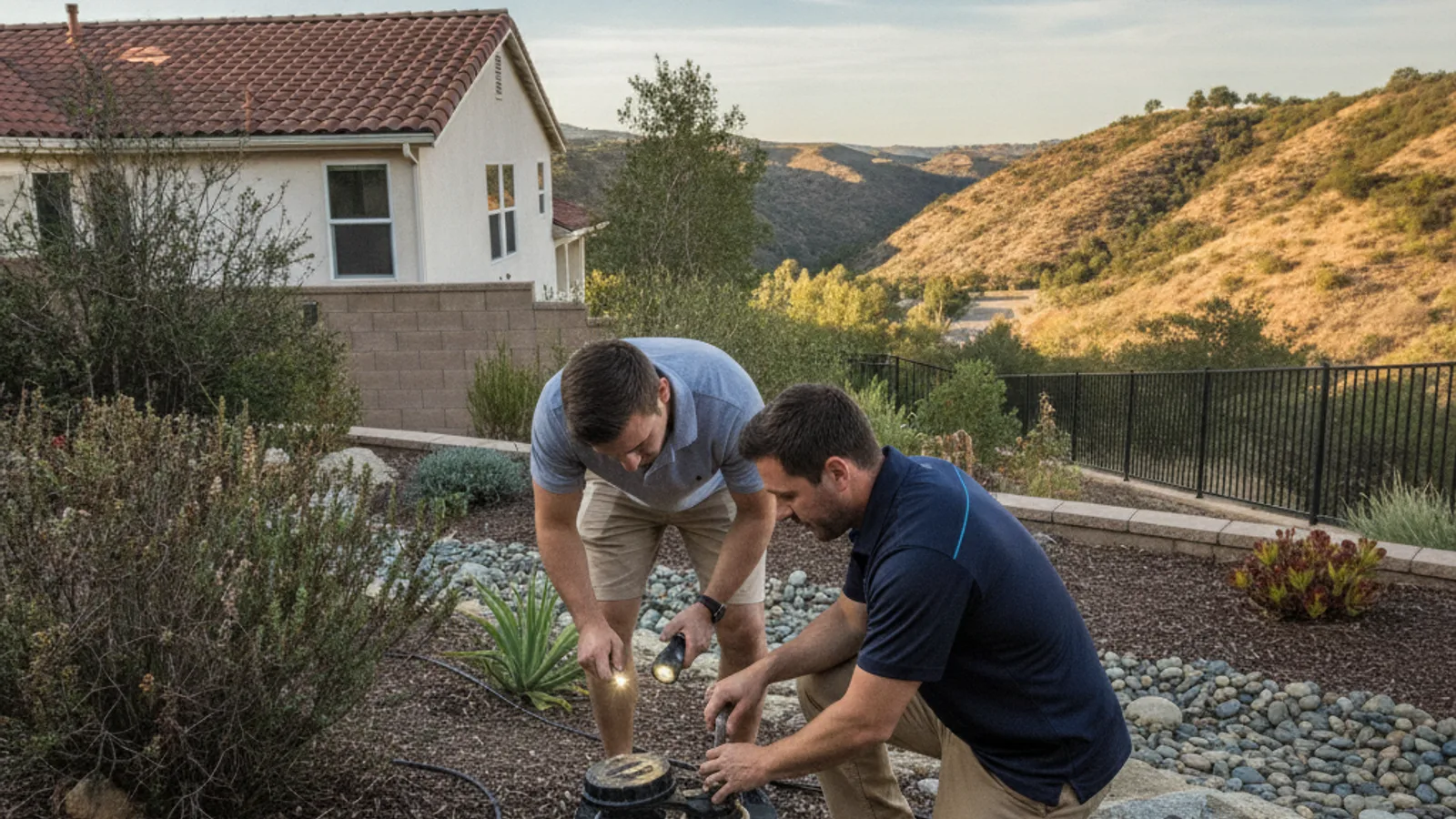
The terrain here matters more than people realize. Scripps Ranch sits on a series of mesa tops cut by canyons around Miramar Lake, with mature landscaping, eucalyptus trees in particular, that has had decades to grow into the ground where many sewer laterals run. That combination, established trees near a lateral old enough to have joints roots can reach, is the credible local theme behind a lot of the drain and sewer questions that come out of this neighborhood. Whether that’s actually the case on any one property is something a camera inspection confirms, not something you can tell from the street.
What actually goes wrong on a mesa-and-canyon lot
Two things come up more here than in a lot of other San Diego neighborhoods: root intrusion in sewer laterals, and drainage quirks tied to canyon-adjacent lots.
Mature landscaping across the neighborhood, including sizable eucalyptus and other established trees, has had a long time to grow root systems that reach toward any nearby moisture source. Those roots don’t care whether they’re growing near a pipe; they follow moisture, and a lateral with aging joints, whatever the exact pipe material turns out to be, is exactly the kind of source that attracts them over time. A camera inspection is what tells you the material and joint condition of your own line, rather than guessing from the house’s age or the neighbors’ experience.
The canyon terrain is the other factor. Lots that sit near a canyon edge can have different grading, runoff, and drainage behavior than an interior lot on the same street, simply because of where the land slopes. That’s genuinely site-specific: a property backing onto open canyon space isn’t the same drainage situation as one two doors down on flatter ground, and it’s worth having a plumber actually walk the property rather than assume based on the general neighborhood description.
Roots and your lateral
Root intrusion doesn’t announce itself all at once. It usually shows up as a slow drain that gets slightly worse over weeks or months, sometimes with a backup that seems to track with recent watering nearby, whether that’s rain, irrigation, or a neighbor’s landscaping work.
The only way to confirm root intrusion rather than guess at it is a sewer camera inspection. The camera shows exactly where roots have entered the pipe, usually at a joint or a small crack, and how much of the pipe’s diameter they’re currently occupying. That’s useful information on its own, and it’s also what a plumber needs before recommending hydro jetting, a mechanical clearing, or anything more involved.
Clearing roots out of a line is often a maintenance task rather than a one-time fix, since the roots can return if the tree and the pipe are still in the same relationship they were before. Our piece on tree roots in sewer lines goes into why that recurrence happens and what actually changes it, which is worth reading if a line has needed clearing more than once.
The drain habits that matter
Every household benefits from basic drain habits, but they matter more on an older or root-affected lateral, where there’s less spare capacity in the pipe to begin with.
Grease should never go down any drain; it cools and hardens against pipe walls and narrows the usable diameter over time. A garbage disposal is for scraps, not a substitute for regular trash disposal, and overloading it stresses both the disposal and the line downstream. Wipes, paper towels, and anything not specifically rated for flushing belong in the trash, not the toilet, regardless of what the packaging claims.
None of that prevents root intrusion, which is a structural issue with the pipe rather than a use issue. But it does reduce how quickly a partially root-affected line tips over into a full backup, since less buildup on top of existing root growth means more time before the line actually clogs.
It also helps to know where your main cleanout is before you ever need it. It often sits along a side yard or near the property line facing the street, but placement varies property to property, so it’s worth confirming yours rather than assuming. Finding it now, rather than during an active backup, saves time if a plumber needs quick access.
Seasonal checklist
| Season | What to check |
|---|---|
| Spring | Watch for slow drains as winter rain saturates soil and encourages nearby root growth |
| Summer | Check for backups tied to increased irrigation near mature trees close to the lateral |
| Fall | Clear leaf and debris buildup from any exterior drains or cleanouts before winter rain |
| Winter | Note any backup that follows a storm, which can point to a canyon-lot drainage pattern worth reviewing |
This isn’t a maintenance contract or a schedule to follow blindly. It’s a rough guide to when a given symptom is more likely to show up, so a slow drain in the fall doesn’t get dismissed as random when it’s worth a look.
When a camera inspection is worth it
A proactive sewer camera inspection, scheduled before anything backs up, makes the most sense for a property with known mature trees near the lateral’s path, a canyon-adjacent lot, or a history of a slow drain that keeps coming back after clearing. It’s a smaller step than waiting for a full backup and then diagnosing under pressure.
For a property changing hands, a camera inspection before closing is also a reasonable way to understand what condition the lateral is actually in, rather than relying on age or neighborhood reputation as a proxy. Our drain cleaning service page covers the more routine version of this maintenance for lines that aren’t showing structural root issues yet.
A camera inspection is also worth revisiting after any major landscaping change near the lateral’s path, whether that’s removing a mature tree, adding new plantings, or regrading part of a canyon-adjacent yard. Roots from a tree that’s already been cut don’t stop growing immediately, and new plantings placed without knowing where the line runs can set up the same problem a decade or two down the road. A plumber who’s already run a camera on the property can tell you roughly where the line sits relative to the yard, which is useful information to hand to a landscaper before they start digging.
Frequently asked questions
Why does Scripps Ranch have more root intrusion problems than some neighborhoods?
Mature eucalyptus and other established trees found throughout the neighborhood have had decades to grow root systems that can reach a sewer lateral old enough to have joints, especially where those joints sit.
What does a canyon lot mean for drainage?
Lots near the canyon edges that cut through the mesa terrain can drain differently than interior lots on the same street. It’s site-specific and worth confirming by walking the property.
How do I know if roots are in my sewer line?
A sewer camera inspection is the reliable way to confirm it. Slow, worsening drains or backups tied to nearby watering can be a sign worth checking.
What drain habits actually matter for an older lateral?
Keeping grease out of drains and not overloading a garbage disposal both reduce buildup, which matters more when a line already has less spare capacity from root growth.
When is a camera inspection worth scheduling proactively?
If mature trees sit near the lateral, the lot is canyon-adjacent, or a drain keeps slowing down after being cleared, a proactive inspection can catch root intrusion early.
When to call us
Confirming or clearing root intrusion in a sewer lateral is licensed-plumber work, since it requires camera equipment and judgment about whether clearing or a repair is the right next step. Call (858) 400-4417 with your address and how long the drain issue has been going on, and we’ll connect you with a licensed and insured local plumber.
Areas this guide covers
We connect homeowners with licensed plumbers in these San Diego County communities.
Keep reading
Need a Plumber in San Diego?
Licensed, insured plumbers, ready across San Diego County. The plumber quotes you before any work starts.
Call (858) 400-4417Call any time, day or night, anywhere in San Diego County