
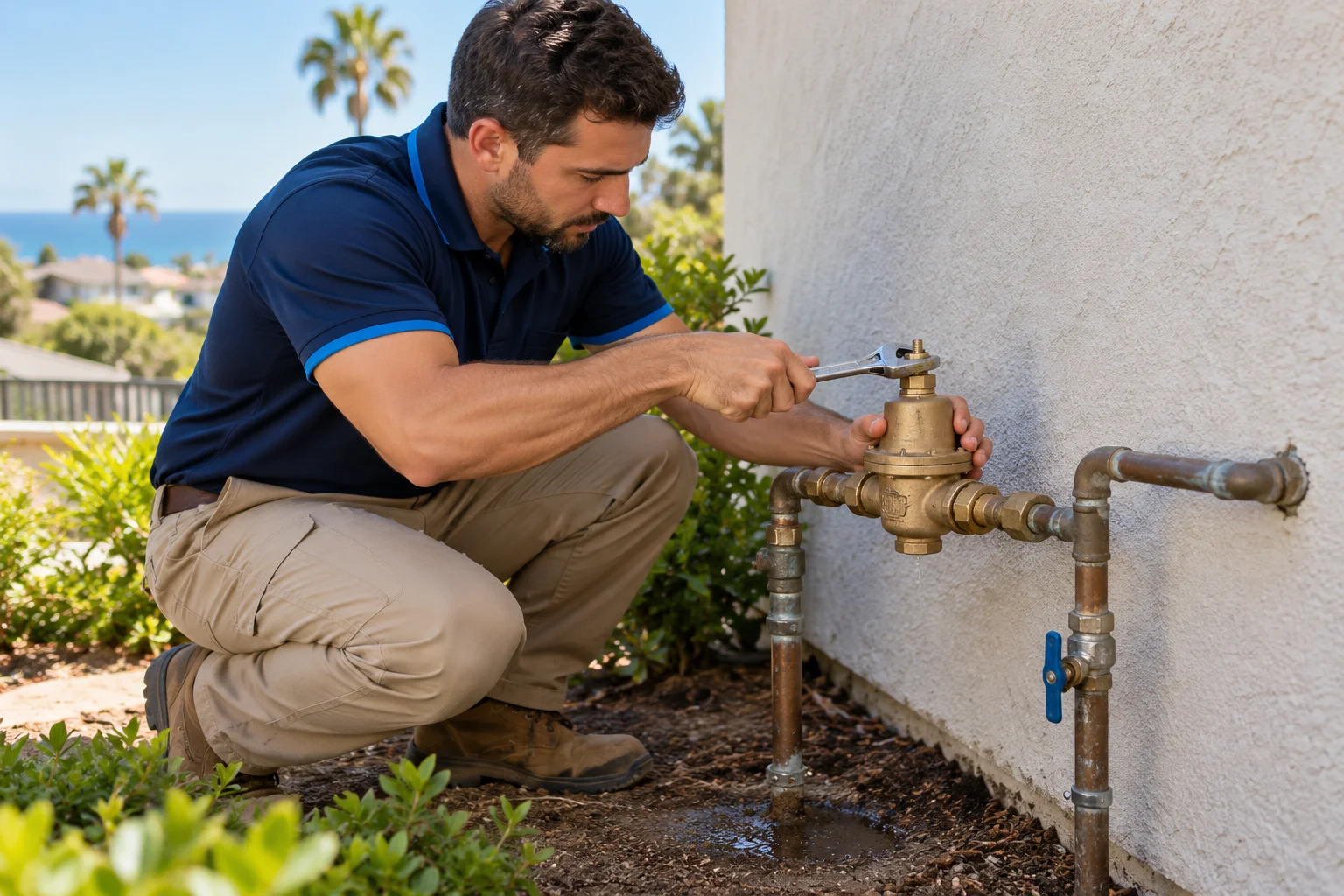
Pressure reducing valve problems in a San Diego home
Learn where a pressure reducing valve sits, what leaks and pressure swings may mean, and how San Diego homeowners can request a plumber referral.
A pressure reducing valve problem often appears near the house inlet. You may notice damp soil, valve noise, or water pressure that won’t stay consistent. Those signs deserve a focused inspection, not a blind adjustment.
Where a house PRV usually sits and what it is for
A pressure reducing valve is also called a pressure regulator valve. Some people search for it as a “PRV valve,” although the final word repeats “valve.”
The device belongs on the incoming water supply serving the house. A plumber will often begin near the point where that supply enters the property. Depending on the home, the valve may be outside, beside an exterior wall, or inside an accessible enclosure. Landscaping, later additions, and previous plumbing changes can make it harder to find.
Don’t assume every bell-shaped valve is the PRV. A property may have other valves serving irrigation, backflow equipment, or individual plumbing branches. Labels can also disappear with age. The reliable approach is to have the device identified by its position, connections, markings, and direction of flow.
A PRV’s intended job is to reduce incoming pressure before water moves through the home’s plumbing. It’s part of the house-side system, not the public water main. The exact valve type and its proper setting depend on the installed equipment and property conditions.
California’s C-36 plumbing classification includes the repair and replacement of regulating valves. That statement describes the classification’s scope. Individual contractor capabilities still vary.
A search for “pressure limiting valve” may return overlapping products and terminology. Don’t select a replacement from the name alone. The contractor should identify the existing device and confirm the replacement’s intended use. A pressure relief valve is another device, so online rules about relief valves shouldn’t be applied automatically to a house PRV.
What dripping, chatter, or swinging pressure can point to
Water on or below a pressure reducing valve needs closer inspection. The moisture could be coming from the valve body, an adjustment area, a threaded connection, or nearby piping. Water can also travel along a pipe before it drips. A damp spot alone doesn’t identify the failed component.
Chatter, vibration, or a repeated pulsing sound can narrow the inspection area. Note whether the sound begins when a faucet opens, a toilet refills, or an appliance draws water. Those details help the independent plumber reproduce the symptom. They don’t prove the PRV has failed.
Pressure that starts strong and then fades is another useful observation. So is pressure that feels different at separate fixtures. A plumber may need to determine whether the change affects the whole house or only one branch. A clogged fixture, a supply-line problem, and a regulating-valve problem can feel similar from inside the home.
Avoid treating the adjustment screw as a diagnostic shortcut. Turning it without identifying the valve and measuring the system can hide the original symptom. A corroded or damaged assembly may also need more than an adjustment.
Take clear photos of the valve and surrounding connections. Record when the dripping, chatter, or pressure swing occurs. If water is appearing somewhere else inside the structure, a leak detection referral may be more appropriate than a valve-only visit.
For broader symptoms, compare the dedicated guides to high water pressure in San Diego and low water pressure in San Diego. This page stays focused on the house-side PRV and its immediate connections.
How a failed PRV differs from a city-side pressure change
One uneven shower doesn’t establish where a pressure problem begins. The cause may be inside the fixture, along a branch line, at the house inlet, or upstream of the property. The symptom’s reach matters.
Start by describing what changed. Note whether every fixture is affected. Record whether the condition is constant or intermittent. Ask nearby occupants on the same property whether they noticed it too. These observations give the plumber and water agency a clearer starting point.
A licensed plumber can inspect the house-side regulator and connected piping. The contractor may also compare pressure behavior at suitable points in the private system. That inspection can help separate a local valve issue from a broader supply question.
The water agency handles questions about its own system. The agency can confirm whether it has reported work, an interruption, or another condition affecting the address. Plumbing Pro San Diego can’t confirm the serving utility from a street name or neighborhood alone.
This distinction matters in places near service boundaries. A San Diego mailing address doesn’t establish which agency supplies the property. The City of San Diego Public Utilities Department serves many addresses, while other districts serve other parts of the county. Confirm the provider from the current water bill before reporting the problem.
Don’t rely on an unverified pressure cap or agency setpoint found in a search result. No San Diego PRV setting or universal replacement threshold was confirmed in the approved claims ledger for this article. Ask the serving agency about its side of the service, then ask the licensed contractor what the private plumbing requires.
What to confirm with the water agency serving the property
Find the agency name on the property’s current water bill. If the bill isn’t available, check the address through the relevant agency’s official website. The San Diego County Water Authority can provide regional water information, but the retail agency serving the address should answer account-specific questions.
When contacting that agency, provide the service address and describe the change plainly. Explain whether the whole property lost pressure, gained pressure, or began fluctuating. Include the date and approximate time you first noticed it. Ask whether the agency has reported work or a supply condition affecting that address.
Also ask where responsibility changes from the agency’s system to the property’s plumbing. Don’t assume that the meter, box, valve, and nearby piping all belong to the same party. The agency can explain its own responsibility. A licensed plumber can identify the private components.
If the property is served by the City of San Diego, its published water-quality information says hardness averages about 16 grains per gallon, or 276 parts per million. The level may vary by location and demand. That verified hardness figure doesn’t diagnose a PRV problem or prove why a valve is leaking.
Keep the agency’s response with your notes. If it reports no known city-side condition, give that information to the inspecting contractor. If it identifies work or an interruption, ask what follow-up the agency recommends. Don’t replace a private valve solely because pressure changed during an agency-side event.
No verified agency response time or universal pressure-setting rule was available for this page. Confirm current information directly with the utility serving the property.
How to request a pipe repair referral
Describe the request as a pressure reducing valve inspection. Mention any visible dripping, chatter, vibration, or whole-house pressure change. Say where the valve appears to be located and whether the surrounding ground or wall is wet.
Photos help the matched contractor understand access. Include a wider view showing the valve’s location. Add close images of the body, connections, markings, and damp areas. Don’t remove covers or disturb piping solely to take a picture.
Tell the contractor what the water agency said. If the agency couldn’t confirm a city-side condition, say that directly. Also mention whether the symptom affects every fixture or only one area. These details can keep the visit focused on the inlet assembly and connected pipe.
A PRV repair may involve the regulating valve, nearby fittings, or damaged piping. The exact scope can’t be confirmed without an inspection. Plumbing Pro San Diego refers homeowners to independent, C-36 licensed plumbing contractors. The homeowner contracts with and pays the matched plumber directly.
No standard San Diego replacement price was verified for this article. Pricing varies with the installed valve, pipe condition, access, and required scope. Request a written description of the proposed work from the contractor before authorizing it.
California property owners can check a contractor by license number, business name, or personnel name through the CSLB license lookup. The database includes license status, classifications, bond information, and workers’ compensation information. It’s unavailable during scheduled maintenance from Sunday evening through Monday morning.
Use our pipe repair referral service when the valve or nearby supply piping needs professional attention. Homeowners farther inland can also review the local Santee plumber guide before requesting a match.
When to call us
Call when the pressure reducing valve is dripping, chattering, or linked to unexplained whole-house pressure changes. The licensed plumber you’re matched with can inspect the regulating valve and determine the proposed repair scope. Call us at (858) 400-4417 and we’ll connect you with a licensed plumber.
Areas this guide covers
We connect homeowners with licensed plumbers in these San Diego County communities.
Keep reading
Need a Plumber in San Diego?
Licensed, insured plumbers, ready across San Diego County. The plumber quotes you before any work starts.
Call (858) 400-4417Call any time, day or night, anywhere in San Diego County