San Diego sewer inspection and repair quote second opinion
Get a sewer inspection second opinion in San Diego. Learn which records to request, how to compare repair scopes, and what to confirm before hiring.
A large sewer repair proposal shouldn’t rest on a brief conversation. Before approving the work, get the inspection evidence and ask another licensed plumber to assess it. The second plumber may agree, disagree, or request more information before offering an opinion.
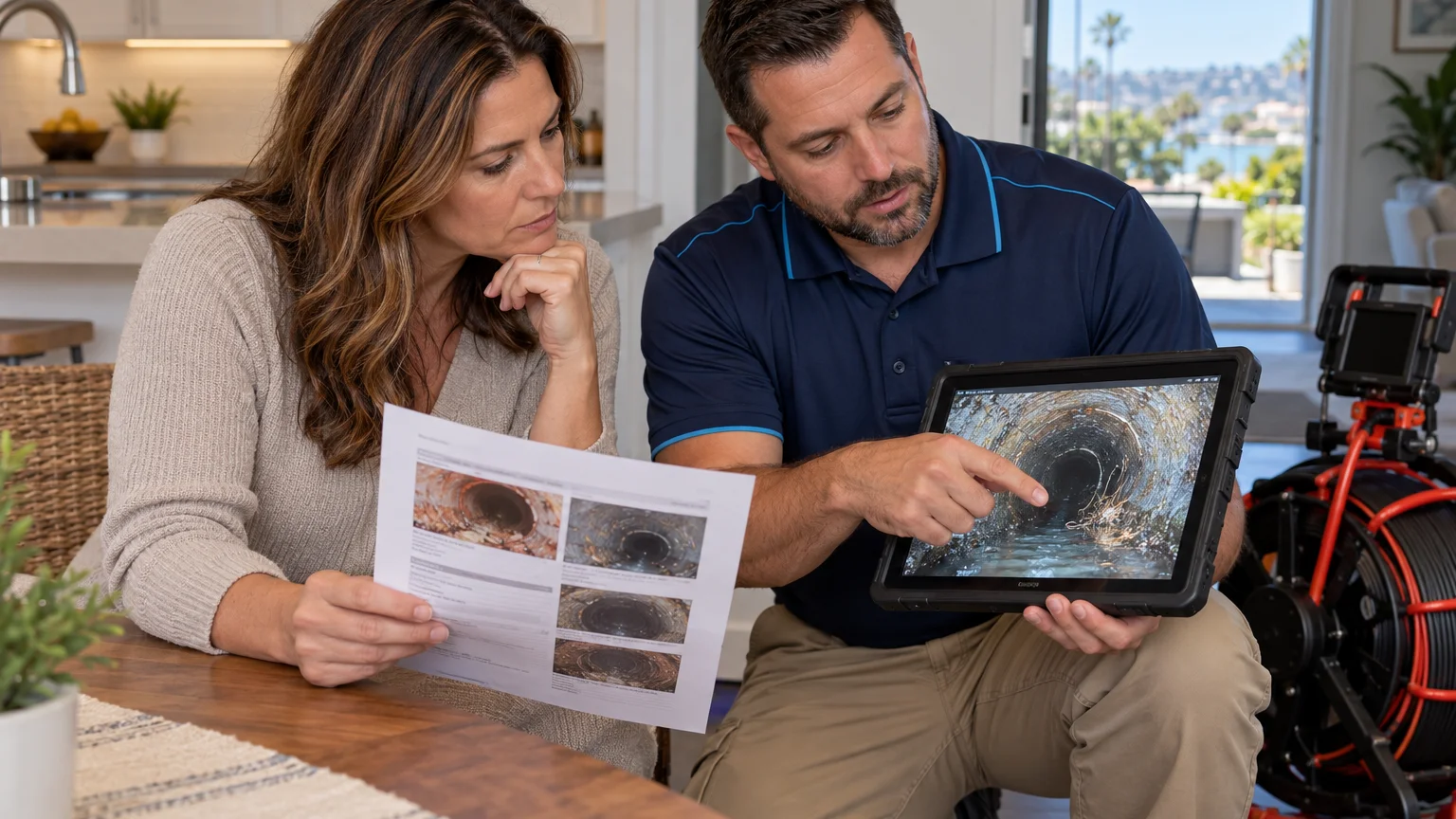
Get the camera recording and written report
Start by asking the first contractor for every item supporting the proposal. That should include the complete camera recording, written findings, photographs, and the proposed repair scope. Request the original files when possible, not only selected screenshots.
A useful report should connect each finding to a location. Look for notes describing where the camera entered the system and how the reported area was identified. If the proposal mentions a break, obstruction, root intrusion, or another condition, ask where it appears in the recording.
Don’t treat an unclear video as proof of a specific diagnosis. Ask the second plumber to explain what can actually be seen. Also ask what can’t be determined from the supplied material. A recording may lack enough context, show poor visibility, or stop before the area in question. The reviewer may recommend another sewer camera inspection before reaching a conclusion.
Save the estimate, invoice, inspection report, and communications together. Note whether the recording matches your property and inspection date. Remove any uncertainty about which line was inspected, especially in a multifamily property or a lot with more than one building.
If the first contractor won’t provide a recording or written findings, tell the second plumber. That gap doesn’t prove the proposed work is wrong. It does mean the independent plumber has less evidence to review.
Compare the identified defect with the proposed repair scope
Next, place the reported defect beside the recommended work. The proposal should make clear which section needs attention and why the suggested scope addresses it. A finding in one area doesn’t automatically explain a proposal covering a much larger section.
Ask the reviewing plumber to separate three issues:
- What the recording appears to show
- What additional information is needed
- Which repair choices might reasonably address the finding
Don’t ask only whether the original proposal is “too much.” Ask the second plumber to identify the evidence behind each part of the scope. That produces a more useful opinion than a simple yes or no.
San Diego property boundaries can make this comparison especially important. Within the City of San Diego, property owners are responsible for maintaining the sewer lateral from the property to its connection with the sewer main. That responsibility can extend past the property line into a street, easement, or canyon.
The City states that it will repair or clear a problem beyond the property line within the City right-of-way when the homeowner has lost all sewer facilities. The City doesn’t reimburse plumbing expenses. Properties outside the City of San Diego may fall under another public agency, so confirm responsibility with the agency serving that address.
For an overview of possible work, see our sewer line service page. It explains the service category, but it can’t determine whether your specific proposal is justified.
Ask about options, access, restoration and permits
Two estimates can describe different projects even when their totals look comparable. Ask each plumber to define the proposed method, starting point, ending point, and access route. The written scope should also identify what happens after the pipe work.
Access can shape the project. A line beneath a yard presents different decisions from one reached through a street, easement, canyon, driveway, or finished interior area. Ask what surfaces may be disturbed and which restoration items are included. Landscaping, concrete, flooring, drywall, and cleanup shouldn’t be left to assumptions.
Request answers to these questions in writing:
- Does the scope cover one spot or a longer pipe section?
- How will the plumber reach the affected area?
- What testing or inspection follows the work?
- Who handles surface removal and restoration?
- Are permit fees or public right-of-way steps included?
- What conditions could change the scope after work begins?
The approved City of San Diego sources available for this page don’t confirm one blanket permit rule for every sewer repair. Don’t accept a guess. Ask the plumber to identify the permit authority, required approvals, and responsible applicant for your exact address and scope. For a City address, the plumber can confirm current requirements with San Diego Development Services. Elsewhere in the county, confirm them with the city or agency overseeing that property.
California’s C-36 classification includes systems for proper disposal of fluid waste and repairs within that described scope. Individual contractor capabilities still vary, so confirm experience with the proposed method.
Confirm the independent plumber can review the existing material
Don’t assume every plumber will review another contractor’s recording. Some may accept an existing video and report. Others may require their own inspection before providing findings or an estimate.
Explain the request before scheduling. Say that you already have a sewer camera recording, written findings, and a repair proposal. Ask whether the plumber can review those materials and what file format they accept. Also ask whether reviewing the documents alone is enough for an opinion.
The contractor may need the property address, inspection date, point of access, and full recording. Share the complete proposal with prices visible if you want a scope comparison. If you want an independent diagnosis first, you can ask the reviewer to examine the evidence before seeing the original recommendation.
Confirm what you’ll receive afterward. A verbal reaction may help, but a written assessment is easier to compare. Ask whether the plumber can describe the visible condition, its apparent location, any limits in the recording, and the scope they would recommend. Don’t request a guarantee that hidden conditions won’t exist.
Every plumber in our referral network is licensed and insured, but you should still verify the individual contractor. California property owners can use the CSLB license lookup to review license status, classifications, bond information, complaint history, expiration information, and workers’ compensation insurance. The database allows searches by license number, business name, or personnel name. It’s unavailable from Sunday at 8 p.m. through Monday at 6 a.m. for scheduled maintenance.
Compare written estimates without assuming a diagnosis
Compare estimates only after you understand what each plumber believes is happening. Matching prices don’t mean the diagnoses or scopes match. Different totals may reflect different access plans, repair lengths, restoration duties, or assumptions.
Build a simple side-by-side comparison. Use the same categories for each estimate:
- Finding and location
- Recommended method
- Start and end points
- Access requirements
- Included restoration
- Permit responsibility
- Exclusions and possible scope changes
- Payment schedule and written terms
Don’t fill missing details yourself. Mark them as unconfirmed and ask each contractor to clarify. If one estimate includes concrete restoration and another excludes it, those aren’t equivalent scopes. The same applies when one contractor proposes a limited repair while another proposes work across a longer section.
No official price schedule establishes a typical sewer repair charge for San Diego. Labor, materials, access, restoration, and site conditions can change the proposal. Our San Diego sewer repair cost guide explains the factors that can affect a quote, but it can’t establish the correct price for your property.
A second opinion also doesn’t prove the first diagnosis was wrong. Its value comes from comparing evidence, reasoning, and clearly defined work. If the plumbers disagree, ask each one to point to the recording or property condition supporting their view. A third inspection may be reasonable when the existing material can’t resolve that disagreement.
When to call us
Call when a sewer report recommends major work, but the recording, location, or scope still isn’t clear. Call us at (858) 400-4417 and we’ll connect you with a licensed plumber.
Areas this guide covers
We connect homeowners with licensed plumbers in these San Diego County communities.
Keep reading
Need a Plumber in San Diego?
Licensed, insured plumbers, ready across San Diego County. The plumber quotes you before any work starts.
Call (858) 400-4417Call any time, day or night, anywhere in San Diego County