Cracked ABS sewer pipe: repair or replace in San Diego
Learn how a licensed plumber may assess a cracked ABS sewer pipe in San Diego, what access changes, and when repair or replacement may fit the property.
A visible crack doesn’t settle the repair-or-replace decision. A licensed plumber first needs to confirm the damaged area, nearby connections, access, and the extent of the problem. For this article, ABS pipe means the drain, waste, or vent piping in a home, not a pressurized water-supply line.
How an ABS drain crack may show up
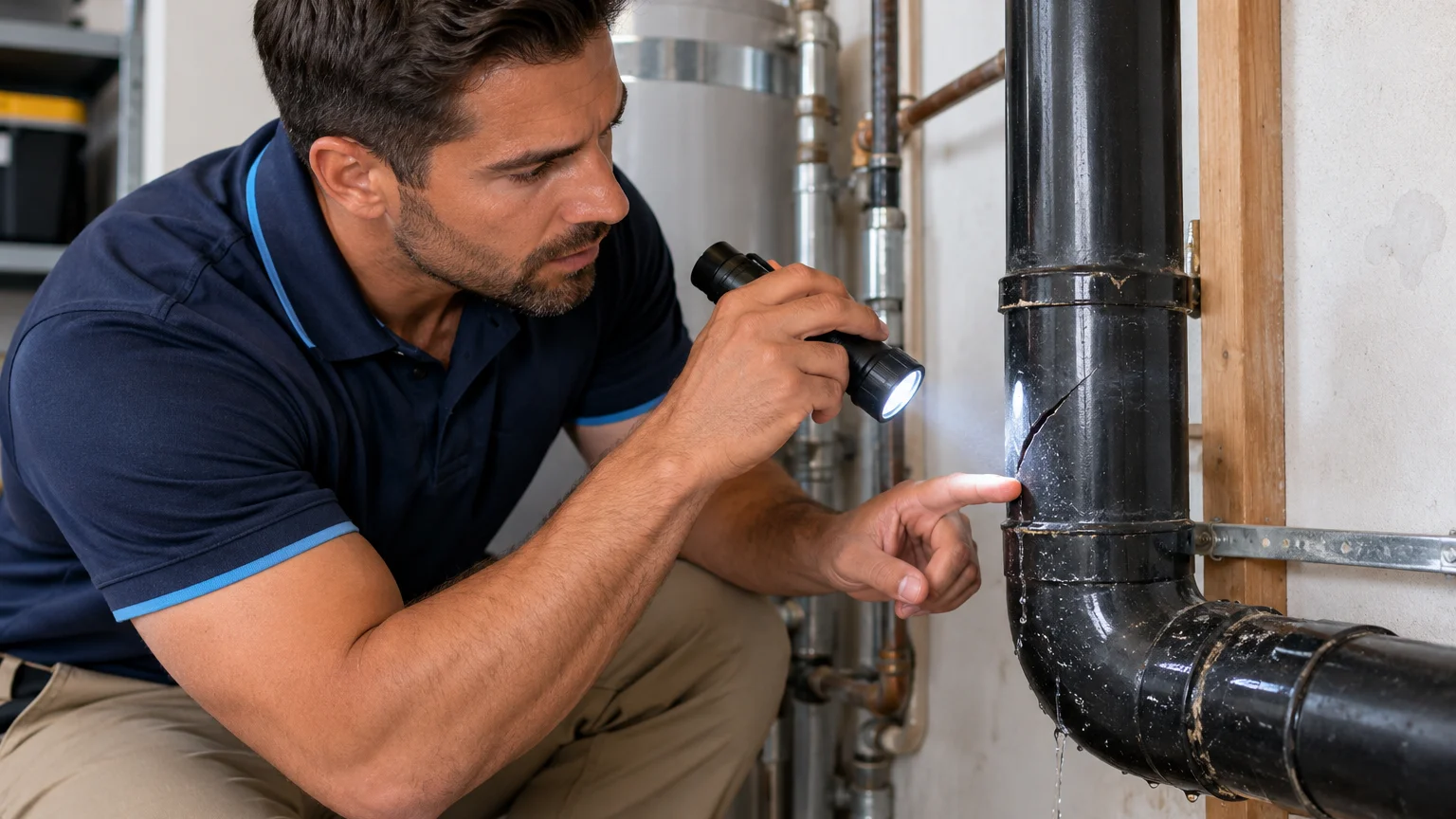
A cracked ABS drain pipe may first appear as a dark line. You might instead notice moisture, a stain, or an odor near exposed piping. The observation matters, but it doesn’t establish the full repair scope.
Record when the condition appears. Note whether moisture shows up while a particular sink, shower, toilet, or appliance drains. If the pipe is visible, photograph the suspected crack and the surrounding fittings. Include a wider photo showing where the pipe enters a wall, floor, or ceiling.
Don’t treat the first visible mark as proof of the source. Moisture can travel across nearby surfaces before becoming noticeable. A stain can also remain after an earlier event. The contractor you’re matched with can compare what’s visible with the fixtures connected to that drain path.
ABS is often discussed alongside other pipe materials. Material alone doesn’t decide whether a section should be repaired or replaced. This page also avoids assigning ABS a standard lifespan. No verified government or academic source in our approved research establishes one. Conditions, connections, access, and the specific damage still need an on-site assessment.
If you’re unsure whether the damaged pipe is ABS, don’t guess from color alone. Send clear photos with your referral request. A plumber can identify the material and confirm the applicable pipe and fitting specifications.
San Diego homes don’t share one layout. An exposed utility-area pipe presents a different access question than piping behind a North Park wall or beneath a Chula Vista floor. Our guide to plumbing in North Park and Hillcrest explains why property details should be part of the first conversation.
How a drain-pipe crack differs from a supply-line leak
The first distinction is what the pipe carries. This article addresses drain, waste, and vent piping. It doesn’t address pressurized water piping, service lines, or hot and cold supply lines.
That distinction changes the questions asked during an inspection. For a suspected drain crack, explain which fixtures were draining when you noticed moisture. For a suspected supply leak, explain whether water appeared without any fixture draining. These observations aren’t a diagnosis, but they help the plumber choose where to begin.
Location also gives useful context. A drain pipe may connect several fixtures before continuing toward the sewer lateral. A supply line serves a different plumbing function. A visible wet area near both systems still requires identification before anyone recommends work.
If the problem seems broader than one ABS drain section, review our comparison of a cracked pipe and a burst pipe. That article covers the language homeowners often hear when discussing damaged piping. It shouldn’t replace an inspection of the current condition.
Be precise when requesting help. Say “suspected cracked ABS drain pipe” if that’s what you observed. Don’t describe it as a water-main break or supply leak unless a plumber has confirmed that diagnosis.
This distinction also prevents the wrong service request. A localized exposed drain problem may fit a pipe repair referral. A problem involving the building drain or sewer lateral may belong under sewer-line service. The plumber determines the actual scope after inspecting the property.
What access and damage location change about the scope
Repair versus replacement isn’t decided by the word “crack.” The contractor needs to learn where the damaged area begins and ends. They also need to see the nearby joints, fittings, supports, and connected sections.
An exposed pipe gives the plumber direct access for inspection. A pipe inside a wall, floor, ceiling, cabinet, or crawl area creates a different access plan. If the suspected damage continues underground or toward the sewer connection, the assessment may extend beyond the visible section.
Tell the referral service exactly where you saw the problem. Useful descriptions include “under the kitchen sink,” “inside the garage wall,” or “at an exposed joint in the utility area.” Avoid saying “whole sewer line” unless that extent has been confirmed.
San Diego location matters most when responsibility changes. Within the City of San Diego, property owners are responsible for maintaining their sewer lateral from the property to its connection with the sewer main. That connection may sit in the street, on an easement, or in a canyon. The City says this responsibility includes clearing obstructions and repairing breaks or cracks.
The City may repair or clear a problem in the portion beyond the property line and within the City right-of-way when the homeowner has lost all sewer facilities. The City also states that it doesn’t reimburse plumbing expenses. You can review the City’s sewer lateral guidance before authorizing work.
That guidance applies to the City of San Diego. It shouldn’t be assumed for Oceanside, Chula Vista, El Cajon, or another local jurisdiction. If the property sits outside city limits, ask the agency that provides sewer service where private responsibility ends.
Material pricing also can’t settle the choice from this page. We couldn’t confirm an official San Diego price comparison for ABS and PVC. Suppliers and independent contractors set their own prices, while the final scope depends on the property. Request a written, property-specific proposal before deciding.
What the contractor you’re matched with may inspect
The matched contractor may begin with the visible ABS pipe and surrounding area. Expect questions about where you noticed the mark, stain, moisture, or odor. They may also ask which fixtures were being used and whether the condition has changed.
The inspection may address:
- Whether the visible mark is an open crack or another surface condition
- Whether moisture appears at the pipe, a joint, or a nearby source
- How far the affected section remains accessible
- Which fixtures connect to that drain path
- Whether adjacent piping needs closer examination
- Whether the issue appears limited to one section
- Whether the observed condition reaches the building drain or sewer lateral
These are inspection questions, not promises about a specific method. A photo can help with the referral, but it can’t confirm concealed conditions.
Homeowners also ask how to measure ABS pipe. For a repair request, don’t rely on one tape measurement or purchase fittings before the inspection. Photograph the pipe beside a ruler or tape if it’s easy to do without moving anything. The contractor can confirm the pipe specification, fitting compatibility, and measurements needed for the proposed work.
The same caution applies to joining ABS with another material. We couldn’t confirm a universal joining method from the approved claims ledger. The correct connection depends on the materials, components, location, and applicable requirements. Ask the plumber to identify the proposed materials and connection method in writing.
If another section appears to be cast iron, don’t assume it should receive the same treatment as ABS. Read our guide to cast-iron sewer pipes in San Diego for that separate material discussion.
California’s C-36 classification covers piping and the proper disposal of fluid waste from structures. It also covers repair and replacement within that classification, though individual contractor capabilities vary. Property owners can check a contractor by license number, business name, or personnel name through the CSLB license lookup. The database shows status, expiration, classification, bond, complaint, and workers’ compensation information. It’s unavailable from Sunday at 8 p.m. through Monday at 6 a.m. for scheduled maintenance.
How to request a sewer or pipe repair referral
Start with the clearest description you can provide. State that you’ve found a suspected cracked ABS drain pipe. Include the property’s city or neighborhood, the room or area, and whether the pipe is exposed or concealed.
Mention what you observed without diagnosing it. A useful request might say: “There’s a visible line and moisture on an exposed ABS drain pipe in the garage. Moisture appeared while the upstairs bathroom drained.” That gives the contractor a starting point without overstating what’s known.
Attach two or three clear photos when possible. Include one close view, one wider view, and one showing nearby fittings. Don’t crop out the surrounding wall, floor, or fixture connections. Access details often matter as much as the suspected crack.
Also share any prior findings from a plumber or sewer inspection. Label those findings by date and source. Don’t present an earlier opinion as proof of the current condition.
Ask the matched contractor to explain:
- What section appears damaged
- Whether the source has been confirmed
- What access the proposed work requires
- Why repair or replacement is recommended
- Which materials and connections are proposed
- What parts of the property will be affected
- Which items remain uncertain until access is opened
Plumbing Pro San Diego is a referral service. We connect homeowners with independent C-36 licensed and insured plumbing contractors. The homeowner contracts with and pays the selected plumber directly. We don’t perform plumbing work, set prices, or determine the repair method.
A written proposal should describe the property-specific scope. No verified official source establishes a standard ABS sewer-pipe repair price, labor time, warranty, or material lifespan for San Diego homes. Confirm each of those details directly with the contractor before authorizing work.
When to call us
Call when an ABS drain crack is visible, suspected, or hidden behind a recurring stain. This work needs a licensed plumber when diagnosis or repair falls within licensed plumbing work. Call us at (858) 400-4417 and we’ll connect you with a licensed plumber.
Areas this guide covers
We connect homeowners with licensed plumbers in these San Diego County communities.
Keep reading
Need a Plumber in San Diego?
Licensed, insured plumbers, ready across San Diego County. The plumber quotes you before any work starts.
Call (858) 400-4417Call any time, day or night, anywhere in San Diego County