Plumber in La Jolla: repair or replace the sewer line
La Jolla's bluffs, hillside lots, and mature landscaping change how a sewer line gets fixed. Here's how site access shapes the repair-or-replace call.
The short answer
- In La Jolla, site access usually decides the repair method before pipe condition does.
- Coastal bluffs, steep hillside lots, narrow older streets, and mature landscaping over the line all change what a plumber can do without heavy excavation.
- A camera inspection should identify the exact location, depth, and type of damage before any method gets chosen.
- Open-trench, trenchless lining or bursting, and spot repair each need different things from the site, and a bid should say which one and why.
- Ask what the camera found, why that method fits the finding, and what happens if conditions change once work starts.
A La Jolla sewer line may need repair or full replacement. The right call depends on pipe findings and site access. Compare a flat, open lot with a hillside property. Retaining walls, landscaping, or limited street access may sit above the lateral. Those conditions can change the job, even when pipe damage is similar.
This is a decision guide, not a repair how-to. It explains how site access can shape the method in La Jolla. It also covers what each repair method needs from a property. You’ll know what to ask before approving one.
The question behind a La Jolla call
Drain trouble raises a practical question. Does the line need cleaning, or does it need structural repair or replacement? A camera inspection can help a plumber distinguish between those paths. Getting that answer right the first time matters, because reworking a job halfway through, after a trench is already open, costs more than getting a proper diagnosis up front.
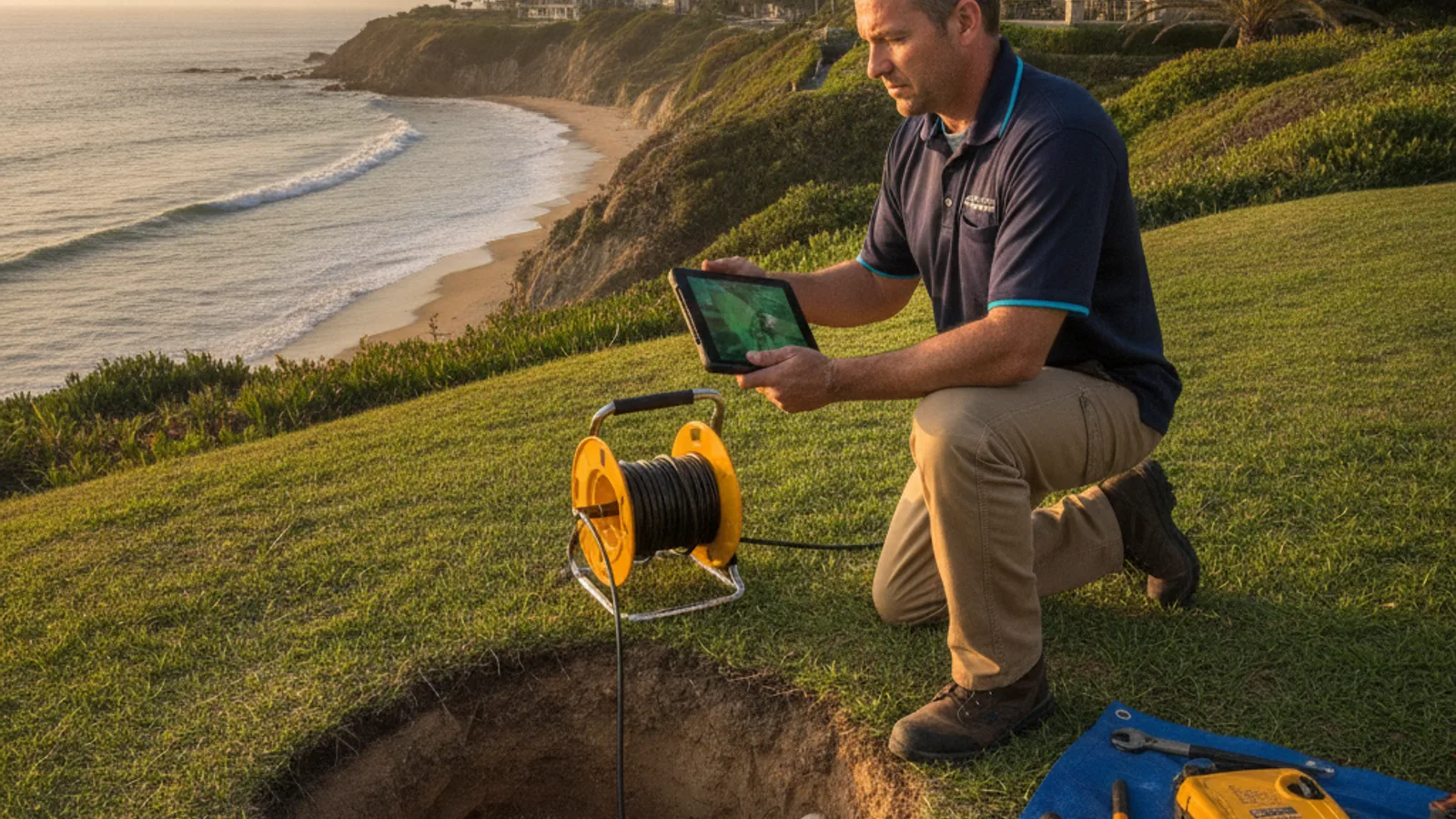
La Jolla’s geography is not incidental to that question. Coastal bluffs, steep hillside streets, and lots built into the slope above the shoreline are common here in a way they aren’t in flatter parts of the county. A line that runs downhill from house to street, through a yard with mature trees or ornamental landscaping, presents different constraints than a line running a straight shot under a flat suburban lawn.
Why access changes the answer here
Three site conditions can shape the decision in La Jolla.
Steep or terraced lots make open-trench excavation harder to stage and can put a trench uncomfortably close to a retaining wall or a foundation. Narrow older streets, common in the Village and along the bluffs, limit where equipment can park and how much of the street a repair crew can occupy at once. And mature landscaping or hardscape sitting directly over the line, patios, mature trees, decorative walls, adds cost and risk to any plan that requires digging a continuous trench.
None of that means every La Jolla job needs a trenchless method. Some lines are shallow, straight, and easy to reach, and an open-trench repair is still the simplest and most direct option for those. The point is that access should be assessed and discussed before a method gets proposed, not treated as an afterthought once a crew shows up.
Salt air near the coastline is worth a mention too, mostly for exposed metal fittings and fixtures rather than for a buried sewer lateral. It’s a fair question to ask a plumber, but it isn’t usually the deciding factor in a sewer repair-or-replace call. The pipe underground and what sits above it matter more.
Comparing the methods
| Method | What it needs from the site | Best fit |
|---|---|---|
| Spot repair | Access to one section only | One isolated defect on an otherwise sound line |
| Trenchless lining or pipe bursting | Small access pits at each end, not a continuous trench | Longer runs with root intrusion or wear, where digging the full length is impractical |
| Open-trench replacement | A continuous trench along the pipe’s path | Shallow, accessible lines or damage too extensive for lining |
Our trenchless sewer repair page goes into more detail on what that method requires and what it doesn’t. For a hillside lot with landscaping over the line, it’s worth asking specifically whether the property allows the smaller access pits that method needs, or whether the terrain forces a different approach.
A sewer line job in La Jolla should always start with the same first step regardless of which method eventually gets chosen.
Cost also tends to track access more than it tracks the pipe material itself. A short, shallow, easily reached section costs less to open up than a long run buried under a driveway or a retaining wall, and that’s true regardless of whether the fix is a liner or a trench. Ask a plumber to walk through which part of the bid is driven by the pipe work and which part is driven by getting to it. That breakdown tells you more about the price than the total number alone does, and it’s a fair question for any contractor to answer plainly.
What a camera inspection should tell you
Before anyone commits to a method, a sewer camera inspection should identify exactly what’s wrong and where. That includes the type of damage, a break, root intrusion, a bellied section, an offset joint, its depth, and its distance from the cleanout or the house.
That footage is the evidence the method recommendation should be built on. A plumber who proposes a full replacement without having run a camera first hasn’t shown you why that’s necessary rather than a spot repair or a liner. Ask to see the footage or at least a clear description of what it showed, tied to the specific method being proposed.
If the line clears the camera but keeps slowing down under normal use, that can point toward standard drain cleaning or hydro jetting rather than any structural repair at all, which is worth ruling out before a bigger job gets proposed.
Questions to ask before you approve a method
Ask what the camera found and where. Ask why the proposed method fits that specific finding, not just “it’s what we usually do.” Ask what the site access requires, whether that means a trench, access pits, or something else. And ask what happens if conditions turn out different once the work is underway, since a hillside lot can hide surprises that a camera doesn’t always fully capture.
A contractor who can answer all four clearly, in writing, on the estimate, is easier to compare against a competing bid than one who quotes a number without explaining the reasoning behind the method. Verify any contractor’s license and standing through the CSLB lookup before signing anything.
It also helps to get more than one bid when the site is genuinely constrained. Two plumbers can look at the same hillside lot and reasonably land on different methods, especially when one is more comfortable working in tight access pits than another. A second opinion isn’t a sign the first one was wrong; it’s a normal part of scoping a harder job, and it gives you more to compare than price alone.
Frequently asked questions
Why does access matter so much for a La Jolla sewer repair?
Coastal bluffs, steep hillside lots, narrow older streets, and mature landscaping over the line all limit how a repair crew can reach and work on the pipe. Those constraints often push a job toward a method that needs less continuous excavation.
What is the difference between open-trench, trenchless, and spot repair?
Open-trench digs up the full pipe run. Trenchless methods rehabilitate or replace the line through small access points. A spot repair fixes one damaged section and leaves the rest alone. The choice follows what the camera finds and what the site allows.
Should I get a camera inspection before approving a repair method?
Yes. It’s the only reliable way to see the actual location, depth, and type of damage, and it should be the basis for whatever method gets proposed.
Does salt air or coastal exposure affect plumbing in La Jolla?
It’s a fair consideration for exposed metal fixtures and fittings, but it isn’t usually what decides a buried sewer line’s repair method. Site access and the camera findings matter more there.
What should I ask before approving a bid?
What the camera showed, why the method fits that finding, what the site access requires, and what the plan is if conditions change mid-job.
When to call us
A sewer line repair-or-replace decision on a hillside or bluff-adjacent property needs a licensed plumber who can assess both the pipe and the site before recommending a method. Call (858) 400-4417 with your address and what a camera inspection has already shown, if you have one, and we’ll connect you with a licensed and insured local plumber.
Areas this guide covers
We connect homeowners with licensed plumbers in these San Diego County communities.
Keep reading
Need a Plumber in San Diego?
Licensed, insured plumbers, ready across San Diego County. The plumber quotes you before any work starts.
Call (858) 400-4417Call any time, day or night, anywhere in San Diego County