Well water testing in San Diego County
Clear water can still carry bacteria you can't see. Here's when to test a private well in San Diego County, what a test actually checks, and what it costs.
The short answer
- Test at least once a year for total coliform bacteria and nitrates, the two issues most likely to affect health and least likely to show any visible sign.
- Clear, good-tasting water can still fail a bacteria or nitrate test. Neither has a taste, smell, or appearance at typical contamination levels.
- A basic bacteria and nitrate test runs $50 to $150 through a certified lab. A full mineral and metals panel runs $200 to $400.
- San Diego County has requirements around well testing tied to home sales. Confirm the current specifics with the county's environmental health department before a transaction.
- Home test strips work fine for hardness and pH monitoring but aren't a substitute for certified lab testing on bacteria or nitrates.
A well that looks clear and tastes fine can still carry contamination you’d never notice without a lab test. That’s the part that catches a lot of new well owners in San Diego’s backcountry off guard. Bacteria, nitrates, and several trace metals have no taste, smell, or visible sign at the concentrations that actually matter for health. The only way to know what’s really in your water is to test it, on a schedule, not just when something seems off.
Why testing matters even when nothing seems wrong
Municipal water customers get their supply tested and treated continuously by their water district. Private well owners in Julian, Ramona, Valley Center, Jamul, Alpine, and similar areas are the ones responsible for that monitoring themselves, and it’s easy to assume everything’s fine because the water runs clear and tastes normal. Total coliform bacteria and nitrate contamination, the two most common well health concerns, don’t reliably change how water looks or tastes. A well sitting next to a septic system, which describes a large share of backcountry properties given how common private septic is out there, carries a real risk of both, regardless of how the water presents at the tap.
How often to test
Once a year, at minimum, for total coliform bacteria and nitrates. These are the two tests that catch the contamination most likely to affect health and least likely to announce itself. Households with infants, pregnant women, or anyone with a compromised immune system often test twice a year instead, since bacterial contamination can develop between annual tests, particularly after heavy rain events that can affect shallow aquifers or after any work done near the wellhead.
A full mineral and metals panel, covering hardness, iron, manganese, pH, and other elements depending on your specific area’s geology, is worth running every 3 to 5 years, or any time you notice a change: new staining, a new odor, a taste shift, or reduced water pressure that might point to a mechanical issue worth investigating alongside the water quality question.
What a basic test actually checks
A standard well test through a certified lab covers total coliform bacteria (an indicator that surface contamination has reached your water) and nitrates (commonly from septic systems, fertilizer runoff, or livestock, all relevant across San Diego’s rural areas). This basic panel runs $50 to $150 depending on the lab and typically takes a few days to come back. It’s the test most real estate transactions and most annual monitoring schedules are built around.
What a full panel adds
A more complete panel adds hardness, iron, manganese, pH, and sometimes arsenic or other trace elements specific to your area’s known mineral deposits. This runs $200 to $400 and is worth doing before you design or upgrade any well water filtration system, since building treatment around an actual result works. Building it around a guess usually leaves the real problem untouched.
Real estate transactions and county requirements
San Diego County’s Department of Environmental Health and Quality has its own requirements around private well water testing that can come into play during a home sale. The specifics of what’s required, and when, can vary by situation and change over time. If you’re buying or selling a home on a private well anywhere in the county, confirm the current requirement directly with the county’s environmental health department rather than relying on what a neighbor did last year or what a previous transaction required. This is one area where the details genuinely matter and are worth a phone call before you’re deep into escrow.
Home test strips vs a certified lab
Home test strips have a place. They’re fast, cheap, and useful for routine hardness and pH monitoring between full lab tests, so you can catch a trend before it becomes a problem. What they can’t do reliably is bacteria testing, which requires sterile sample collection and lab-controlled analysis a strip simply isn’t built for. For anything tied to a health concern, a real estate transaction, or your annual coliform and nitrate check, use a certified laboratory, not a strip from the hardware store.
How to actually get a sample tested
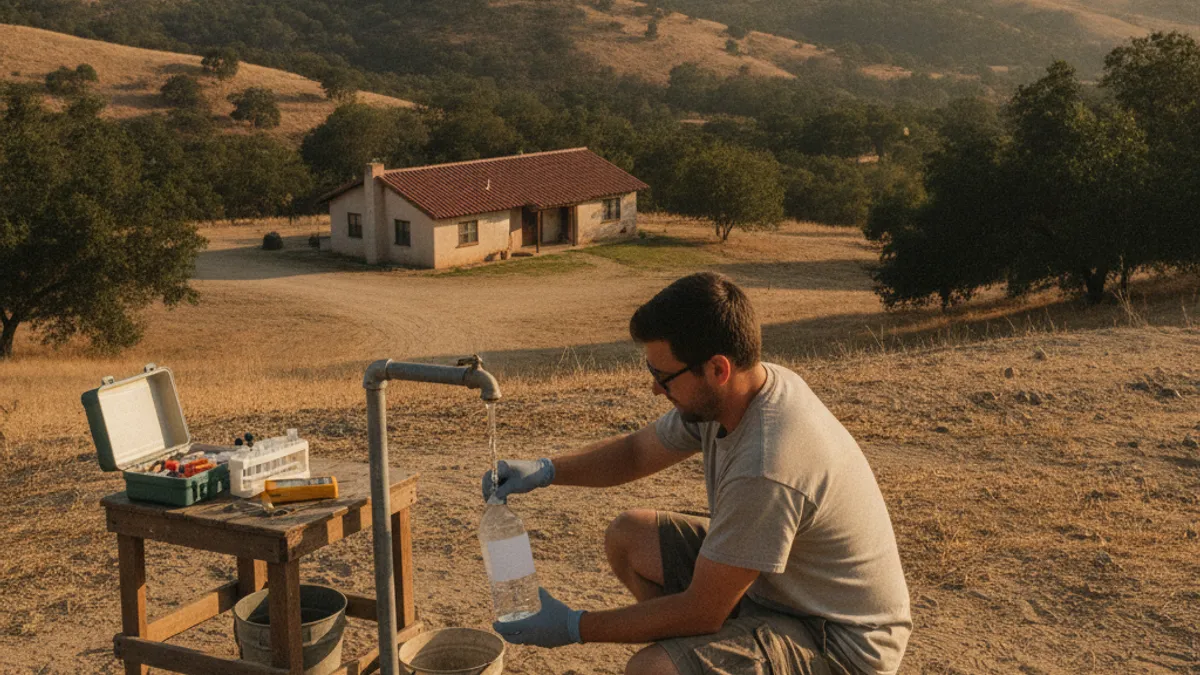
Most certified labs give you a sterile sample bottle and specific collection instructions, since contamination during collection is a real risk that skews results. Typically that means running the tap for several minutes before filling the bottle, avoiding touching the inside of the cap or bottle, and getting the sample to the lab within a set window, often 24 to 30 hours for bacterial testing specifically, since bacteria counts can shift the longer a sample sits. San Diego County’s environmental health department maintains a list of certified labs that handle private well testing, which is worth checking directly rather than assuming any local lab is equipped for the specific panel you need, since bacterial testing in particular requires lab accreditation that not every testing service carries.
Reading your results without guessing
A lab report on total coliform will typically come back as either present or absent, a straightforward pass-fail result. Nitrate results come back as a number, usually in milligrams per liter, and it’s worth asking the lab or a water treatment professional what threshold matters for your household, since the answer can depend on whether infants or pregnant women are in the home. A full mineral panel comes back with a longer list of numbers that mean little without context, iron and manganese levels that explain staining, hardness in grains per gallon that explains scale, and pH that affects how corrosive the water is to your plumbing and fixtures over time. Don’t just file the report away. Walk through it with whoever’s building your treatment plan, so the system that gets installed actually targets what your specific well is dealing with.
What to do with a bad result
A positive bacteria test doesn’t necessarily mean a permanent problem. Shock chlorination of the well, a fairly standard procedure, often clears an isolated contamination event, followed by a retest to confirm it worked. Wells with recurring bacterial issues, or anyone who wants ongoing protection regardless of test results, often move to a continuous UV disinfection system installed at the point water enters the house. Elevated nitrates are a different problem entirely, usually pointing to something in the surrounding land use, and don’t respond to shock treatment the way bacteria does. That situation calls for a specific filtration approach, which is worth discussing once you have an actual number from your test in hand.
When you’re ready
If you’re overdue for a well test, dealing with a change in your water’s taste or smell, or navigating a real estate transaction that involves a private well, call us at (858) 400-4417. We can point you to certified testing, walk through what your results mean, and help you figure out what, if anything, your water actually needs.
Areas this guide covers
We connect homeowners with licensed plumbers in these San Diego County communities.
Keep reading
Need a Plumber in San Diego?
Licensed, insured plumbers, ready across San Diego County. The plumber quotes you before any work starts.
Call (858) 400-4417Call any time, day or night, anywhere in San Diego County