Last updated: August 30, 2026
Gas shutoff valve won't turn: who should inspect it
A stuck gas shutoff valve needs professional identification. Learn when to call the utility or request a local licensed San Diego plumbing contractor.
When a gas shutoff valve won’t turn, the right contact depends on the component. A licensed C-36 plumbing contractor can inspect covered property-side piping and connections. For anything near the meter, confirm responsibility with the gas utility serving the address.
Which valve the homeowner may be looking at
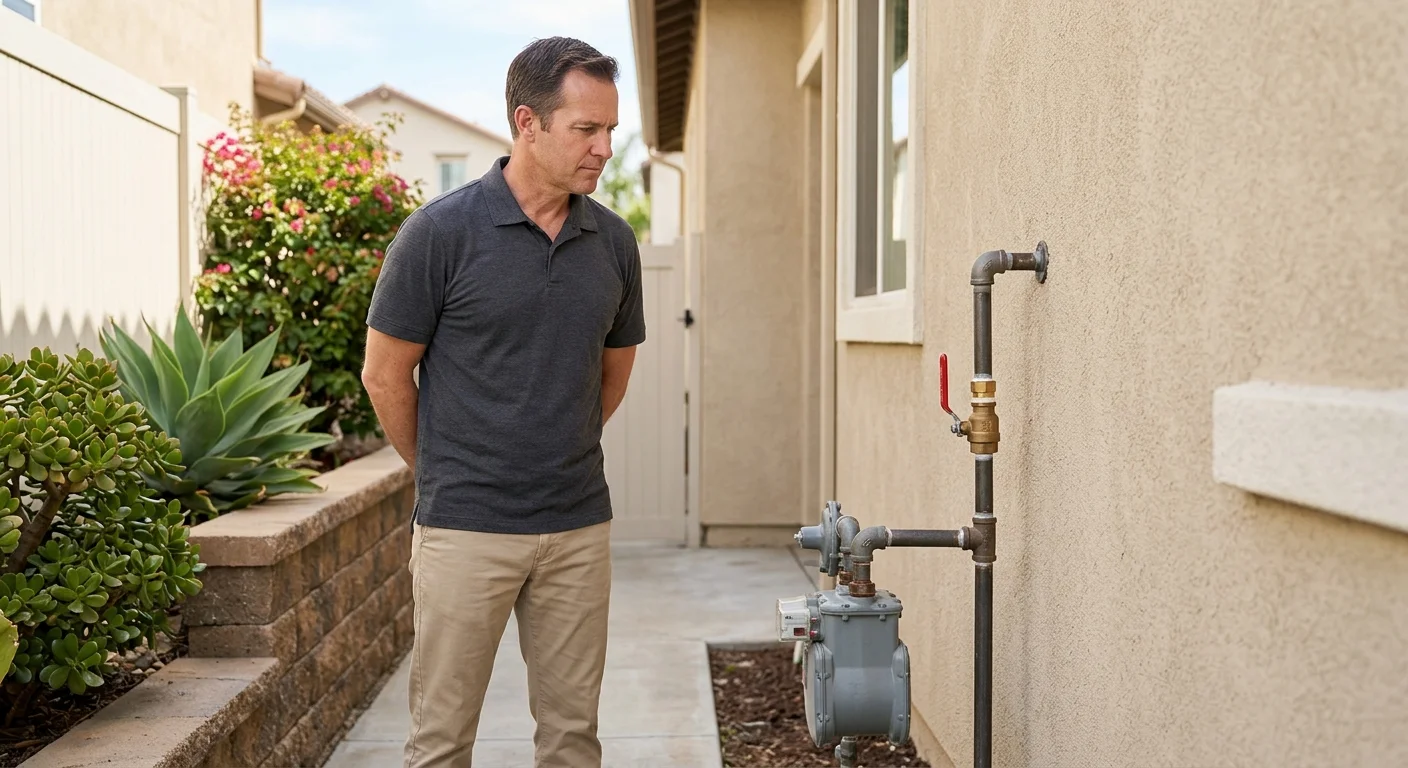
“Gas valve” can describe several different components around a home. It might refer to a connection serving a gas appliance. It could also mean a regulating valve, an earthquake valve, or something near the utility meter.
Those components don’t all have the same owner or service path. A photo can help a contractor or utility representative understand what you’re describing. The exact location also matters. Note whether the component is beside the meter, along piping toward the building, or near an appliance.
Avoid deciding who owns the valve based only on its appearance. Plumbing Pro San Diego’s approved research doesn’t establish a universal ownership rule for every meter-area component in San Diego County. The utility serving the address must confirm its boundary and responsibility.
The California C-36 classification covers gas appliances, connections, and certain safety devices. It also includes gas piping from the property owner’s side of the utility meter to structures. That classification describes permitted plumbing work. It doesn’t prove that every contractor offers every gas-related service.
If you’re still identifying the broader problem, our guide to gas line repair in San Diego explains the professional service path. When requesting help, describe the valve as a stuck component. Don’t present an uncertain identification as settled.
Why the valve location changes what must be confirmed
The meter creates an important reference point. California’s C-36 scope includes water and gas piping from the property owner’s side of the utility meter to structures. However, that wording doesn’t identify every fitting around a particular meter assembly.
That’s why the exact location changes your next call. A contractor can discuss piping and covered connections on the property side. The serving gas utility should be asked about anything believed to be part of its equipment or service boundary.
Responsibility can’t be confirmed from the county name alone. San Diego County includes incorporated cities and unincorporated communities. A home in El Cajon, central San Diego, Oceanside, or San Ysidro may also have different local permitting contacts. Our approved claims don’t establish one gas-valve permit rule for every jurisdiction.
Ask the contractor and local building authority whether the proposed repair requires approval or inspection. The specific requirement couldn’t be confirmed from the approved research for this page. The correct answer depends on the address, component, and proposed scope.
East County homeowners can also review our El Cajon plumber guide for local referral context. It doesn’t replace confirmation from the utility or permitting authority.
Clear location details prevent an avoidable handoff. Provide the service address and describe where the component sits. Mention the appliance involved, if any. Let the utility or licensed contractor identify the component and define the next step.
What an independent licensed contractor may inspect
A C-36 licensed plumbing contractor may work within the classification’s established scope. That scope includes gas appliances, flues, and related connections. Forced warm air units are excluded from the classification.
C-36 work may also cover gas piping from the property owner’s utility-meter side to the structure. Repair and replacement can include safety devices such as earthquake valves and regulating valves. Individual contractor capabilities still vary, so confirm that the plumber handles the specific component involved.
An inspection request should begin with identification. Give the contractor the address and the valve’s location. Explain that the handle or operating part didn’t move as expected. Mention any appliance connected to that section, without diagnosing the cause.
The contractor can then explain whether the component falls within the offered service scope. The homeowner should receive a clear description of the proposed work before authorizing it. Pricing, availability, and contract terms come directly from the independent contractor.
Before approving work, verify the contractor through the California Contractors State License Board lookup. The database can show license status, classification, bond information, complaint history, expiration details, and workers’ compensation information. It’s unavailable from Sunday at 8 p.m. through Monday at 6 a.m. during scheduled maintenance.
Our gas line repair referral page can connect you with an independent licensed plumber. Plumbing Pro San Diego doesn’t inspect valves, perform repairs, set prices, or hold a contractor license.
What to confirm with the utility serving the address
Start with the utility shown on the property’s current gas account or bill. The approved research for this page doesn’t verify which utility serves every San Diego County address. It also doesn’t establish one responsibility rule covering every valve near every meter.
Give the utility the complete service address. Describe the component’s position in relation to the meter and building. If you already have a clear photo, ask whether it helps identify the equipment. Don’t rely on an online image of a different meter assembly.
Ask several direct questions. First, ask whether the component is utility equipment or property-side equipment. Next, ask which party may inspect or repair it. Confirm whether the utility has an official process for reporting the stuck component. Request its current safety instructions for that address and situation.
Also ask whether utility work must happen before a private contractor can proceed. If the representative directs you to a licensed plumber, keep any reference or case details they provide. Share those details with the contractor.
A stuck valve and a suspected gas leak aren’t interchangeable service requests. If the situation involves a suspected leak, follow the serving utility’s current emergency directions. Our separate guide covers what to do about a gas leak in a house.
For urgent plumbing referral needs, visit our emergency plumbing service page. That referral doesn’t replace directions from the utility or emergency authorities.
How to request a gas line repair referral
A useful referral request starts with facts you can observe. Provide the San Diego County service address and the valve’s location. State whether it’s near the meter, along visible piping, or beside an appliance. Include the utility’s direction if you’ve already contacted it.
Mention that the gas shutoff valve won’t turn. Don’t guess at the failed part or required repair. If the utility identified ownership or responsibility, share that wording accurately. This gives the contractor a clearer starting point.
Plumbing Pro San Diego connects homeowners with independent C-36 licensed plumbing contractors. The referral service doesn’t perform plumbing work or employ plumbers. It doesn’t own service trucks, dispatch a crew, or set the contractor’s price.
The homeowner contracts with and pays the matched contractor directly. Before authorizing work, confirm the contractor’s license status and classification. Ask whether that contractor handles the identified valve, piping, or appliance connection. Individual capabilities vary within the C-36 scope.
You can request a gas line repair referral after clarifying the component’s location. If ownership remains uncertain, contact the utility serving the address first. That extra confirmation helps route the request to the appropriate party.
Keep the request simple and specific. “The gas valve at this location won’t turn” is enough to begin. Add the address, nearby equipment, and any utility instructions. The licensed contractor can then discuss inspection scope, availability, and contract terms with you.
When to call us
Call when the utility directs you to a private contractor, or the stuck component appears to involve property-side gas piping or a covered connection. Call us at (858) 400-4417 and we’ll connect you with a licensed plumber.
Areas this guide covers
We connect homeowners with licensed plumbers in these San Diego County communities.
Keep reading
Need a Plumber in San Diego?
Licensed, insured plumbers, ready across San Diego County. The plumber quotes you before any work starts.
Call (858) 400-4417Call any time, day or night, anywhere in San Diego County