Pipe insulation for San Diego mountain homes
Plan water pipe insulation for a San Diego County mountain home. Learn what to inspect, what to confirm, and when to request a licensed plumber.
Water pipe insulation starts with knowing which lines you have and what condition they’re in. In Julian, Mount Laguna, Pine Valley, Descanso, and nearby communities, that planning should happen before insulation hides an existing problem.
Which exposed water lines may need closer attention
Start with a slow walk around the property. Look for water lines that remain visible along walls, beneath floors, inside cabinets, or near utility equipment. Include detached structures and exterior plumbing in that first review.
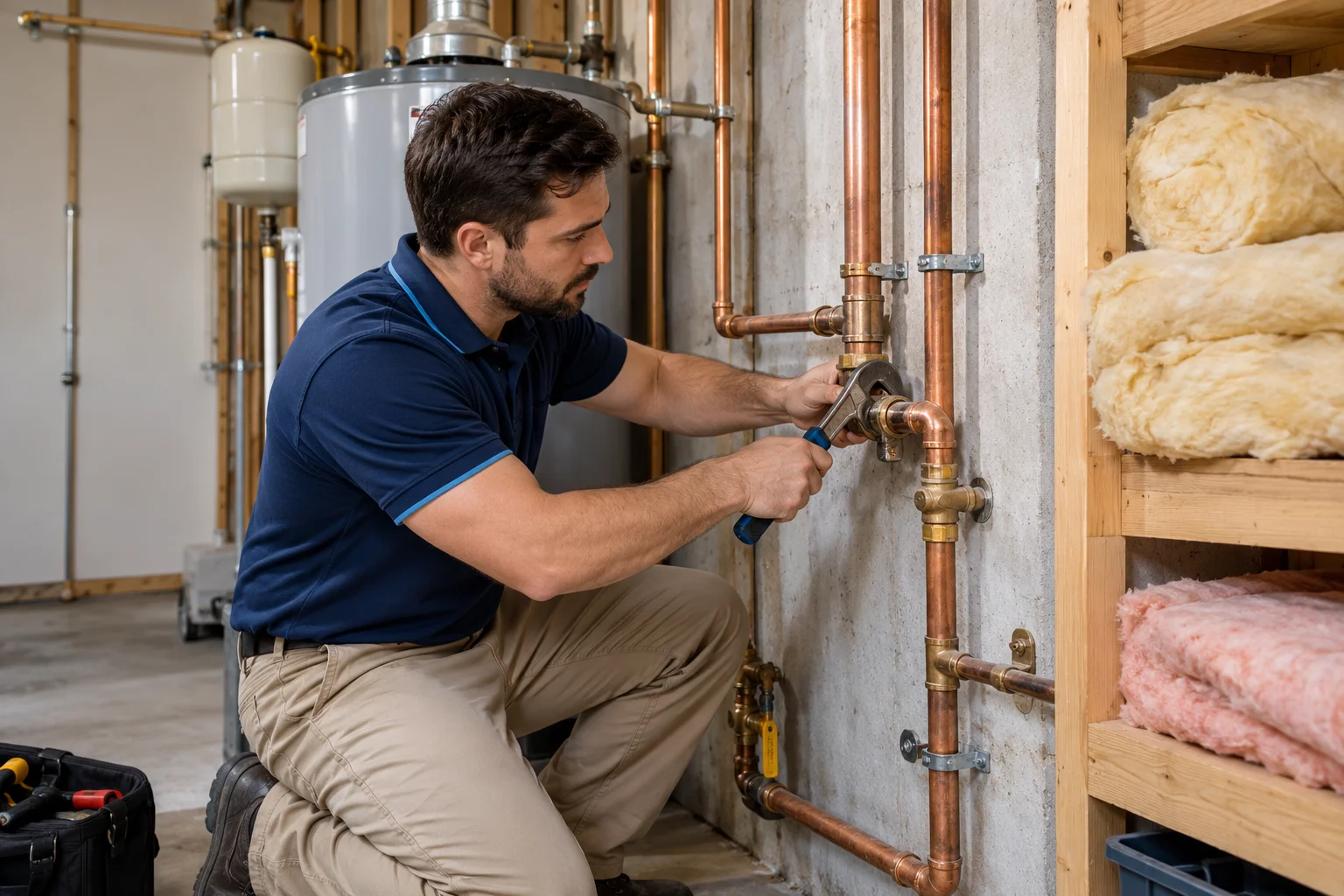
Accessible lines are easier to examine before choosing insulation. Check the full visible run, including fittings, valves, bends, and places where a pipe enters a wall. Don’t focus only on the longest straight section. A short exposed connection can deserve the same attention as a longer run.
Record what you see without guessing at the pipe material. Note the line’s location, approximate outside diameter, and nearby surfaces. Take clear photos of fittings and transitions. A plumber can use those details to decide what needs an in-person assessment.
Separate the lines into simple groups:
- Hot and cold water lines
- Indoor and outdoor sections
- Pipes in occupied and utility spaces
- Lines beneath the home or inside another limited-access area
- Sections with staining, corrosion, damage, or old coverings
Don’t wrap a visibly wet or damaged line and assume the covering solves it. The source of moisture needs to be identified first. If a line appears compromised, begin with a pipe repair assessment.
Mountain properties don’t all share one plumbing layout. A home in Julian may have different access conditions from one in Pine Valley. Additions, detached buildings, and previous alterations can also split a water line across several environments. Follow each accessible run instead of treating the whole property as one simple project.
If your main concern is an active cold-weather event, use the separate guide to frozen pipes in the San Diego mountains. This article focuses on inspection and planning before insulation begins.
How accessible and concealed pipes change the project
An exposed pipe can usually be measured and viewed from several angles. A concealed pipe can’t. That distinction affects what you can inspect, what insulation can reach, and whether opening a surface may be considered.
Accessible locations may include open utility rooms, unfinished storage areas, cabinets, and visible spaces beneath a home. Even there, access isn’t always straightforward. A pipe may sit tight against framing, pass behind equipment, or disappear through several surfaces.
Don’t remove walls, ceilings, or fixed materials just to make a quick insulation purchase. First identify where the line enters and exits the concealed area. Look for nearby access panels and signs of previous plumbing work. A licensed plumber can assess whether access work is justified.
Concealed piping needs a different conversation. Ask these questions:
- Is the pipe’s route known?
- Can both ends of the concealed run be identified?
- Is there evidence of leakage near either opening?
- Does the line pass through an addition or detached structure?
- Would access affect electrical, structural, or finished materials?
- Is the goal insulation, repair, rerouting, or a combination?
Insulating only the visible portion may leave the underlying concern unresolved. It can also create a misleading sense that the whole line has been addressed. Document where coverage stops and where the pipe becomes concealed.
Access is especially relevant for backcountry properties with crawl areas, outbuildings, or plumbing altered over time. Our guide to finding a plumber in East County and San Diego’s backcountry explains why property access and travel details should be shared when requesting service.
Before anyone enters a confined or difficult area, describe the opening, clearance, lighting, and known hazards. Let the independent contractor decide what access and preparation the assessment requires.
What insulation can and cannot address
Water pipe insulation is a covering, not a pipe repair. It doesn’t restore weakened material, seal an active leak, correct a failing fitting, or replace a valve that won’t operate. Those conditions need separate evaluation.
Insulation also doesn’t answer why moisture is present. Water near a pipe could come from the pipe, a nearby fixture, the building, or another source. The approved claims ledger doesn’t establish a universal test for that situation. A licensed plumber should identify the source before the line is covered.
For hot water piping, homeowners often ask whether insulation works or how much energy it saves. No property-specific savings figure can be confirmed from the approved claims available for this page. Pipe layout, usage, material, surrounding space, and the selected product all affect the project. Review product documentation and ask the contractor how the recommendation applies to your home.
The same caution applies outdoors. Don’t assume a foam sleeve is suitable simply because it fits around the pipe. Confirm the manufacturer’s approved locations, exposure limits, installation method, and compatibility with the pipe. Product ratings haven’t been verified in the claims ledger, so they shouldn’t be guessed from appearance.
PEX requires the same product-specific review. There isn’t one verified insulation choice that can be called the most effective for every PEX installation. Confirm the pipe’s identity, outside diameter, fittings, location, and the insulation manufacturer’s compatibility instructions.
Insulation can’t replace preparation for a plumbing emergency. Know where the water can be shut off before cold weather or repair work. If you haven’t identified it, follow this guide to finding the main water shut-off valve.
Treat insulation as one part of a plan. The plan may also involve inspection, repair, improved access, or replacement of a damaged section. Which steps apply depends on what the plumber finds at the property.
What to confirm before insulating an existing line
Begin with pipe condition. Look for active drips, damp surfaces, discoloration, deformation, loose fittings, and damaged prior coverings. Don’t scrape, bend, or disturb questionable material to identify it. Photograph it and ask a licensed plumber what should happen next.
Then confirm the pipe itself. The insulation must fit the actual outside diameter, not a visual estimate. Identify bends, tees, valves, hangers, and transitions that interrupt a straight run. A plan that covers only straight sections may leave unclear gaps around those features.
The approved claims ledger doesn’t provide universal insulation thicknesses, temperature thresholds, or product ratings. Check the current manufacturer’s instructions for those details. If the packaging doesn’t clearly address the pipe material and installation location, don’t improvise.
Before work begins, confirm:
- Which pipe sections are included
- Which sections remain concealed or inaccessible
- Whether any repair should happen first
- The known pipe material and outside diameter
- The product’s approved use and installation instructions
- How valves and service points will remain accessible
- Whether old insulation or another covering needs assessment
- Who will handle any required access or surface repair
Permit requirements for this exact insulation project couldn’t be confirmed from the approved claims ledger. Requirements can depend on the work surrounding the insulation, especially if piping is repaired, moved, or replaced. Ask the authority with jurisdiction over the property and the licensed contractor before expanding the scope.
California’s C-36 classification covers water piping and repair or replacement of the described plumbing components. Individual contractor capabilities still vary. You can verify a contractor’s status, classification, bond information, and complaint history through the CSLB license lookup.
Don’t let insulation conceal a label, shut-off point, or part that needs service. Ask the plumber how each valve and connection should remain identifiable and reachable after the work.
How to request a pipe assessment referral
A useful referral request describes the property and the decision you need to make. Say that you’re considering water pipe insulation, then identify the exposed locations. Name the community, whether the home is occupied, and any access limits the contractor should know about.
Share photos when possible. Include one wide photo showing the space and closer views of pipes, valves, fittings, and visible damage. Add a common object for scale only when it can be placed safely without touching the plumbing.
Tell us if the line serves the main home, an addition, or a detached structure. Mention crawl-area access, locked gates, steep approaches, and parking limits. These details help identify an independent plumber suited to the property’s conditions. They don’t replace an on-site assessment.
Be clear about symptoms. If you see moisture, state where and when it appears. If water service has changed, describe what changed without diagnosing the cause. If a pipe has frozen or broken, say so. An active failure is different from a planned insulation review.
Ask the contractor to separate the assessment into clear decisions:
- Whether the visible pipe appears ready for insulation
- Whether repair or replacement should come first
- Which sections can be reached without opening finishes
- What additional access may be needed
- Which product specifications apply to the identified pipe
- Whether another trade or local approval is needed
Plumbing Pro San Diego is a referral service. We connect homeowners with independent, C-36 licensed plumbing contractors. The homeowner contracts with and pays the matched plumber directly. The pros in our network are licensed and insured, but individual capabilities and project scope still need confirmation.
When to call us
Request a licensed plumber when a line is leaking, damaged, difficult to identify, or hidden behind finished surfaces. An assessment also makes sense when access, pipe condition, or product compatibility remains unclear. Call us at (858) 400-4417 and we’ll connect you with a licensed plumber.
Areas this guide covers
We connect homeowners with licensed plumbers in these San Diego County communities.
Keep reading
Need a Plumber in San Diego?
Licensed, insured plumbers, ready across San Diego County. The plumber quotes you before any work starts.
Call (858) 400-4417Call any time, day or night, anywhere in San Diego County