Shower mixing valve not working: what a plumber may check
Shower stuck hot, cold, or at one temperature? Learn what a San Diego plumber may inspect before recommending valve repair or replacement for your home.
A shower stuck on hot, cold, or one temperature needs a focused valve inspection. The problem may involve the handle, cartridge, internal mixing parts, or the incoming water supplies. A matched plumber can test those possibilities before recommending repair or replacement.
How a mixing valve differs from a pressure-balancing valve
“Mixing valve” is often used as a broad name. It may describe a shower valve that combines hot and cold water. It may also refer to a separate tempering device near a water heater. The exact meaning depends on the installed product.
A pressure-balancing valve and a thermostatic mixing valve don’t use identical controls. Product documentation may describe one as responding to supply-pressure changes. Another may have components intended to regulate mixed-water temperature. Some shower systems combine several functions behind one trim plate.
That distinction matters during diagnosis. A shower that changes temperature when another fixture runs presents a different pattern from one that never moves beyond lukewarm. Our guide to a shower going cold when another faucet opens covers the first pattern. This page focuses on a control that stays hot, stays cold, or won’t reach the selected temperature.
The handle’s appearance can’t always identify the valve behind the wall. Replacement trim may hide an older valve body. Brand markings may also appear only after the handle and cover are removed.
Don’t turn an unfamiliar adjustment simply because an online diagram points one direction. The hotter direction hasn’t been confirmed as universal across shower valves. Check the manufacturer’s instructions for the exact model, or ask the plumber to identify it first.
A referral for faucet repair and installation can cover the initial shower-control inspection. The contractor you hire can then explain which valve type is present.
What sudden scalding, cold, or stuck temperature can point to
The temperature pattern gives the plumber a starting point. It doesn’t prove which part has failed.
Write down what the shower does before requesting service. Useful observations include whether it stays fully hot, stays fully cold, or stops at lukewarm. Note whether the handle moves through its normal range. Also mention whether the symptom began after other plumbing work.
A plumber may compare hot and cold water at nearby fixtures. That check helps separate a shower-specific problem from a broader hot-water issue. If other fixtures also lack hot water, the contractor may inspect the water-heating system instead of focusing only on the shower.
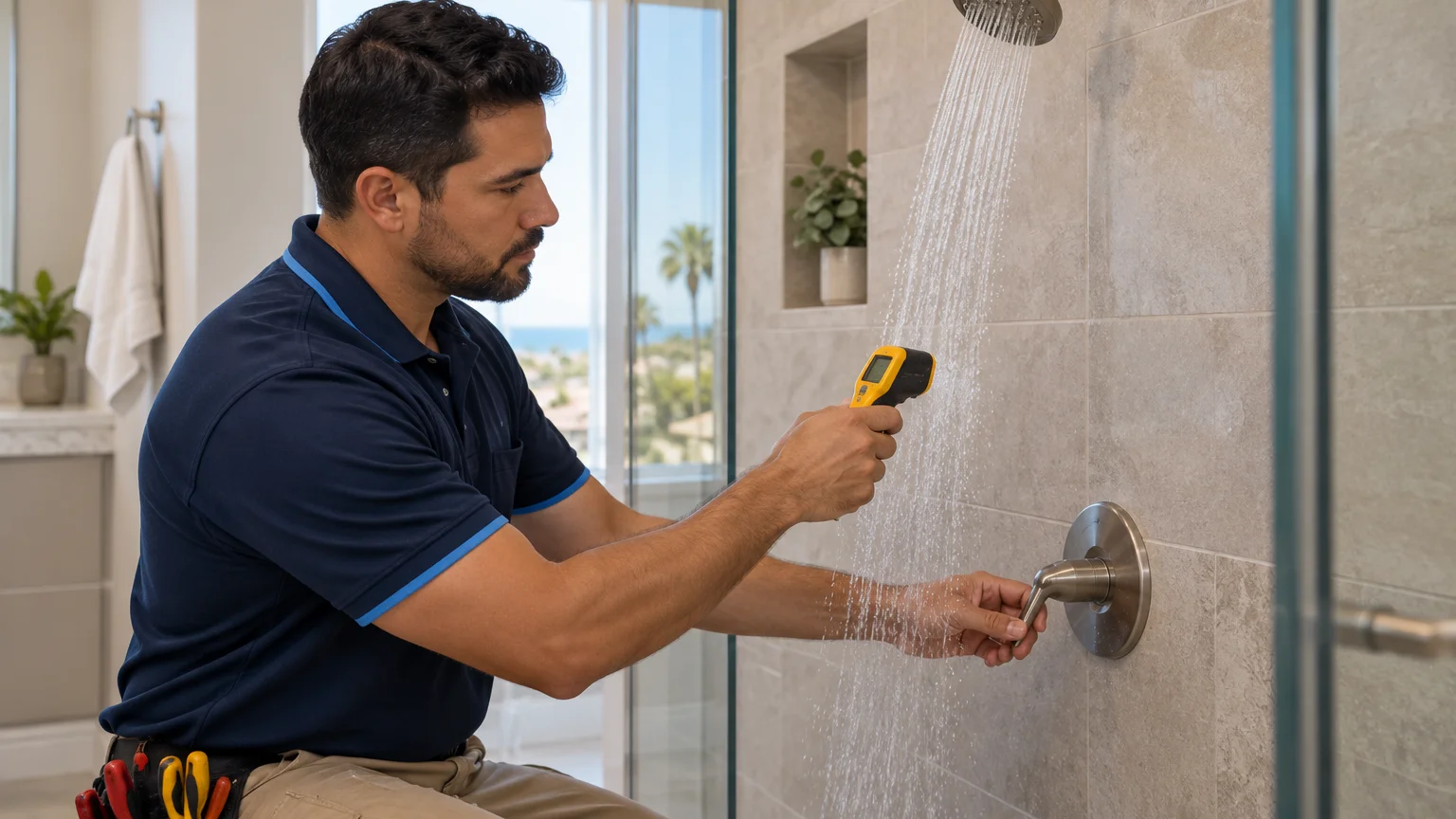
When the symptom belongs to one shower, the inspection may move behind the handle. The plumber may examine the trim, handle connection, cartridge, stops, and valve body. Visible leaking, stiff movement, or damaged parts may change the recommended repair.
A shower valve stuck on hot deserves clear wording when you request the referral. Say that the temperature won’t respond to the handle. Don’t describe it only as a weak shower or low-pressure complaint.
A diverter creates another distinct symptom. It controls where water goes, such as between a tub spout and showerhead. If water won’t switch outlets, see our guide to a shower diverter that won’t switch.
Avoid forcing a stuck handle. The contractor can determine whether the resistance comes from the trim, handle connection, cartridge, or another component.
What mineral scale can and cannot explain in San Diego water
San Diego’s water hardness makes mineral buildup a reasonable inspection item. It doesn’t establish the cause of a failed shower mixing valve.
The City of San Diego reports that hardness can vary by location and seasonal demand. It also identifies imported Colorado River water containing dissolved limestone as a primary source of local hardness. Our guide to San Diego water hardness explains the city’s published information and where residents can check service-area details.
A plumber may look for visible deposits around the showerhead, handle opening, or accessible valve parts. The contractor may also compare flow and temperature behavior with nearby fixtures. Those observations can help shape the next inspection step.
Scale alone doesn’t confirm that the entire valve needs replacement. A damaged handle connection, restricted supply, incompatible replacement part, or internal valve problem may present a similar household symptom. Diagnosis requires access to the actual assembly.
Location also matters when describing the job. San Diego County has many separate water providers. Tell the contractor whether the property is in the City of San Diego or another service area. A homeowner in Mira Mesa can also review our local Mira Mesa plumbing referral guide before requesting service.
If you want service-area water details, check your provider’s current water-quality report. The San Diego County Water Authority can help residents identify regional water information. Don’t buy a valve or treatment product based only on a hardness assumption.
What the contractor you’re matched with may inspect
The contractor will usually begin with the symptom and the installed controls. Photos can help identify the trim, but they may not reveal the concealed valve body.
Before the visit, gather any brand name, model number, or installation paperwork you have. Note whether someone recently replaced the cartridge, trim, water heater, or nearby piping. Tell the plumber if the problem affects one shower or several fixtures.
The inspection may include the handle movement, temperature range, available flow, and hot and cold supply behavior. If the valve has accessible service stops, the plumber may examine their position and condition. The contractor may then remove trim or internal parts when appropriate.
Possible recommendations depend on what’s found. The plumber might discuss a compatible internal repair, new trim, or valve replacement. A concealed valve replacement can involve access through the shower wall or an adjacent wall. Ask which surface may need opening before approving work.
Our shower valve replacement guide explains the questions worth asking when repair isn’t recommended. For work connected to a larger renovation, a bathroom and kitchen plumbing referral may fit better.
California’s C-36 classification includes plumbing work involving water piping, water-heating equipment, and regulating valves. Individual contractor capabilities still vary. You can verify a contractor’s status, classification, bond information, and complaint history through the CSLB license lookup. Search by license number, business name, or personnel name.
How to request a shower valve referral
Start with the exact symptom. “The shower stays cold” is more useful than “the shower is broken.” Mention whether the water ever becomes warm, whether the handle turns, and whether other fixtures behave normally.
Include the property location and bathroom type. A tub-and-shower combination may use different controls from a shower-only installation. Photos of the handle, trim plate, showerhead, and any visible brand markings can help the matched contractor prepare questions.
Tell us if the wall behind the shower is accessible. Don’t open it only for the referral. Just note whether the opposite side is drywall, cabinetry, tile, or another finished surface.
Ask the contractor to explain the diagnosis before authorizing work. Useful questions include:
- Which installed component appears to be causing the symptom?
- Can the exact valve and replacement part be identified?
- Is an internal repair being proposed, or full valve replacement?
- Will the work require opening a finished surface?
- Who handles any wall or tile restoration?
- What labor, materials, and related work does the written quote include?
No verified standard replacement price applies to every San Diego shower mixing valve. Access, installed hardware, compatible parts, and the proposed scope can differ. The independent plumber sets the price, and you’ll contract with and pay that plumber directly.
Plumbing Pro San Diego is the referral service. We connect homeowners across San Diego County with independent pros. Every plumber in the network is licensed and insured. We don’t perform the plumbing work, set prices, or provide a warranty for the contractor’s work.
When to call us
Request a licensed plumber when the shower stays hot, stays cold, won’t reach the selected temperature, or needs concealed valve work. Call us at (858) 400-4417 and we’ll connect you with a licensed plumber.
Areas this guide covers
We connect homeowners with licensed plumbers in these San Diego County communities.
Keep reading
Need a Plumber in San Diego?
Licensed, insured plumbers, ready across San Diego County. The plumber quotes you before any work starts.
Call (858) 400-4417Call any time, day or night, anywhere in San Diego County